 By
ByMurrah Buffalo Breed: India’s Black Gold and the World’s Highest Milk-Producing Buffalo
Murrah Buffalo Breed – India’s Most Famous Dairy Buffalo (Murra Bhains)
If we talk about buffaloes in the animal world, and there is no mention of the Murrah buffalo, that cannot happen. Murrah is not just a breed, but a prominent milch buffalo among India’s registered indigenous breeds, which has the distinction of being the highest milk‑giving buffalo in the world. That is why Indian farmers lovingly and respectfully call it ‘Black Gold’. Murrah is considered a standard breed not only in India but for the dairy industry across the entire world.
The birthplace of the Murrah buffalo is Haryana state, specifically the areas of Hisar, Rohtak, Jind, Karnal, and Gurugram. It is a riverine buffalo, which means it loves to sit in water, roll in mud, and live near rivers and streams. Due to its excellent milk production and strong body, this breed has now spread throughout India – in Rajasthan, Punjab, Delhi, and even in southern states such as Karnataka, Tamil Nadu, and Andhra Pradesh, Murrah buffaloes are reared on a large scale. Local people also lovingly call it “Delhi”, “Kundi”, and “Kali”. For Indian farmers, the production and use of the Murrah buffalo holds special importance, because it is a breed that gives higher earnings at lower cost.
The name of Murrah is not limited to India’s borders alone. This breed is also very famous internationally. Many countries such as Bulgaria, Philippines, Malaysia, Vietnam, Brazil, and Sri Lanka have imported the Murrah buffalo to improve their milk production. In these countries, Murrah has played an important role in improving local buffalo breeds and strengthening the dairy industry. That is why Murrah is called not only India’s heritage but also the world’s heritage.
Murrah Buffalo Milk Per Day & Main Uses
In India, the Murrah buffalo is reared mainly for two purposes. The first and biggest purpose is – milk production. The Murrah buffalo gives on average 10 to 16 litres of milk per day, and with better rearing and proper care, it can produce 18 to 25 litres of milk. In one lactation (from one calving until milk dries up), Murrah gives 1800 to 2500 kilograms of milk. The second purpose is – semen collection. High‑quality semen is collected from Murrah breed bulls and used in artificial insemination of other buffaloes, so that the breed of buffaloes can be improved across the country.
(An interesting comparison: If we talk about cows, the Sahiwal breed is considered the highest milk‑giving among India’s indigenous cows. Similarly, among buffaloes, Murrah holds that same position – i.e., both are the ‘Queens of Milk’ in their respective categories.)
Top 10 Highest Milk Producing Cow Breeds in India : By The Rajasthan Express
Must Read for Dairy Farmers & Livestock Owners
- Sahiwal Cow Characteristics
- Tharparkar Cow Milk Per Day
- Red Sindhi Cow Milk Per Day
- Rathi Cow Cow Milk Per Day
- Sanchori Cow Cow Milk Per Day
- Deoni Cow Cow Milk Per Day
- Hariana Cow Cow Milk Per Day
- Ongole Cow Characteristics
- Nimari Cow Milk Production
Buffalo breeds in India: Grouping based on origin
In India, buffaloes are divided into different groups according to their ancestral region (place of origin). Each region has its own special breeds, famous for milk, strength, or other qualities. In total, more than 22 buffalo breeds are registered in the country. Below, these groups are explained in simple language.
1. Murrah Group (Murrah Group) – Pride of the North‑West
This group includes the country’s most milch and famous buffaloes. Main breeds are:
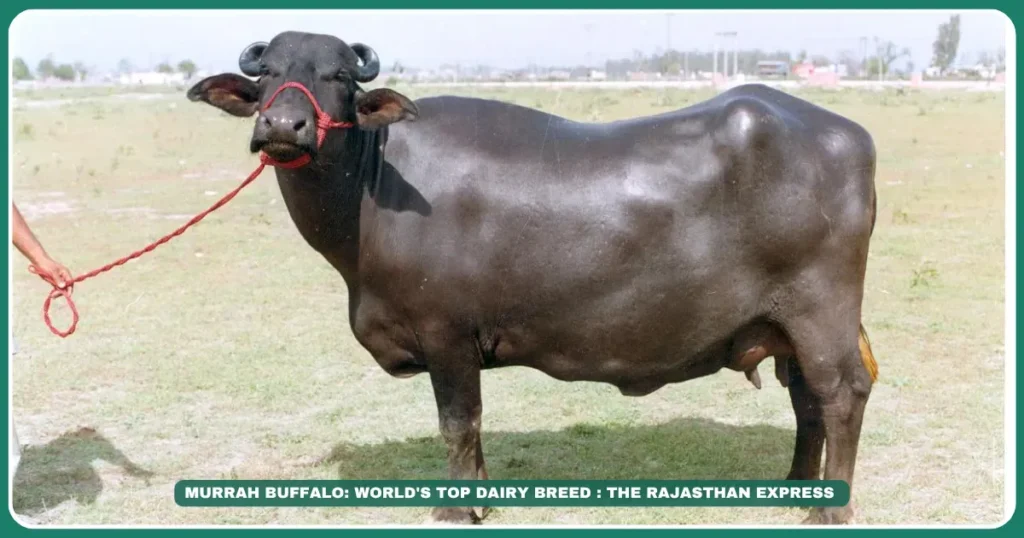
- Murrah – Famous breed of Haryana, known all over the world. This buffalo is famous for its abundant milk and is called ‘Black Gold’.
- Nili Ravi – Breed of Punjab. This buffalo is known for its low fat milk. Among all buffalo breeds of India, Nili Ravi milk has the lowest fat, about 4%. That means its milk is thinner compared to other buffaloes.
- Gojri – Found in Punjab and Himachal Pradesh. It is black in colour and small in stature, but easily adapts to harsh conditions.
2. Gujarat Group (Gujarat Group) – Strength of the Western Region
Gujarat has several strong milch breeds:
- Mehsana – Famous for good milk. This breed is found around Mehsana district of Gujarat.
- Surati – Buffalo of the Surat region of Gujarat. Its temperament is very calm and gentle, making it easy to rear.
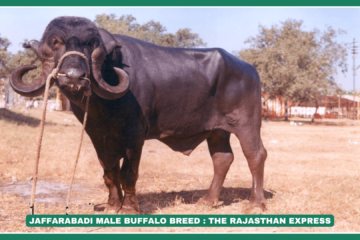
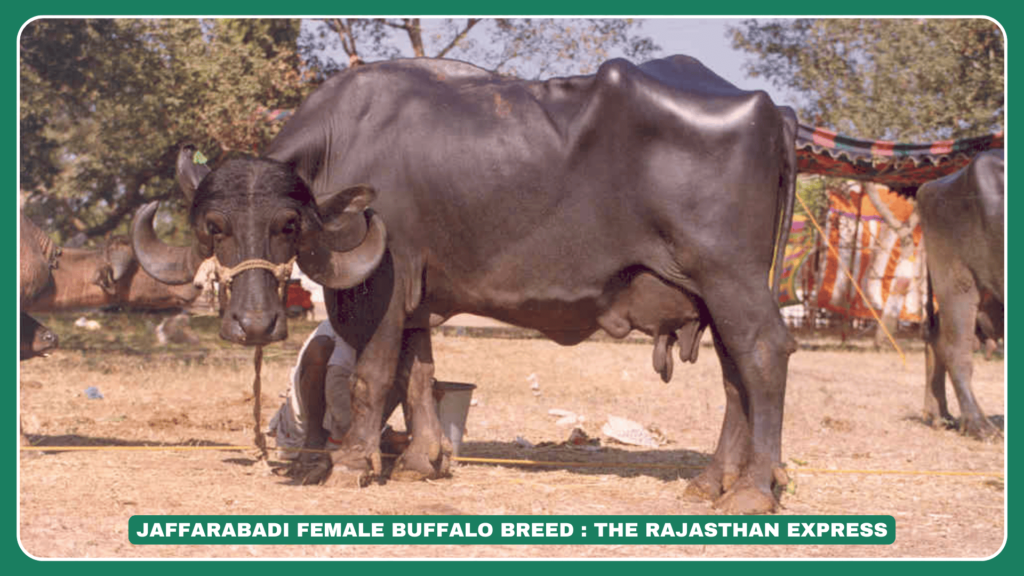
- Jafarabadi – Very large stature and heavy body. Known for its huge size.
- Banni – Found in the Banni region of Kutch district, Gujarat. It is fully adapted to desert conditions.
3. Uttar Pradesh Group (UP Group) – Buffalo of the plains
The main breed in this group is Bhadawari.
- Bhadawari – Found in Uttar Pradesh (Mathura, Agra, Etah) and around Madhya Pradesh. It is a good milk‑giving breed, but its biggest speciality is that among all buffalo breeds of India, Bhadawari milk has the highest fat (approx 14%). That means its milk is very thick and creamy, considered the best for making desi ghee. Its horns are short and twisted, and the body often has brown‑white spots.
4. Central India Group (Central India Group) – Prosperity of Eastern and Central Parts
This includes buffaloes from several states (Maharashtra, Odisha, Chhattisgarh):
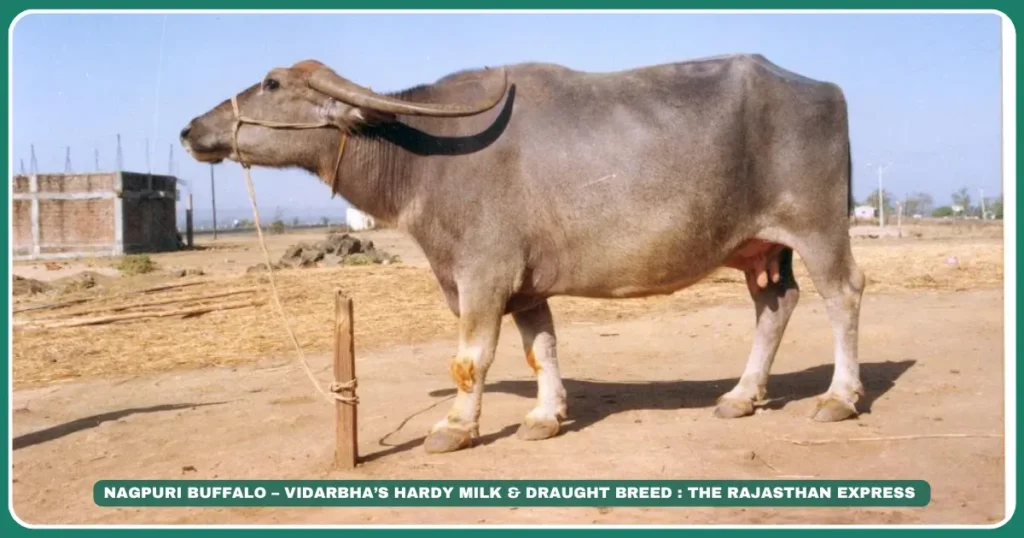
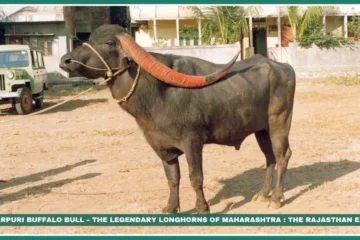
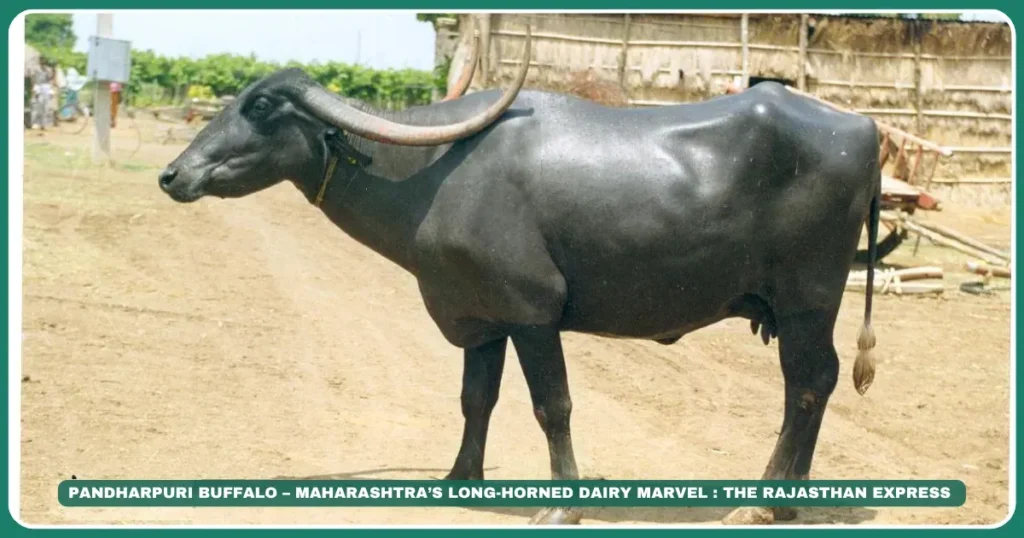
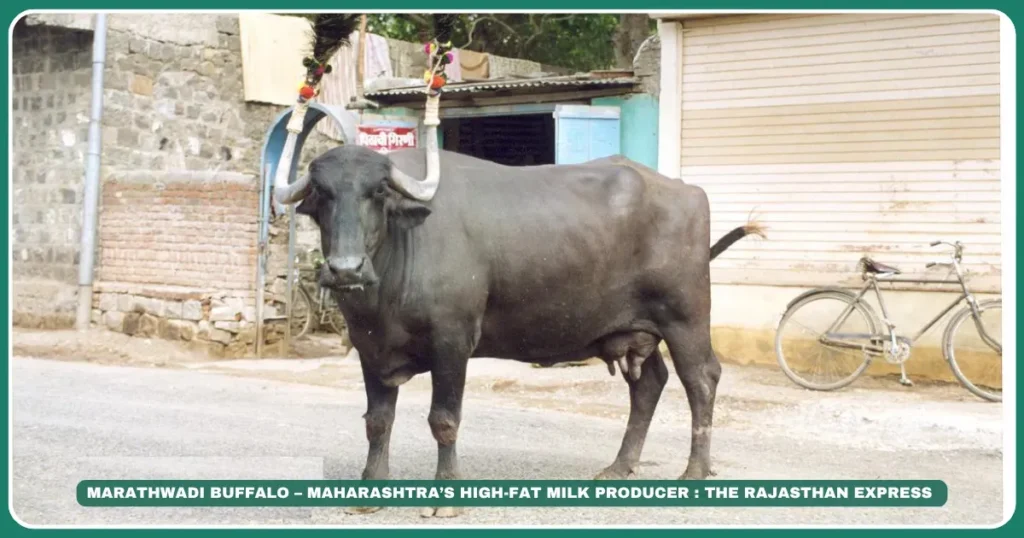
- Nagpuri, Pandharpuri, Marathwadi – Major breeds of Maharashtra. These are strong and working buffaloes.
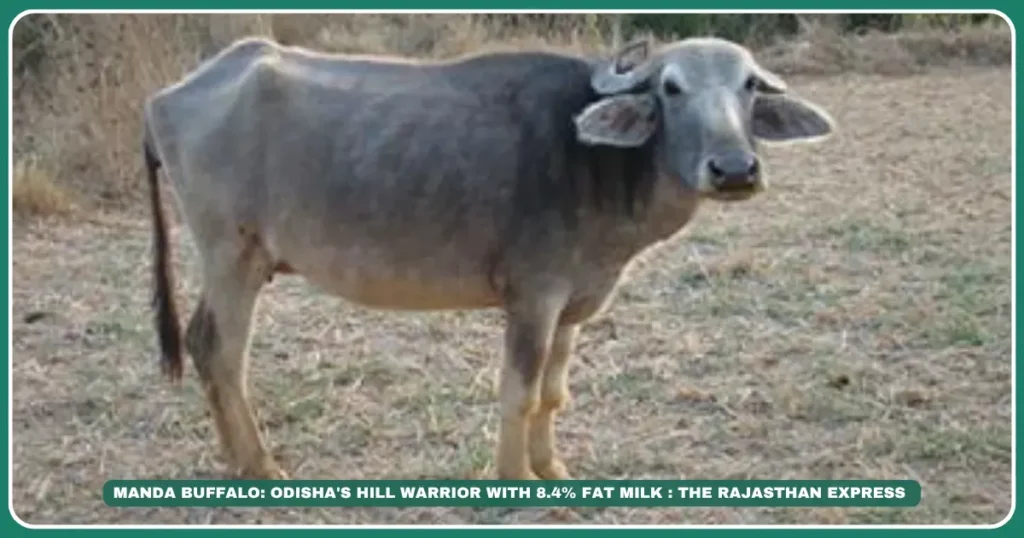
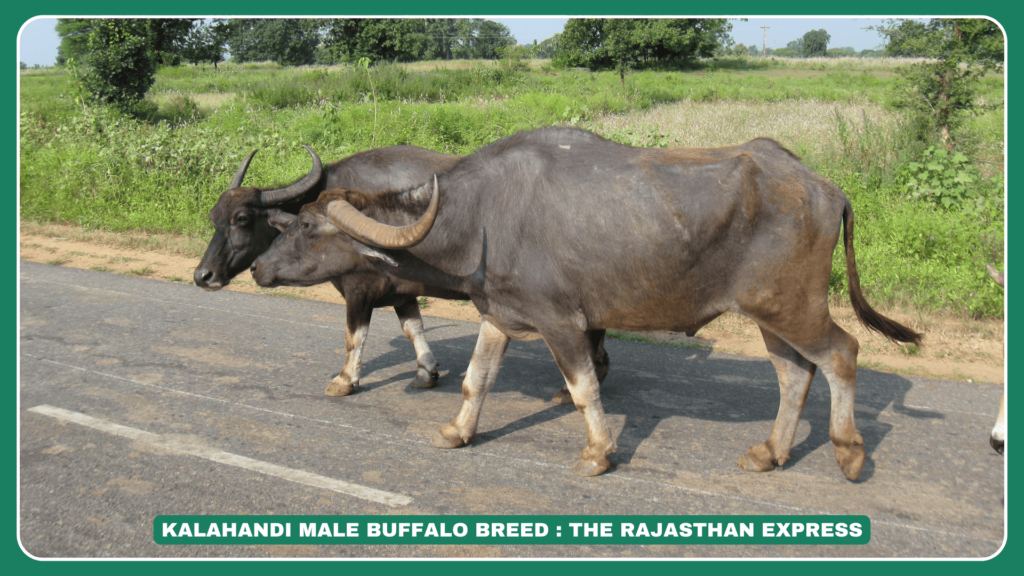
- Manda, Kalahandi, Chilka – Buffaloes of Odisha. Chilka buffalo is found especially around Chilka Lake.
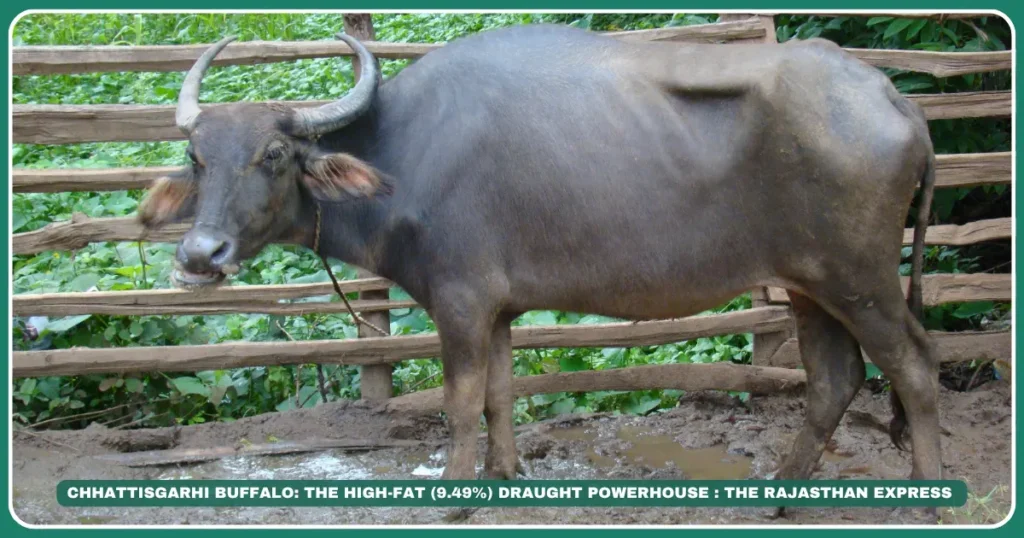
- Chhattisgarhi – Strong, working buffalo of Chhattisgarh. Used mainly for ploughing fields and carrying loads.
- Puranathadi – Newly registered breed from the Vidarbha region of Maharashtra.
- Melghati – Recently identified breed from the Melghat region of Maharashtra. Its speciality is high fat content in its milk.
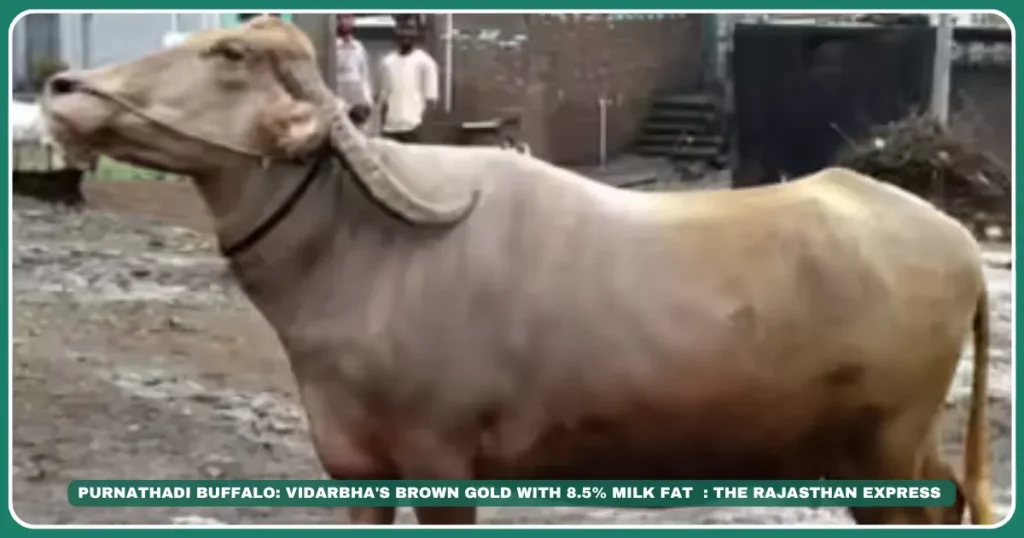
5. South India Group (South India Group) – Small but strong breeds
Buffaloes in this group are small in body, but very hardy and tolerant in local conditions:
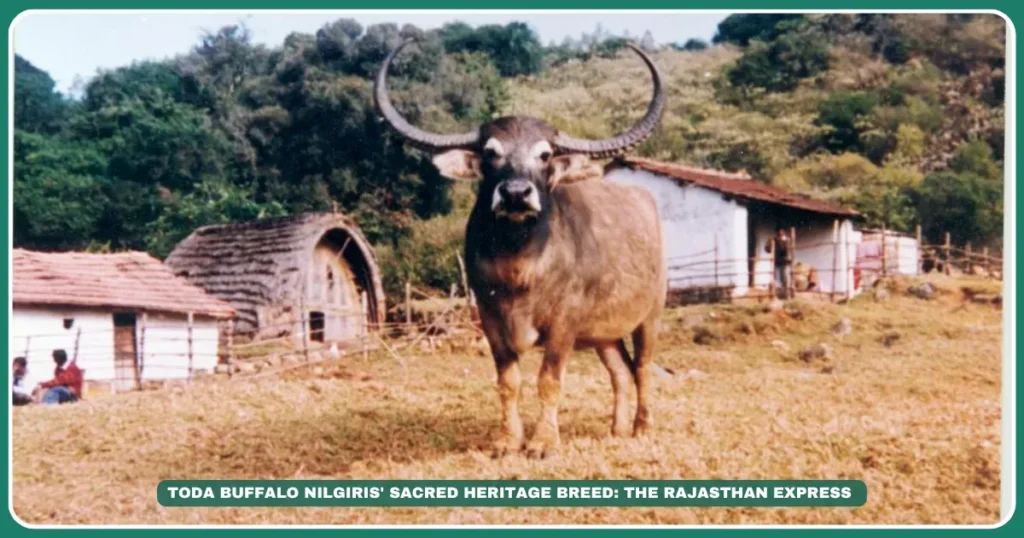
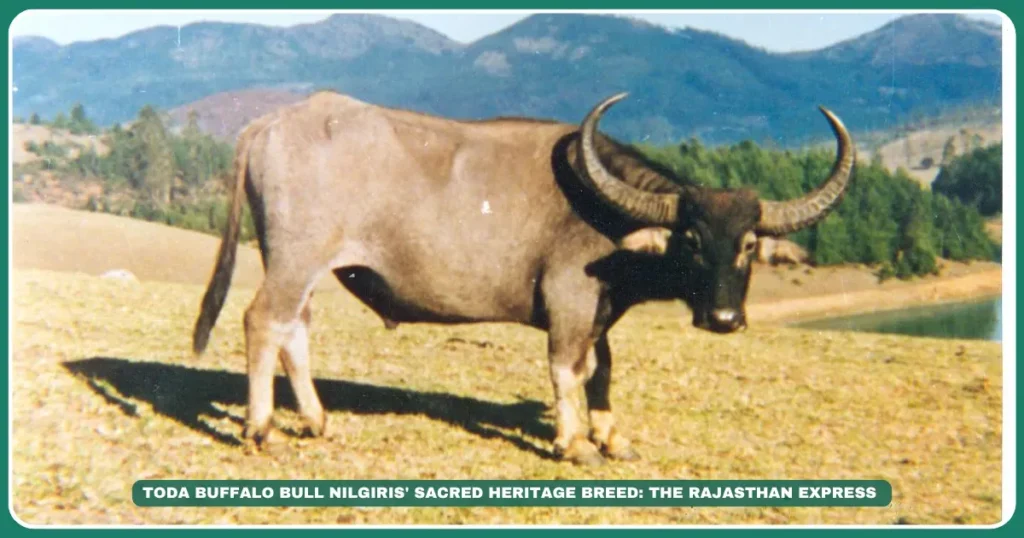
- Toda – Found in the Nilgiri hills of Tamil Nadu. This is a very unique and rare breed, reared by the Toda tribe.
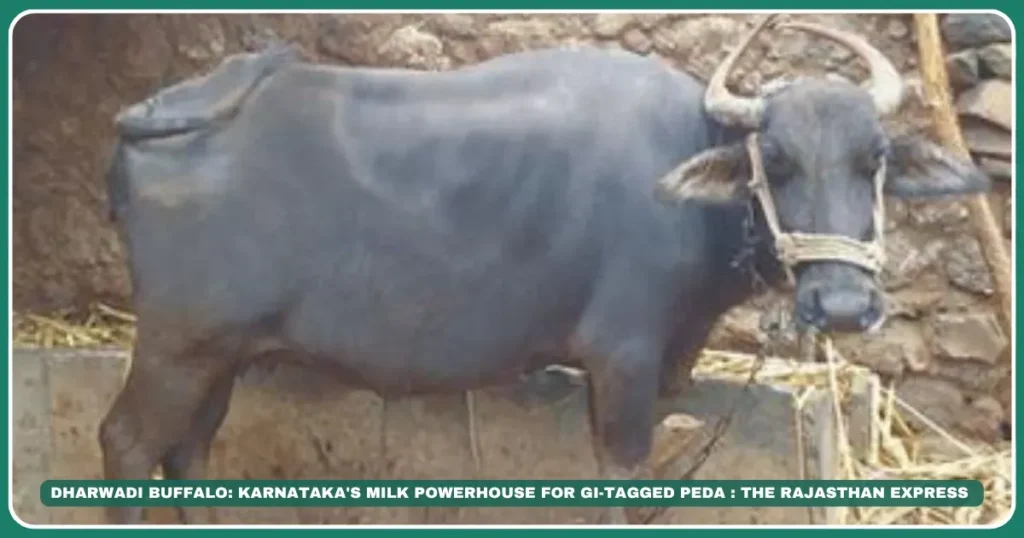
- Dharwari – Famous buffalo breed of Karnataka. Dharwad Peda made from the milk of this breed is very famous.
- Bargur – Working buffalo of the Bargur region of Tamil Nadu. It is small but extremely strong, used mainly for farm work in hilly areas.
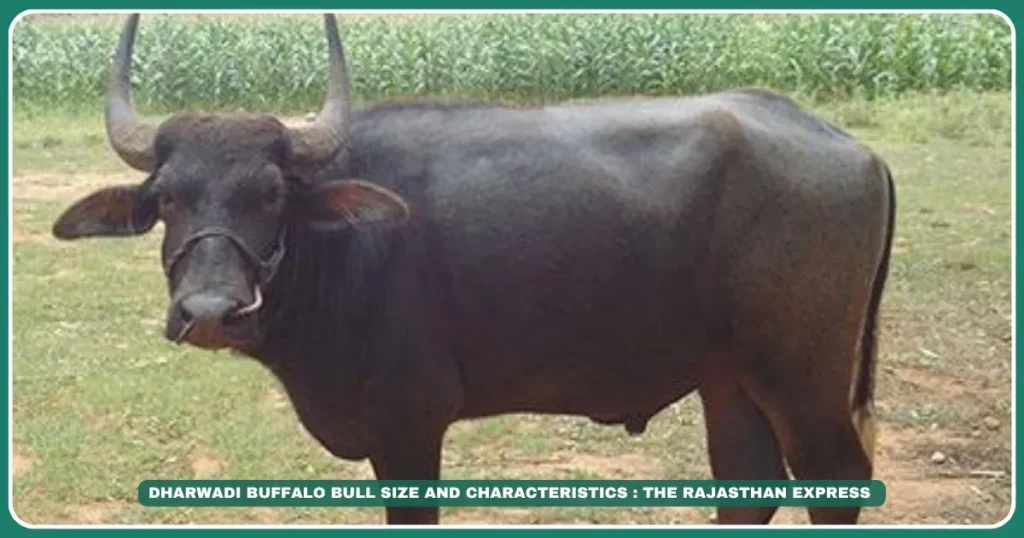
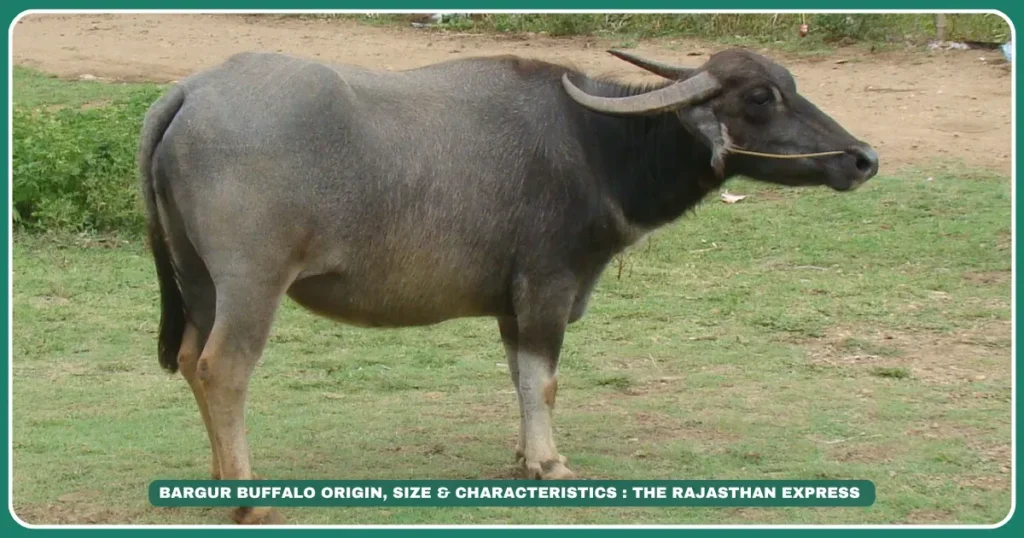
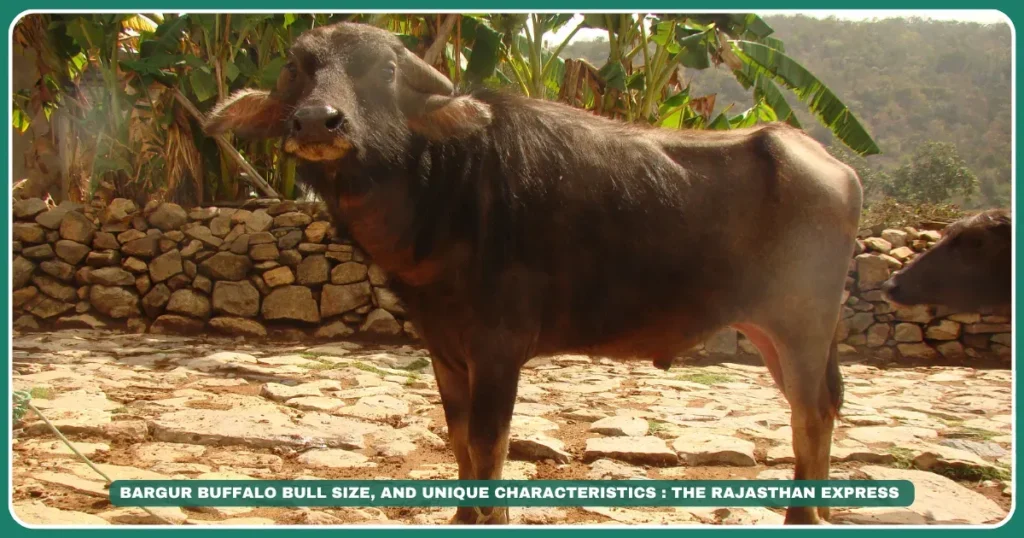
6. Eastern India Group (Swamp Buffalo Group) – Swamp Buffalo Group
Completely different from other breeds, these are swamp buffaloes, found in north‑eastern states such as Assam, Manipur, Mizoram. They are different in appearance and behaviour from riverine buffaloes. Their main use is for work (especially in muddy paddy fields) and meat rather than milk:
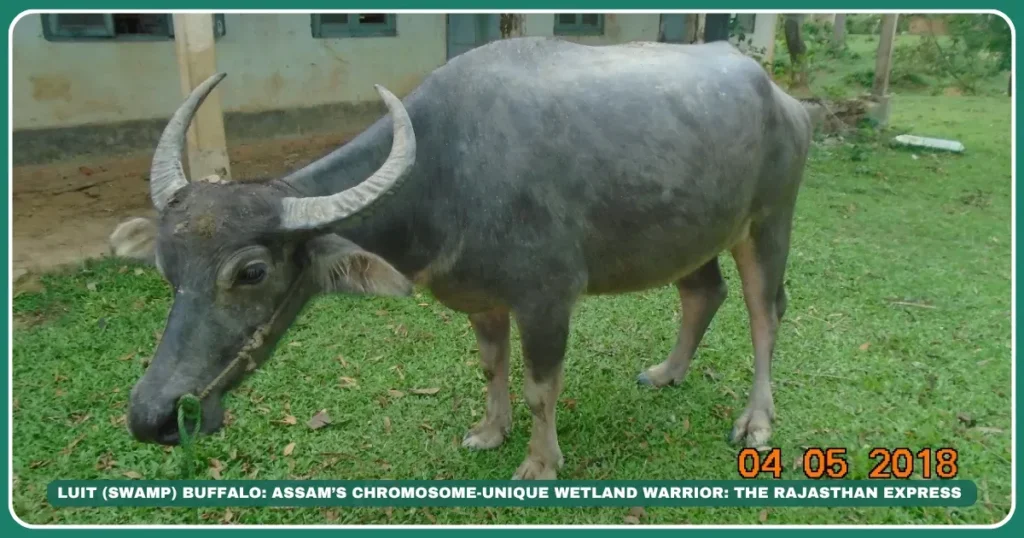
- Luit – Buffalo of the Brahmaputra river region (called Luit in Assam).
- Manah – Dual‑purpose breed of Assam – i.e., it gives some milk and can also do farm work.

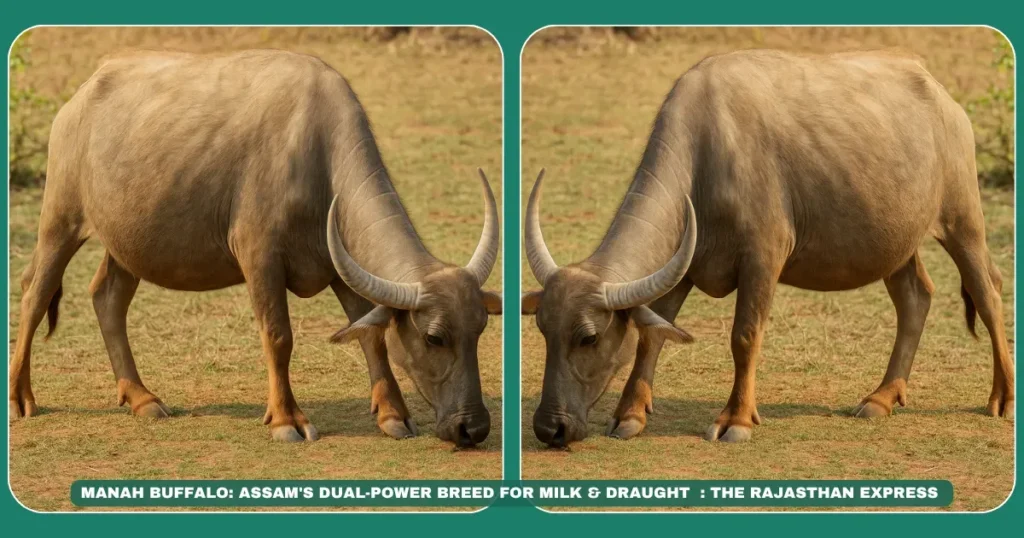
The diversity of buffaloes in India is very large. Murrah is number one in milk quantity. Nili Ravi milk has the lowest fat (4%), while Bhadawari milk has the highest fat (14%). Other breeds are famous for their own special qualities – some for strength, some for work, some for surviving harsh weather. Every region has its own heritage.
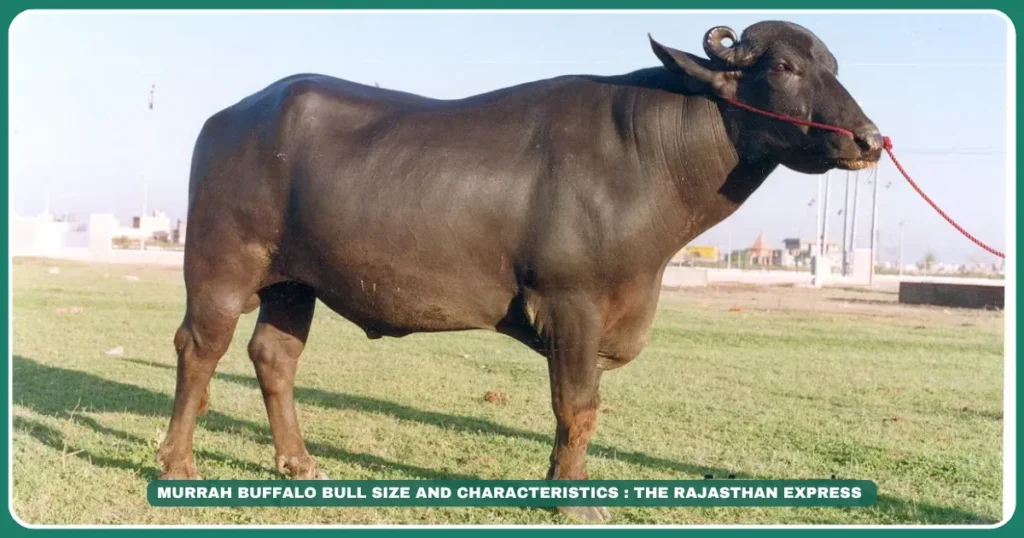
Murrah Buffalo Origin and History (Murrah Buffalo Breed)
The birthplace of the Murrah buffalo is considered to be the southern parts of Haryana. Specifically, its home tract extends to the Rohtak, Jind, Hisar, Jhajjar, Fatehabad, Gurugram districts of Haryana and the National Capital Region of Delhi. By the way, sometimes its origin is also mentioned in Punjab (Bhiwani, Patiala, Agra districts).
Latitude & Longitude of Murrah Buffalo Breed
Not only that, a specific limit has been determined for the geographical spread of this breed – between 28°15′ to 30°0′ North latitude and 75°45′ to 70°50′ (approx 77°) East longitude. This area is Murrah’s home town.
If we talk about the origin of the name ‘Murrah’, the word ‘Murrah’ itself means ‘coiled’ or ‘curved’. This name is based on the structure of its horns, which are very tightly curved. Meanwhile, its synonym names are ‘Delhi’ (because its main centre was around Delhi), ‘Kundi’ and ‘Kali’ (because of its black colour and coiled or jalebi‑like horns).
The Murrah group mainly includes three major breeds: Murrah, Nili Ravi, and Gojri. Genetic studies show that Murrah and Nili Ravi have many similarities and may have a common origin, while Gojri has a distinct and unique genetic heritage. The origin of the Nili Ravi buffalo is considered mainly from Punjab state in India.
Murrah Buffalo Distribution in India
The Murrah buffalo was originally native to the areas around Haryana and Delhi (Rohtak, Hisar, Jind, Gurugram). But due to its excellent milk, it gradually spread throughout India. Today it is seen in almost all states including Punjab, Rajasthan, Uttar Pradesh, Madhya Pradesh, Maharashtra. According to the 20th Livestock Census (2019), the total number of Murrah buffaloes in India is approximately 2 crore (20.48 million), which is about 20% of the country’s total buffalo population. That is, one out of every five buffaloes is Murrah. This figure shows how deeply Murrah has rooted itself across the country.
Now know the contribution of Murrah in the Milk Revolution (Operation Flood) – this is its real strength.
In 1970, the Government of India launched the world’s largest dairy programme called “Operation Flood”. This is what we call the White Revolution or Milk Revolution. The main objective of this revolution was – to make India, a milk‑deficient country, the world’s largest milk‑producing country.
Why was Murrah buffalo’s contribution the biggest in this revolution?
- Buffaloes account for about 45% of India’s total milk production. And among these buffaloes, Murrah’s place is at the top.
- Murrah milk has high fat content, which makes it thick and creamy.
But there was a big technical problem – making powder (skimmed milk powder) from buffalo milk was very difficult. It could be made from cow’s milk, but not from buffalo milk. If powder cannot be made, milk cannot be stored and transported.
Then came Dr. Verghese Kurien and Harichand Megha Dalaya.
Dr. Verghese Kurien (called the “Father of the White Revolution” and “India’s Milkman”) led Operation Flood. His colleague Harichand Megha Dalaya developed the world’s first technology to make skimmed milk powder from buffalo milk as well. This was a revolutionary invention.
What was the result of this technology?
- Now Murrah buffalo’s milk could be converted into powder and sent across the country.
- Amul adopted this technology and organised farmers under the “Amul Pattern” (Anand Pattern).
- Where there was a shortage of milk, this powder was sent and reconstituted into milk for sale.
What was the final outcome?
- India, which was once dependent on foreign countries for milk, today has become the world’s largest milk‑producing country. Murrah buffalo’s role was the most important in this – because its thick milk made the powder technology meaningful and fulfilled Dr. Kurien’s dream.
- Murrah buffalo has not only spread to every state of India, but by giving the most milk in the Milk Revolution, it changed the country’s destiny. That is why farmers call it ‘Black Gold’ and the world considers it the Queen of Milk.
- Apart from milk production, a major use of the Murrah breed is also as an ‘Improver Breed’ to improve local buffalo breeds. This means that the semen from Murrah males is used to inseminate local buffaloes to improve their breed.
International Export History of Murrah Buffalo
The Murrah buffalo is not limited only to India’s villages and dairy farms, but has established its presence in every corner of the world. It is such a priceless gift of India that has transformed the dairy industry of many countries.
Why is Murrah buffalo in demand all over the world? There are three big reasons:
- Unmatched milk production: Murrah is the highest milk‑giving buffalo in the world. A good Murrah buffalo can give more than 3,000 litres in one lactation, and in record cases up to 4,500 litres, with 6.5% to 8% fat.
- Strong body and adaptability: This breed tolerates hot and humid weather very well, which is very important for tropical countries like South‑East Asia, Latin America, and Africa.
- Dual purpose: Many countries have imported Murrah buffalo not only for milk, but also for meat production and improving the quality of local breeds. Murrah bulls are used in crossbreeding with weaker breeds to increase their milk capacity. For example, the Godavari buffalo has been developed by crossing local buffaloes with the Murrah breed.
International export history: A year‑by‑year journey
The written history of Murrah buffalo export begins around 1917, i.e., even before independence. Since then, it has strengthened the economy and food security of many countries.
- Philippines (1917) – First stop
Murrah buffalo was first taken to the Philippines. The local buffalo there is called ‘Carabao’, which is small in size and gave less milk. The Government of India helped the Philippines improve their breed by giving them Murrah buffalo. Thereafter, the milk production capacity of buffaloes in the Philippines improved significantly. - Europe and Balkan region (Bulgaria, Italy, Azerbaijan)
European countries like Bulgaria and Italy also adopted Murrah buffalo. Murrah contributed well to making the famous buffalo milk mozzarella and other cheeses here. Murrah milk has high fat content, ideal for the cheese industry.
Countries like Azerbaijan also imported Murrah to improve their local breeds. - Africa and West Asia (Egypt)
Egypt used Murrah buffalo for crossbreeding with its local Egyptian buffalo. The aim was to increase milk production, and the results were good. - South‑East Asia (Thailand, Vietnam, Malaysia, Indonesia, China)
Countries in this region chose Murrah buffalo because the climate here is exactly like India’s (hot and humid).
China, Thailand, Vietnam, Malaysia, and Indonesia imported Murrah buffalo semen and live animals to improve their local buffaloes.
Especially in Vietnam and Thailand, Murrah crossbred buffaloes are today a major source of farmers’ income. - Neighbouring countries (Sri Lanka and Nepal)
Import of Murrah buffalo has been very common in India’s closest countries, Sri Lanka and Nepal. Due to shared borders, there has been movement of Murrah breed for centuries. In the Terai regions of Nepal, Murrah buffalo is farmers’ first choice. - Latin America (Venezuela)
Venezuela also imported Murrah buffalo under its livestock improvement programme. Like Brazil, it is used here for both milk and meat. - Brazil – Big market for milk and meat
Brazil imported Murrah buffalo on a large scale. Here it was used for two things:
- Milk production: Mozzarella cheese made from Murrah buffalo milk is very famous in many parts of Brazil.
- Meat production: There is also good demand for buffalo meat in Brazil, and Murrah calves grow quickly, making meat production profitable. Today, Brazil has the world’s largest Murrah population (after India).
Cows + Buffaloes = Brazil’s full strength
Brazil imported both cows and buffaloes from India, and by adapting both to their needs, transformed their milk and meat industries into the world’s largest industries.
- Nellore (Ongole) dominates the meat market.
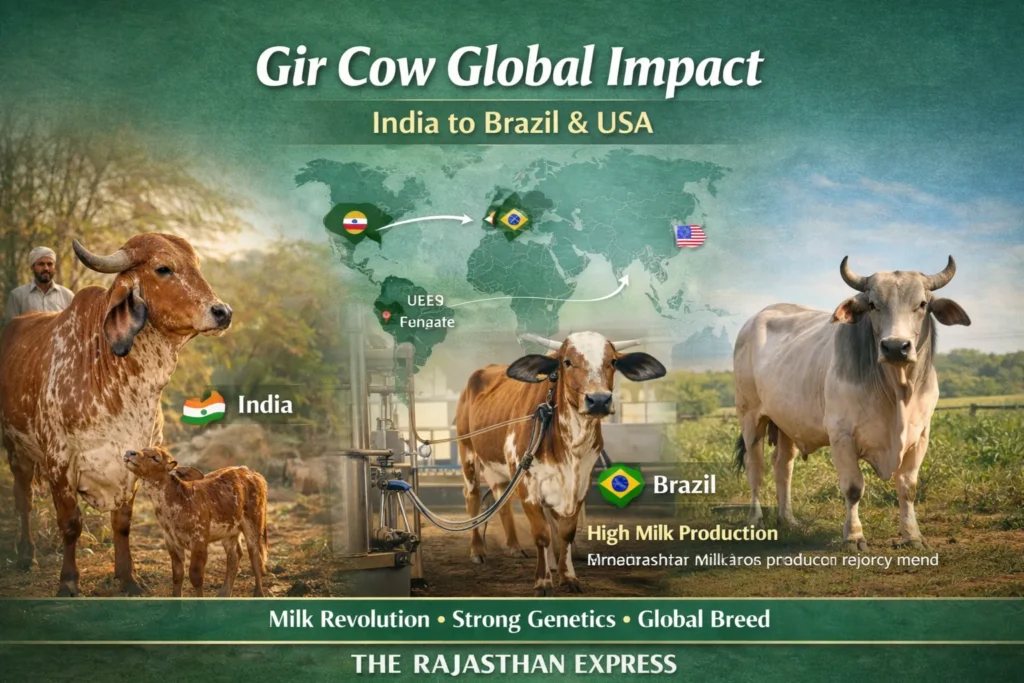
- Gir (and its crossbreed Girolando) revolutionised the milk industry.
- Guzerá (Kankrej) made its place in the dual‑purpose sector.
- Murrah buffalo gave a new identity to the cheese industry and also strengthened the buffalo meat market.
It is a matter of pride that the genes of Indian animals have contributed so greatly to making a country prosperous on the other side of the world. That is why many countries of the world are still eager to import the semen and embryos of these breeds from India.
| Indian Breeds and Their Impact in Brazil : The Rajasthan Express | ||||
| Hybrid Breed | Which Indian breed? | Crossed with which other breed? | Main Use | Speciality / Impact in Brazil |
|---|---|---|---|---|
| Nellore | Ongole (pure Indian, selected without cross) | – (purebred) | Meat | 80% of Brazil’s cattle are Nellore or its cross. The most expensive cow (₹40 crore) is also Nellore. |
| Girolando | Gir | Holstein‑Friesian | Milk | Over 80% of Brazil’s milk production comes from Girolando. One cow gives up to 50 litres/day. |
| Guzerá | Kankrej | Local European breeds | Milk + Meat (dual purpose) | Over 92,000 registered cows; famous for dual purpose. |
| Indu‑Brazil | Gir + Kankrej (cross between two Indian breeds) | – (no other breed; composite of two Indian breeds) | Meat | Very large size and long ears; this breed is now declining. |
| Brahman | Kankrej + Ongole + Gir (mixture of all three) | – (composite of three Indian breeds) | Meat | One of the world’s most famous heat‑tolerant meat breeds. |
| Major crossbreeds/hybrids developed in Brazil from Indian zebu breeds – Nellore, Girolando, Guzerá, Indu‑Brazil, and Brahman have shaped Brazil’s beef and dairy industry. | ||||
Major crossbreeds developed in Brazil from Indian breeds
India’s indigenous cows (such as Gir, Ongole, Kankrej, Sahiwal) are famous worldwide for their hardiness, heat tolerance, and disease resistance. Many countries have used these Indian breeds to improve their local cows. The most successful example is Brazil, where scientists created several new and excellent breeds by crossing Indian cows with European breeds.
| Major Crossbreeds Developed in Brazil from Indian Breeds: The Rajasthan Express | |||
| Exported Breed from India | Name in Brazil | Main Use | Impact in Brazil |
|---|---|---|---|
| Ongole/Nellore (cow) | Nellore | Meat | 80%+ of cattle; most expensive cow (₹40 crore) |
| Gir (cow) | Gir / Girolando | Milk | 80%+ of milk (from Girolando breed) |
| Kankrej (cow) | Guzerá | Milk + Meat (dual purpose) | New dual‑purpose breed |
| Murrah (buffalo) | Murrah | Milk + Meat (dual purpose) | Famous for Mozzarella cheese; largest population after India |
| Impact of Indian Zebu & Buffalo Breeds in Brazil – Nellore dominates beef, Girolando drives milk production, Guzerá serves dual purpose, and Murrah buffalo are key for cheese. | |||
Key Points About Indigenous Cows in India (Desi Cow Facts)
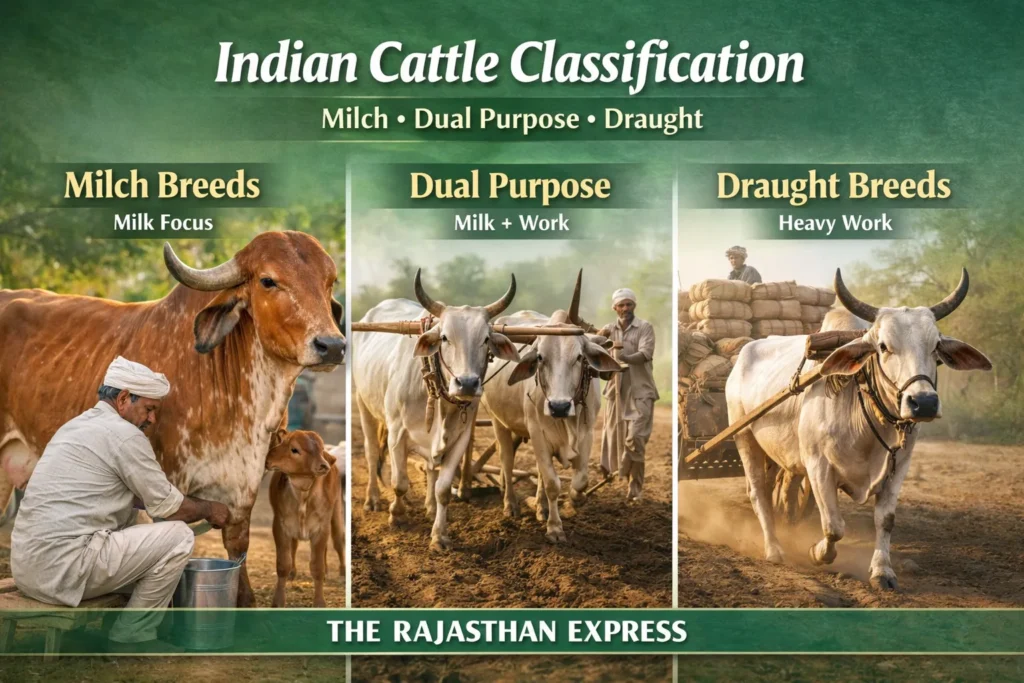
- India’s best draught (load‑carrying) breed is Amrit Mahal.
- Maharashtra’s best draught breed is Khillari.
- Rajasthan’s best load‑carrying breed is Nagori.
- India’s best dual‑purpose (milk + work) breed is Hariana.
- The world’s smallest cow breed is Vechur.
- India’s heaviest cow breed is Kankrej.
- The Kankrej breed exhibits a “Sawai Chal” (fast and special gait).
- Deoni cow was created by crossing Gir, Dangi, and local cows.
- Nimari cow was created by mixing Gir and Khillari breeds.
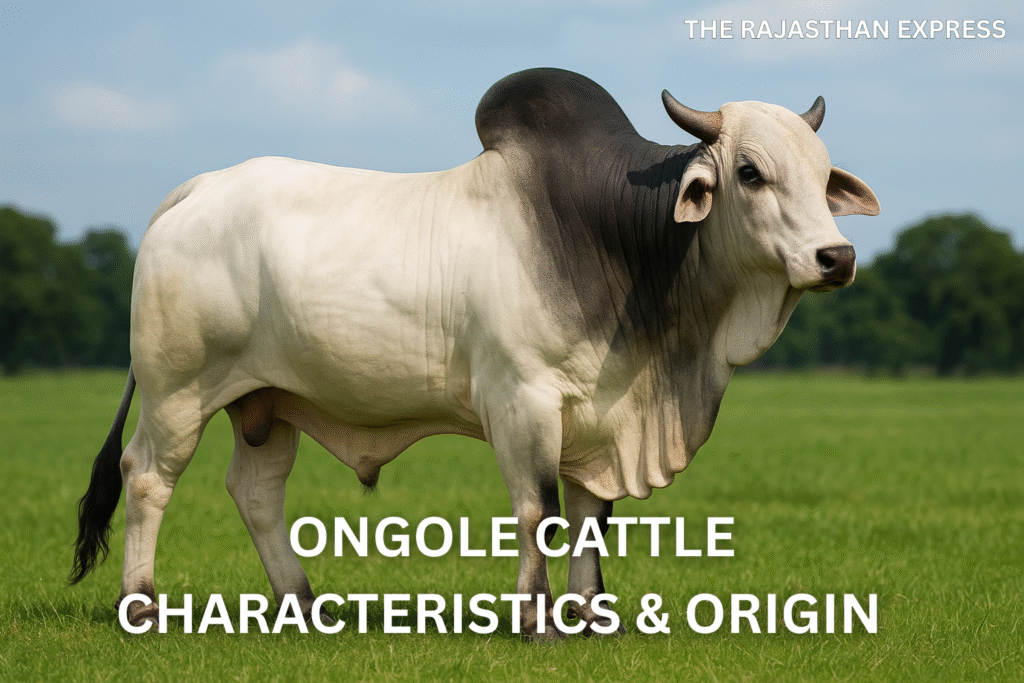
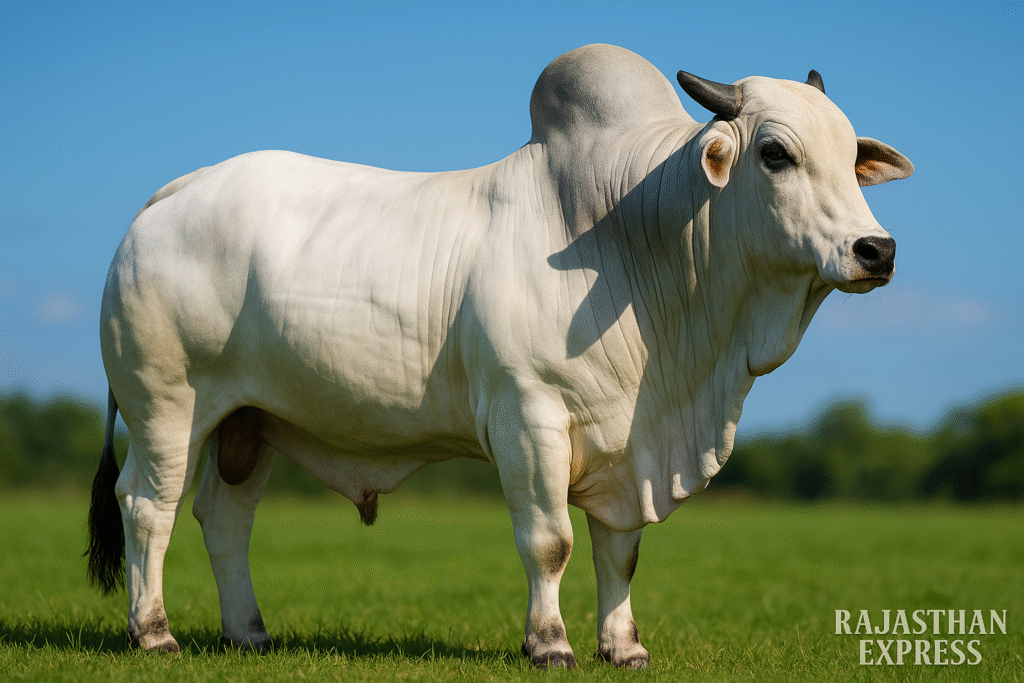
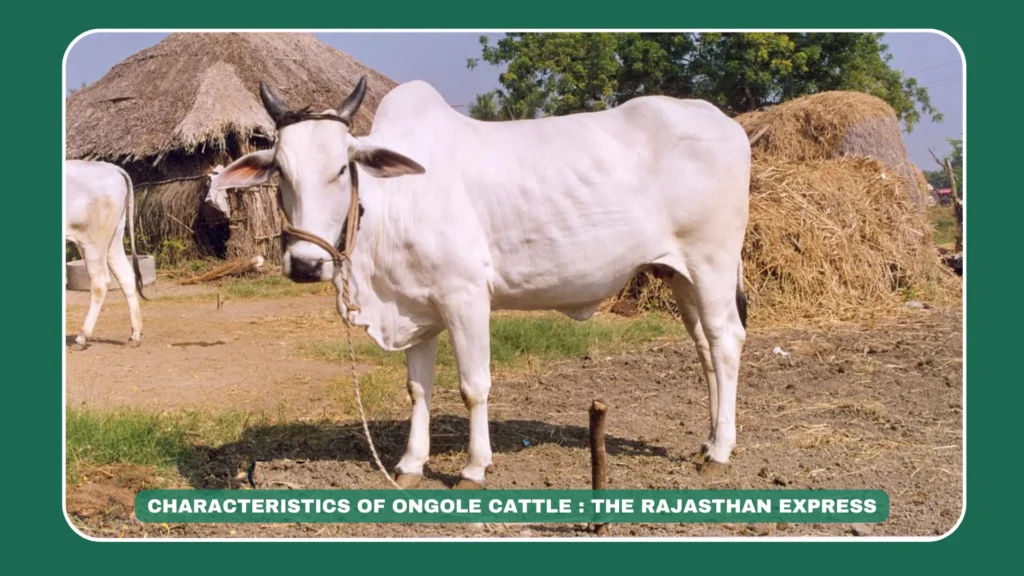
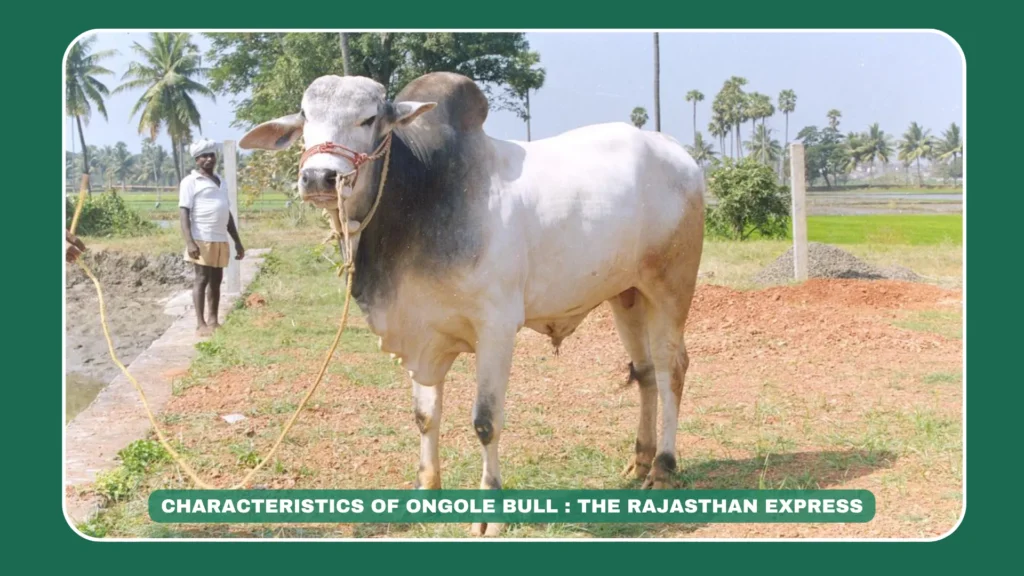
- India’s most expensive cow breed is considered to be Ongole. In Brazil, this same breed is called Nelore. At the beginning of the year 2025, a Nelore cow named “Viatina‑19” was sold for approximately ₹40‑41 crore. It also set a Guinness World Record. “Viatina‑19” weighed about 1100 kg, which is much more than a normal cow. The first Ongole cows were taken from India to Brazil in 1868. Later, by 1960, about 7000 cattle were sent there. In Brazil, this breed was named “Nelore”, after the Nellore district of Andhra Pradesh.
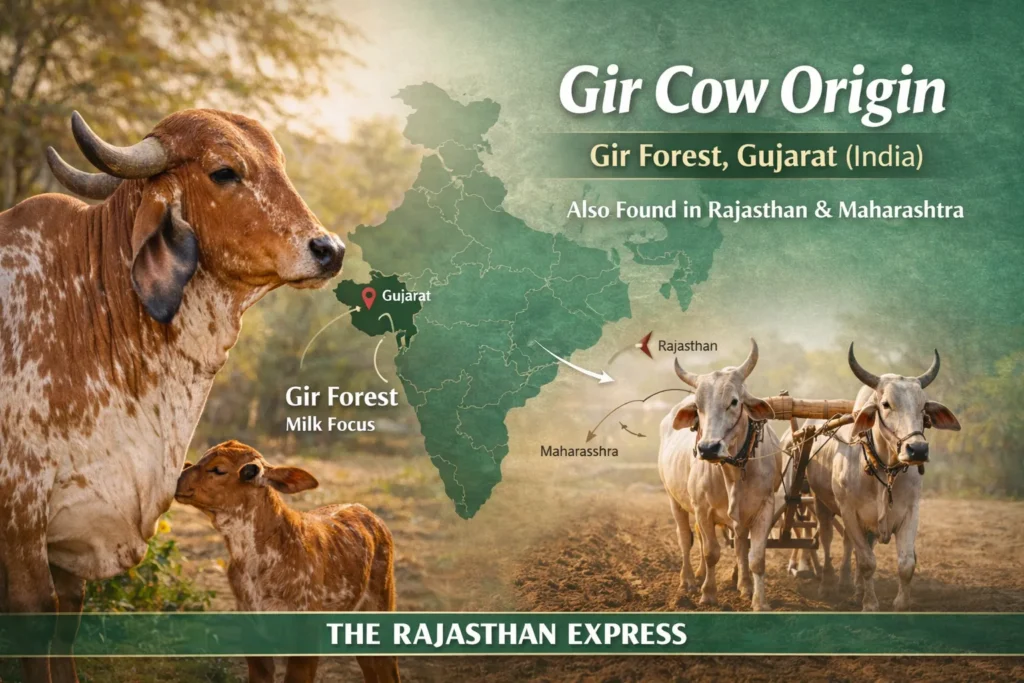
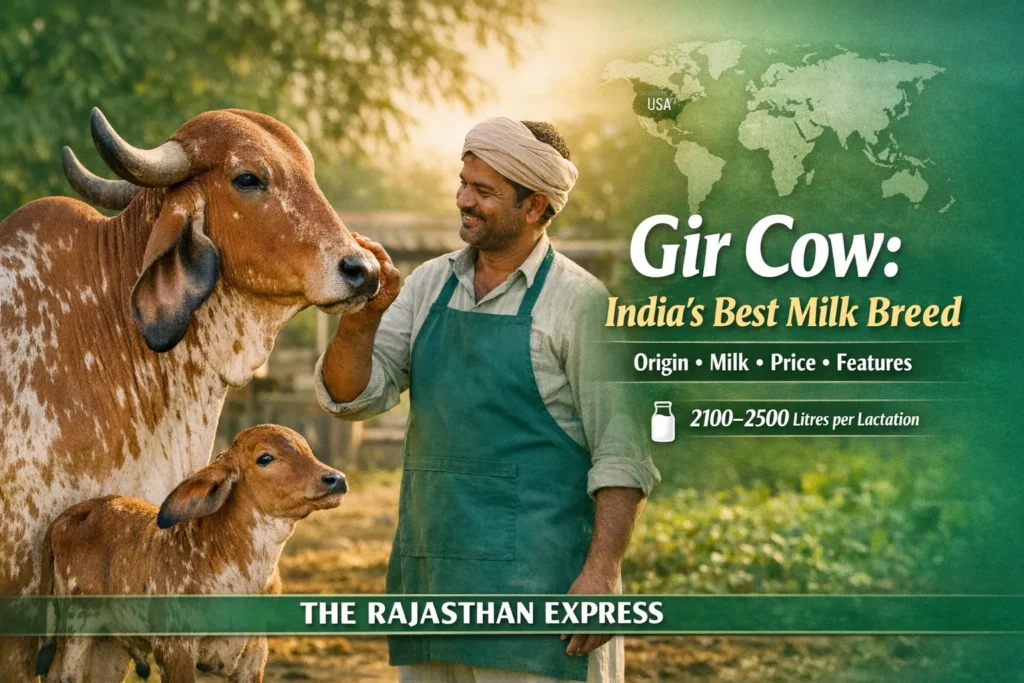
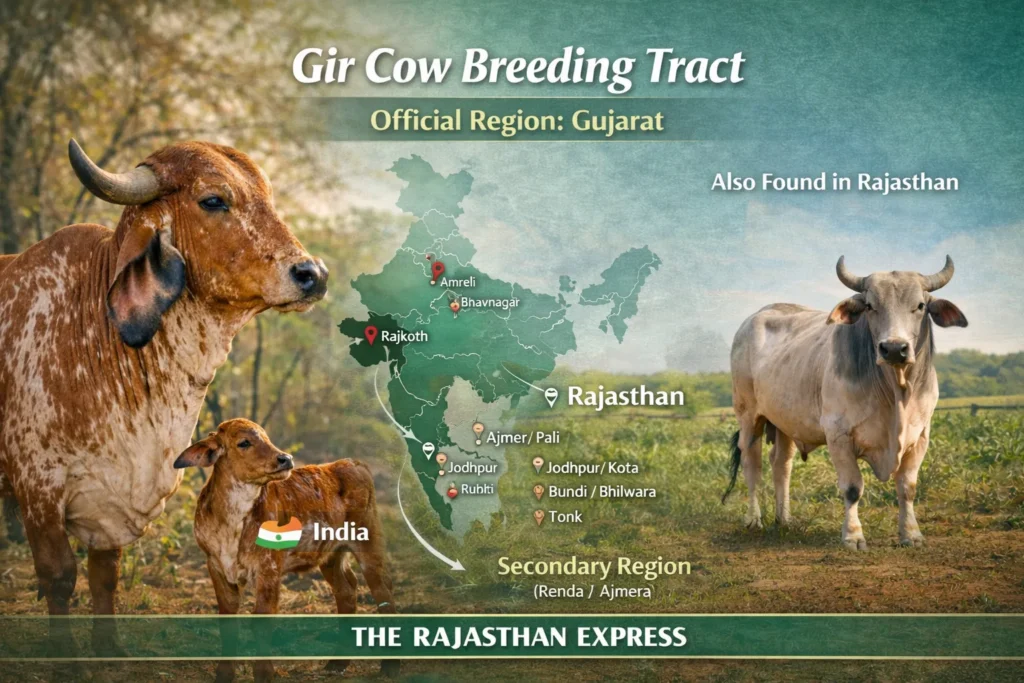
- Among indigenous cows, the longest lactation period is of the Gir cow (about 325 days). The Gir cow originated in the Gir forests of Kathiawar, Gujarat. The Gir cow is also called Kathiyawadi, Ajmera, Renda, Surti.
- Among buffaloes, the longest lactation period is of the Mehsana buffalo (about 352 ± 15 days).
- Identification of Gir cow:
- Red, brown, or spotted skin
- Prominence on forehead
- Long, hanging, leaf‑shaped ears
- Half‑moon shaped horns
- India’s highest milk‑producing indigenous cow is Sahiwal.
- In the Sahiwal cow, the dewlap (loose skin of the neck) and Nawelflap are more developed. This is the main identification of the Sahiwal cow. The Sahiwal cow originated in Montgomery (Pakistan), Punjab, Haryana. The Sahiwal cow is also called Lola breed, Multani, Montgomery, Lambi Bar.
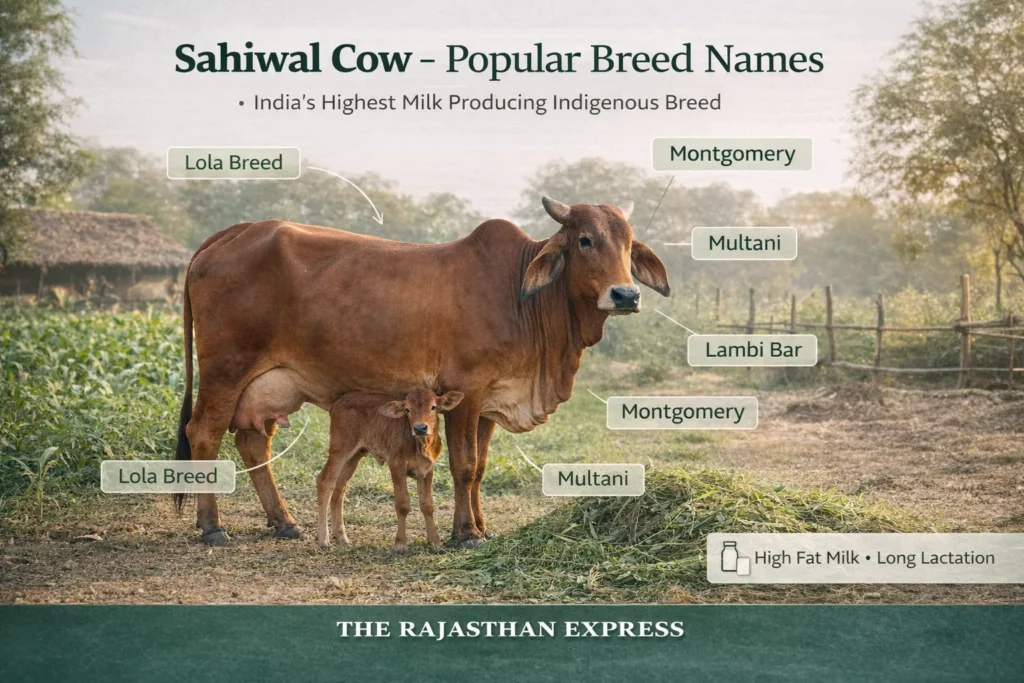
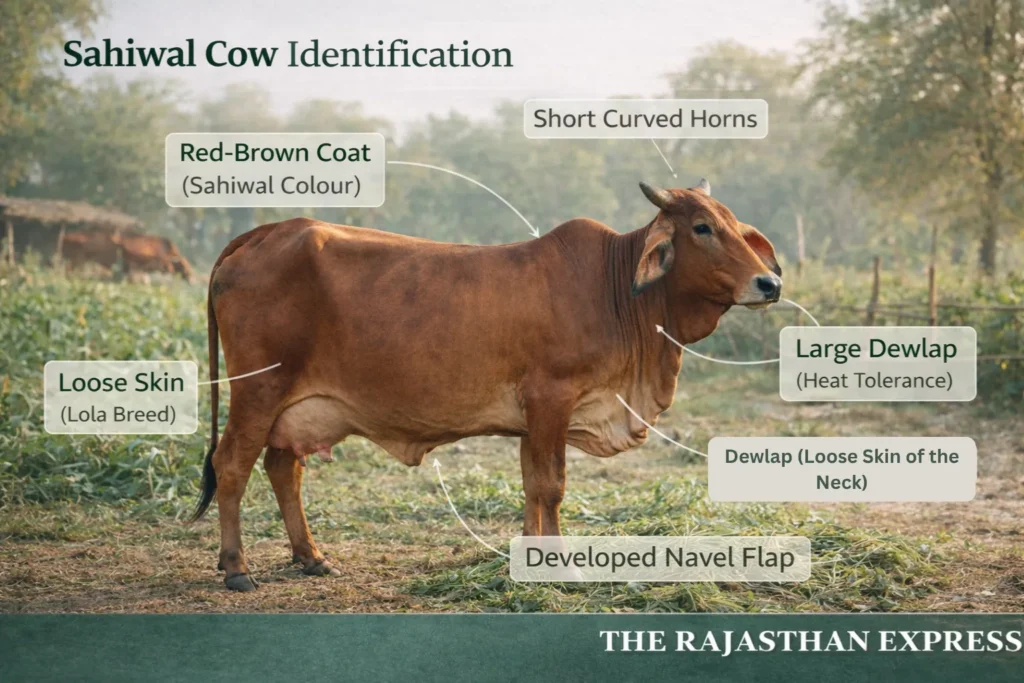
- Because the Sahiwal cow’s skin is loose, it is also called the Lola breed.
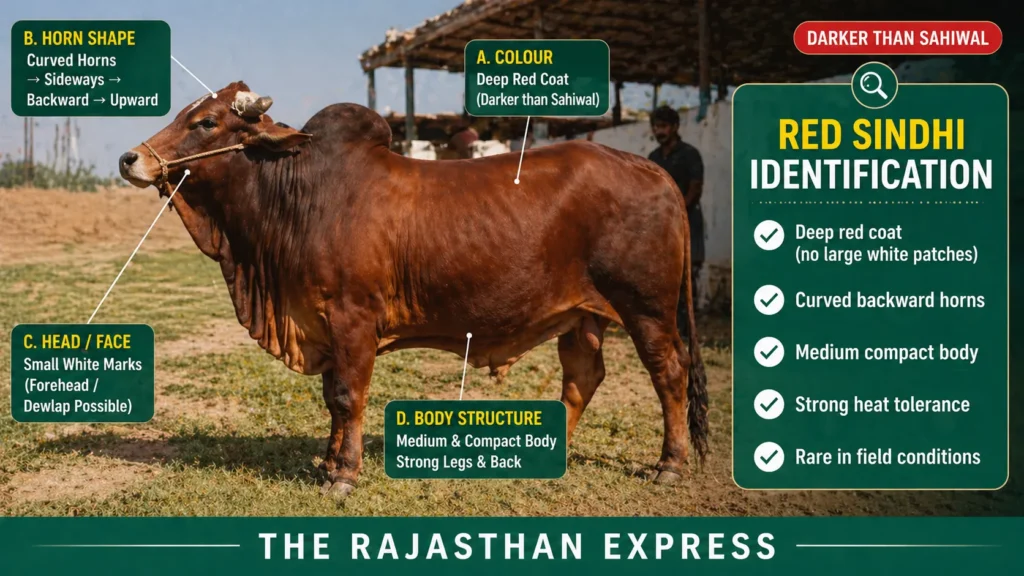
- The most intelligent cow breed is considered to be Red Sindhi. The Red Sindhi cow originated in Karachi, Hyderabad (Sindh), Pakistan. The Red Sindhi cow is also called Red Karachi.
- Among indigenous breeds, the highest disease resistance is found in the Tharparkar cow, which is found in the state of Rajasthan, India. The Tharparkar cow originated in the Tharparkar district of Sindh province in Pakistan and in Gudamalani, Barmer. It is also known as White Sindhi, Grey Sindhi, or Thari and Malani. This breed is named after the Thar Desert, which extends from Sindh to the Kutch district of Gujarat and to the Barmer, Jaisalmer, and Jodhpur districts of Rajasthan, India.
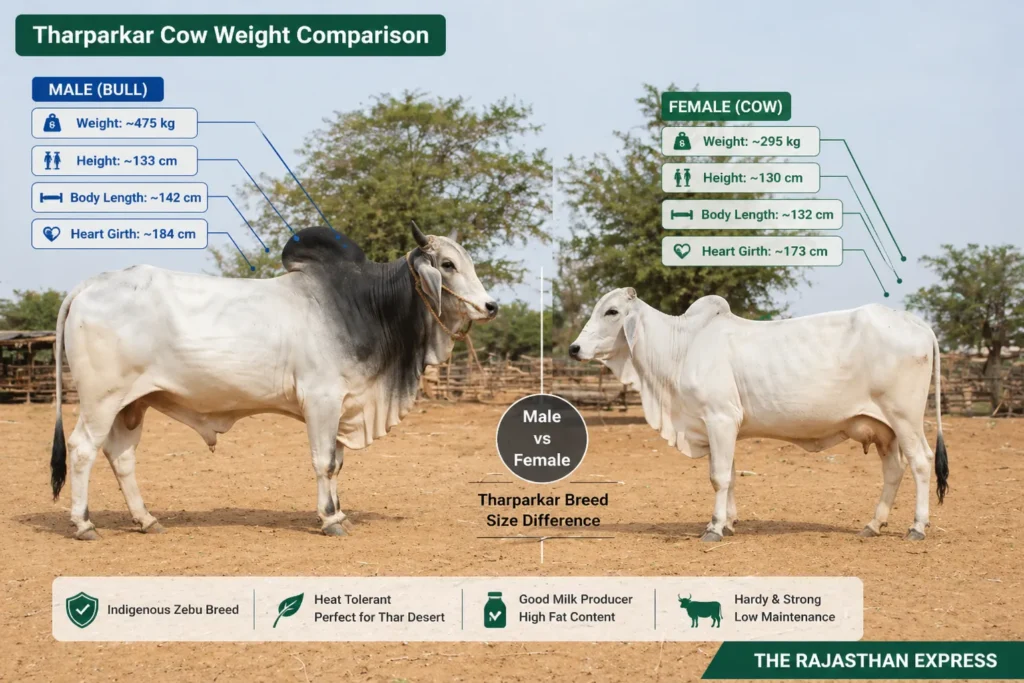
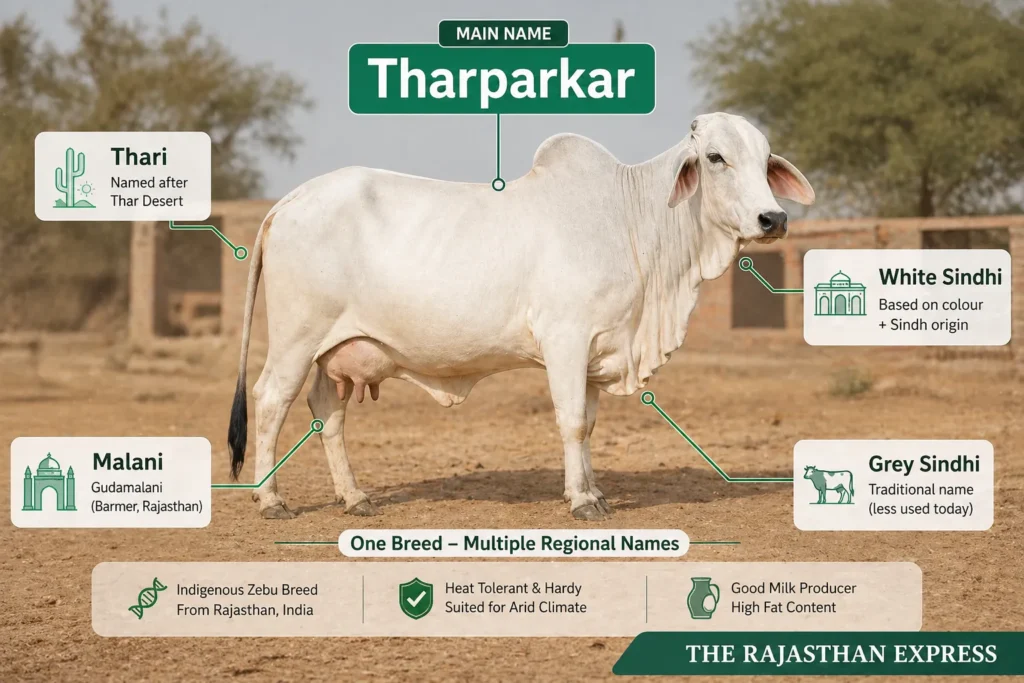
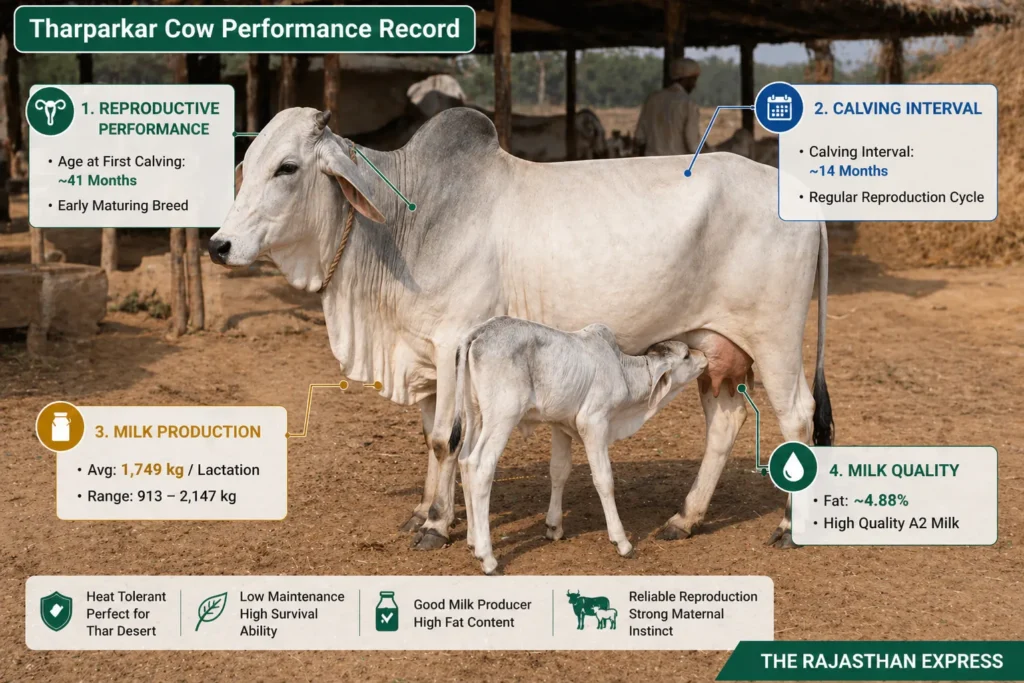
- The Tharparkar cow also has the ability to change colour.
- The highest milk‑producing cow in Rajasthan is Tharparkar.
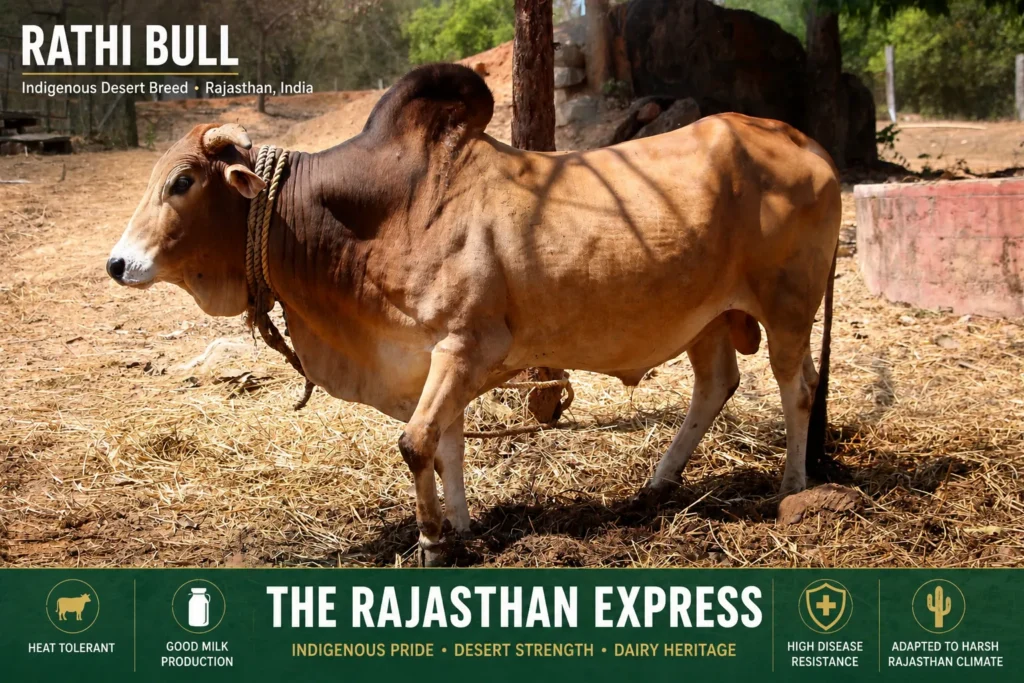
- The Rathi cow was created by mixing Red Sindhi, Sahiwal, Tharparkar, and Dhani breeds. The Rathi cow is also called Rajasthan’s Kamadhenu.
Where is Murrah buffalo found in India?
The native place of Murrah buffalo is the area of Haryana, Delhi, and Punjab. It is a high‑quality milch buffalo breed, recognised by its “jet black” colour and jalebi‑shaped curved horns. In fact, the word “Murrah” itself means “curved” or “twisted”, which matches the shape of its horns. Sometimes it is also called “Delhi buffalo”, because its origin centre is considered to be the area of Delhi and Haryana.
The breeding tract is spread over the southern part of Haryana, including Rohtak, Jind, Hisar, Jhajjar, Fatehabad, Gurugram, and Delhi.
Geographical location (latitude‑longitude):
- Latitude: Between 28°15′ to 30°00′ North
- Longitude: Between 75°45′ to 78°80′ East
Climate and soil: This area has light textured sandy or loamy soil. The climate is hot and dry. In summer, the temperature reaches 45°C, while in winter the minimum temperature goes near zero. Even in such harsh weather, this breed adapts well.
Buffalo breeds coming under the Murrah Group
The Murrah Group is a group of buffaloes from north‑western India (Haryana, Punjab, Delhi) that are famous worldwide for their excellent milk and strong body. This group mainly includes three breeds:
- Murrah Buffalo – This is the highest milk‑giving breed of this group. It is also the highest milk‑producing buffalo in the world. Therefore, farmers lovingly call it ‘Black Gold’.
- Nili Ravi Buffalo – This breed is found in the Punjab region (India‑Pakistan border). Among all breeds of this group, Nili Ravi milk has the lowest fat – about 4%. That means its milk is slightly thinner compared to other buffaloes.
- Gojri Buffalo – This breed is found in some areas of Punjab and Himachal Pradesh. Its colour is black and stature is small, but it easily adapts to harsh conditions.

Murrah Buffalo Other Names (Murra Bhains | Mura Bhes)
The Murrah buffalo is known by different names in different places. Murrah buffalo is also known as Delhi Buffalo, Kali, Kunni, and Khundi. These names are based either on its colour, shape, or the region where it is found:
| Murrah Buffalo – Other Names & Their Origin/Reason | |
| Other Name | Reason / Region |
|---|---|
| Delhi Buffalo | Because its origin and concentration are around Delhi and Haryana |
| Khundi / Kunni | Local rural names used in Haryana and Delhi |
| Kali | Due to its completely black body color |
| Kerbau Banleng | Name used in Sumatra Island, Indonesia |
| Kerbau Sapi / Karban Sapi | Names used in Malaysia |
| Murrah Buffalo Other Names (Murra Bhains | Mura Bhes) : The Rajasthan Express | |
💡 A special thing – Why is it called ‘Black Gold’?
The Murrah buffalo is called ‘Black Gold’ because:
- It is the highest milk‑giving buffalo in India (10‑25 litres per day).
- Its milk is thick and creamy, making ghee, Mozzarella cheese, and other dairy products very well.
- For a farmer, this buffalo is as precious as gold – it gives abundant earnings at low cost. Therefore, looking at its black colour, it has been given the title ‘Black Gold’.
River Buffalo vs Swamp Buffalo
The buffaloes found in India are mainly divided into two large groups: River Buffalo and Swamp Buffalo. These two are completely different from each other in appearance, temperament, habitat, and use. Let us understand the main differences between them in very simple language.
| Main Differences Between River Buffalo and Swamp Buffalo : The Rajasthan Express | ||
| Feature | River Buffalo | Swamp Buffalo |
|---|---|---|
| Chromosomes | 50 chromosomes | 48 chromosomes |
| Scientific name | Bubalus bubalis | Bubalus kerabau / Carabanesis (considered a different species) |
| Main use | Milk production (for milk) | Draught and meat production (farm work, load carrying, meat) |
| Body size | Heavy and strong body | Relatively smaller, strong build |
| Horns | Short and more tightly coiled | Large, heavy, and less coiled (semi‑circular, curving backward and upward) |
| Bathing habit | Prefer bathing in clean water (river, canal, pond) – this habit is called ‘wallowing’. They sit in water for hours, fully immersed. | Prefer bathing in dirty water/mud (swamps, muddy ponds). |
| Geographical location | India, West Asia, Mediterranean region. Almost all registered breeds of India belong to this group. | South‑East Asia and China. In India, only limited to Assam, Manipur, Meghalaya, Nagaland. |
| Major breeds in India | Murrah, Nili Ravi, Bhadawari, Mehsana, Surati, Jafarabadi, Nagpuri, Chhattisgarhi, Puranathadi, Chilka, Marathwadi, etc. | Only Luit is the only registered swamp breed. |
| Origin history | Believed to have been domesticated in the Indus‑Ganga valley of India. | Domesticated in China about 5000 years ago. |
| Crossbreeding | If these two are crossbred, the first generation (F1) produces offspring with 49 chromosomes, but such hybrids are often weak or infertile, meaning they cannot reproduce further. | |
| Main Differences Between River Buffalo and Swamp Buffalo : The Rajasthan Express | ||
Murrah Buffalo Identification (Murrah Buffalo Breed Characteristics)
Now let us understand each part in more depth:
1. Colour
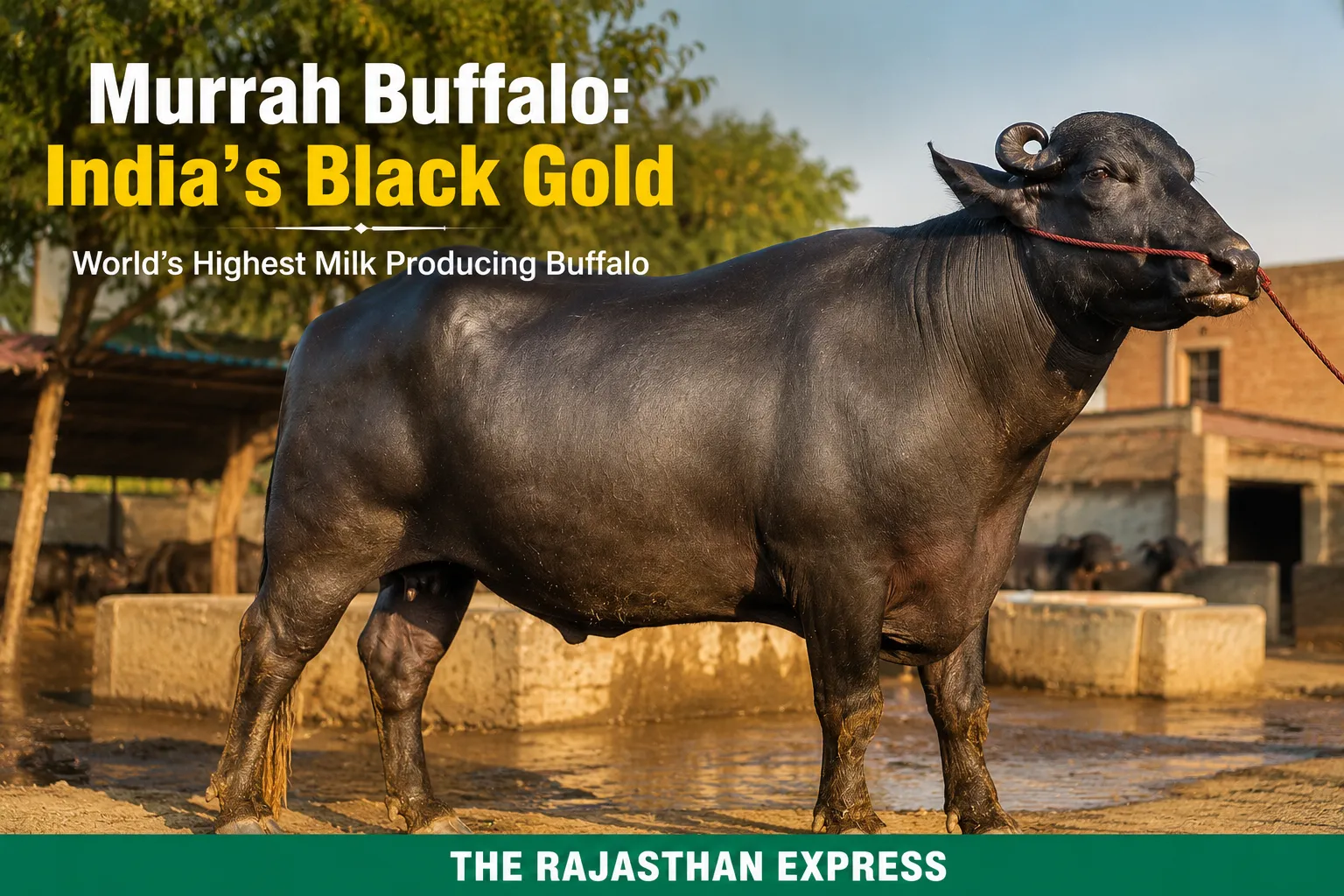
The colour of Murrah buffalo is completely ‘jet black’ – as black and shiny as coal. When sunlight falls, this black brightness is visible.
- Exception: An ideal Murrah buffalo should have no white spot anywhere on the body. Yes, sometimes there may be a light white mark on the tail switch or the edge of the udder, but in a good breed, even this is not present.
2. Horns
The horns of the Murrah buffalo are its most special identification:
- Number: 2 horns
- Shape: Short, flat, and very tightly curled
- Appearance: Jalebi‑like curved
- Direction: First the horns turn backward, then rise upward, and finally twist inward towards the head so much that they almost touch the neck.
- Naming: The word ‘Murrah’ itself means “curved” or “twisted”. Therefore, this breed got its name because of these unique horns.
- Length: Usually 15‑25 cm long.
- Texture: Horns are smooth and solid, not cracked.
3. Head
- Size: Compared to the body, the head is quite small, but wide and strong.
- Forehead: Quite wide and prominent. There may also be a slight dish‑like depression in the middle.
- Eyes – biggest identification:
- Eyes are large, black, very bright, and alert.
- Female’s eyes appear more prominent and active.
- Male’s eyes appear slightly shrunken.
- These eyes are so special that Murrah can be recognised in just one glance.
- Nose and mouth: Nostrils are large, may be pink or black. Mouth is wide.
- Difference between male and female: Female’s eyes are more prominent and active, while male’s eyes are slightly shrunken.
4. Ear
- Shape: Small and thin. Not large or hanging. They stick out straight on both sides of the head, sometimes slightly drooping. These ears are always alert, constantly moving to hear sounds all around. They are black, sometimes light pink on the inside.
5. Neck
- Female: Neck is long, thin, and well‑shaped. This allows her to graze and drink water easily.
- Male: Neck is very thick, heavy, and muscular. This shows his strength.
- Dewlap (skin under the neck): Sometimes there is a slightly loose part under the neck, but not much. Generally, dewlap is absent in buffaloes – dewlap is normally seen only in cows. Among all indigenous cow breeds, the most developed dewlap and navel flap is found in the Sahiwal cow.
6. Body
- Structure: Murrah’s body is heavy, strong, and cylindrical (cylinder‑like).
- Front‑back shape: It is wedge‑shaped – i.e., narrow in front (towards the head) and wide and deep at the back (towards the hind legs). This shape is a special characteristic of milch breeds.
- Back: Wide and completely straight, no depression in the middle.
- Hips: Very wide and rounded.
- Ribs: Rounded and well‑spaced, giving room to the lungs and heart.
- Rump (upper rear part): Almost flat or slightly sloping.
7. Tail
- Length: The tail is very long – so long that it hangs down below the knee (below the hock joint, almost to the fetlock joint). Many times it reaches the heel. It is thin at the top and gradually becomes thicker towards the bottom.
- Switch (end tuft): There is a dense tuft of hair at the end of the tail, which is often white in colour. This is a major identification of Murrah. In an ideal Murrah, this tuft should be completely black, but practically, a white tuft is considered normal. This tail helps in swatting flies and keeping the body clean.
8. Udder – most important organ
- Size: The udder is very large, fully developed, and tight. It extends from just behind the navel between the hind legs to the rear part. It is a pendulous udder. When filled with milk, it looks like a balloon or a swollen ball.
- Milk veins: Very prominent, thick, and clear veins are visible on the skin of the udder. These veins carry the blood that produces milk. The subcutaneous abdominal vein (milk vein) indicates the milk production quantity of a milch animal – the more swollen and developed it is, the more milk the animal produces.
- Four parts of the udder (Teats):
- Number: Four.
- Shape: Long, cylindrical, and straight.
- Position: Properly spaced from each other for easy milking.
- Fore teats: Slightly smaller than the hind ones.
- Hind teats: Slightly longer and wider.
- Colour: Udder and teat tip colour is generally black, sometimes pink‑black mixed.
9. Skin and Hooves
- Skin: Very soft, smooth, and thin. So thin that veins are sometimes clearly visible.
- Hair: Very little and fine hair on the body. Most parts are almost hairless.
- Colour: Skin colour is also black, sometimes there may be pinkness near the nose or eyelids.
- Hooves: Hard and black.
For what purpose is the Murrah breed mainly reared in India? (Main Purpose of Murrah Buffalo in India)
The Murrah breed is mainly reared in India for milk production. It is considered the highest milk‑giving buffalo breed not only in India but in the entire world. Because of this, it is called ‘Black Gold’ worldwide – because its milk is as precious as black gold. Additionally, Murrah bulls are prepared for semen collection, so that the semen can be used for selective breeding of other buffaloes across the country. In some places, it is also used for its highly nutritious meat, but the main purpose is milk.
Why is it called ‘Black Gold’?
- The Murrah buffalo is black in colour, and its milk is obtained in greater quantity than any other buffalo breed in the world. Also, its milk has very high fat and SNF (Solids‑Not‑Fat), making it the most nutritious and energy‑rich milk. Because it is so precious and beneficial, it is called ‘Black Gold’.
Speciality of the milk:
Murrah buffalo milk has about twice the fat (7% to 8%) compared to cow’s milk and more than 9% SNF (which contains protein, minerals, etc.). That is why yoghurt, paneer, khoya, ghee, and butter made from it are of very high quality and delicious.
| Murrah Buffalo Milk Per Day & Lactation Yield : The Rajasthan Express | ||
| Production Level | In Kilograms (kg) | In Litres (≈) |
|---|---|---|
| Average production | 1752 kg | ≈ 1701 litres |
| Minimum production | 1003 kg | ≈ 974 litres |
| Maximum production | 2057 kg | ≈ 1997 litres |
| Murrah Buffalo Milk Per Day & Lactation Yield : The Rajasthan Express | ||
*(Calculation method: Litres = Kilograms ÷ 1.03, because milk density is approx 1.03 kg/litre)*
Murrah Buffalo Milk Per Day
- Average daily production: 8-10 liters per day (Highest Milk : 10-25 Litters Up To )
- High-yielding animals can produce even more under superior management conditions.
Murrah Buffalo Milk (Murrah Buffalo Milk Fat Percentage)
- Average 7.3% (between approx 7% to 8%). Minimum 6.9% and maximum up to 8.3%. This makes the milk very thick, creamy, and nutritious.
Biggest peculiarity of this breed:
- The Murrah breed has now spread to almost every corner of the world. It has been exported to many developing countries (such as Bangladesh, Sri Lanka, Philippines, Vietnam, China, Malaysia, Brazil, Colombia, etc.). There, it is either reared in pure form, or used to improve local buffalo breeds. In other words, the Murrah breed is used worldwide for ‘grading up’ local buffaloes. That is why it is the most valuable buffalo breed globally.
Murrah Buffalo Male vs Female Weight & Body Measurements
Here are the main measurements of Murrah male and female. You can see that the Murrah male is larger and heavier than the female in every respect.
| Murrah Buffalo Male vs Female Weight & Body Measurements : The Rajasthan Express | ||
| Measurement | Male (Bull) | Female (Bhains) |
|---|---|---|
| Height at shoulder (Avg cm) | 142 cm | 133 cm |
| Body length (Avg cm) | 150 cm | 148 cm |
| Chest/Heart girth (Avg cm) | 220 cm | 202 cm |
| Adult weight (Avg kg) | 567 kg | 516 kg |
| Birth weight (Avg kg) | 32 kg | 30 kg |
| Murrah Buffalo Male vs Female Weight & Body Measurements : The Rajasthan Express | ||
The Murrah male (bull) is about 142 cm tall and weighs about 567 kg. Meanwhile, the female is 133 cm tall and weighs about 516 kg. The average birth weight of both is 31 kg (male 32, female 30). The body structure of Murrah buffalo is quite stocky and strong. Its biggest identification is its coiled (curly) horns and long, slender head.
Murrah Buffalo Management in India (Murra Bhains Management System)– How is Murrah buffalo reared in India?
The Murrah buffalo is kept in a semi-intensive system, meaning they are partially left open, but most of the time they remain stationary under a roof. That is, they stay tied in one place and are fed there.
What is the housing like? (Housing Management of Murrah Buffalo Breed)
- Generally, the Murrah buffalo is tied to a tree or pole in the open. But when the weather is very bad (extreme heat, rain, or cold), a roofed shelter (shed) is built for them. These sheds are mostly made of pucca walls and raw floors. There is sufficient space (ventilation) in the walls for air to pass through.
What is fed (diet)? Murrah Buffalo Feeding Management (Murrah Buffalo Milk Per Day Nutrition)
Murrah buffalo is given two types of fodder – green fodder (such as grass, berseem, oats, mustard) and concentrate feed (cake, grain, oil meal). Changes are made in the fodder according to the season:
- Generally, in animals, the diet consists of 65% fodder and 35% grain to maintain the Volatile Fatty Acid Ratio Balance in ruminant animals.
- Rabi season (winter): Green fodder of berseem, oats, mustard.
- Kharif season (rainy): Green fodder of jowar, bajra, cluster-bean (guar).
Special precautions:
- Pesticides are sprayed in the housing from time to time to prevent flies, mosquitoes, and diseases.
- The Central Institute for Research on Buffaloes (CIRB) organizes programmes and fairs every year for the conservation of breeds like Murrah and Nili Ravi.
Note: For ruminant animals (like cows and buffaloes), the ideal ratio in the total diet is: ⅔ fodder : ⅓ grain (65% fodder, 35% grain). If this balance is disturbed (e.g., too much fodder and too little grain), the possibility of ketosis increases.
➤ The reason is imbalance of VFAs (Volatile Fatty Acids):
When this ratio is balanced, the normal ratio of VFAs produced in the rumen is:
🔸 Acetate : Propionate : Butyrate = 7 : 2 : 1
This means: Ketogenic (Acetate + Butyrate) : Glucogenic (Propionate) = 4 : 1
Explanation:
- Propionate forms glucose, so it is called Glucogenic VFA.
- Whereas Acetate and Butyrate form ketone bodies, so they are called Ketogenic VFA.
- If the glucose‑forming Propionate decreases and ketogenic fatty acids (Acetate, Butyrate) increase, the amount of ketone bodies in the blood starts increasing and ketosis can occur.
📌 In summary:
If the amount of fodder in the total diet given to the cow is very high and the amount of grain is low (i.e., the ⅔:⅓ ratio is disturbed), then due to deficiency of Propionate and excess of Ketone bodies, the risk of ketosis increases greatly.
Main Features of Metabolic Disease in Dairy Cattle
- These diseases are Non-Contagious — do not spread from one animal to another.
- In most cases, these diseases are related to the production system, hence they are also called Production Diseases.
- Especially pregnant and milk-producing animals (like cow and buffalo) are more susceptible to these diseases.
- The possibility of metabolic diseases increases with increasing milk production.
- In native cows (Zebu cattle), the highest possibility of metabolic disease is found in the third calving.
- In exotic cows (Exotic Cattle), this possibility is highest in the fifth calving.
- In buffaloes, the possibility of metabolic diseases is mostly in the fourth calving.
- The order of possibility of metabolic diseases is as follows:
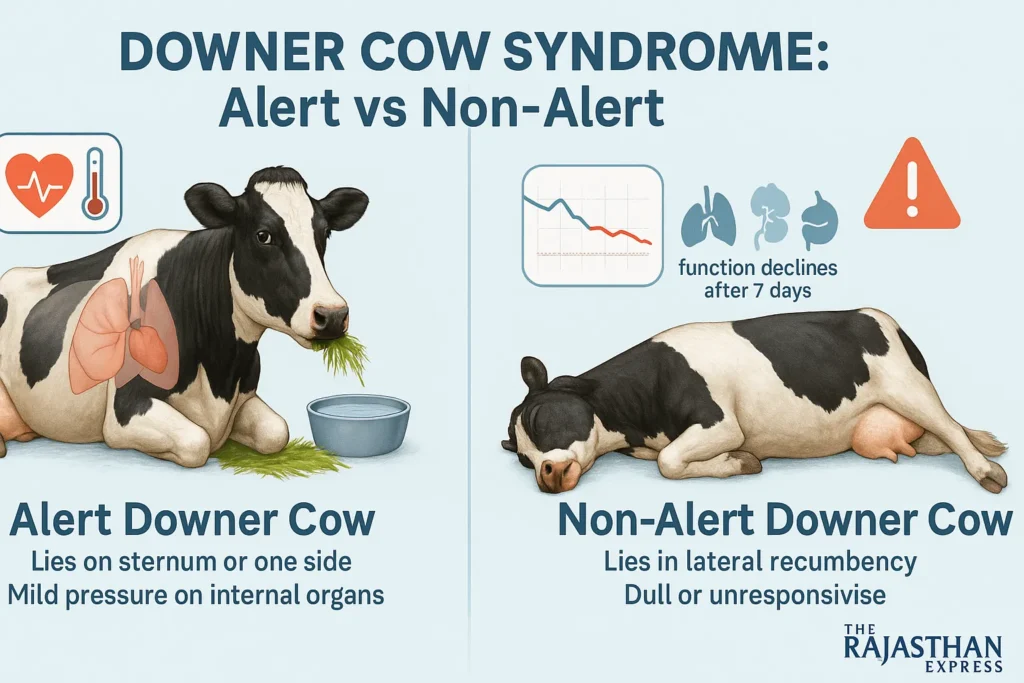
Exotic Cow > Native Cow > Buffalo - The possibility of Downer Cow Syndrome, Ketosis, Postpartum Haemoglobinuria, and Mastitis disease is higher in exotic cows, especially in the Holstein-Friesian breed.
- These same diseases are found mostly in the Sahiwal breed in native cows.
- The possibility of Milk Fever is highest in Jersey cows.
We have also explained these diseases in detail.
Explore the key metabolic diseases in cattle with quick links to each section:
- Milk Fever – Calcium deficiency immediately after calving
- Downer Cow Syndrome – Complications from prolonged lying after milk fever
- Ketosis In Cattle – Energy deficiency and ketone accumulation
- Postparturient Haemoglobinuria – Red blood cell destruction due to phosphorus deficiency
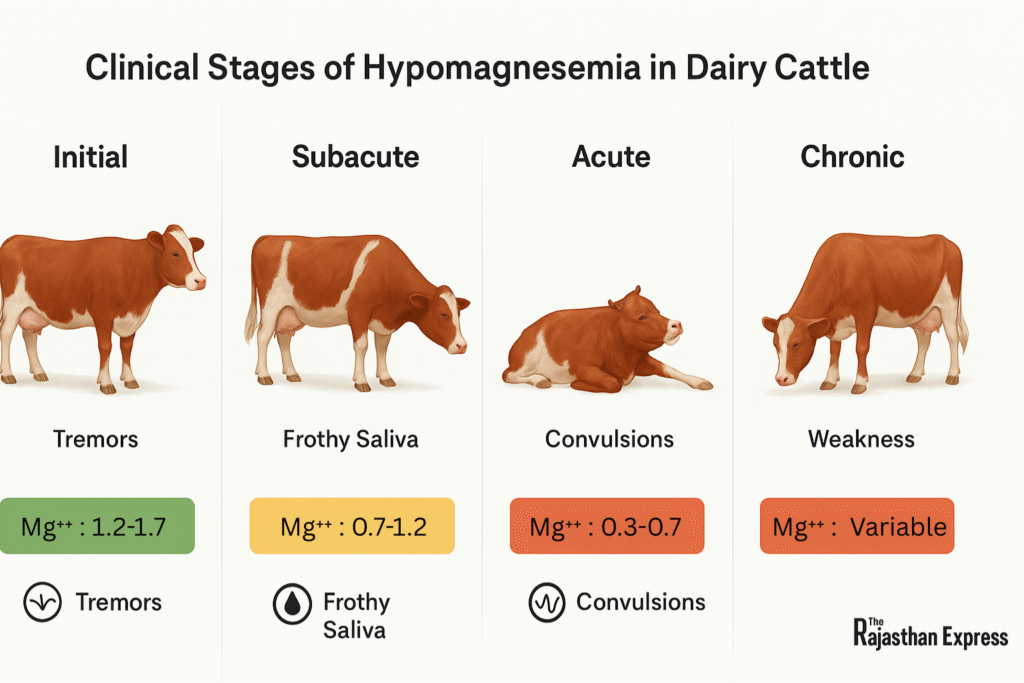
- Grass Tetany – Muscle cramps from magnesium deficiency
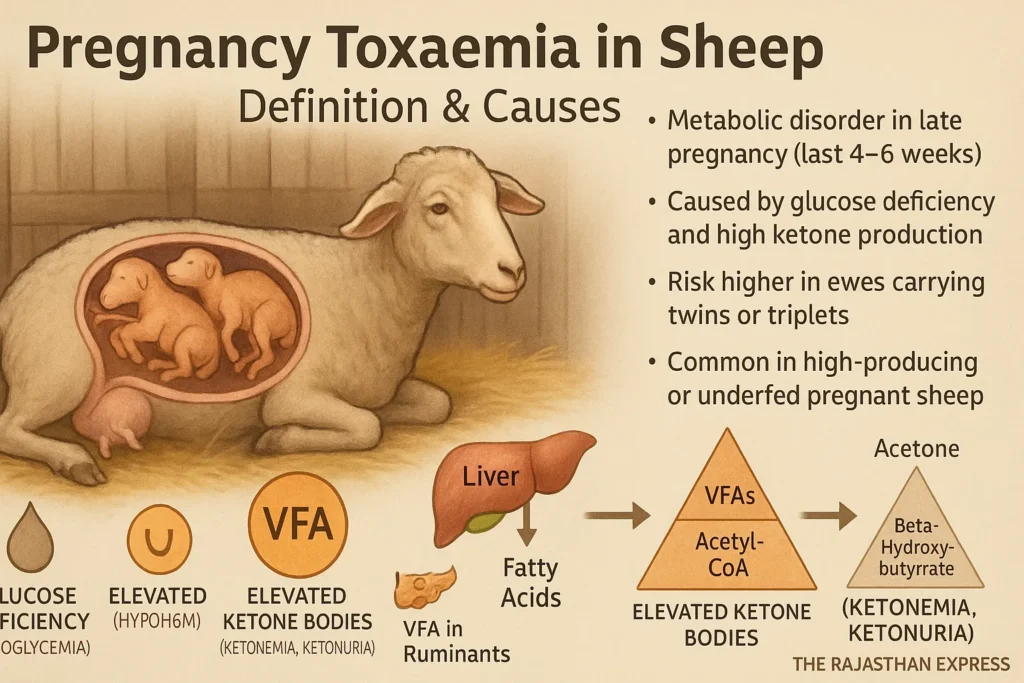
- Pregnancy Toxemia – Energy deficiency in late pregnancy
- Neonatal Hypoglycemia in Calves : Neonatal disorder marked by abnormally low blood glucose levels (<79 mg/dL or 2 mmol/L)

Murrah Buffalo Performance Record (Murrah Buffalo Milk Per Day & Milk Fat Percentage)
Murrah buffalo is considered one of the best milk‑giving buffalo breeds in the world. Its native place is Haryana (Bhiwani, Rohtak, Hisar), but today it has spread throughout India and many countries of the world. The data given below are based on scientific studies of government institutions (mostly NDRI, NBAGR, NDDB) and records of good dairy farms. These show how advanced this breed is in milk production, fertility, and milk quality.
1. Age at First Parturition – age at first calving
- Average: 43.4 months (approx 3 years 7 months)
- Minimum: 39.9 months (approx 3 years 4 months)
- Maximum: 54.2 months (approx 4 years 6 months)
Murrah buffalo gives her first calf at an average age of 3 years 7 months. If she gets better care and nutrition, she can calve at 3 years 4 months. But sometimes due to genetic or management reasons, it may take up to 4 years 6 months. This period is considered quite normal and good for buffaloes.
2. Parturition Interval – time between two calves
- Average: 14.9 months (approx 15 months)
- Minimum: 14.1 months (approx 14 months)
- Maximum: 19.9 months (approx 20 months)
Murrah buffalo gives one calf on average every 15 months. For an ideal buffalo, an interval of 13 to 15 months is considered very good. That means she can give one calf almost every year or year and a quarter. This is a very good reproductive level, because the sooner the buffalo calves, the more milk and calves will benefit the farmer. Due to deficiencies or diseases, this interval can sometimes extend to 20 months.
3. Milk Yield per Lactation – total milk after one calving
- Average: 1752 kg
- Minimum: 1003 kg
- Maximum: 2057 kg
Converted to litres (since milk is usually understood in litres):
- 1 kg milk ≈ 0.97 litres (approximately 1 litre).
- Average approx 1700 to 1750 litres per lactation.
- In good farms, it can reach 2057 kg (approx 2000 litres).
- A weak or poorly cared for buffalo gives only 1000 kg (approx 970 litres).
Murrah Buffalo Milk Per Day
- If we assume the lactation length is about 300 days (10 months), then the Murrah buffalo gives on average 5.8 to 6.8 litres per day. A very good buffalo can give up to 7‑8 litres per day. Note that Murrah buffalo milk is thick and creamy, so even less milk gives more cream.
This data is from official government websites, not from a single Murrah buffalo.But with good care and good nutrition, a Murrah buffalo can easily produce 10‑12 litres of milk per day.
4. Murrah Buffalo Milk Fat Percentage – creaminess and thickness of milk
- Average: 7.3%
- Minimum: 6.9%
- Maximum: 8.3%
This is the biggest speciality of Murrah buffalo. Cow milk usually has 3.5% to 5% fat, whereas Murrah buffalo milk is very thick and creamy with 7.3% fat. That means ghee, butter, yoghurt, khoya, and sweets made from this milk are better and produced in greater quantity. Sometimes this fat reaches up to 8.3%, which is amazing.
| Murrah Buffalo Performance Record (Murrah Buffalo Milk Per Day & Milk Fat Percentage) : The Rajasthan Express | |||
| Parameter | Average | Minimum | Maximum |
|---|---|---|---|
| Age at first calving (months) | 43.4 (3y 7m) | 39.9 (3y 4m) | 54.2 (4y 6m) |
| Calving interval (months) | 14.9 (~15m) | 14.1 (14m) | 19.9 (20m) |
| Milk yield per lactation (kg) | 1752 kg (~1700 L) | 1003 kg (~970 L) | 2057 kg (~2000 L) |
| Milk fat (%) | 7.3% | 6.9% | 8.3% |
| Murrah Buffalo Performance Record (Murrah Buffalo Milk Per Day & Milk Fat Percentage) : The Rajasthan Express | |||
These figures are averages from scientific studies and good dairy farms. In real life, these numbers can vary according to the buffalo’s care, fodder quality, weather, health, and management. But one thing is certain – Murrah buffalo is one of the most valuable buffalo breeds not only in India but in the entire world, due to its amazing milk production, short calving interval, and above all, milk with over 7% fat.
Murrah Buffalo Price in India (Murrah Buffalo Price 2026)
What factors does the price of Murrah buffalo depend on?
The price of Murrah buffalo is not a single number; it depends on many factors. In the market, an ordinary milch buffalo can be found from ₹50,000 to lakhs, but when it comes to super high quality and record‑breaking breeds, the price reaches crores. For example – Shahenshah: ₹25 crore. Let us understand all the things that determine its price.
1. Milk production capacity – the biggest measure
Milk is the identity of Murrah buffalo and the biggest reason for its price.
- Daily milk: A normal Murrah buffalo gives 8 to 15 litres of milk per day. But with good breed and proper care, it can give 18 to 20 litres per day. Some excellent Murrah buffaloes hold records of up to 25 litres.
- Milk fat (%): Murrah buffalo milk has on average 7‑8% fat, making it extremely thick and creamy. High‑fat milk is best for ghee and sweets, which increases its price further.
- Effect on price: Milk quantity and quality directly determine the price.
- Normal milk (8‑12 litres/day): Price around ₹50,000 – ₹80,000.
- Good milk (15‑18 litres/day): Price can go from ₹1 lakh to ₹2 lakh.
- Excellent milk (20‑25 litres/day): These buffaloes are very expensive, with prices from ₹3 lakh to ₹5 lakh or even higher.
💰 Effect on price – How quickly does your investment return?
Now the most interesting part: the math. Suppose you buy a high‑producing Murrah buffalo.
Today’s milk price (as of 2026):
- Milk price approx ₹70 per litre (it can be between ₹60‑80 depending on fat; we assume average ₹70).
Total milk value (in one lactation):
- If the buffalo gives 1800 kg milk: 1800 kg × ₹70 = ₹1,26,000 (total earnings in one lactation)
- If the buffalo gives 2000 kg milk: 2000 kg × ₹70 = ₹1,40,000 (total earnings in one lactation)
That is, in just one lactation (about 10 months), you can sell milk worth ₹1.25 lakh to ₹1.40 lakh.
Now compare with the price of the buffalo:
| Buffalo Category | Estimated Price (₹) | Milk earnings in one lactation (₹) | How many lactations to recover cost? |
|---|---|---|---|
| Normal buffalo (8–12 litres/day) | ₹60,000 | ₹80,000 – ₹1,00,000 | ✅ Cost recovered in 1 lactation itself |
| Good buffalo (15–18 litres/day) | ₹1,20,000 | ₹1,25,000 – ₹1,50,000 | ✅ Cost almost recovered in 1 lactation |
| Excellent buffalo (20+ litres/day) | ₹2,50,000 | ₹1,80,000 – ₹2,20,000 | 🔄 Cost recovered in 1.5 lactations (approx 15 months) |
| Murrah Buffalo Price Recovery Analysis – Murrah Buffalo Price in India (Murrah Buffalo Price 2026) : The Rajasthan Express | |||
Main point:
- A normal Murrah buffalo (₹60,000) returns its entire price as milk in the very first lactation. After that, its milk and future offspring (calf/heifer) will be pure profit.
- A good Murrah buffalo (₹1.2 lakh) also recovers almost its full price in the first lactation. Net profit starts from the second lactation.
- A very expensive excellent buffalo (₹2.5 lakh) may take one and a half or two lactations to recover its cost, but after that it will give even more milk for a long time, and its calves will also be very valuable, and there may be high demand for its semen.
Important: This calculation is only for milk sales. It does not deduct the maintenance cost (fodder, water, medicine, labour). That cost can be about 30‑40%. Still, a net profit of ₹5,000‑8,000 per month (on average) is easily achieved. That is why Murrah buffalo is called ‘Black Gold’ – it returns your investment very quickly.
2. Breed purity – the power of documentation
The real identity of Murrah buffalo is its pure breed.
- Impure or mixed breed: Their price is much lower, but they are weaker in milk and size.
- Certified (Registered) pure breed: Buffaloes that have a certificate from government institutions (like NBAGR) have a price that increases significantly per litre of milk.
- Effect on price: A pure breed Murrah buffalo sells from ₹80,000 upwards to ₹3 lakh or more. Buffaloes that win competitions and are awarded have even higher prices.
3. Age of the buffalo – the market value of youth
When buying a milk machine, its remaining age and productivity are most important.
- Heifer (1‑2.5 years): Has not started giving milk yet. Its price is low (approx ₹30,000 – ₹60,000) because future milk production is uncertain.
- Young milch buffalo (3‑6 years): After the first or second calving, this buffalo sells at the highest price. It is in its peak production period and can give good milk for at least 5‑6 more years. This buffalo can sell from ₹80,000 to ₹2 lakh.
- Old buffalo (above 8‑10 years): Its price drops sharply and it is often sold at the price of its meat (beef).
- Note: Among indigenous cows (Zebu cattle), the highest milk production occurs in the third lactation. Among exotic cows, the highest milk production occurs in the fifth lactation. Among buffaloes, the highest milk production occurs in the fourth lactation.
4. Pregnant Murrah Buffalo Price– two for the price of one
Buying a pregnant buffalo is a profitable deal. In just a few months, you get a calf (or heifer).
- Effect on price: A pregnant Murrah buffalo costs ₹20,000 to ₹40,000 more than a normal buffalo.
- In the market, a 9‑month pregnant Murrah buffalo can sell for ₹1,05,000 (14 litres milk capacity) or ₹1,20,000 (15 litres milk capacity).
- A pregnant buffalo with high milk capacity (15‑20 litres) is even more expensive.
5. Pedigree – the dominance of an aristocratic breed
When a buffalo is ‘aristocratic’, i.e., its parents, grandparents, all have been record‑breaking producers, then it has its own unique value.
- Effect on price: A buffalo with recorded pedigree can sell for several times the price of a normal buffalo. Its semen also sells very expensively. This is why the prices of some breeds go into crores.
6. Health and vaccination – disease‑free guarantee
A completely healthy and vaccinated buffalo (protected against FMD, HS, Brucellosis, etc.) costs 10‑15% more than an unvaccinated buffalo. This is proof that the buffalo is free from diseases and the risk of it falling sick is very low.
7. Place of purchase and colour – effect of region and appearance
- Region: The native area of Murrah buffalo is Haryana (Rohtak, Hisar, Karnal, Jind). Here it is cheapest and most easily available. As you go to distant states (Punjab, Uttar Pradesh, Madhya Pradesh, Delhi‑NCR), the price increases by 20‑40% due to transport and middlemen. A buffalo costing ₹1 lakh in Haryana can become over ₹1.5 lakh by the time it reaches Delhi or Mumbai.
- Colour and appearance: Murrah buffalo’s colour is completely black / jet black. A buffalo with light brown or white spots is not considered ‘pure Murrah’ and its price is lower. Spotted ones are often a mix of Nili Ravi breed, because the Nili Ravi breed has about five white spots on its body. Heaviness of body, attractive structure of head and neck also increase the price.
| Category | Estimated Price (₹) |
|---|---|
| Heifer / young buffalo (not yet started milking) | 25,000 – 50,000 |
| Ordinary Murrah buffalo (8‑12 litres/day) | 50,000 – 90,000 |
| Good milch Murrah buffalo (12‑16 litres/day) | 90,000 – 1,20,000 |
| High‑yielding Murrah buffalo (18‑22 litres/day) | 1,50,000 – 3,00,000 |
| Complete record buffalo (pedigree, vaccination, milk record, breeding history) + high milk, champion breed + 20+ litres milk | 5,00,000 – 25,00,000+ |
| Murrah Buffalo Price in India (Murrah Buffalo Price 2026) : The Rajasthan Express | |
Note: Apart from milk, the price of the most expensive buffaloes (like Shahenshah, Anmol) goes into crores because of their semen, which is used to improve other buffaloes through artificial insemination (AI).
Top 10 Most Expensive Murrah Buffaloes in India | Shahenshah ₹25 Crore & Anmol ₹23 Crore
Murrah buffaloes really sell for crores of rupees. Here is all the information about these superstar buffaloes:
| Top 10 Most Expensive Murrah Buffaloes in India | Shahenshah ₹25 Crore & Anmol ₹23 Crore | |||
| S.No. | Buffalo Name | Estimated Price | Reason for Fame and Special Things |
|---|---|---|---|
| 1 | Shahenshah | ₹25 crore | World’s most expensive bull buffalo. About 15 feet long and over 6 feet tall. Its diet is also very special. |
| 2 | Anmol | ₹23 crore | Superstar of Pushkar fair. Weighing 1,500 kg, this bull buffalo earns about ₹5 lakh per month from its semen. Its price equals two Rolls-Royce cars. |
| 3 | Bheem | ₹24 crore | Giant bull buffalo, 1,500 kg weight. An Afghan sheikh wanted to buy it for ₹24 crore, but the owner refused. |
| 4 | Sultan | ₹21 crore | Unique lifestyle: this buffalo used to drink different brands of Scotch whisky daily and was like family to its owner. |
| 5 | Kuber | ₹21 crore | Awarded star: won the title of ‘World’s Best Bull Buffalo’ at Pushkar fair. One dose of its semen sells for ₹500. |
| 6 | Yuvraj | ₹9.25 crore | Record-breaking semen: this 1,400 kg bull buffalo fathered over 1.5 lakh calves through its semen. |
| 7 | Vidhayak | ₹8 crore | Bred by a Padma Shri farmer; its semen sale earns ₹50-60 lakh annually. |
| 8 | Balveer | ₹1 crore | Young star (Pushkar fair 2025): only 35 months old, 800 kg weight, famous for its shiny physique. |
| 9 | Bulbul | ₹10 lakh | Possessor of beauty: 800 kg weight, famous for its beauty at Pushkar fair. |
| 10 | Yuvraj (Junior) | ₹35 lakh | Second ‘Yuvraj’ of Pushkar fair 2025, with bids up to ₹25 lakh already placed. |
| The Rajasthan Express : Most Expensive Murrah Buffaloes in India | |||
🤔 Identification of breed purity (Murrah Buffalo Breed Identification (Murra Bhains Identification)
Many people cannot differentiate between Murrah and Jafarabadi or Nili Ravi buffaloes. Here are some easy identifications:
- Colour: Completely black or jet black. Lightness or white marks are not present in pure Murrah. White spots are seen in the Nili Ravi breed.
- Horns: Short, flat, turned inward and wrapped backward like a snake’s hood. Murrah buffalo horns are jalebi‑like.
- Body and head: Body is heavy and double‑double built. Head is large and protruding forward (bony). Eyes should be black and bright.
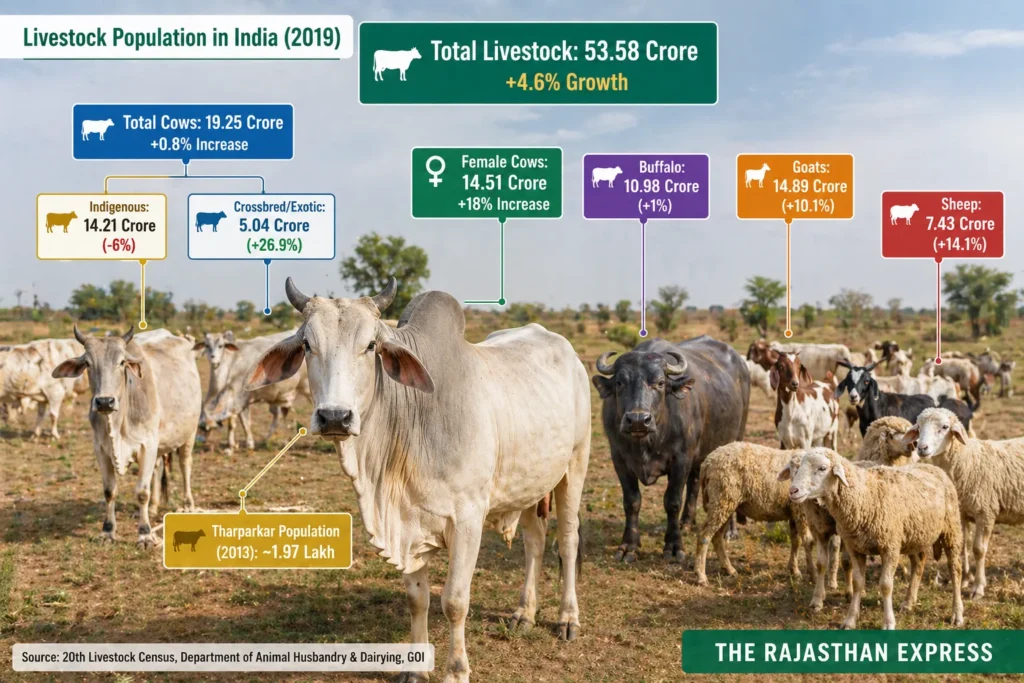
Livestock Population in India (20th Livestock Census 2019)
| Livestock Population in India (20th Livestock Census, 2019) | ||
| Particulars | 20th Livestock Census (2019) figure | Change from previous census (2012) |
|---|---|---|
| Total livestock | 53.58 crore (535.78 million) | +4.6% (increase) |
| Total cows (all types) | 19.25 crore (192.49 million) | +0.8% (increase) |
| Indigenous/unclassified cows | 14.21 crore (142.11 million) | -6% (decline) |
| Exotic/crossbred cows | 5.04 crore (50.42 million) | +26.9% (remarkable increase) |
| Female cows (Cows) | 14.51 crore (145.12 million) | +18.0% (much higher than previous census) |
| Buffaloes | 10.98 crore (109.85 million) | +1.0% |
| Goats | 14.89 crore (148.88 million) | +10.1% |
| Sheep | 7.43 crore (74.26 million) | +14.1% |
| The Rajasthan Express : Livestock Census 2019 | ||
Important point:
- While the total cow population has increased marginally by 0.8%, the population of female cows has seen a large increase of 18.0%. In contrast, the total population of indigenous cows (both male and female) has declined by 6%. These figures indicate that attention to milk production has increased, due to which the number of female animals has increased.
Murrah Buffalo Population in India
- Murrah buffalo is called ‘India’s Black Gold’, and this name fits perfectly on its huge population as well. This breed is known not only for its milk and ghee but also for its rapidly growing numbers. Let us understand how many Murrah buffaloes there are in India and how this number has grown.
The oldest and most accurate figure – Breed‑wise Survey of 2013
- The Government of India’s Department of Animal Husbandry conducted a separate count of every breed of cow and buffalo in the country in 2013. In that survey, the total number of Murrah buffaloes came out to be 1,16,86,198 (1 crore 16 lakh 86 thousand 198). In simple language, approximately 1.17 crore Murrah buffaloes were present in India at that time. This is the most accurate and official figure to date.
Rapidly growing population – Estimate of 2019
After that, the 20th Livestock Census was conducted in 2019. It found that the total number of buffaloes in the country had increased to approximately 11 crore (10,98,50,000). According to a separate breed‑wise report in this census, the share of Murrah breed among all buffaloes in the country was 42.8%. That is, by 2019, the total number of Murrah buffaloes had reached approximately 4.70 crore (approx 4.7 crore). You can see that in just 6 years (2013 to 2019), the number of Murrah buffaloes increased from 1.17 crore to 4.70 crore – i.e., almost four times more. This shows how quickly people adopted this breed.
Understand in simple words:
- 2013: Approximately 1.17 crore Murrah buffaloes (most accurate government figure)
- 2019: Approximately 4.70 crore Murrah buffaloes (based on 20th Livestock Census)
Where is this population found
- The original home of Murrah buffalo is Haryana – especially Hisar, Bhiwani, Rohtak, Jhajjar, and Sirsa districts. But today it has spread throughout India. Punjab, Delhi, western Uttar Pradesh, Sri Ganganagar in Rajasthan, Madhya Pradesh, Maharashtra, and Gujarat – Murrah buffaloes can be found everywhere. Not only that, Murrah has also been exported to countries like Brazil, China, Vietnam, Colombia, where it improves local buffalo breeds.
Discover why Murrah buffalo is called Black Gold. Get 2026 price updates, milk per day (10-25L), 7.3% fat, breed identification, and most expensive Murrah bulls in India. Check Murrah buffalo price in India – ₹50k to ₹3L for high-yield. 20 litre Murrah buffalo price up to ₹25L. Where to buy pure breed? Identify pure Murrah buffalo: jet black colour, jalebi-like curved horns, bright eyes. See mura bhes photo & male (bull) features explained.
The Rajasthan Express: Your Trusted Source for Animal Care and Veterinary Science.
People Also Ask
What is the average milk yield of a Murrah buffalo per day?
What is the price of a Murrah buffalo in India?
- Heifer (young, not milking): ₹25,000 – ₹50,000
- Ordinary (8-12 litres/day): ₹50,000 – ₹90,000
- Good milch (12-16 litres/day): ₹90,000 – ₹1,20,000
- High-yielding (18-22 litres/day): ₹1,50,000 – ₹3,00,000
- Champion record holder (20+ litres/day with pedigree): ₹5,00,000 – ₹25,00,000+
What is the fat percentage of Murrah buffalo milk?
What is the price of a Murrah buffalo giving 20 litres per day?
Where can I buy a Murrah buffalo for sale?
- Government livestock farms in Haryana (Hisar, Rohtak, Karnal, Jind, Bhiwani, Jhajjar, Sirsa)
- Central Institute for Research on Buffaloes (CIRB) – organizes fairs and conservation programmes
- Registered private breeders in Punjab, Rajasthan, Uttar Pradesh, Madhya Pradesh, Maharashtra, and Gujarat
- Pushkar fair (Rajasthan) – known for champion Murrah buffalo auctions
What is the difference between Murrah and Nili Ravi buffalo?
Nili Ravi buffalo: Black body with about five white spots (typically on forehead, tail switch, and legs), horns are less coiled, milk fat is much lower (~4%), native to Punjab region (India-Pakistan border). Nili Ravi is also part of the Murrah group but has thinner milk.
What are the physical characteristics of a pure Murrah buffalo?
- Colour: Jet black, completely black – no white spots anywhere on the body
- Horns: Short, flat, very tightly curled (jalebi‑like), turning backward and inward almost touching the neck
- Head: Small compared to body but wide and prominent forehead; females have large, bright, prominent eyes; males have slightly shrunken eyes
- Body: Heavy, strong, wedge‑shaped (narrow front, wide deep back)
- Tail: Very long, hanging below the knee, often with a white switch (though pure ideal is black)
- Udder: Very large, pendulous, with prominent milk veins
How many Murrah buffaloes are there in India?
- 2013 (Breed‑wise Survey): Approximately 1.17 crore (11.7 million) pure Murrah buffaloes
- 2019 (20th Livestock Census): Murrah share was 42.8% of total buffalo population (~11 crore buffaloes) → approximately 4.70 crore (47 million) Murrah buffaloes
What is the lifespan and calving interval of Murrah buffalo?
Age at first calving: Average 43.4 months (3 years 7 months) – range 39.9 to 54.2 months.
A healthy Murrah buffalo can produce milk for 8‑10 years or more. The highest milk production in buffaloes occurs in the fourth lactation.
Why is Murrah buffalo called Black Gold?
- It is the highest milk‑giving buffalo in India and the world (10-25 litres per day)
- Its milk has 7-8% fat – very thick, creamy, and perfect for ghee, cheese, and sweets
- It gives very quick return on investment – a ₹60,000 buffalo can recover its full price in just one lactation (10 months) from milk sales alone
- Its jet black colour resembles the colour of gold in a different way – as precious as gold for farmers
What is the price of Murrah buffalo milk?
What are the most expensive Murrah buffaloes in India?
- Shahenshah: ₹25 crore – world’s most expensive bull buffalo
- Bheem: ₹24 crore – 1,500 kg giant, owner refused ₹24 crore offer
- Anmol: ₹23 crore – 1,500 kg, earns ₹5 lakh/month from semen
- Sultan: ₹21 crore – unique lifestyle
- Kuber: ₹21 crore – ‘World’s Best Bull Buffalo’ at Pushkar fair
- Yuvraj: ₹9.25 crore – fathered over 1.5 lakh calves via semen
- Vidhayak: ₹8 crore – earns ₹50‑60 lakh/year from semen
How to identify a pure Murrah buffalo vs a crossbreed?
- Completely jet black colour – no white spots anywhere (tail switch may rarely have a white tuft but not preferred)
- Horns are short, flat, tightly curled (jalebi‑like), turning backward and inward almost touching the neck
- Body is heavy, wedge‑shaped, with a large prominent forehead
- Eyes are large, black, and bright (females more prominent)
- White spots on body (Nili Ravi has about 5 white spots)
- Horns less tightly curled, longer
- Lighter colour or brownish tinge
- Lower milk fat (around 4-5%)
What is the ideal diet and management for Murrah buffalo?
- 65% fodder + 35% grain (⅔:⅓ ratio) to maintain VFA balance and prevent ketosis
- Winter (Rabi): Green fodder – berseem, oats, mustard
- Rainy (Kharif): Green fodder – jowar, bajra, cluster-bean (guar)
- Pesticide spraying in sheds to control flies and diseases
- Regular vaccination (FMD, HS, Brucellosis) – adds 10‑15% to the animal’s value