 By
ByBuffalo Breeds in India: Complete Guide to NBAGR Buffalo Breeds in India, Murrah Buffalo Breed, and Total Buffalo Breeds in India
India is world‑famous for the unique richness and diversity of its indigenous cow and buffalo breeds. All these breeds are excellent examples of centuries‑old natural selection and adaptation to local environments, fulfilling the diverse agricultural and dairy needs of the country. India is the world’s largest milk‑producing country, and the real heroine of this milk revolution is the buffalo. It is a surprising fact that buffaloes account for only about 36% of India’s total milch animal population (cows + buffaloes), yet their contribution to total milk production is about 45% to 46%. In other words, more than half of the milk that reaches the Indian plate comes from buffaloes, and the dairy industry is sustained especially by its thickness and high fat content.
According to the 20th Livestock Census, India has 10.99 crore (109.85 million) buffaloes, while out of the country’s total milk production of 209.96 million tonnes (2020‑21), about 92 million tonnes of milk is obtained from buffaloes alone. This figure also makes India the world’s largest buffalo milk producer.
NBAGR Buffalo Breeds in India: Total Buffalo Breeds in India Registered by NBAGR
Behind this success is the unique diversity of 22 indigenous buffalo breeds registered by the National Bureau of Animal Genetic Resources (NBAGR), in which the Murrah breed has been crowned the ‘best milch buffalo in the world’. Born in areas like Rohtak, Hisar and Jind in Haryana, the Murrah buffalo is today being exported from Brazil to Vietnam, and by giving up to 4,000 litres of milk in one lactation, it quadruples farmers’ income.
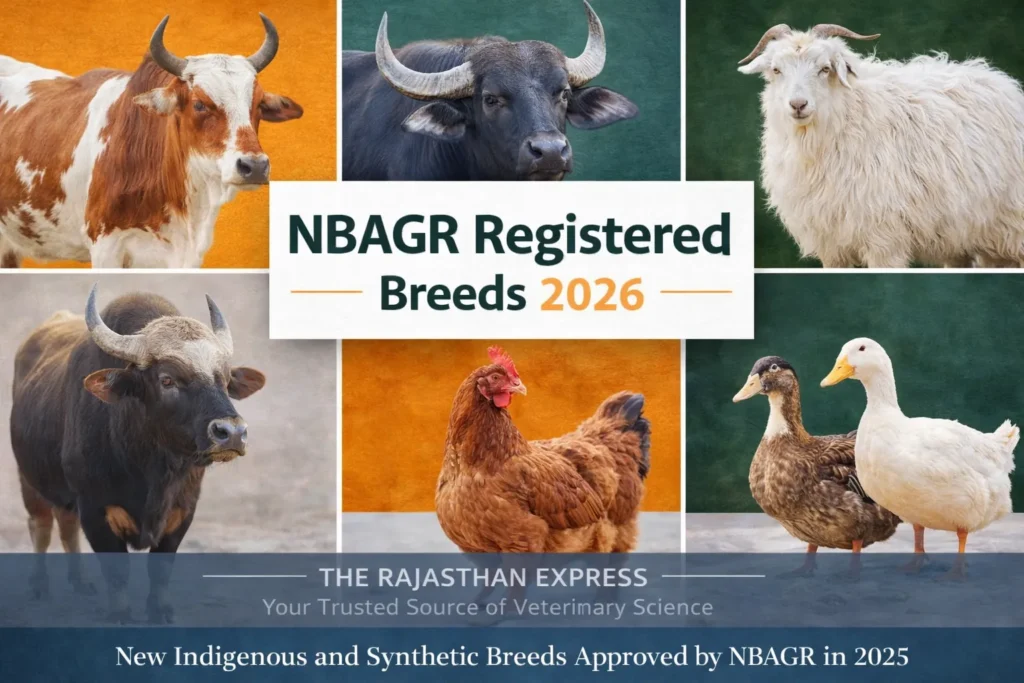
Recently (in 2025), in NBAGR meetings, new breeds were added, taking the total number of livestock breeds to 242, reflecting the richness of our biodiversity. Whether it is the velvety milk of Murrah or Gujarat’s Surati‑Mehsana, every breed is a living proof of centuries of natural selection and adaptation to the local environment. This is why India is playing a leading role not only in the genetic improvement and conservation of cows but also of buffaloes.
NBAGR Cattle Breeds and NBAGR Buffalo Breeds Latest Update (2025–2026):
- 12th meeting: Held on 6 January 2025 at the NASC campus in New Delhi, in which registration of 10 new animal and poultry breeds from various states was approved.
- 13th meeting: Held on 12 November 2025 in New Delhi, in which 13 indigenous and 3 synthetic breeds were approved.
- Result: After these registrations, the total number of registered indigenous livestock and poultry breeds in India has become 242. As of now (June 2026), the total registered buffalo breeds are 22.
Condition: For any breed to be registered, it is necessary that at least 1,000 animals of that breed are present in the country.
Buffalo Breeds List: Classification of 22 Registered Buffalo Breeds in India
All the indigenous buffalo breeds in India have been divided into different groups based on their ancestral region (place of origin). Each region’s buffalo has its own special identity – some are famous for milk, some for their strength and ability to work. Currently, there are 22 registered indigenous buffalo breeds in India, which are mainly placed in five major groups:
- Murrah Group
- Uttar Pradesh (U.P.) Group
- Gujarat Group
- Central India Group
- South India Group
The names of these groups themselves indicate in which part of India these breeds originated and how they have adapted according to the climate and needs of that area. Now, let us understand each group in detail and in simple language.
Top 10 Highest Milk Producing Cow Breeds in India : By The Rajasthan Express
Must Read for Dairy Farmers & Livestock Owners
- Sahiwal Cow Characteristics
- Tharparkar Cow Milk Per Day
- Red Sindhi Cow Milk Per Day
- Rathi Cow Cow Milk Per Day
- Sanchori Cow Cow Milk Per Day
- Deoni Cow Cow Milk Per Day
- Hariana Cow Cow Milk Per Day
- Ongole Cow Characteristics
- Nimari Cow Milk Production
1. Murrah Group (Murrah Group) – Pride of the North‑West
This group includes the country’s most milch and famous buffaloes. Main breeds are:
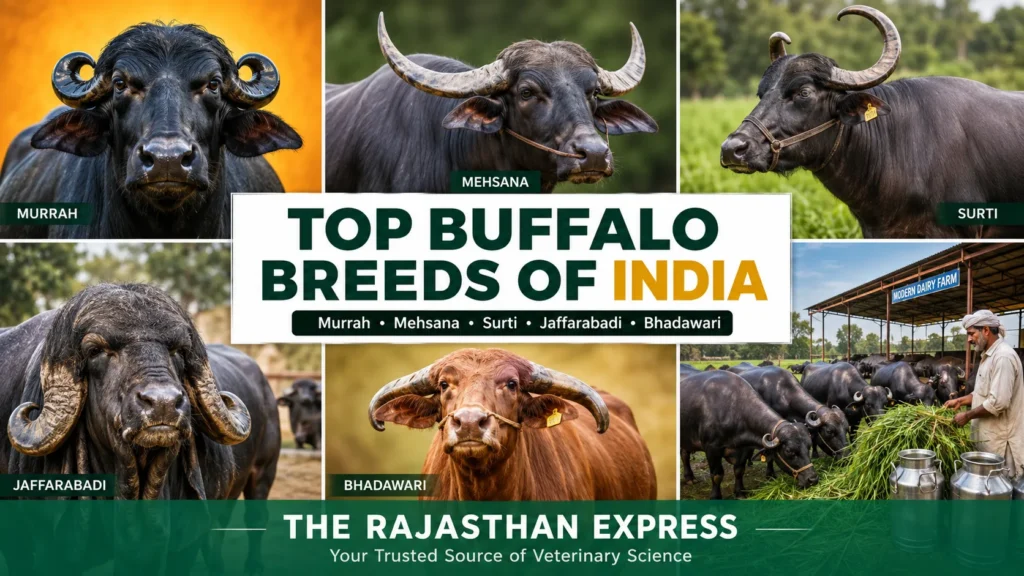
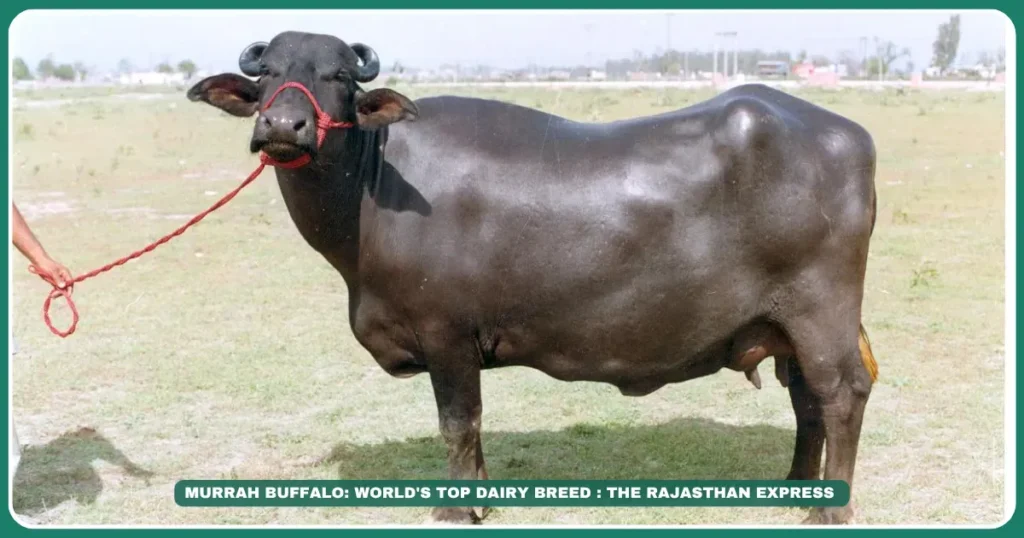
- Murrah – Famous breed of Haryana, known all over the world. This buffalo is famous for its abundant milk and is called ‘Black Gold’.
- Nili Ravi – Breed of Punjab. This buffalo is known for its low fat milk. Among all buffalo breeds of India, Nili Ravi milk has the lowest fat, about 4%. That means its milk is thinner compared to other buffaloes.
- Gojri – Found in Punjab and Himachal Pradesh. It is black in colour and small in stature, but easily adapts to harsh conditions.
2. Gujarat Group (Gujarat Group) – Strength of the Western Region
Gujarat has several strong milch breeds:
- Mehsana – Famous for good milk. This breed is found around Mehsana district of Gujarat.
- Surati – Buffalo of the Surat region of Gujarat. Its temperament is very calm and gentle, making it easy to rear.
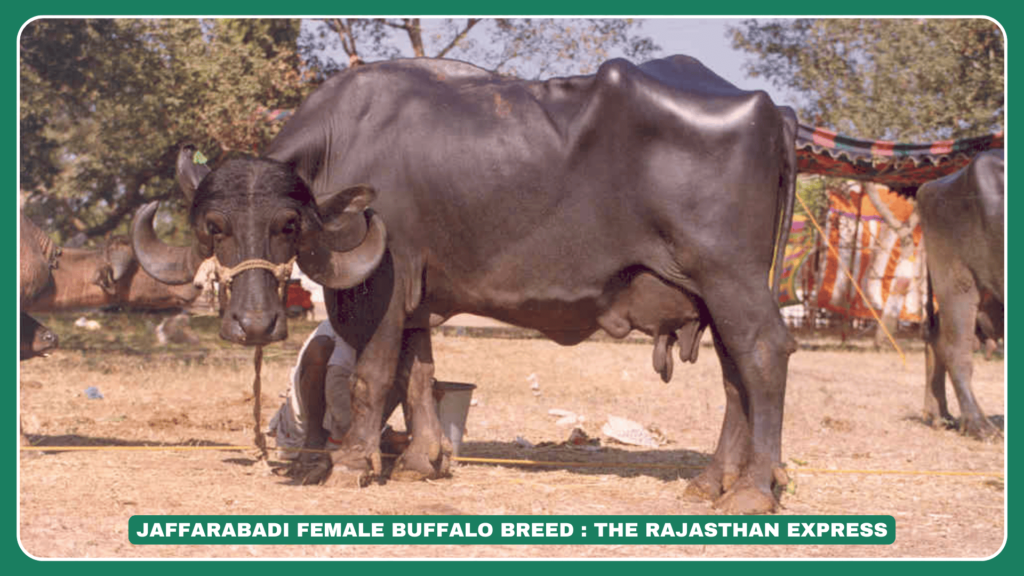
- Jafarabadi – Very large stature and heavy body. Known for its huge size.
- Banni – Found in the Banni region of Kutch district, Gujarat. It is fully adapted to desert conditions.
3. Uttar Pradesh Group (UP Group) – Buffalo of the plains
The main breed in this group is Bhadawari.
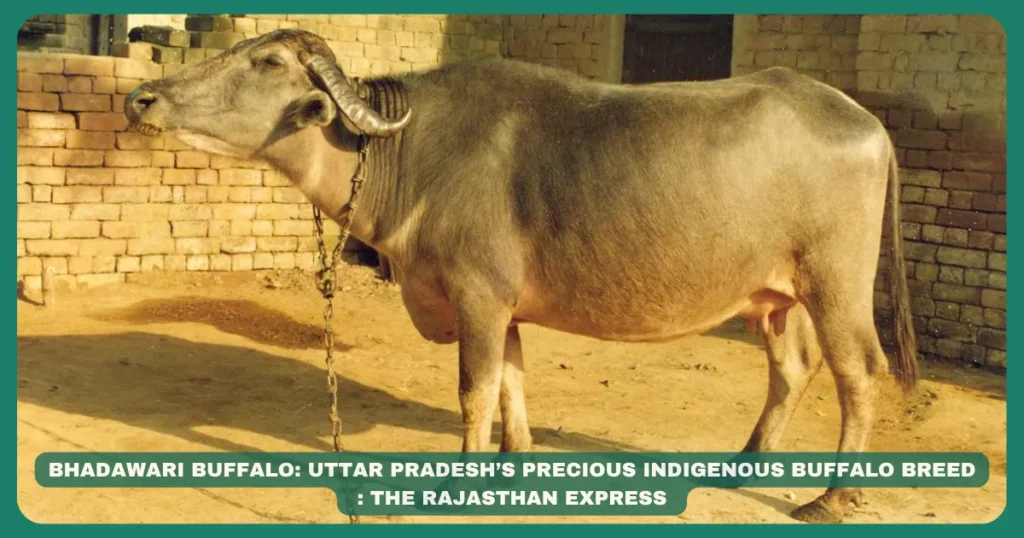
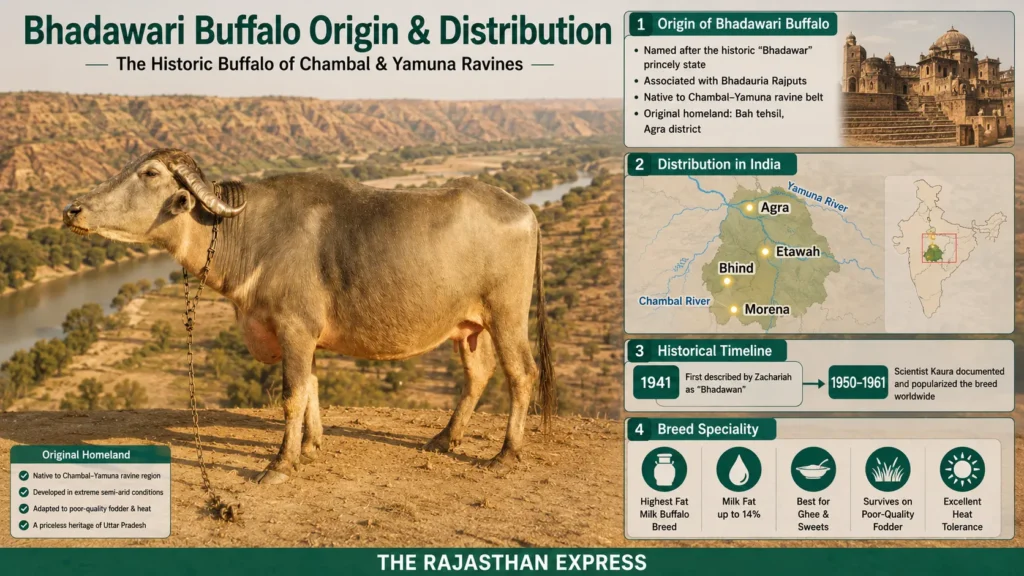
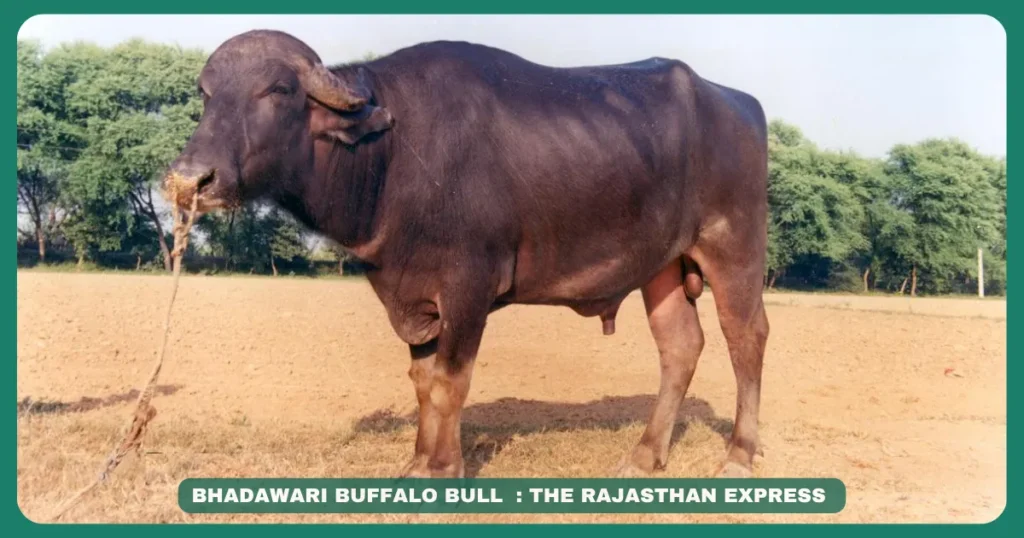
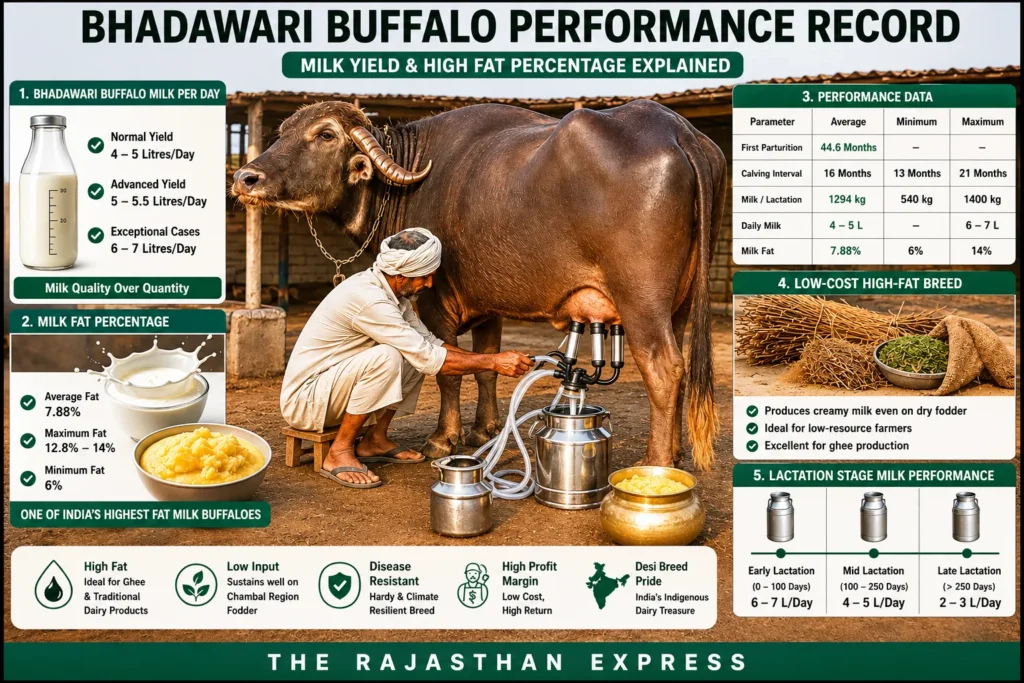
- Bhadawari – Found in Uttar Pradesh (Mathura, Agra, Etah) and around Madhya Pradesh. It is a good milk‑giving breed, but its biggest speciality is that among all buffalo breeds of India, Bhadawari milk has the highest fat (approx 14%). That means its milk is very thick and creamy, considered the best for making desi ghee. Its horns are short and twisted, and the body often has brown‑white spots.
4. Central India Group (Central India Group) – Prosperity of Eastern and Central Parts
This includes buffaloes from several states (Maharashtra, Odisha, Chhattisgarh):
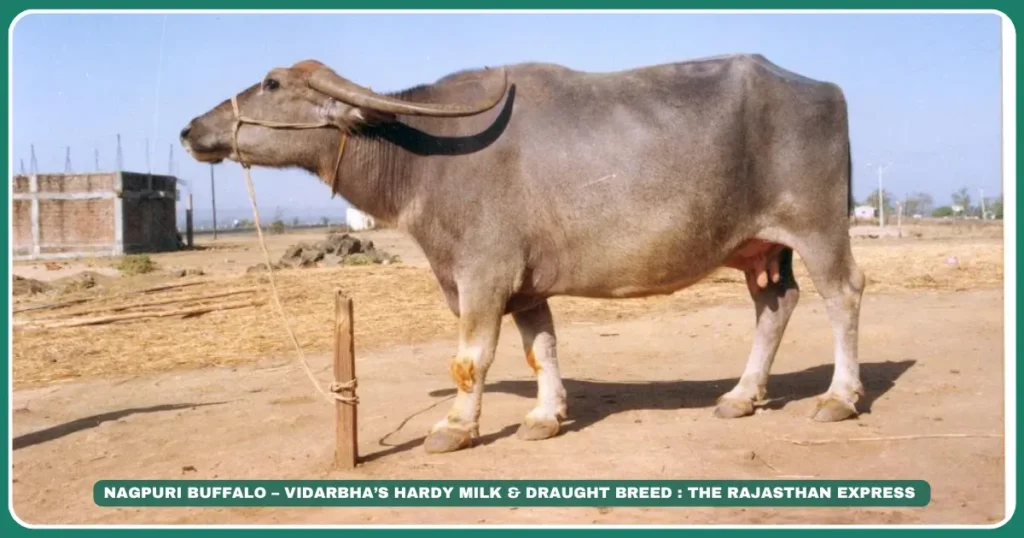
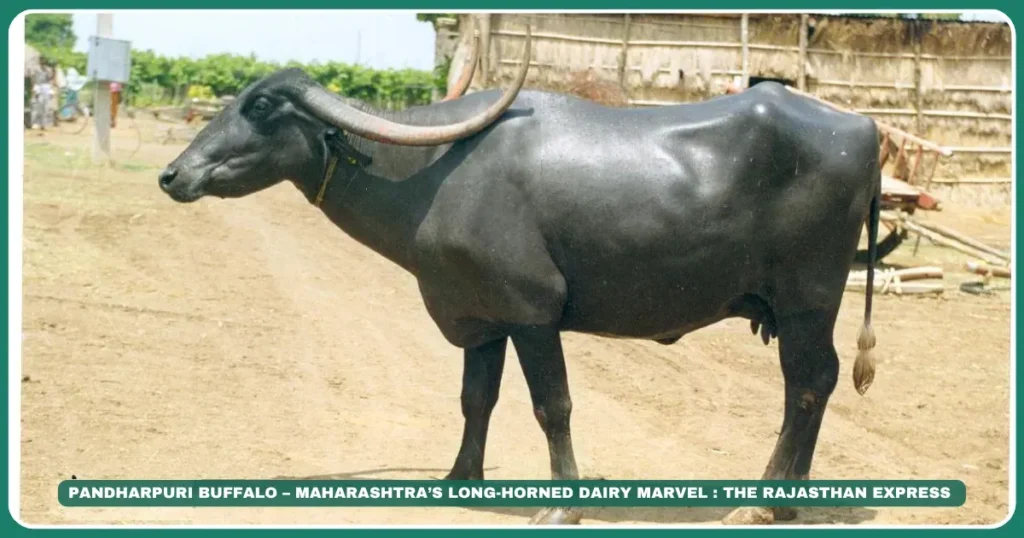
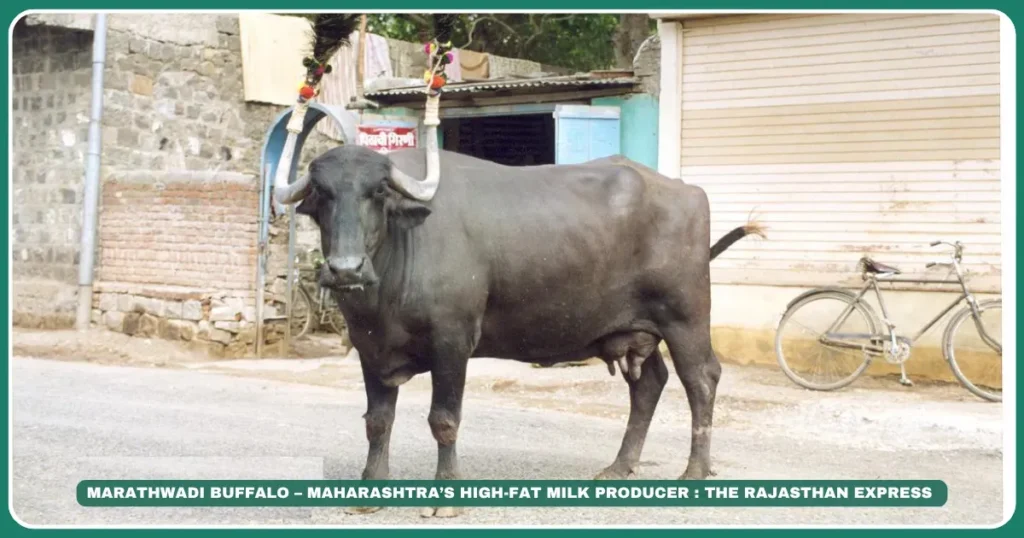
- Nagpuri, Pandharpuri, Marathwadi – Major breeds of Maharashtra. These are strong and working buffaloes.
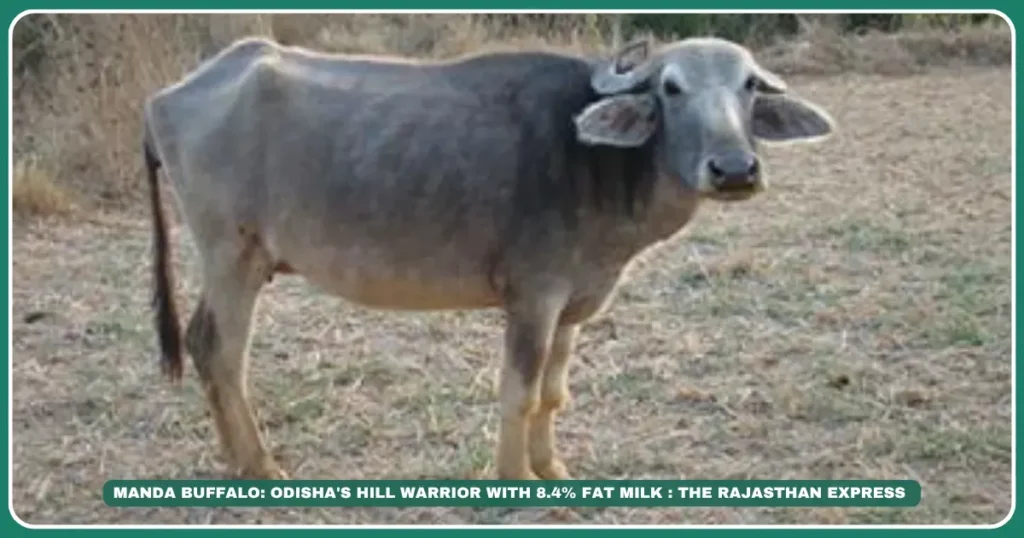
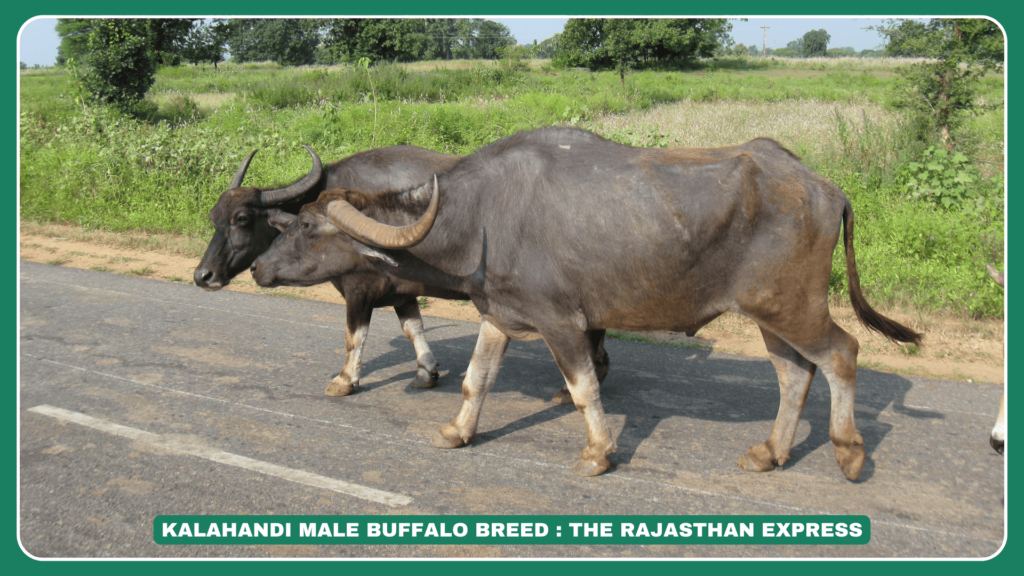
- Manda, Kalahandi, Chilka – Buffaloes of Odisha. Chilka buffalo is found especially around Chilka Lake.
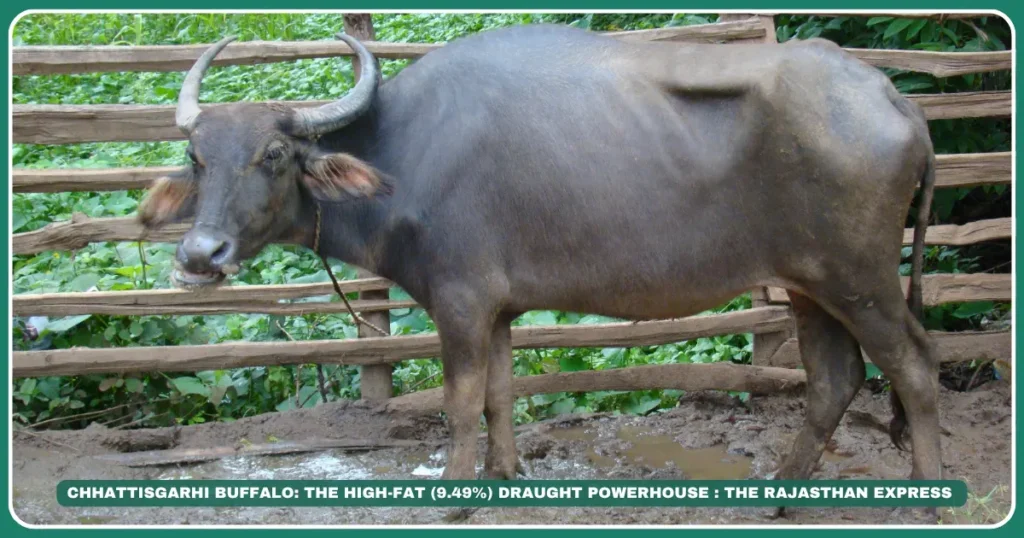
- Chhattisgarhi – Strong, working buffalo of Chhattisgarh. Used mainly for ploughing fields and carrying loads.
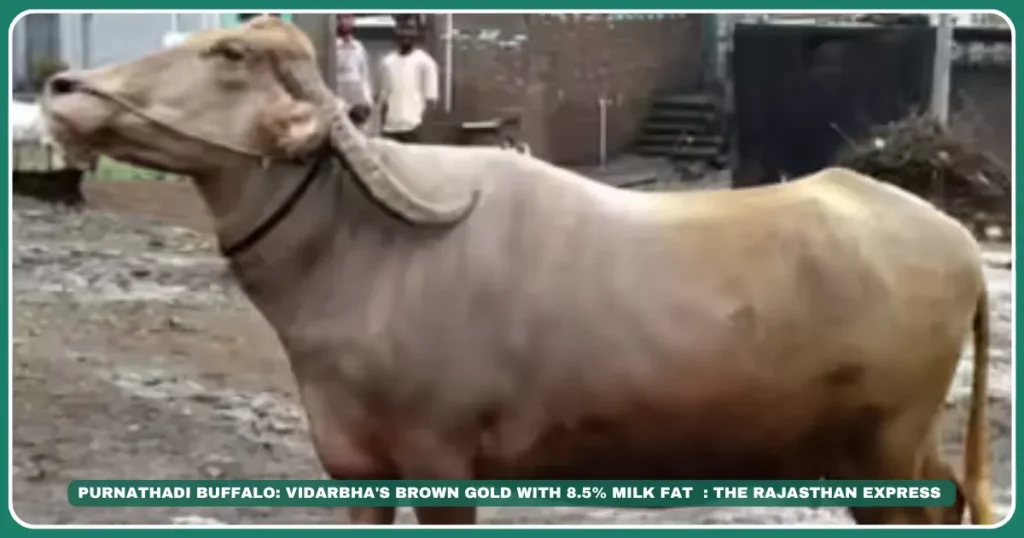
- Puranathadi – Newly registered breed from the Vidarbha region of Maharashtra.
- Melghati – Recently identified breed from the Melghat region of Maharashtra. Its speciality is high fat content in its milk.
5. South India Group (South India Group) – Small but strong breeds
Buffaloes in this group are small in body, but very hardy and tolerant in local conditions:
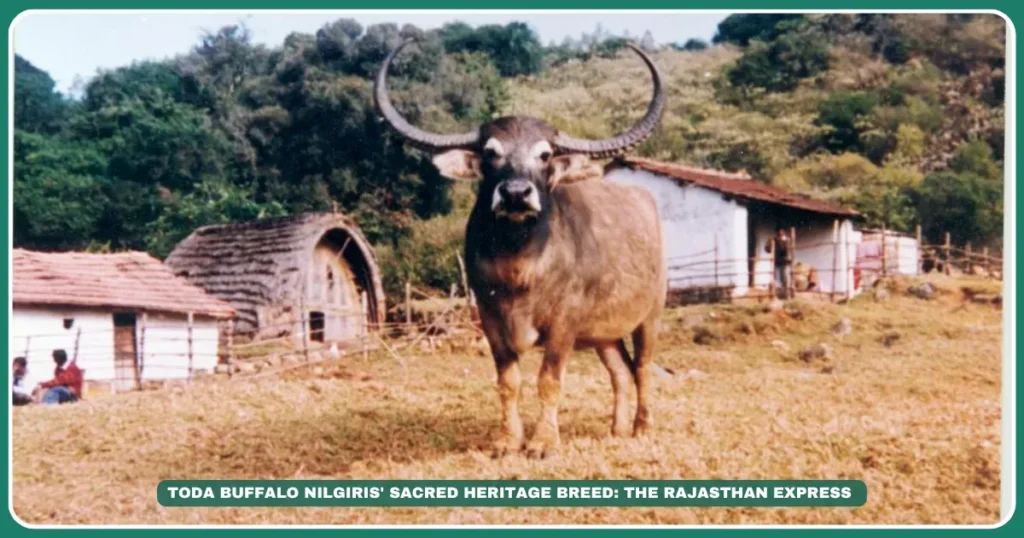
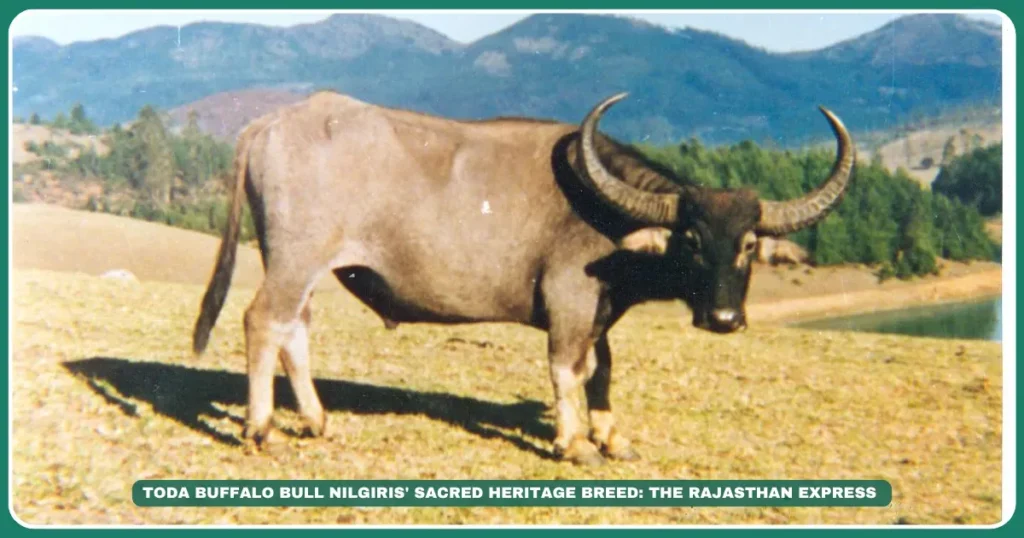
- Toda – Found in the Nilgiri hills of Tamil Nadu. This is a very unique and rare breed, reared by the Toda tribe.
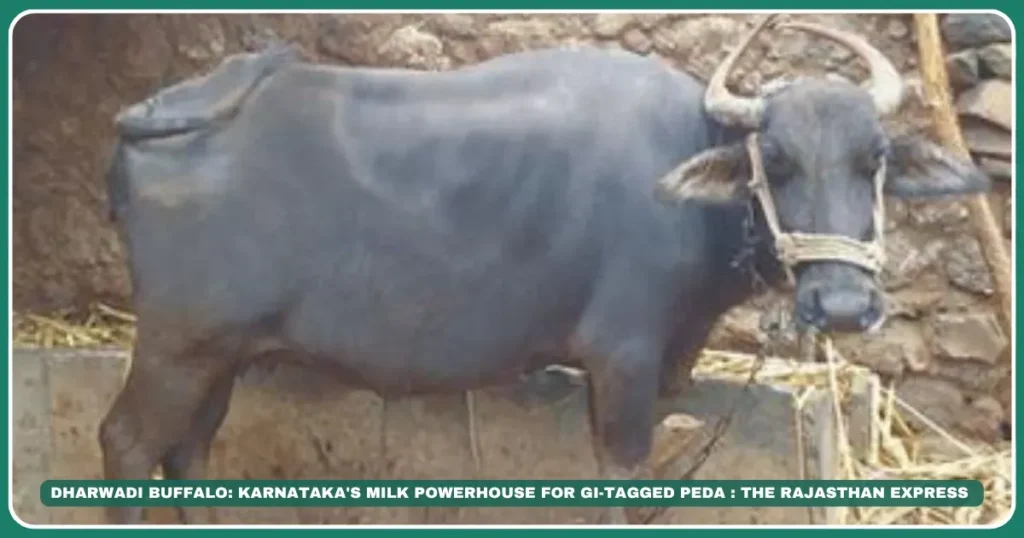
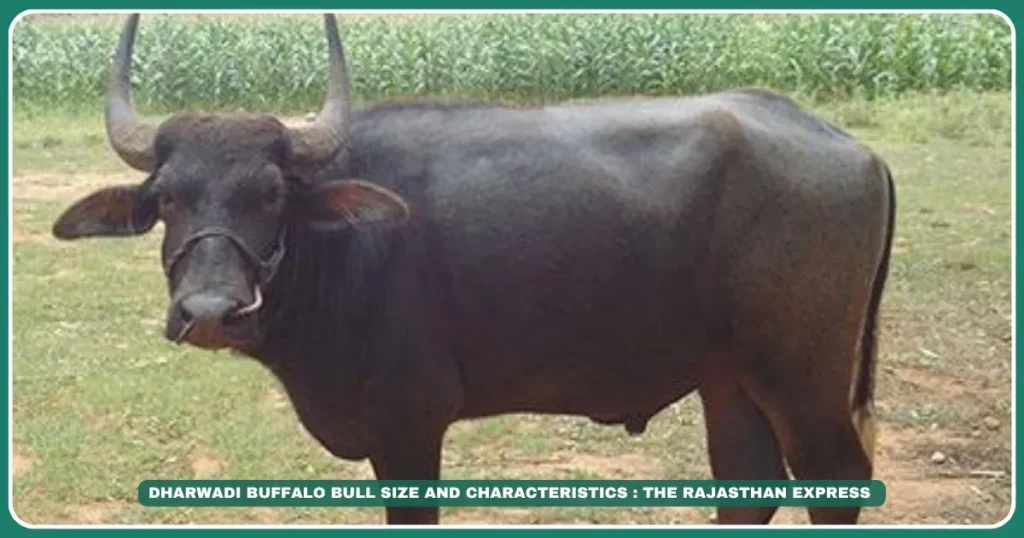
- Dharwari – Famous buffalo breed of Karnataka. Dharwad Peda made from the milk of this breed is very famous.
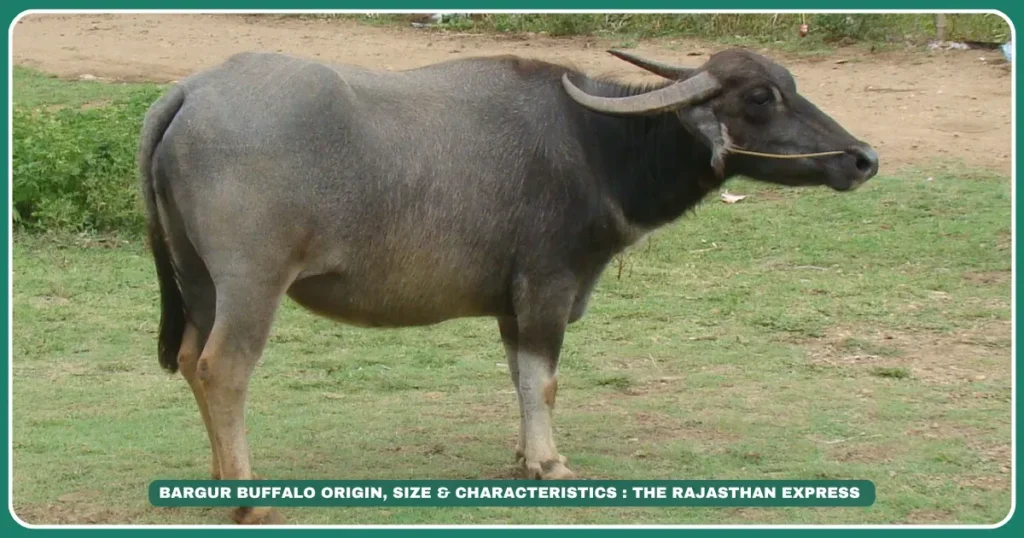
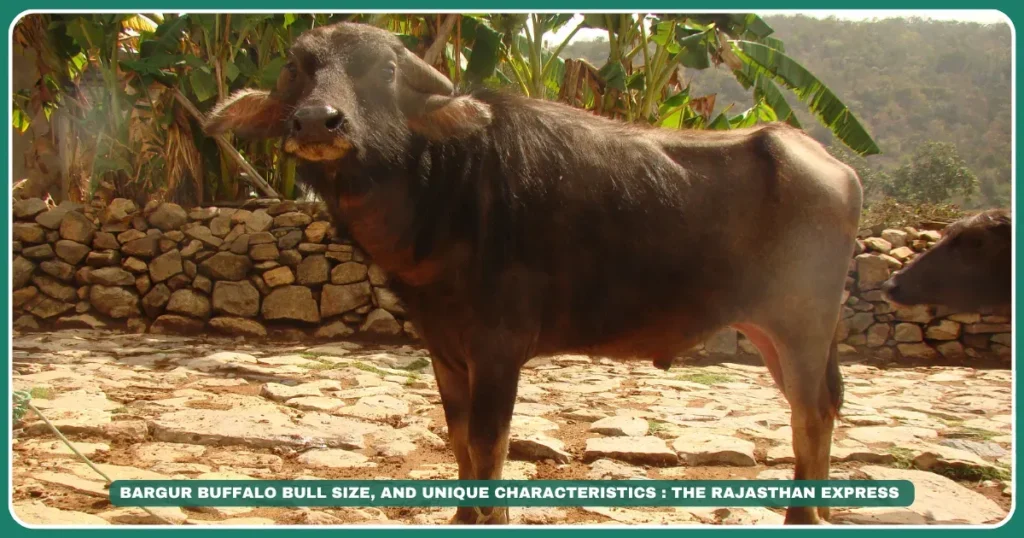
- Bargur – Working buffalo of the Bargur region of Tamil Nadu. It is small but extremely strong, used mainly for farm work in hilly areas.
6. Eastern India Group (Swamp Buffalo Group) – Swamp Buffalo Group
Completely different from other breeds, these are swamp buffaloes, found in north‑eastern states such as Assam, Manipur, Mizoram. They are different in appearance and behaviour from riverine buffaloes. Their main use is for work (especially in muddy paddy fields) and meat rather than milk:
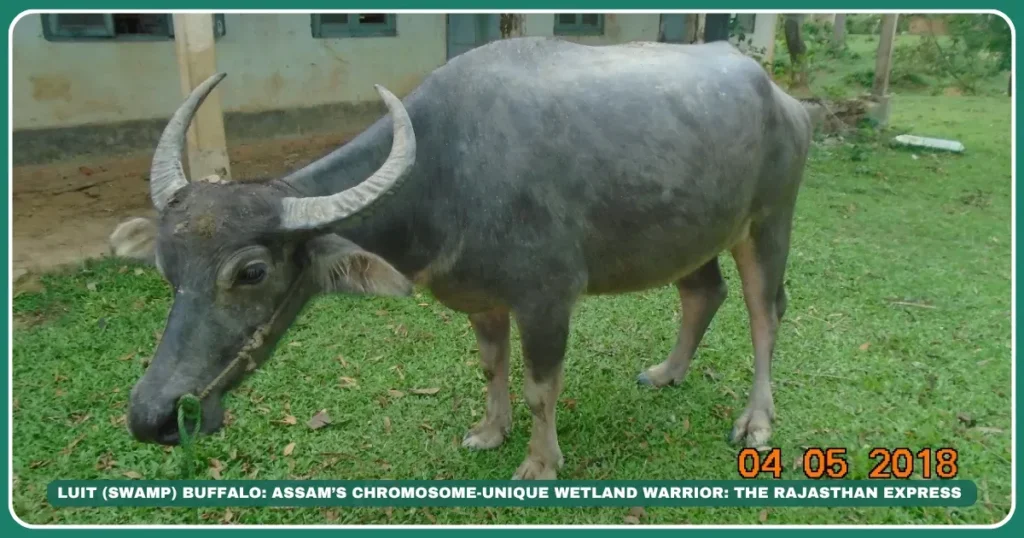
- Luit – Buffalo of the Brahmaputra river region (called Luit in Assam).
- Manah – Dual‑purpose breed of Assam – i.e., it gives some milk and can also do farm work.
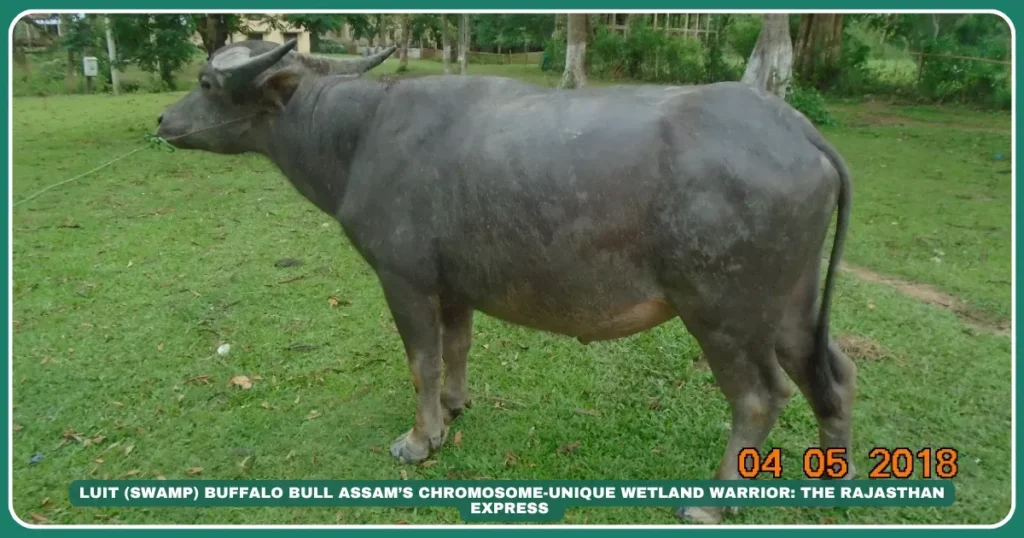
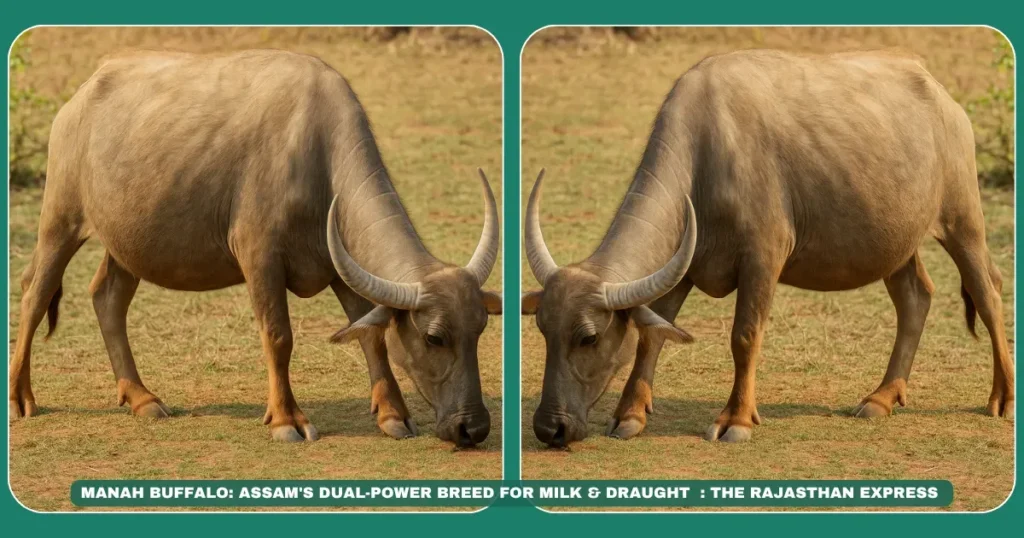
The diversity of buffaloes in India is very large. Murrah is number one in milk quantity. Nili Ravi milk has the lowest fat (4%), while Bhadawari milk has the highest fat (14%). Other breeds are famous for their own special qualities – some for strength, some for work, some for surviving harsh weather. Every region has its own heritage.
Total Registered Buffalo Breeds in India (2026 Update)
As of February 2026, a total of 242 indigenous livestock and poultry breeds have been registered in the country. In addition, 3 crossbred (synthetic) cow breeds and 1 crossbred sheep breed have also been registered.
In India, as of June 2026, a total of 22 indigenous Buffalo breeds are registered. Among them, the prominent breeds are: Murrah ,Nili Ravi, Bhadawari, Mehsana, Surti, Jaffarabadi, Nagpuri , Pandharpuri , Marathwadi, Toda, Banni , Chilika, Kalahandi, Luit, Bargur, Chhattisgarhi, Gojri, Dharwadi, Manda etc
| Registered Indigenous Livestock Breeds in India (Total 242) | ||
| S.N. | Animal Species | Number of Registered Breeds |
|---|---|---|
| 1 | Cow | 55 |
| 2 | Buffalo | 22 |
| 3 | Goat | 43 |
| 4 | Sheep | 46 |
| 5 | Horse & Pony | 8 |
| 6 | Camel | 9 |
| 7 | Pig | 15 |
| 8 | Donkey | 4 |
| 9 | Dog | 5 |
| 10 | Yak | 2 |
| 11 | Chicken | 21 |
| 12 | Duck | 9 |
| 13 | Goose | 2 |
| 14 | Mithun | 1 |
| Total (Indigenous Breeds) | 242 | |
| The Rajasthan Express : Indigenous Livestock Breeds in India | ||
| Buffalo Breeds of India – 22 Recognized Breeds | ||||
| S.N. | Breed | Home Tract | Accession Number | Link |
|---|---|---|---|---|
| 1 | Murrah | Haryana | INDIA_BUFFALO_0500_MURRAH_01001 | Murrah Buffalo |
| 2 | Nili Ravi | Punjab | INDIA_BUFFALO_1600_NILIRAVI_01002 | Nili Ravi Buffalo |
| 3 | Bhadawari | Uttar Pradesh & Madhya Pradesh | INDIA_BUFFALO_2010_BHADAWARI_01003 | Bhadawari Buffalo |
| 4 | Mehsana | Gujarat | INDIA_BUFFALO_0400_MEHSANA_01004 | Mehsana Buffalo |
| 5 | Surti | Gujarat | INDIA_BUFFALO_0400_SURTI_01005 | Surti Buffalo |
| 6 | Jaffarabadi | Gujarat | INDIA_BUFFALO_0400_JAFFARABADI_01006 | Jaffarabadi Buffalo |
| 7 | Nagpuri | Maharashtra | INDIA_BUFFALO_1100_NAGPURI_01007 | Nagpuri Buffalo |
| 8 | Pandharpuri | Maharashtra | INDIA_BUFFALO_1100_PANDHARPURI_01008 | Pandharpuri Buffalo |
| 9 | Marathwadi | Maharashtra | INDIA_BUFFALO_1100_MARATHWADI_01009 | Marathwadi Buffalo |
| 10 | Toda | Tamil Nadu | INDIA_BUFFALO_0018_TODA_01010 | Toda Buffalo |
| 11 | Banni | Gujarat | INDIA_BUFFALO_0400_BANNI_01011 | Banni Buffalo |
| 12 | Chilika | Odisha | INDIA_BUFFALO_1500_CHILIKA_01012 | Chilika Buffalo |
| 13 | Kalahandi | Odisha | INDIA_BUFFALO_1500_KALAHANDI_01013 | Kalahandi Buffalo |
| 14 | Luit | Assam & Manipur (Swamp) | INDIA_BUFFALO_0212_LUIT_01014 | Luit Buffalo |
| 15 | Bargur | Tamil Nadu | INDIA_BUFFALO_1800_BARGUR_01015 | Bargur Buffalo |
| 16 | Chhattisgarhi | Chhattisgarh | INDIA_BUFFALO_2600_CHHATTISGARHI_01016 | Chhattisgarhi Buffalo |
| 17 | Gojri | Punjab & Himachal Pradesh | INDIA_BUFFALO_1606_GOJRI_01017 | Gojri Buffalo |
| 18 | Dharwadi | Karnataka | INDIA_BUFFALO_08006_DHARWADI_01018 | Dharwadi Buffalo |
| 19 | Manda | Odisha | INDIA_BUFFALO_15000_MANDA_01019 | Manda Buffalo |
| 20 | Purnathadi | Maharashtra | INDIA_BUFFALO_1100_PURNATHADI_01020 | Purnathadi Buffalo |
| 21 | Manah | Assam | INDIA_BUFFALO_0200_MANAH_01021 | Manah Buffalo |
| 22 | Melghati | Maharashtra | INDIA_BUFFALO_1100_MELGHATI_01022 | Coming Soon |
| The Rajasthan Express : Buffalo Breeds of India | ||||
Top 5 Highest Milk Producing Buffalo Breeds in India (Based on NBAGR–ICAR Data and Actual Field Performance)
India is home to the world’s finest dairy buffalo breeds. While official records published by the National Bureau of Animal Genetic Resources (NBAGR-ICAR) provide average milk yield data, the actual production potential of elite animals under scientific feeding and management is often much higher. The following ranking combines both NBAGR field performance and practical dairy farming observations to identify the most productive buffalo breeds in India.
1. 🏆 Murrah Buffalo – The Real King of Milk Production
- Origin: Haryana (Hisar, Rohtak, Jind, Gurugram) and Delhi.
- Milk Production (Reality):
- NBAGR field average: 1,752 litres per lactation – this figure is derived by averaging animals of all small and large farmers across India.
- Actual capacity: An excellent Murrah buffalo, with proper feeding and care, can easily give 2,500 to 3,500 litres per lactation and often up to 4,000 litres. This is regularly seen on advanced dairy farms in India and progressive farmers in Haryana‑Punjab.
- Government records show lower actual capacity because they also include undernourished animals from the unorganised sector.
- Milk fat: Average 7.3% (6.9% to 8.3%).
- Physical identification:
- Colour is deep jet black, shining in sunlight.
- Horns are short, thick, and jalebi‑like – this is its biggest identification.
- Body is boat‑shaped and well‑proportioned, udder is heavy and spread all around, milk veins are clearly prominent on the udder.
- Special features: Mother of India’s milk revolution. Exported to many countries (Brazil, Vietnam, Philippines, Sri Lanka, Bulgaria, etc.) in pure form or for improving local buffaloes. Excellent fertility (first calving 43.4 months, calving interval 14.9 months) and extreme heat tolerance make it the best.
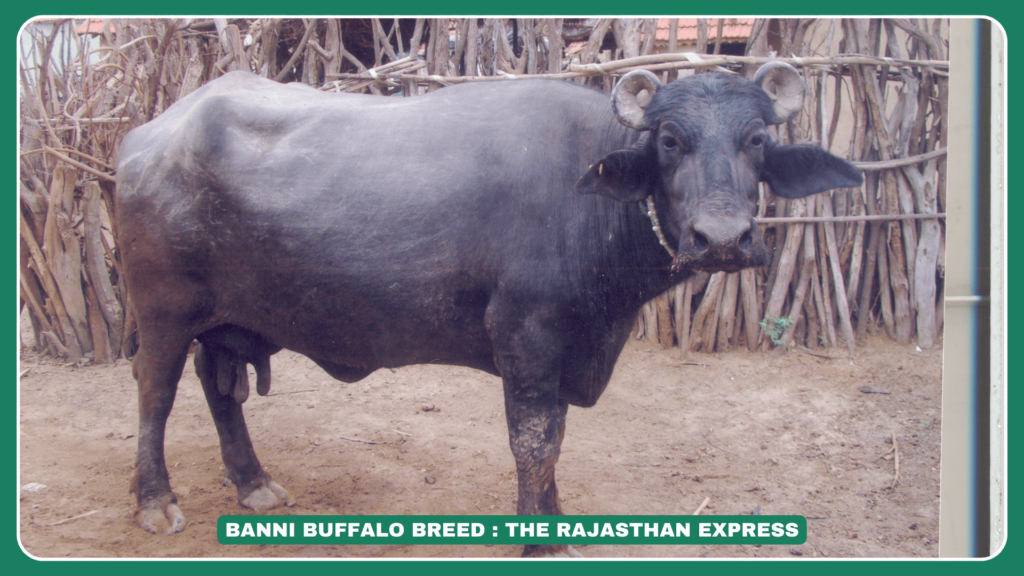
2. Banni Buffalo – 2,857.2 kg (litres) Average
- Origin: Kutch district of Gujarat (Banni grasslands).
- Milk production: NBAGR survey average 2,857.2 litres (ranging from 1,095 to 6,054 litres).
- Milk fat: Average 6.65% (4% to 12.1%).
- Physical identification:
- Colour mainly black, sometimes with a copper tinge.
- Horns are medium to large, vertical upward, with inverted or double coiling.
- Special features: Unique night‑grazing breed. Excellent production even in highly saline land, water scarcity, and high temperatures. First calving only 40.3 months and calving interval 12.24 months, making it extremely profitable.
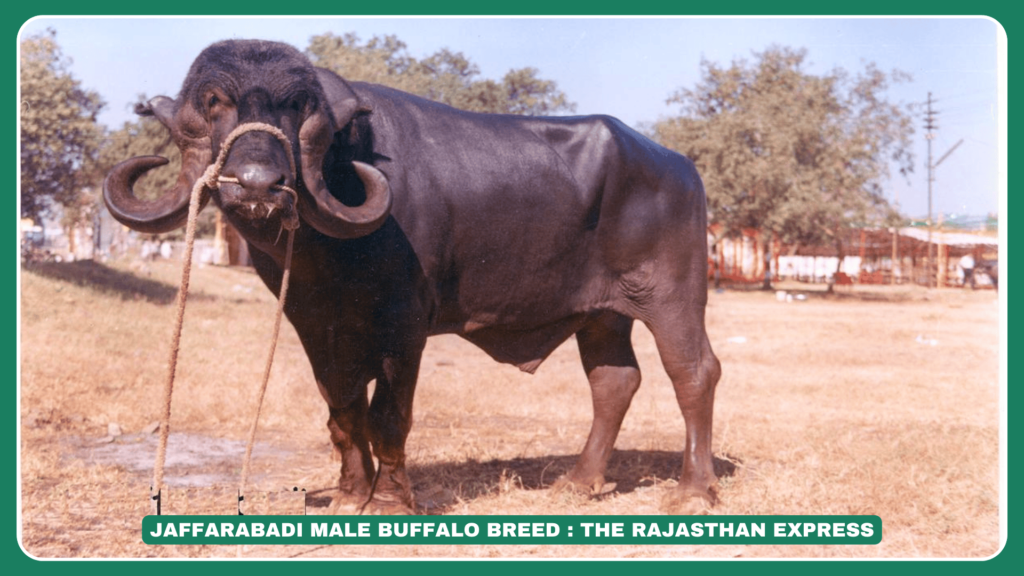
3. Jafarabadi Buffalo – 2,239 kg (litres) Average
- Origin: Gir forest area of Gujarat (Junagadh, Amreli, Bhavnagar, Rajkot, Porbandar).
- Milk production: Average 2,239 litres (2,150–2,340 litres).
- Milk fat: Average 7.68% (6.8%–8.5%).
- Physical identification:
- India’s heaviest buffalo – male 700 kg, female 620 kg.
- Horns are heavy, drooping, eyes are sleepy‑like.
- Special features: High milk production with heavy body. Famous for ability to fight lions. Calving interval 14.6 months.
4. Nili Ravi Buffalo – 1,850 kg (litres) Average
- Origin: Firozpur and Amritsar districts of Punjab.
- Milk production: Average 1,850 litres (1,586–1,929 litres).
- Milk fat: Average 6.8% (5.1%–8.0%).
- Physical identification:
- Five white markings on the body (Panchkalyani), wall eye, jalebi‑like horns.
- Special features: Milk has low fat, light for drinking. Excellent breed that prefers living near rivers and streams.
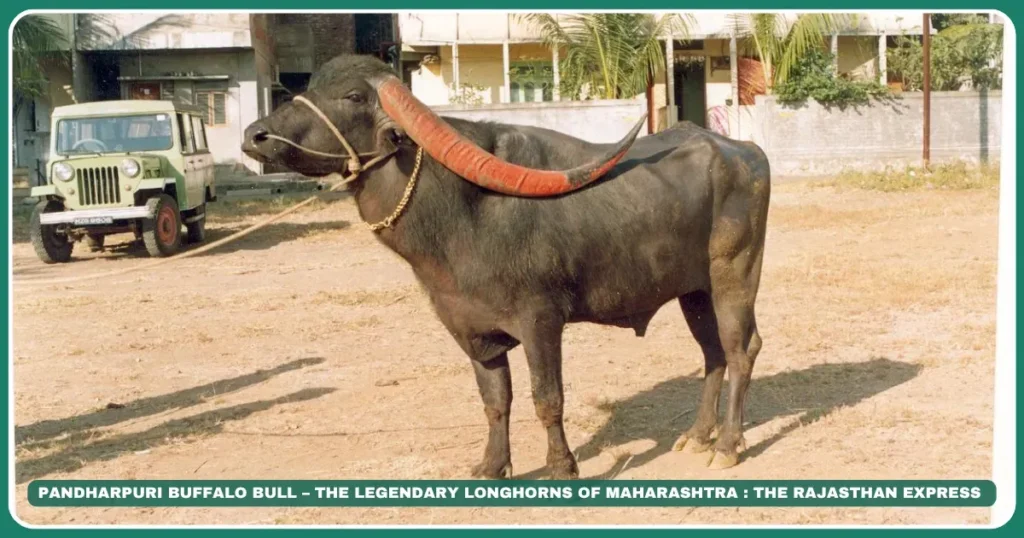
5. Pandharpuri Buffalo – 1,790.6 kg (litres) Average
- Origin: Solapur, Sangli, and Kolhapur districts of Maharashtra.
- Milk production: Average 1,790.6 litres.
- Milk fat: Average 8.01%.
- Physical identification:
- Horns are very long, extending beyond shoulders to hips (three types), nose bone is prominent.
- Unique feature: Door‑to‑door milking – amazing ability of multiple milk let‑down (repeatedly releasing milk). Calving interval only 13.6 months.
| Top 5 Highest Milk Producing Buffalo Breeds in India | ||||
| Rank | Buffalo Breed | Origin | Average Milk Yield (Lactation) | Milk Fat (%) |
|---|---|---|---|---|
| 🥇 1 | Murrah Buffalo | Haryana & Delhi | 1,752 L (2,500–4,000 L potential) | 7.3 |
| 🥈 2 | Banni Buffalo | Kutch, Gujarat | 2,857.2 L | 6.65 |
| 🥉 3 | Jaffarabadi Buffalo | Gir Region, Gujarat | 2,239 L | 7.68 |
| 4 | Nili-Ravi Buffalo | Punjab | 1,850 L | 6.8 |
| 5 | Pandharpuri Buffalo | Maharashtra | 1,790.6 L | 8.01 |
| The Rajasthan Express : Top 5 Highest Milk Producing Buffalo Breeds in India | ||||
River Buffalo vs Swamp Buffalo: Difference Between River and Swamp Buffalo in India, Genetics, Characteristics, and Uses
The buffaloes found in India are mainly divided into two large groups: River Buffalo and Swamp Buffalo. These two are completely different from each other in appearance, temperament, habitat, and use. Let us understand the main differences between them in very simple language.
| River Buffalo vs Swamp Buffalo: Main Differences Between Buffaloes or Buffalos : The Rajasthan Express | ||
| Feature | River Buffalo | Swamp Buffalo |
|---|---|---|
| Chromosomes | 50 chromosomes | 48 chromosomes |
| Scientific name | Bubalus bubalis | Bubalus kerabau / Carabanesis (considered a different species) |
| Main use | Milk production (for milk) | Draught and meat production (farm work, load carrying, meat) |
| Body size | Heavy and strong body | Relatively smaller, strong build |
| Horns | Short and more tightly coiled | Large, heavy, and less coiled (semi‑circular, curving backward and upward) |
| Bathing habit | Prefer bathing in clean water (river, canal, pond) – this habit is called ‘wallowing’. They sit in water for hours, fully immersed. | Prefer bathing in dirty water/mud (swamps, muddy ponds). |
| Geographical location | India, West Asia, Mediterranean region. Almost all registered breeds of India belong to this group. | South‑East Asia and China. In India, only limited to Assam, Manipur, Meghalaya, Nagaland. |
| Major breeds in India | Murrah, Nili Ravi, Bhadawari, Mehsana, Surati, Jafarabadi, Nagpuri, Chhattisgarhi, Puranathadi, Chilka, Marathwadi, etc. | Only Luit is the only registered swamp breed. |
| Origin history | Believed to have been domesticated in the Indus‑Ganga valley of India. | Domesticated in China about 5000 years ago. |
| Crossbreeding | If these two are crossbred, the first generation (F1) produces offspring with 49 chromosomes, but such hybrids are often weak or infertile, meaning they cannot reproduce further. | |
| Main Differences Between River Buffalo and Swamp Buffalo : The Rajasthan Express | ||
1. Genetic Difference Between River Buffalo and Swamp Buffalo
The most fundamental and decisive difference between River Buffalo and Swamp Buffalo is the number of chromosomes. River buffalo has 50 chromosomes, while swamp buffalo has 48 chromosomes. This difference is so profound that they are considered different subspecies or even separate species.
If these two are hybridized, the first generation (F1) produces offspring with 49 chromosomes, but such hybrids are often weak or infertile – they cannot reproduce further. Let us open and understand this entire mystery, and see why the offspring born between them is infertile like a mule.
What are chromosomes?
- Chromosomes are thread‑like structures found in the nucleus of every cell of every living being.
- Inside these chromosomes is hidden DNA (deoxyribonucleic acid), which contains the entire genetic code of that animal – its colour, size, structure, temperament, disease resistance – everything.
- Each species has a fixed number of chromosomes. This number is like the identity of that species.
Chromosome numbers in various species:
- Human → 46 chromosomes
- Horse → 64 chromosomes
- Donkey → 62 chromosomes
- Cow & Goat → 60 chromosomes
- Sheep → 54 chromosomes
- Camel → 74 chromosomes
- Dog → 74 chromosomes
- River Buffalo → 50 chromosomes
- Swamp Buffalo → 48 chromosomes
When two animals produce offspring, half the chromosomes from the mother (via the egg) and half from the father (via the sperm) combine to make the full number in the baby’s cells.
Why are River and Swamp buffalo different?
- River buffalo (such as Murrah, Bhadawari, Mehsana) have 50 chromosomes. This is the group of most registered breeds in India. They are famous for milk production and prefer bathing in clean water (rivers, canals, ponds).
- Swamp buffalo (only ‘Luit’ in India) have 48 chromosomes. They are mainly reared for farm work and meat, and prefer living in dirty water, swamps, and mud.
This difference of 2 chromosomes – 50 vs 48 separates the entire world. Due to years of different evolution, their chromosomes do not match each other.
What happens if these two are hybridized?
Now comes the most interesting part. Scientists have hybridized these two in experiments:
- Mother (River buffalo) → egg has 25 chromosomes (half of 50)
- Father (Swamp buffalo) → sperm has 24 chromosomes (half of 48)
- Combined: 25 + 24 = 49 chromosome hybrid offspring
This hybrid survives and in some cases may grow large. But it is infertile – meaning when it grows up, it cannot produce offspring itself.
Why does this happen?
- To produce eggs or sperm, an animal’s body must divide chromosomes into pairs.
- But 49 is an odd number – it cannot be divided into equal pairs.
- When the body tries to make eggs or sperm, the chromosomes cannot separate properly. Result – neither proper eggs nor proper sperm are formed. Therefore, the hybrid becomes infertile.
River Buffalo Hybrid and Mule: A Similar Story
The offspring of a horse and donkey (mule) is also infertile, and the same mathematics works here:
| River Buffalo Hybrid and Mule: A Similar Story | |||||
| Animal 1 | Chromosomes | Animal 2 | Chromosomes | Offspring (Chromosomes) | Result |
|---|---|---|---|---|---|
| Mare (Female Horse) | 64 | Donkey (Male) | 62 |
Mule 32 + 31 = 63 Chromosomes |
❌ Infertile |
| River Buffalo (Female) | 50 | Swamp Buffalo (Male) | 48 |
Hybrid 25 + 24 = 49 Chromosomes |
❌ Infertile |
| The Rajasthan Express : River Buffalo Hybrid and Mule Comparison | |||||
In both cases:
- Mother and father are from different species.
- Their chromosome numbers are even but different from each other (64 & 62, or 50 & 48).
- The offspring gets an odd number (63 or 49).
- Due to the odd number, the offspring is infertile.
Only one difference: The mule is a very strong, enduring, and hard‑working animal, so people deliberately produce mules. The hybrid of these buffaloes does not have as much strength as a mule, so no one specifically rears it. But the principle of infertility is exactly the same.
Why don’t these two naturally reproduce with each other?
- Genetic isolation: Evolving separately for millions of years, their chromosomes have become so different that they do not naturally recognize each other as the same species. Even if kept together, their mating is very rare because their courtship behaviors are also different.
- If offspring ever occurs, it will be infertile – meaning it has no future. Producing such offspring is pointless in nature because it cannot pass on its genes. Therefore, nature has created a reproductive barrier between these two.
2. Habitat and Behavior of River Buffalo and Swamp Buffalo
- River Buffalo: They prefer clean and flowing water (rivers, canals). Their heat tolerance is lower, so they sit in water for hours to regulate their body temperature. This activity is called ‘wallowing’, which is very important for their health and milk production.
- Swamp Buffalo: As the name suggests, they prefer living in swamps, mud, and dirty water. By wallowing in mud, they not only regulate their temperature but also protect themselves from insects. Their bodies are more adapted to tolerate both heat and humidity compared to river buffaloes.
3. Luit Buffalo Breed: The Only Registered Swamp Buffalo Breed in India
Meaning of the name: The name ‘Luit’ comes from the local name of the Brahmaputra river – ‘Luit’ – because it is found mainly on the islands and banks of the Brahmaputra.
Identification and Characteristics of Luit Buffalo
- Colour: Mainly black, but it has white stocking‑like marks up to the knees on all four legs – this is the main identification of Luit buffalo.
- Horns: Large, wide, and semi‑circular, curving backward and upward.
- Head: Wide and concave forehead.
- Tail: Short.
Geographical Distribution of Luit Buffalo Breed: This breed is found mainly in 9 districts of upper Brahmaputra valley in Assam (Jorhat, Sivasagar, Dibrugarh, Tinsukia, Lakhimpur, Dhemaji, Golaghat, Majuli, and Biswanath). Additionally, it is also seen in some border areas of Manipur, Mizoram, and Nagaland.
Milk Production and Uses of Luit Buffalo: Although it is mainly a draught buffalo, it gives about 449 kg of milk per lactation, with fat content up to 8.68%. It is used for both milk and farm work.
Conclusion: River Buffalo – A Milk Factory, Swamp Buffalo – A Worker of Nature:
River buffaloes are like ‘milk factories’, while swamp buffaloes are like ‘nature’s labourers’. If you want to do dairy farming, the river buffalo (such as Murrah) should be your first choice.
Buffalo in India and Cattle: Basic Scientific Information
When we talk about animal husbandry, the first names that come to mind are cow and buffalo. But do we know about them from a scientific perspective? What is their family, how many days do they take to give birth, what does rumination mean, and what are things like dressing percentage? Let us understand the answers to all these questions in very simple language.
1. Scientific classification: By what scientific names does science know cow and buffalo?
Every living being has a scientific name and classification, so that scientists around the world can speak in the same language. The classification for cow and buffalo is as follows:
| Scientific Classification of Cattle and Buffaloes (Buffalos) | ||
| Category | Cattle | Buffalo |
|---|---|---|
| Kingdom | Animalia | Animalia |
| Phylum | Chordata (with backbone) | Chordata |
| Class | Mammalia | Mammalia |
| Order | Artiodactyla (even-toed ungulates) | Artiodactyla |
| Family | Bovidae | Bovidae |
| Genus | Bos | Bubalus |
| Species |
• Indigenous (Humped): Bos indicus • Foreign (Humpless): Bos taurus |
• River Buffalo: Bubalus bubalis • Swamp Buffalo: Bubalus kerabau (or Bubalus carabanesis) |
| The Rajasthan Express : Scientific Classification of Cattle and Buffalo | ||
Special points to understand:
- Difference between indigenous and foreign cows: Our Indian cows (such as Gir, Sahiwal, Red Sindhi, Rathi, and Tharparkar, etc.) have a hump on their shoulder, therefore they are called Bos indicus or Zebu cattle or Humped Cattle. Foreign cows like Jersey and Holstein have no hump, therefore they are Bos taurus – also called Humpless Cattle.
- River and Swamp buffalo: The buffaloes found in our country, such as Murrah and Nili Ravi, are River Buffalo, which have 50 chromosomes. Meanwhile, the Swamp Buffalo found in East Asia is a different species, having 48 chromosomes. Therefore, these two types of buffaloes differ in appearance and genetics.
2. Why are these called “Ruminant” animals?
Both cows and buffaloes are called ruminants or cud‑chewing animals. This means that after eating fodder, they bring it back to their mouth and chew it comfortably. Their stomach has four chambers, which help in digesting the fodder properly and extracting ample nutrition from it. They are also called Large Ruminants because they are larger than sheep and goats. This is why they can give us nutritious milk even after eating dry fodder and grass.
3. What is Dressing Percentage?
This term is a bit technical, but it is very easy to understand. Dressing percentage is the figure that tells, after slaughtering an animal, what percentage of its body remains for eating or use. The skin, head, feet, intestines, and blood are removed.
- For buffalo, this percentage is approximately 57%.
- For cattle, this percentage is approximately 55%.
That is, if a buffalo’s live weight is 100 kg, after slaughter only about 57 kg (meat and bones) remains for use.
- Cara Beef: Buffalo meat is called Cara Beef.
- Beef: Cow meat is called Beef.
- Veal: Calf meat is called Veal.
4. Life cycle of cow and buffalo: from birth to old age
It is very important for every livestock keeper to know when cows and buffaloes become capable of giving birth and what their lifespan is. These figures for cows and buffaloes differ from each other, so they should be remembered separately.
| Life Cycle of Cow and Buffalo: From Birth to Old Age | ||
| Life Cycle Stage | Cattle | Buffalo |
|---|---|---|
| Puberty | 18 to 24 months (1.5 to 2 years) | 24 to 36 months (2 to 3 years) |
| Gestation Period | Approximately 283 days (9 months 9 days) | Approximately 310 days (10 months 10 days) |
| Age at First Calving | Between 2.5 to 3.5 years | Between 3.5 to 4 years |
| Offspring per Calving | Usually 1 (twins very rare) | Usually 1 (twins very rare) |
| Average Lifespan | 15 to 20 years | 20 to 25 years |
| The Rajasthan Express : Life Cycle of Cow and Buffalo | ||
Points to note:
- The cow matures slightly earlier than the buffalo (18‑24 months vs 24‑36 months).
- The cow’s gestation period is about one month shorter than the buffalo’s (283 days vs 310 days).
- The cow’s average lifespan is also slightly shorter than the buffalo’s (15‑20 years vs 20‑25 years).
Complete terminology related to cows and buffaloes –
When we step into the world of animal husbandry, we hear many words – bull, bullock, heifer, calf, barn, dewlap, hump, brisket, etc. An ordinary farmer often calls all male cattle “bull” and all females “cow”, but in animal science, different words are fixed for every age, gender, and stage. Understanding the correct meaning of these words is essential for every livestock keeper, dairy entrepreneur, and student, because this understanding lays the foundation for proper animal management, breeding, and health care. Let us understand the meaning and speciality of all these words in very simple everyday language. Along with this, we will also clarify the differences between cows and buffaloes.
2.1 Vocabulary according to the age and gender of cattle
- Bull – Breeding male
- This is an adult male cow, more than three years of age, fully capable of breeding (impregnating females).
- Its testicles are present, and it is the main means of making cows pregnant in the herd.
- Its weight is often 500‑600 kg or even more, and it looks extremely strong.
- Bullock / Steer – Castrated bull
- When a male calf or bull’s testicles are removed surgically (this process is called castration), it becomes a bullock or steer.
- It can no longer reproduce, but its body becomes calmer and more powerful, making it ideal for ploughing fields, pulling carts, and carrying heavy loads.
- In common language, this is called “bull”, whereas in true sense, bullock means a castrated male.
- Cow – Adult female
- A female cow that has given at least one calf and is giving milk is called a cow.
- Usually its age is above 2‑3 years. It will not be called a cow until it has given its first calf.
- Milk production is its biggest identity, and it is the mainstay of the dairy industry.
- Heifer – Young unbred female
- This is a young female cow, between about 1 to 2.5 years of age, that has not yet given any calf.
- It has grown physically but is not yet fully ready for reproduction or may have been serviced.
- As soon as it calves for the first time, it becomes a cow and starts giving milk.
- Calf – Newborn baby (male calf / female calf)
- A cow’s newborn baby, whether male or female, from birth to about 12 months (1 year) of age, is called a calf.
- It is completely dependent on mother’s milk or external feed, and it undergoes its fastest physical development during this period.
- Bull Calf – Male calf
- This is a calf that is male by sex. From birth to one year, it is called a bull calf.
- When it grows up, if its testicles remain intact, it will become a bull; if castrated, it will become a bullock.
- Heifer Calf – Female calf
- This is a calf that is female. Under one year of age, it is called a heifer calf.
- After one year of age and without having given birth, it will be called only a heifer, and after giving birth, it becomes a cow.
2.2 Vocabulary according to the age and gender of buffaloes
- Buffalo Bull – Male buffalo bull
- This is an adult male buffalo that is capable of breeding. It is used for natural impregnation and collecting high‑quality semen.
- It is physically very strong and is the main source of breeding in buffalo herds.
- Buffalo – Adult female buffalo / milking buffalo
- A female buffalo that has given at least one calf and is giving milk is called a buffalo.
- It is the backbone of milk production in the dairy industry, and its milk has a higher fat percentage than cow’s milk.
- Buffalo Heifer – Young unbred female buffalo
- This is a young female buffalo, between 1 to 3 years of age, that has not yet given any calf.
- After first calving, it becomes a milking buffalo and starts producing milk.
- Buffalo Calf – Young calf (Paṛā / Paṛī)
- A buffalo’s small baby, from birth to 12 months of age, is called a buffalo calf.
- In Hindi, it is more accurate to call a male baby “Paṛā” and a female baby “Paṛī”, although in common language, “buffalo calf” is also used.
2.3 Special breeding management terms
- Teaser Bull / Vasectomy Bull – Heat detection bull
- This is a special type of bull in which the vas deferens (sperm duct) has been surgically cut and tied. This procedure is called vasectomy.
- Sperm continue to be produced in this bull’s body, but during ejaculation they cannot come out – only fluid comes out. Therefore, it cannot make a cow or buffalo pregnant.
- Its main use is to detect heat (estrus) in cows and buffaloes. When a female comes into heat, this bull attempts to mount her, letting the livestock keeper know that the female is ready for artificial insemination or natural service.
2.4 Physical body parts and their characteristics
- Dewlap – Hanging skin under the neck
- This is the loose layer of skin hanging under the cow’s neck.
- It is found only in cows; it is completely absent in buffaloes.
- The most developed and clearly visible dewlap is found in the Sahiwal breed of cows, which is a major breed identification marker.
- Hump – Hump on the back
- This is the fleshy and bony part raised on the back of indigenous cows and camels above the shoulders.
- It is formed mainly by the fusion and enlargement of the third and fourth thoracic vertebrae (back bones).
- It is found only in indigenous humped cattle (Bos indicus), such as Gir, Sahiwal, Hariana. The hump is completely absent in foreign cows (Bos taurus) and all buffaloes.
- Navel Flap – Hanging skin at the navel
- This is the fold of loose skin hanging just below the cow’s navel.
- This is also a special characteristic found only in indigenous cows. In buffaloes, it is either absent or very insignificant.
- The longest and most developed navel flap is found in the Sahiwal breed of cows, considered a main identification of this breed.
- Brisket – Chest area
- In both cows and buffaloes, the part between the two front legs where the chest is located is called the brisket.
- This is an important part of the body, and its width and strength are assessed when evaluating the animal’s stature.
- Heart Girth – Chest circumference
- This means the roundness or length around the animal’s chest, i.e., the complete circumference of the chest just behind the front legs.
- This measurement is very useful because the animal’s live weight can be easily estimated from the heart girth measurement. Different formulas are available for different breeds.
- Flank – Side / Loin
- This is the soft area below the ribs and towards the back of the belly, where the animal’s belly begins.
- It has great medical significance. When a cow or buffalo suffers from milk fever, the sick animal abnormally turns its neck towards the flank – a major symptom for identifying this disease.
- Similarly, when a horse has colic (abdominal pain), it also turns its neck towards the flank.
2.5 Leg structure: Hooves and Dewclaws
- Main toes and hooves
- In both cows and buffaloes, each leg has two fully developed toes – these are the 3rd and 4th toes. Each toe has 3 small bones (phalanges).
- The hard parts on top of these two toes together form the hoof, on which the animal walks and supports its entire weight. Therefore, it is placed in the even‑toed ungulate order (Artiodactyla).
- Dewclaws – Vestigial toes
- On the fetlock joint (the joint below the knee of the leg) of cows and buffaloes, the 2nd and 5th toes are present in very small, vestigial form.
- These vestigial toes are called dewclaws. They do not touch the ground at all and are merely marks.
- Comparison with horses (additional information)
- The structure of a horse is different. In it, only one toe (the 3rd) is fully developed, and that alone forms its entire hoof.
- The remains of the 2nd and 4th toes in the horse are called ergots, found on the fetlock joint.
- The remaining vestige of the 1st toe is called chestnut, found on the inner side of the horse’s leg. “When cleaning a horse’s leg, the chestnut appears on the upper side and the ergot on the lower side.”
2.6 Group and housing terms
- Herd – Group of animals
- A group of cows, buffaloes, or other animals living together is called a herd.
- This group can range from a few animals to hundreds. For example, “The cowherd took his herd to graze in the morning.”
- Barn – Animal house / Shed
- This is a large covered building built on a farm where animals are kept, along with fodder, machinery, and other agricultural equipment.
- To protect from rain, sun, and cold, animals are often tied in the barn at night.
- Byre – Cow shed
- This is a covered shelter specifically built for cows (and sometimes buffaloes). It can also be called a cow‑shed.
- In common language, both barn and byre are given the same meaning – “cow‑buffalo’s house”.
Buffalo in India: Cow Bone Count, Ruminant Digestive System, Buffalo Male Terminology, and Key Facts About NBAGR Buffalo Breeds in India
Cow Bone Count: How Many Bones Are Present in a Cow?
- A cow’s body has a total of 208 bones.
Vertebral Formula of Cattle and Buffalo
- A cow’s body has a total of 208 bones. These include the spine bones, which are called vertebrae. The cow’s spine is divided into five parts. The neck part has 7 Cervical bones, in which the first bone is called the Atlas and the second is called the Axis – these help in supporting and rotating the head.
- After that, the chest part has 13 bones (Thoracic) and 13 pairs of ribs are attached to them, meaning a total of 26 ribs. Then the loin part has 6 bones (Lumbar). After that, the sacral part has 5 bones fused together. Finally, the tail part has 15 to 25 small bones (Coccygeal).
Cattle and Buffalo Vertebral Formula: C7 T13 L6 S5 Cy15-25
| Vertebral Formula of Cattle and Buffalo | |||
| Symbol | Part | Number | Meaning |
|---|---|---|---|
| C | Neck (Cervical) | 7 | 7 bones in the neck |
| T | Chest (Thoracic) | 13 | 13 pairs (26) ribs attached |
| L | Loin (Lumbar) | 6 | 6 bones in the middle of the back |
| S | Sacral | 5 | Bones connected to the hip area |
| Cy | Tail (Coccygeal) | 15 to 25 | Tail bones (depending on length) |
| The Rajasthan Express : Vertebral Formula of Cattle and Buffalo | |||
- The first neck bone (Cervical) is called the Atlas.
- The second neck bone (Cervical) is called the Axis.
- The 13 Thoracic bones have 13 pairs of ribs (26 ribs) attached.
Cow Skeleton Structure
Two Main Parts of a Cow’s Skeleton
The bones of a cow’s body are divided into two main parts. One is the Axial Skeleton, which includes the skull, spine, ribs, and sternum, and its total number is 112. The second is the Appendicular Skeleton, which includes the bones of the front and hind legs, and their total number is 96. When both are added, the total is 208 bones.
(a) Axial Skeleton – i.e., the bones of the main trunk
| Cow Skeleton Structure (A) Axial Skeleton – Bones of the Main Trunk | ||
| Bone Name | Number | Meaning |
|---|---|---|
| Skull | 32 | Bones of the head |
| Vertebrae (Spine Bones) | 51 | Entire spine combined |
| Visceral Bones | 2 | Os Cordis – 2 triangular bones found in the ventricle of all ruminants |
| Ribs | 26 | 13 pairs (13 × 2 = 26) |
| Sternum | 1 | Breastbone in the middle of the chest |
| Axial Skeleton Total | 112 | Total bones in the axial skeleton |
| The Rajasthan Express : Cow Skeleton Structure (Axial Skeleton) | ||
(b) Appendicular Skeleton – i.e., the bones of the legs
- Forelimbs (both combined): 48 bones
- Hindlimbs (both combined): 48 bones
- Appendicular Skeleton Total = 96
- Total bones = 112 + 96 = 208
Forelimb Bones (both legs combined – 48)
A cow’s forelimbs have the scapula, humerus, radius and ulna, carpals, metacarpals, phalanges, and sesamoid bones. Similarly, the hindlimbs have the hip bone, femur, patella, tibia and fibula, tarsals, metatarsals, phalanges, and sesamoid bones. Both forelimbs combined have 48 bones and both hindlimbs combined also have 48 bones. Thus, together they make 96 bones.
| Appendicular Skeleton of Cow | ||
| Bone Name | Number | Description |
|---|---|---|
| Forelimb Bones (Both Legs Combined) | ||
| Shoulder Bone (Scapula) | 2 | Flat bone of the upper part of the forelimb |
| Upper Arm Bone (Humerus) | 2 | Long bone below the shoulder |
| Radius + Ulna | 4 | Two bones in the middle part fused together |
| Carpal Bones | 12 | Small, roundish bones clustered below the knee |
| Metacarpal Bones | 4 | Straight pipe-like long bones (4 in both legs) |
| Phalanges | 12 | 3 in each toe – two full toes plus small dewclaws |
| Proximal Sesamoid | 8 | Small grain-like bones near joints |
| Distal Sesamoid | 4 | Small bones at the other end of joints |
| Total | 48 | Total Forelimb Bones |
| Hindlimb Bones (Both Legs Combined) | ||
| Hip Bone (Pelvis) | 2 | Large flat bone of the upper part of the hindlimb |
| Thigh Bone (Femur) | 2 | Largest long bone below the hip |
| Knee Cap (Patella) | 2 | Round-flat bone at the lower end of the femur |
| Tibia + Fibula | 4 | One thick (tibia) and one thin (fibula) in both legs |
| Tarsal Bones | 10 | Small bones clustered below the knee |
| Metatarsal Bones | 4 | Pipe-like long bones below the tarsal bones |
| Phalanges | 12 | Same arrangement as the forelimb |
| Proximal Sesamoid | 8 | Small grain-like bones |
| Distal Sesamoid | 4 | Small bones |
| Total | 48 | Total Hindlimb Bones |
| The Rajasthan Express : Appendicular Skeleton of Cow | ||
Buffalo in India: Normal Body Temperature, Respiration Rate, and Pulse Rate
- Temperature: 101.5 °F
- Respiration rate: 12 – 16
- Pulse rate: 45 – 65
A healthy adult cow‑buffalo’s normal body temperature ranges from 100.5°F to 103.1°F (approximately 38°C to 39.5°C) , with an average of 101.5°F. The respiration rate is 12 to 16 breaths per minute and the pulse (heart rate) is 45 to 65 beats per minute.
Digestive system related movements: The largest part of the stomach, the rumen, contracts 3 times every 2 minutes (Motility) , which is an indication of a properly functioning digestive system.
Cows and buffaloes come into heat (estrus cycle) every 21 days, and the signs of heat (estrous cycle period) last for 12 to 24 hours. The first heat after calving (post‑partum estrus) can occur in 45 to 60 days.
Blood cell counts per microlitre in cows and buffaloes:
- The normal haemoglobin level in cow‑buffalo blood is 8 to 15 g/dL.
| Blood Cell Count in Cow and Buffalo | ||
| Index | Count | Lifespan |
|---|---|---|
| RBC (Red Blood Cells) | 7–10 Million | 120–150 Days |
| WBC (White Blood Cells) | 7,000–10,000 |
Monocytes: 1–1.5 Days; B-Lymphocytes: 3–4 Days; T-Lymphocytes: 1–3 Years; Granulocytes: 5–20 Hours |
| Platelets | 3–6 Lakh | 8–12 Days |
| The Rajasthan Express : Blood Cell Count in Cow and Buffalo | ||
Types of Animals Based on Feeding
Cows, buffaloes, sheep, and goats are herbivorous animals. Cows and buffaloes are grazers, meaning they feed on pasture grass.
Types of Animals Based on Food (Herbivores, Carnivores, Omnivores)
(A) Herbivores (Herbivores)
- These animals eat only grass, leaves, straw, etc.
- Examples: Cow, buffalo, goat, sheep, camel, horse, rabbit, giraffe, etc.
Herbivorous animals are divided into two parts based on their method of eating:
| Types of Feeding Behavior (Grazer vs Browser) | ||
| Type | What do they eat? | Examples |
|---|---|---|
| Grazer | They graze grass grown on the ground. | Cow, buffalo, sheep, horse, rabbit |
| Browser | They eat leaves and twigs of trees and plants. | Goat, giraffe, camel |
| The Rajasthan Express : Feeding Behavior Classification | ||
Easy Language:
- Grazer = “Grass cutters” – They bend down and graze on grass.
- Browser = “Leaf pluckers” – They stretch upward and eat leaves.
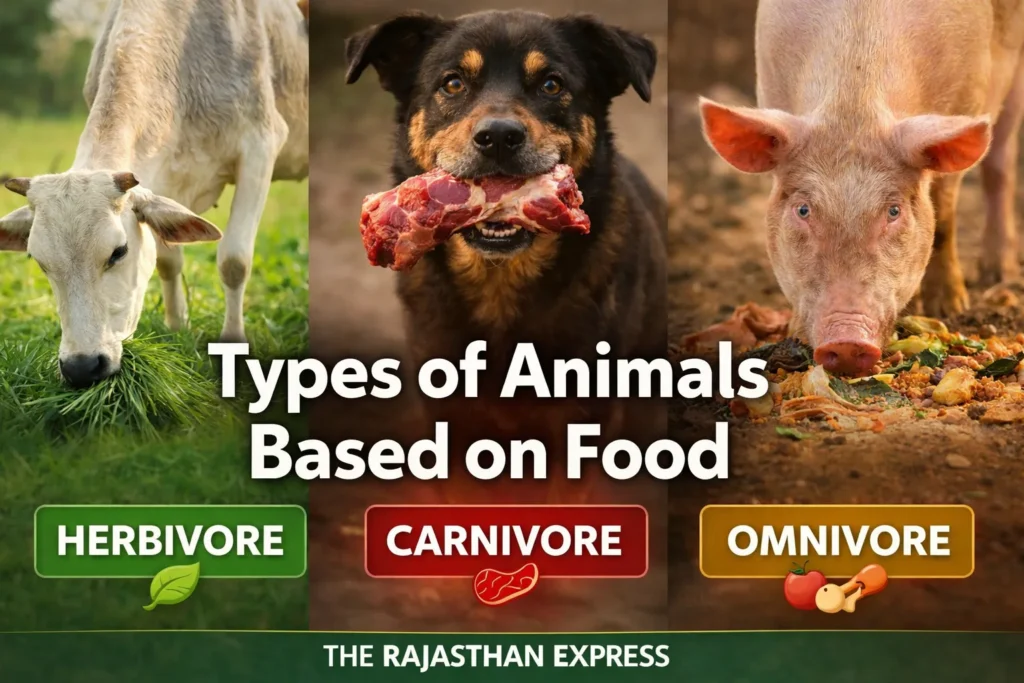
(B) Carnivores (Carnivores)
- These animals eat meat.
- Examples: Dog, cat, lion, tiger, wolf, etc.
(C) Omnivores (Omnivores)
- These animals eat both grass and meat.
- Examples: Pig, human, bear, chicken (to some extent).
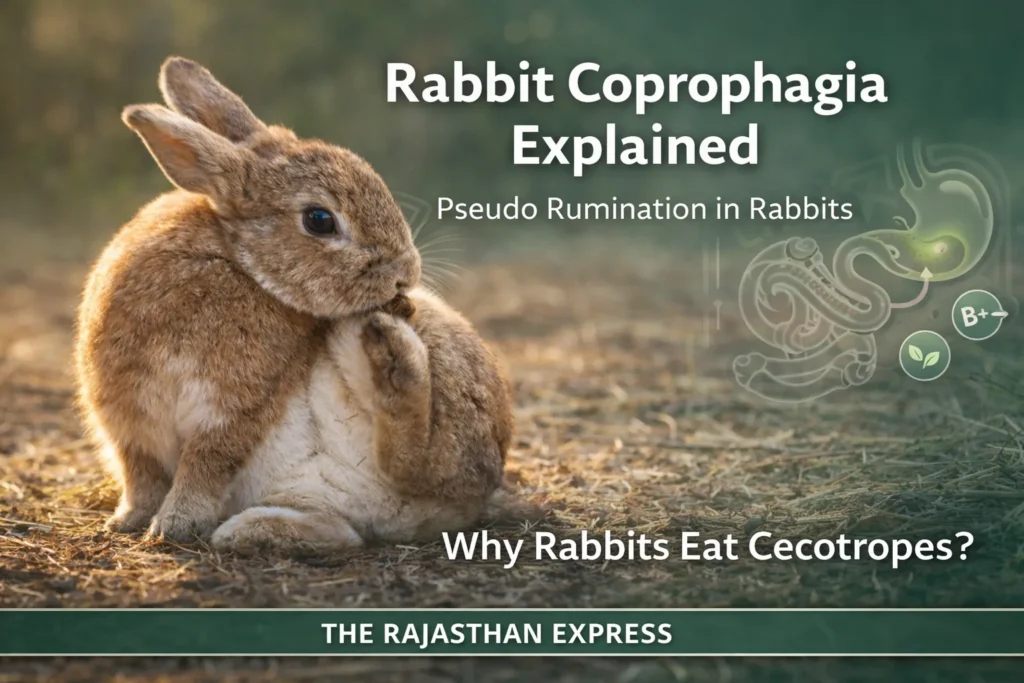
Rabbit and Pseudo Rumination (Coprophagia / Caecotrophy)
The rabbit is a non-ruminant animal, meaning its stomach has only one compartment. Still, it fulfills its nutrition through a special method called pseudo rumination.
What is the meaning of Coprophagia?
- The rabbit excretes hard feces (pellet-shaped) during the day. At night, it excretes soft feces (cecotropes).
It immediately eats this soft feces – directly from the anus to the mouth (this is not normal feces but is rich in nutrients). - This process is called Pseudo Rumination, Coprophagia, or Caecotrophy.
Why Does It Do This?
- Microorganisms in the rabbit’s intestine break down fibrous food (grass), but this digestion happens in the large intestine (caecum).
- The vitamins (especially B-complex) and proteins formed during this process are expelled through feces.
- By eating them again, the rabbit absorbs the nutrients a second time.
When does coprophagia start in rabbits?
- This process begins in rabbits from the age of 3 weeks (21 days).
Simple Understanding:
- The rabbit excretes hard feces during the day and soft feces at night – which is full of real nutrition. It immediately eats it. It does this so that it can fully obtain nutrition from grass. This is its pseudo rumination.
Types of Animals Based on Stomach
Now we understand whether cows and buffaloes are Ruminants or Non‑Ruminants. Cows and buffaloes are Ruminants that chew cud. A cow’s stomach has four parts. The largest part is the rumen. Actually, animals are divided into 3 categories based on their stomach structure:
Animals are classified into three types based on stomach structure.
Types of Animals Based on Stomach (Ruminants, Pseudo-Ruminants, Non-Ruminants)
Now we understand how the stomach of these animals works. In fact, animals are divided into parts based on the structure of their stomach:
1. Ruminant: Cow and Buffalo Digestive System (Cud-Chewing Animals)
These are animals that eat grass and chew cud. Rumination means swallowing food and then bringing it back to the mouth to chew again (regurgitation).
- They ruminate (chew food again and again after regurgitating it).
- Their stomach has 4 compartments: Rumen, Reticulum, Omasum, Abomasum.
- Examples: Cow, buffalo, goat, sheep, yak, mithun, giraffe, deer, nilgai.
- Their stomach is compound, having four parts:
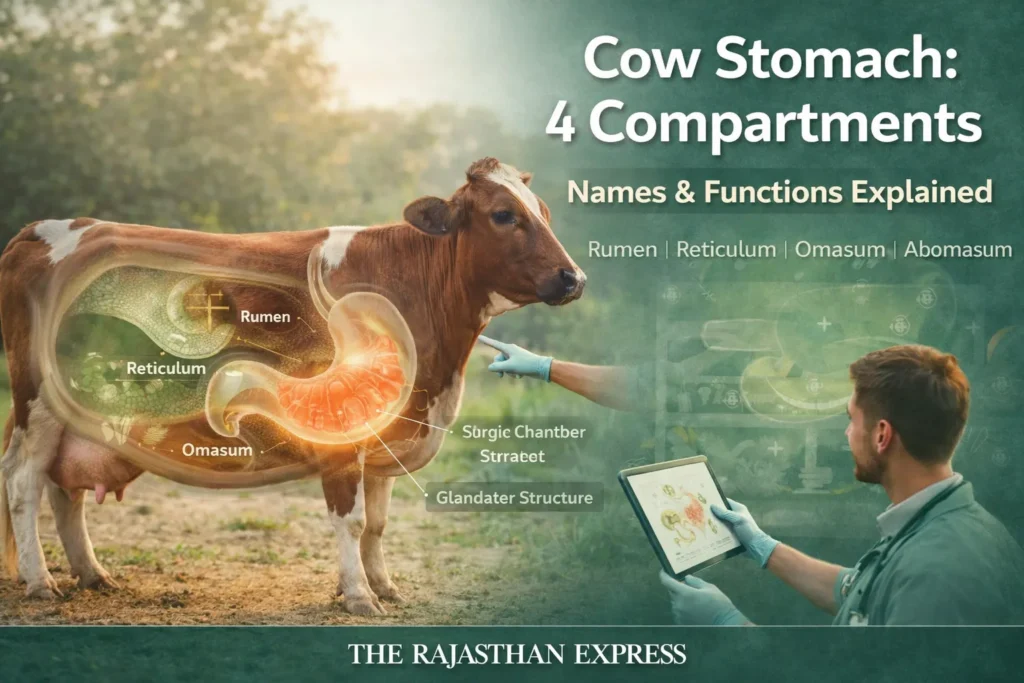
(1) Rumen – The Largest Part
- The largest part (70–80% of the entire stomach).
- Shape: Like a Turkish towel.
- Function: Food is fermented here. Billions of microorganisms break down grass.
- pH: 6.5–6.8 (slightly acidic, like curd).
- Movement: Contracts 3 times every 2 minutes (motility).
Easy Words: This is the “storage chamber.” The animal quickly eats grass and stores it here, then later brings it back to chew comfortably.
(2) Reticulum – “Honeycomb Small Part”
- The smallest part (only 5% capacity). It is the smallest part of the stomach.
- It is the second compartment based on food flow.
- Shape: Like a honeycomb. Also called “net” or “boni.”
- Function: Rumination starts here. Food comes back to the mouth from here.
- It filters small and large particles. This is the place from where the animal regurgitates food.
Special Fact: If an animal swallows sharp objects like nails or wires, they get stuck here. That’s why it is called a “Tool Box.” This condition is known as Hardware Disease.
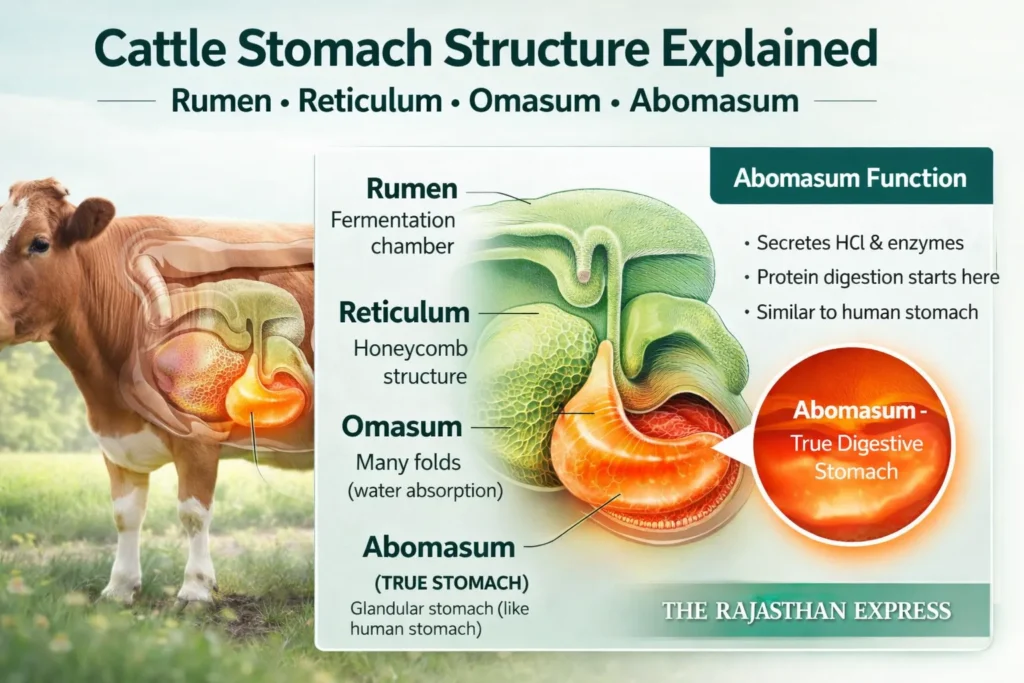
(3) Omasum – Leafy Part (Book Stomach)
- The third part of the stomach with a capacity of 7–8%.
- Also called “oda” or “leaf.”
- Shape: Contains many layers (like leaves), hence called Book Stomach.
- Function: Absorbs water from food and temporarily holds it.
Note: This part is absent in pseudo-ruminant animals (camel, llama, etc.).
Easy Words: It is a “leafy pump” that removes extra water from food.
- Omasum is also called Many-Plies because it contains many folds, hence also called Book Stomach.
- It has leaf-like layers inside. It absorbs water and nutrients. Water is removed from food here.
Note: In poultry, the crop performs a function similar to the omasum. In animals, omasum temporarily stores food, while in poultry, this function is done by the crop (an expanded part of the oesophagus).
(4) Abomasum – True Stomach
- The fourth and second-largest part (7–8% capacity).
- Function: Digestive juices (acid, enzymes) are produced here. Real digestion occurs here.
- pH: 2 (acidic, like the human stomach).
- Also called True Stomach or Rennet, as it secretes rennin enzyme (for milk curdling).
The abomasum is called the True (Glandular) Stomach because digestive glands are present here. Real digestion occurs here.
It is the final (fourth) part and the second-largest in capacity.
Easy Words: This is the real “gastric stomach.” The other three parts only do pre-processing; digestion happens here. It is exactly like the human stomach. Gastric juice (acid) is secreted here, which digests bacteria and proteins.
Size Order of Compartments:
- Rumen (70–80%) > Abomasum (7–8%) > Omasum (7–8%) > Reticulum (5%)
Food Flow Sequence:
- Rumen → Reticulum → Omasum → Abomasum
How Does Rumination Occur?
- Food comes back to the mouth from the reticulum, then the animal chews it again and swallows it.
Calf Stomach Development (Birth to 6 Months)
- At birth: The most developed part is the abomasum, because the calf drinks only milk and this part digests milk.
- At 6 months: The rumen becomes fully developed. Now the calf can digest grass.
Key points about India’s registered buffalo breeds –
- India’s highest milk‑giving buffalo is Murrah, with average milk production of 1,752 kg per lactation and milk fat of 7.3%. Among indigenous cows, the highest milk‑giving breed is Sahiwal.
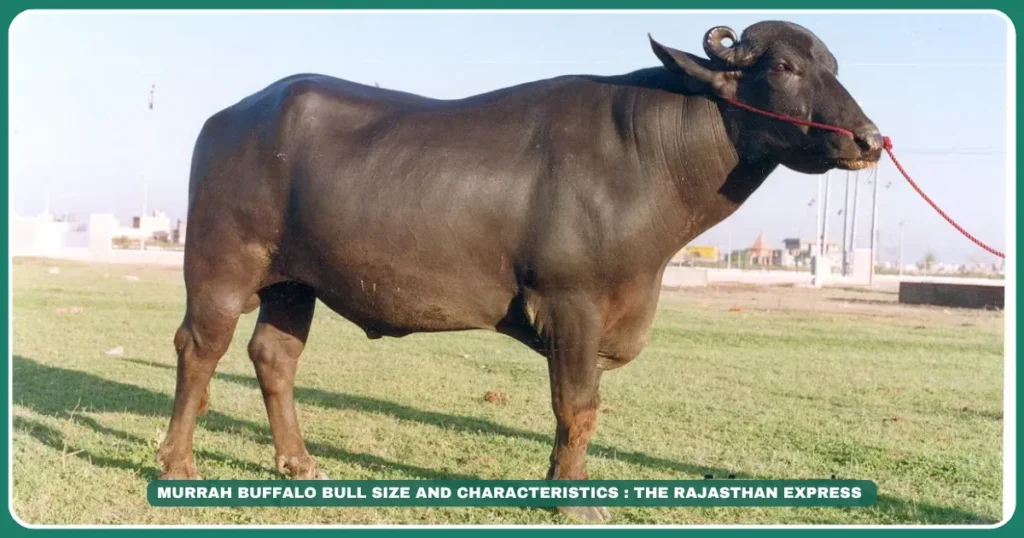
- The Murrah buffalo is jet black in colour and has short, thick, jalebi‑like coiled horns – this is its biggest identification. It is also called Delhi Buffalo, Khundi, Kunni.
- Nili Ravi buffalo is called Panchkalyani or Panchbhadra because it has five white markings (forehead, face, muzzle, legs, and tail) on its body. Nili Ravi has a wall eye (blue or white spotted eye) and its horns are also jalebi‑like like Murrah. Its average milk is 1,850 kg and fat 6.8%. Among Indian buffaloes, the lowest milk fat breed is Nili Ravi – about 4% fat.
- India’s highest milk fat buffalo is Bhadawari. According to NBAGR, average fat is 7.88% and maximum up to 12.8%. Among indigenous cows, the highest fat is in Sahiwal milk (4.5‑5%).
- Bhadawari buffalo colour is copper‑like bright and it has two white lines (Kantha) on the neck. It is also called ‘Chambal’s Black Gold’.
- Traditionally and in most livestock literature, Nili Ravi buffalo was known as the lowest milk fat breed (~4%). However, according to NBAGR’s latest field surveys, the lowest average fat (6.65%) is now Banni (Kundi), while Nili Ravi’s average fat is estimated at 6.8%.
- Banni buffalo is a unique night‑grazing breed that gives average 2,857 kg of milk even in the extreme heat and saline soil of the Rann of Kutch.
- India’s heaviest buffalo is Jafarabadi. Male weight is 700 kg and female weight is 620 kg. Its drooping horns and sleepy eye are special identifications. India’s heaviest indigenous cow is Kankrej.
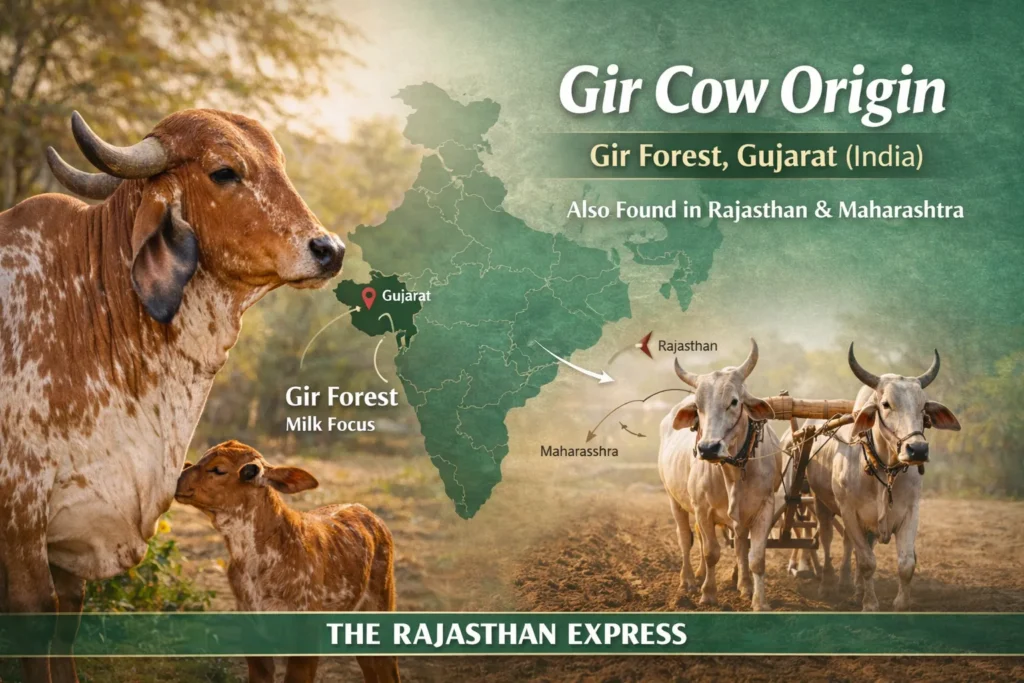
- The birthplace of Jafarabadi buffalo is Gujarat’s Gir forest, from where the Gir cow also originated.

- The longest lactation period among buffaloes is of Mehsana buffalo – approximately 352 ± 15 days. Among indigenous cows, the longest lactation period is of Gir cow – approximately 325 days.
- Mehsana is a cross of Murrah and Surti. Its tail switch is black, while in Surati the switch is white or mixed.


- Surti buffalo has sickle‑shaped horns and two white bands under the neck. It gives 1,667 kg of milk even on low fodder.
- Pandharpuri buffalo has the unique ability of ‘door‑to‑door milking’ – the same buffalo can be taken to multiple customers’ doors and milked repeatedly.
- Both Pandharpuri and Nagpuri have sword‑like horns (long, flat, reaching up to the shoulders). Nagpuri horns are slightly thinner than Pandharpuri.
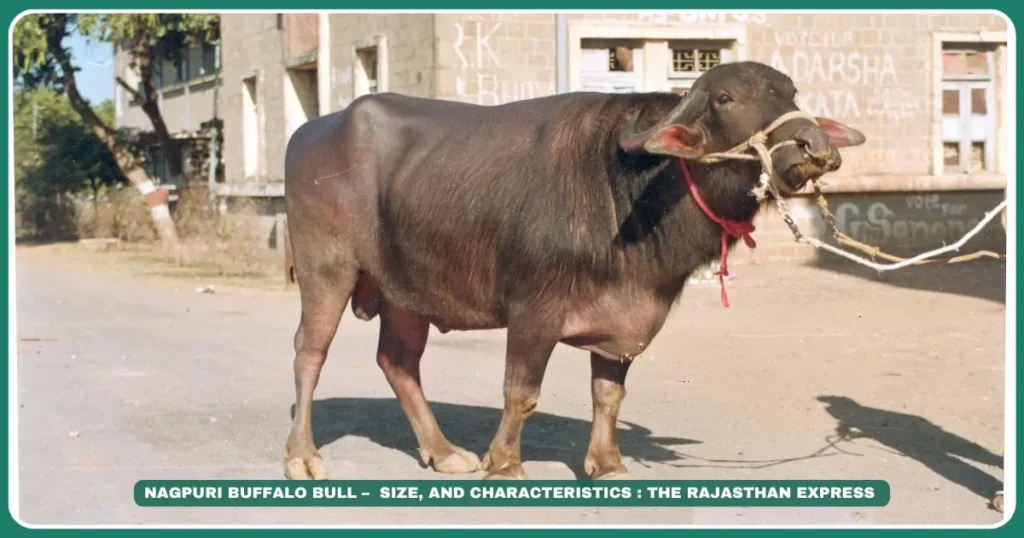
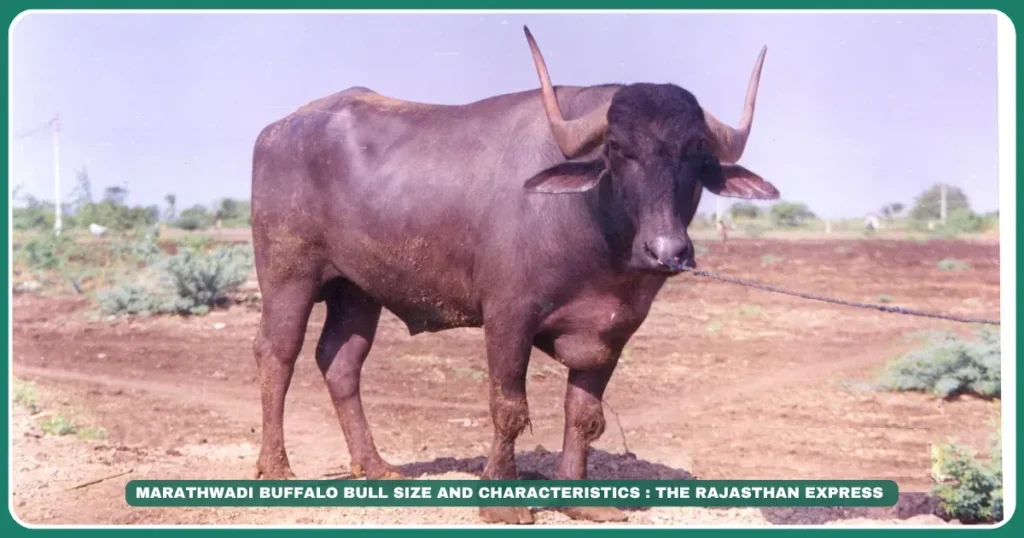
- Marathwadi buffalo horns never extend beyond the shoulder bone, distinguishing it from Pandharpuri. Its average fat is 8.8%.
- Some newborn calves of Puranathadi buffalo are completely white. Its milk has average fat of 8.44%.
- Dharwadi buffalo milk is used to make ‘Dharwad Peda’, which has received a GI Tag. Its average milk production is 972 litres.
- India’s only swamp buffalo is Luit, which has 48 chromosomes. All other registered buffaloes are riverine and have 50 chromosomes.
- Luit is found in Assam’s flood‑prone areas and has average milk of 449 kg and fat of 8.68%.
- Chilka buffalo is the only salt‑water adapted breed. It swims and grazes in the salt water of Chilka Lake, and its milk curd does not spoil for 5‑7 days.
- Toda buffalo is a semi‑wild and most aggressive breed of the Nilgiri hills. It is the cultural heritage of the Toda tribe.
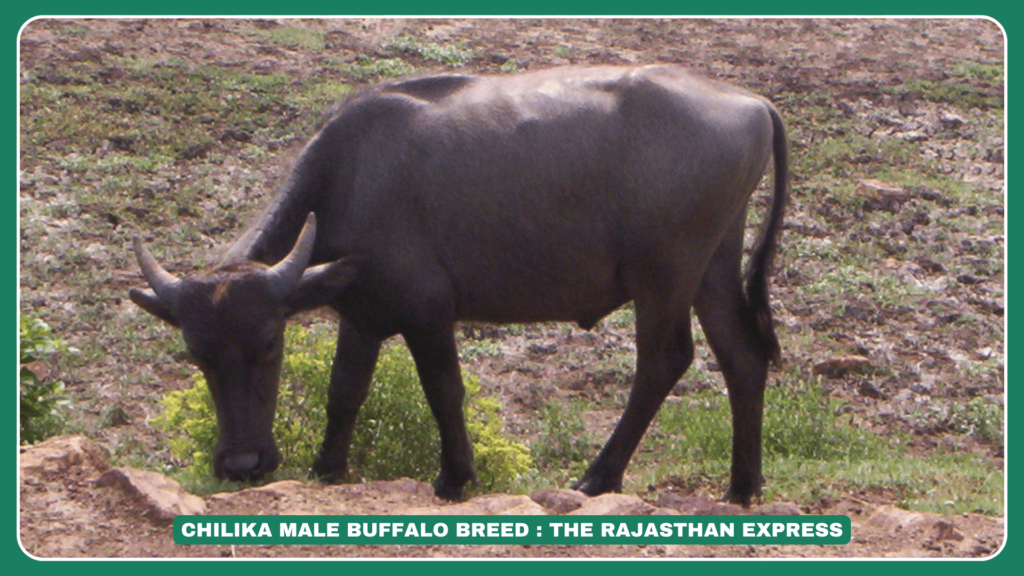

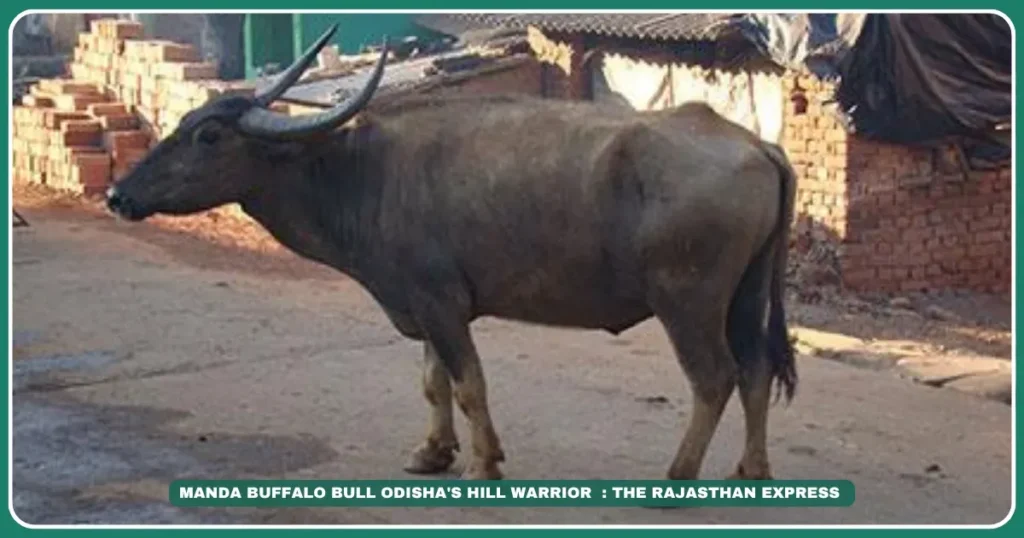
- India’s smallest buffalo is Manda, found in the hills of Koraput‑Malkangiri, Odisha. The world’s smallest cow is Vechur, and Punganur is also counted among dwarf cows.
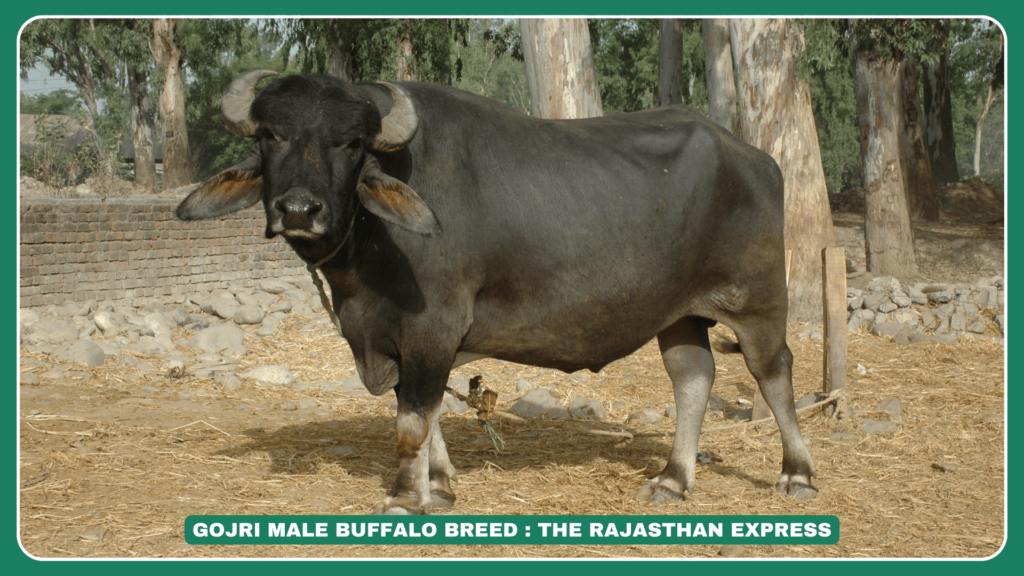
- Gojri is a hill buffalo, reared by the Gujjar community and follows a nomadic lifestyle. Its horns are called ‘leaf‑shaped horns’ with a large sweep.

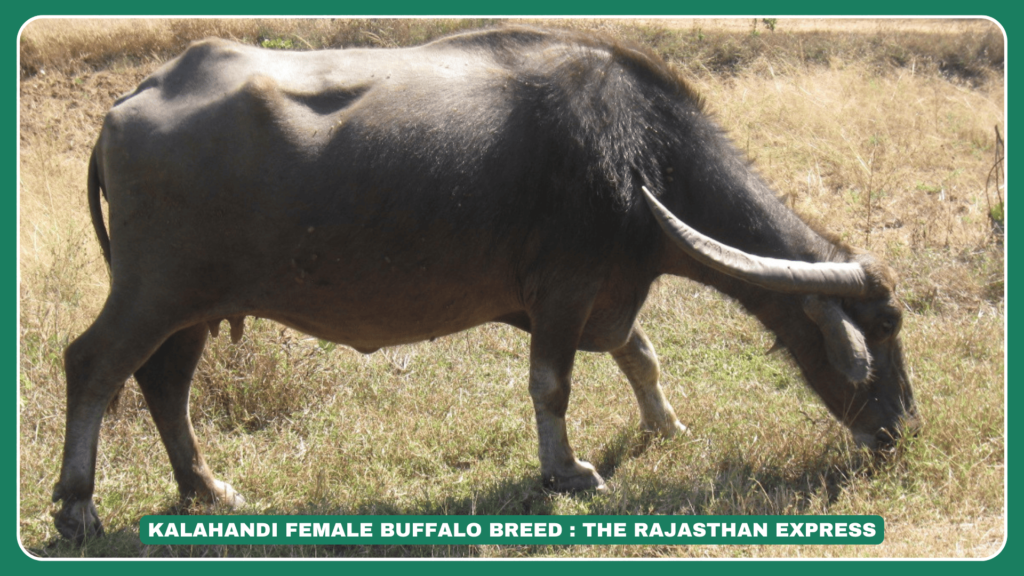
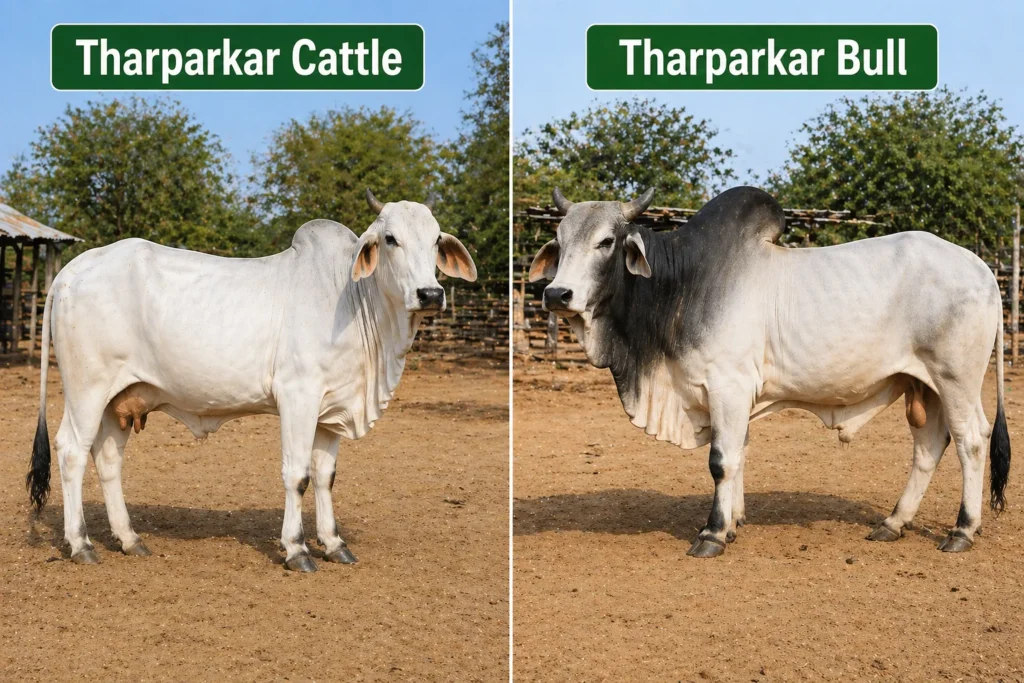
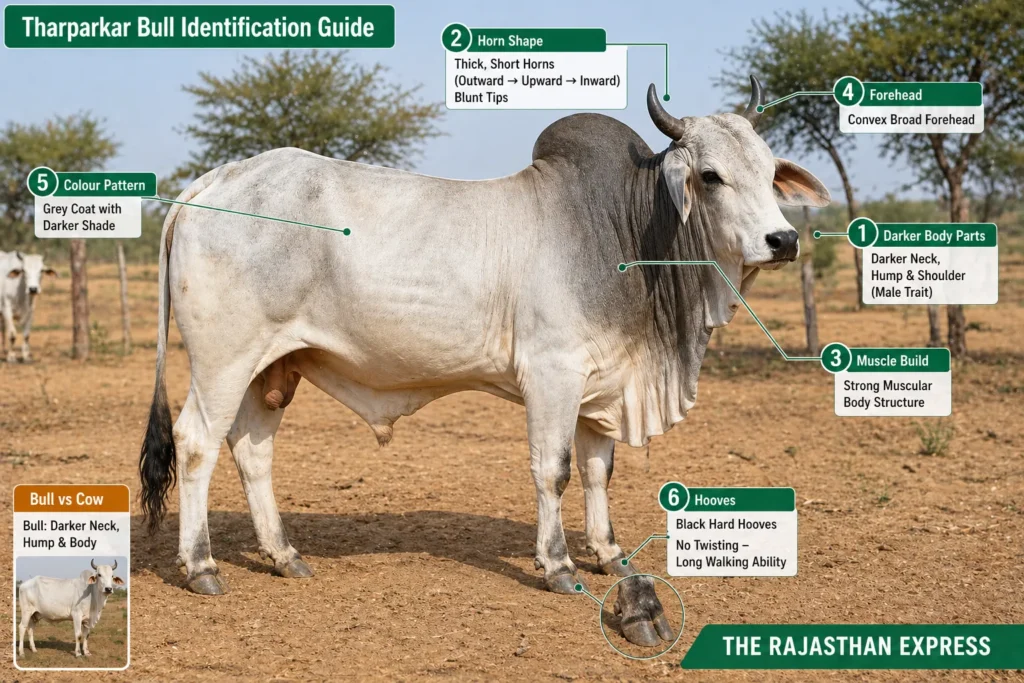
- Kalahandi buffalo survives by grazing in forests and hills without any special diet and is highly resistant to diseases. India’s highest disease‑resistant indigenous cow breed is Tharparkar.
Key conclusions in simple language –
- India’s highest milk‑giving buffalo breed is Murrah.
- The lowest milk fat breed among Indian buffaloes is Nili Ravi, with approximately 4% fat.
- The highest milk fat breed among Indian buffaloes is Bhadawari, with up to approximately 14% fat.
- The heaviest and largest breed among Indian buffaloes is Jafarabadi.
- The smallest registered breed among Indian buffaloes is Manda.
- The most aggressive and wild‑tempered buffalo breed in India is Toda.
- The longest lactation period among buffaloes (approx 352 days) is of the Mehsana breed.
- The only registered swamp buffalo breed in India is Luit, which has 48 chromosomes.
- The night‑grazing buffalo breed is Banni (Kundi).
- The buffalo breed well‑adapted to salt water is Chilka.
- The buffalo breed with door‑to‑door milking ability is Pandharpuri.
- The buffalo breed known for world‑famous Dharwad Peda (which has received a GI Tag) is Dharwadi.
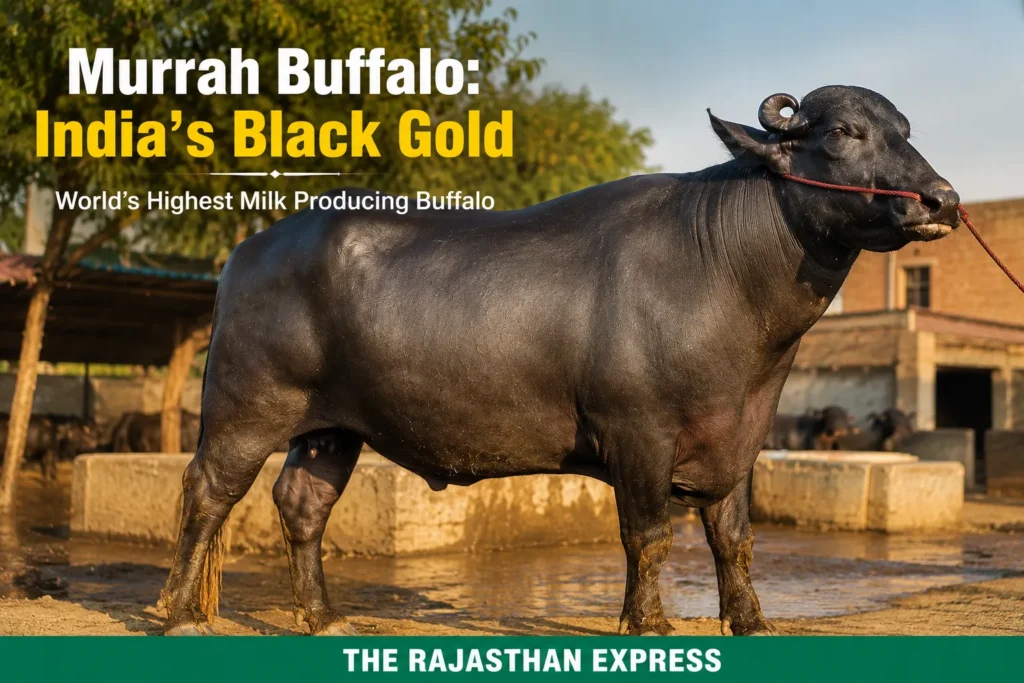

1. Murrah Buffalo
- Common names: Murrah is also known as ‘Delhi Buffalo’, ‘Khundi’, and ‘Kunni’.
- Place of origin: The native place of this breed is Hisar, Rohtak, Jind, and Gurugram districts of Haryana. It is also found abundantly in Punjab and Delhi.
- Milk production and fat: Murrah is the highest milk‑giving buffalo breed not only in India but in the world. According to NBAGR’s field survey, its average milk production per lactation is 1,752 kg (litres), with a normal range of 1,003 to 2,057 kg. With excellent management and feeding, it can give more than 3,500 litres. Its milk fat content averages 7.3% (ranging from 6.9% to 8.3%).
- Physical identification:
- Colour is deep jet black, which shines in sunlight.
- Horns are short, thick, and jalebi‑like (coiled) – this is its biggest identification.
- Female’s head is light and pointed, eyes are bright, and neck is thin.
- Body is boat‑shaped and well‑proportioned, udder is heavy, pendulous, and evenly spread on all sides. Milk veins are clearly prominent on the udder.
- Other features: This breed can tolerate extreme heat and has excellent fertility. It has the biggest contribution in bringing about the milk revolution across India. (According to NBAGR, average age at first calving is 43.4 months and calving interval is about 15 months.)
2. Nili Ravi Buffalo
- Common names: It is also known as ‘Panchkalyani’ and ‘Panchbhadra’.
- Place of origin: The main area of this breed is Firozpur (Fazilka, Zira, Makhu) and Amritsar (Patti, Khemkaran) districts of Punjab.
- Milk production and fat: According to NBAGR’s field survey, its average milk production per lactation is 1,850 kg (litres) , ranging from 1,586 to 1,929 kg. Its milk fat content averages 6.8% (ranging from 5.1% to 8.0%).
- Physical identification:
- Body colour is generally black, but it has five white markings that are essential – on the forehead, on the face, on the muzzle, on all four legs below the knees, and on the tail switch. This feature makes it ‘Panchkalyani’.
- Eyes are often wall eyes (light blue or with white spots), which look unique.
- Horns are jalebi‑like (tightly coiled) like Murrah, but they spread and twist slightly more than Murrah.
- Body is heavy, forehead is prominent, and skin is thin.
- Other features: Due to low fat, its milk is considered light for drinking, and it prefers to live near rivers and streams. (According to NBAGR, average age at first calving is 45 months and calving interval is about 16 months.)
3. Bhadawari Buffalo
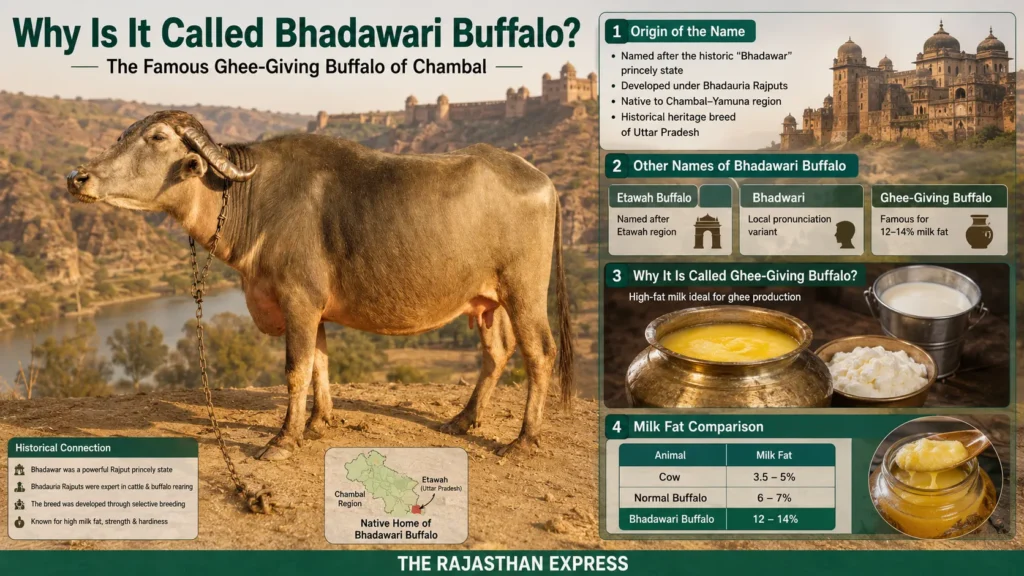
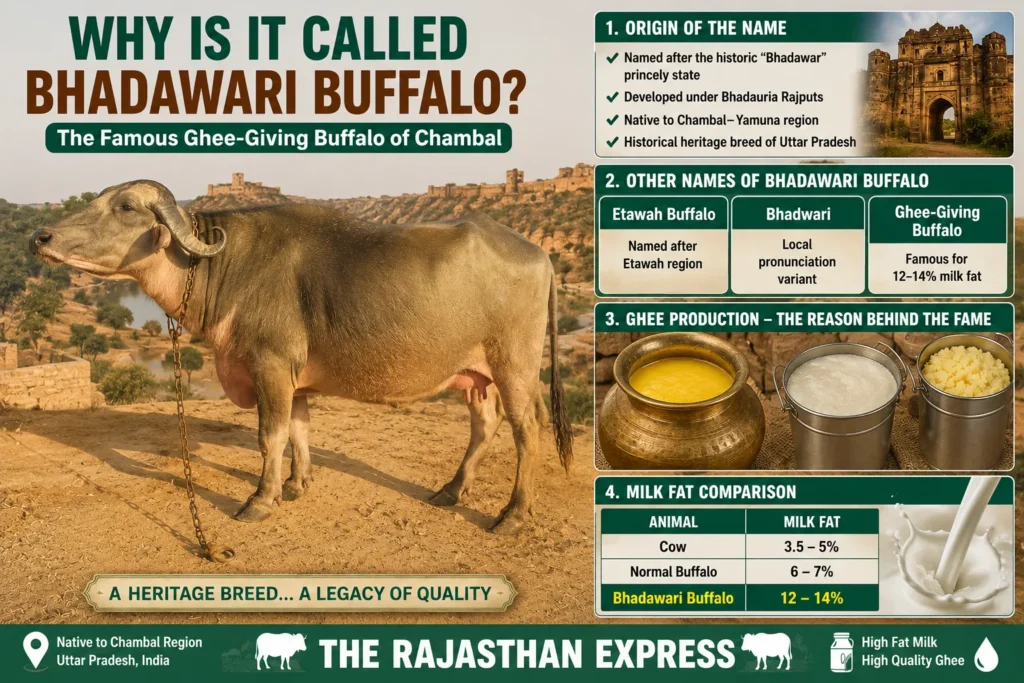
- Common names: It is also called ‘Etawah buffalo’. Its name comes from the Bhadawar princely state and the Bhadawariya Rajput clan there.
- Place of origin: Main area is Bhind and Morena districts of Madhya Pradesh, and Agra and Etawah districts of Uttar Pradesh. It is found abundantly in the ravines of the Chambal, Yamuna, and Utangan rivers.
- Milk production and fat: According to NBAGR’s survey, its average milk production per lactation is 1,294 kg (litres) , with a normal range of 540 to 1,400 kg. This is India’s highest milk fat buffalo. Its milk fat averages 7.88% , which can reach up to 12.8% in some excellent animals. For this reason, its milk makes extremely thick yoghurt, delicious butter, and pure ghee.
- Physical identification:
- Body colour is bright copper or blackish copper, which shines in sunlight. Leg colour is usually like wheat straw.
- There are two white lines (chevrons) on the lower part of the neck, locally called ‘Kantha’.
- Horns are black, medium thickness, go outward‑downward, then backward parallel to the neck, and finally curve upward at the end.
- Body is relatively small and stocky.
- Other features: This breed has tremendous ability to survive harsh conditions in the ravines of Chambal and convert poor‑quality fodder into high‑fat milk. It is called ‘Chambal’s Black Gold’. (According to NBAGR, average age at first calving is 44.6 months and calving interval ranges from 13 to 21 months.)
4. Gojri Buffalo
- Common names: Called ‘Gojri’ because it is reared by the Gujjar community; locally also called ‘Desi’.
- Place of origin: This hill buffalo is found in the sub‑Himalayan areas of Himachal Pradesh (Chamba, Kangra) and Punjab (Hoshiarpur, Gurdaspur, Ropar, Pathankot, Mohali) .
- Milk production and fat: According to NBAGR’s survey, its average milk production per lactation is 1,000 kg (litres) , ranging from 800 to 1,200 kg. Milk fat content is around 6% to 7% as per regional estimates.
- Physical identification:
- This buffalo is medium in size.
- Body colour is blackish‑brown or brown.
- Horns are heavy and medium‑sized; they go backward and upward forming a large sweep, locally called ‘leaf‑shaped horns’.
- It has amazing ability to walk long distances in hilly areas and survive on limited fodder.
- Other features: This breed maintains its reproduction and milk production even in harsh hill climates and on grazing alone without any special diet. It adopts a semi‑nomadic lifestyle with the Gujjar community. (According to NBAGR, average age at first calving is 54 months and calving interval ranges from 15 to 24 months.)
5. Surti Buffalo
- Common names: Also known as Charottari, Dakkani, Gujarati, Nadiadi, and Talbada.
- Place of origin: Mainly found in Vadodara, Bharuch, Kheda, and Surat districts of Gujarat.
- Milk production and fat: According to NBAGR’s survey, its average milk production per lactation is 1,667 kg (litres) . Its milk fat content averages 7.02% (ranging from 3.8% to 8.7%). This breed has good amounts of both fat and SNF in its milk.
- Physical identification:
- Body size is medium.
- Colour ranges from rusty brown to silver‑grey and black , with black or brown skin.
- The biggest identification is its flat and sickle‑shaped horns , which go downward and backward, finally curving upward to form a hook.
- There are two white bands under the neck.
- Udder is well‑developed and strong.
- Other features: Being light in body, this breed eats less fodder and can survive even on dry stalks without green fodder. It is very popular among landless, small, and marginal farmers. (According to NBAGR, average age at first calving is 44.9 months and calving interval is about 14.86 months.)
6. Mehsana Buffalo
- Common names: It is a cross of Murrah and Surati.
- Place of origin: Mehsana, Patan, and Banaskantha districts of Gujarat.
- Milk production and special features: This buffalo is famous for having the longest lactation period among buffaloes. Its average lactation period is 352 ± 15 days – meaning it gives milk for almost the entire year. Milk production averages 1,800 to 2,500 litres and fat is 6% to 7%.
- Physical identification:
- Body colour is black, like Murrah, but the body is often lighter than Murrah.
- Horns are sickle‑shaped like Surati , not jalebi‑like like Murrah.
- The tail switch (tuft at the end of the tail) is black , while in Surati it is white or mixed.
- Eyes are small and bright, forehead is wide.
- Speciality: This is an excellent breed for commercial dairy because it gives more milk for a longer period.
7. Jafarabadi Buffalo
- Common names: Also called Bhavnagari, Gir, or Jafari.
- Place of origin: Its birthplace is considered to be Junagadh, Amreli, Bhavnagar, Jamnagar, Rajkot, and Porbandar districts of Gujarat.
- Milk production and fat: According to NBAGR’s survey, its average milk production per lactation is 2,239 kg (litres) , ranging from 2,150 to 2,340 kg. Its milk fat content averages 7.68% (ranging from 6.8% to 8.5%).
- Physical identification:
- This is the heaviest and largest breed among all buffalo breeds of India. According to NBAGR, an adult male averages 700 kg and female 620 kg.
- Body colour is black, but in some animals the tail switch may be white or slate.
- The most special identification is its long, heavy, downward‑hanging horns (drooping horns) , which press on the head and go outward‑downward‑sideways, then curve upward and inward forming a ring‑like shape.
- Due to this horn structure, the eyes appear small and sleepy or half‑open (sleepy eye or study eye) , which is a speciality of this breed.
- Body is heavy, forehead is prominent and huge.
- Other features: This breed is also known for its ability to fight lions in the Gir forests. (According to NBAGR, average age at first calving is 45 months and calving interval is about 14.6 months.)
8. Banni Buffalo
- Common names: Also known as Kachchi and Kundi.
- Place of origin: Kutch district of Gujarat , especially the Banni grasslands.
- Milk production and fat: According to NBAGR’s survey, its average milk production per lactation is 2,857.2 kg (litres) , which can range from 1,095 to 6,054 kg. Its milk fat content averages 6.65% (ranging from 4% to 12.1%).
- Physical identification:
- Body colour is mainly black , sometimes with a copper tinge.
- Horns are medium to large, heavy, and vertical upward , with inverted double or single coiling.
- It is a unique night‑grazing buffalo , which grazes at night in the Banni grasslands to escape the extreme heat of the Kutch Rann during the day, and rests during the day.
- Speciality: A breed that survives in extremely adverse conditions (high‑salinity land, water scarcity, extreme temperatures) and gives excellent milk production without much care. (According to NBAGR, average age at first calving is 40.3 months and calving interval is about 12.24 months.)
9. Toda Buffalo
- Common names: This breed is known after the Toda tribe.
- Place of origin: Nilgiri hills of Tamil Nadu.
- Milk production and fat: According to NBAGR, its average milk production per lactation is only 500 kg (litres) . Milk fat content averages 8.22% , making it extremely thick.
- Physical identification:
- Considered the most aggressive and semi‑wild breed among all buffalo breeds of India.
- Calf colour is light brown (fawn) at birth, which changes to ash‑grey in about two months. Adults are mainly fawn and ash‑grey.
- There is a narrow strip of dense hair from the upper neck to the beginning of the tail.
- There are two white chevron (V‑shaped) marks between the throat and chest.
- Horns are long (about 62 cm), thick , go outward‑downward‑upward forming a semi‑circular or half‑circle.
- Both males and females average about 380 kg weight.
- Speciality: Toda buffalo has extreme religious and cultural importance in the life of the Toda tribe. It depends completely on grazing and is capable of crossing hill streams. (According to NBAGR, average age at first calving is 48 months and calving interval is about 15.7 months.)
10. Chilka Buffalo
- Common names: Locally also called Desi.
- Place of origin: Cuttack, Ganjam, Puri, and Khurda districts of Odisha , especially the area around Chilka Lake.
- Milk production and fat: According to NBAGR’s survey, its average milk production per lactation is 500 kg (litres) , ranging from 440 to 514 kg. Its milk fat content averages 8.7% (ranging from 8.5% to 8.81%).
- Physical identification:
- Body colour is blackish‑brown or completely black.
- Medium size, well‑built body, strong legs, and small udder.
- Horns curve upward and inward.
- Speciality: Its biggest speciality is amazing adaptation to salt water. It eats submerged vegetation in the salt water of Chilka Lake and lives there. The curd made from its milk does not spoil for 5 to 7 days at room temperature – a unique quality.
- Other features: This breed grazes at night in the marshy areas of the lake and survives without any special diet. (According to NBAGR, average age at first calving is 44.81 months and calving interval is about 14.03 months.)
11. Luit Buffalo
- Common names: Also called Assam’s swamp buffalo (Assamiya Swamp) .
- Place of origin: Nine districts of upper Brahmaputra valley in Assam – Jorhat, Sivasagar, Lakhimpur, Dibrugarh, Tinsukia, Dhemaji, Golaghat, Majuli, and Biswanath. It is also found in border areas of Manipur, Mizoram, and Nagaland.
- Milk production and fat: According to NBAGR’s survey, average milk production per lactation is only 449.4 kg (litres) , with a normal range of 385 to 505 kg. Milk fat content averages 8.68% (ranging from 7.8% to 10.9%).
- Physical and genetic identification:
- This is India’s only registered swamp buffalo , while all others are riverine buffaloes.
- Body colour is black. There is a white ‘V’‑shaped mark under the neck, and light white stripes up to the knees on all four legs (stockings) .
- Horns go outward backward upward forming a semi‑circle.
- The biggest genetic difference: This breed has only 48 chromosomes , while riverine buffaloes have 50 chromosomes.
- Male average weight is 470 kg and female 416 kg.
- Other features: This breed is fully adapted to swamps, floods, and extremely humid areas. It is reared in large groups on river islands and banks. (According to NBAGR, average age at first calving is 53.55 months and calving interval is about 15.31 months.)
12. Dharwadi Buffalo
- Place of origin: Spread across Dharwad, Gadag, Haveri, Bagalkot, Belgaum, Vijayapura, Raichur districts of Karnataka.
- Milk production and fat: According to NBAGR, its average milk production per lactation is 972 litres. Daily milk can range from 1.5 to 8.7 litres. Milk fat content averages 6.9% .
- Physical identification:
- Body colour is black , medium height.
- Horns are semi‑circular and curve backward almost touching the shoulders.
- Ears are erect, udder is medium‑sized, and teats are cylindrical.
- Speciality: The famous Dharwad Peda made from the milk of this breed has received a GI Tag (Geographical Indication) . It is suitable for low‑rainfall areas.
13. Pandharpuri Buffalo
- Place of origin: Solapur (especially Pandharpur tehsil), Sangli, and Kolhapur districts of Maharashtra.
- Milk production and fat: According to NBAGR’s survey, its average milk production per lactation is 1,790.6 kg (litres) . Milk fat content averages 8.01% .
- Physical identification:
- Colour is generally black , ranging from light to dark black. Some animals have white marks on the forehead, legs, and tail.
- Horns are very long , extending beyond the shoulders and sometimes reaching the hip bones. They are of three types – Bharakand (curved backward and twisted), Toki (curved backward‑upward and outward), and Meti (flat and downward).
- Nose bone is prominent, long, and straight.
- Female average weight is about 416 kg.
- Unique feature – Door‑to‑door milking: This breed has the amazing ability of multiple milk let‑down (repeatedly releasing milk). The farmer takes the buffalo to one customer’s door and milks it, then takes it to the next customer and milks the same quantity again. It may take 30 to 40 minutes for complete milking.
- Other features: This is a hardy breed suitable for dry conditions. (According to NBAGR, average age at first calving is 43.8 months and calving interval is about 13.6 months.)
14. Nagpuri Buffalo
- Common names: Also known as Berari, Gavrani, Purnathadi, Varhadi, Illichpuri, Gavlavi, Arvi, Gavlagan, Gangauri, Shahi, and Chanda.
- Place of origin: Vidarbha region of Maharashtra – Nagpur, Akola, Amravati, Yavatmal, and Wardha districts.
- Milk production and fat: According to NBAGR’s survey, its average milk production per lactation is 1,039 kg (litres) , ranging from 760 to 1,500 kg. Milk fat content averages 8.25% (ranging from 7% to 8.8%).
- Physical identification:
- Colour is black , with white spots on the face, legs, and tail end. The Purnathadi subtype has a slightly brownish colour.
- Horns are flat, long (50‑65 cm) , and sword‑like , going backward along the neck to the shoulders, with pointed and upward‑raised tips.
- Male average weight is 396 kg and female 349 kg.
- Speciality: The maintenance cost of this breed is very low; it adapts well to local hot climate and has high fat content in milk. That is why farmers prefer it very much. (According to NBAGR, average age at first calving is 57 months and calving interval is about 14 months.)
15. Marathwadi Buffalo
- Common names: Also called Illichpuri and Dudhna Thadi.
- Place of origin: Marathwada region of Maharashtra – Jalna, Parbhani, Beed, Nanded, and Latur districts.
- Milk production and fat: According to NBAGR’s survey, its average milk production per lactation is 1,118 kg (litres) . Milk fat content averages 8.8% (ranging from 6.25% to 10.5%).
- Physical identification:
- Colour ranges from slate‑black to deep jet black. Some animals have white marks on the forehead and lower legs.
- Horns are medium length (about 43 cm) , parallel to the neck and reaching the shoulders, but never extending beyond the shoulder bone. This distinguishes it from Pandharpuri.
- Speciality: This breed is adapted to drought‑prone areas and maintains good milk production even with less water and dry fodder. (According to NBAGR, average age at first calving is 52.3 months and calving interval is about 16.7 months.)
16. Purnathadi Buffalo
- Common names: Also called Purnakati and Bhuri.
- Place of origin: Buldhana, Akola, and Amravati districts of Maharashtra , especially the area along the Purna river.
- Milk production and fat: According to NBAGR’s survey, its average milk production per lactation is 878.52 kg (litres) , ranging from 353 to 1,533 kg. Milk fat content averages 8.44% (ranging from 6.5% to 11.5%), making it known for high fat.
- Physical identification:
- Male colour is brown , female is brownish‑white. Some newborn calves are completely white .
- Horns are long, thin, and straight , curving upward like a hook at the end. Male horns average 52 cm, female 58 cm.
- A star‑like white spot on the forehead , white lower parts of all four legs, and white tail switch are common.
- Speciality: About 15% of buffaloes have a pinkish udder. This breed is rapidly becoming popular for its high milk fat and strength in the local market. (According to NBAGR, age at first calving ranges from 42 to 54 months and calving interval is about 14.6 months.)
17. Kalahandi Buffalo
- Common names: Locally called Desi.
- Place of origin: Kalahandi district of Odisha (Bhavanipatna, Junagarh, Dharmagarh, Kodsara, Golamunda blocks) and Rayagada district .
- Milk production and fat: According to NBAGR’s survey, milk production ranges from 680 to 912 kg per lactation . Milk fat content ranges from 7.8% to 8.2% .
- Physical identification:
- Small and well‑built in size. Male average weight is 377.6 kg , female 350.9 kg .
- Body colour is blackish‑slate or sometimes completely slate .
- Horns are about 50 cm long , go outward‑backward‑upward and then curve inward, appearing semi‑circular .
- Forehead is prominent, tail is long with thick hair on the switch.
- Speciality: This is a completely grazing‑dependent breed , grazing all day in forests, hills, and harvested fields. Without much care, it is the backbone of the local tribal economy. (According to NBAGR, average age at first calving is 49.74 months and calving interval is about 17.5 months.)
18. Manda Buffalo
- Place of origin: Koraput, Malkangiri, and Nawarangpur districts of Odisha , which lie in the hills and plateau region of the Eastern Ghats.
- Milk production and fat: According to NBAGR, daily milk production ranges from 1.2 to 3.7 kg . Milk fat content averages 8.4% .
- Physical identification:
- This is India’s smallest buffalo breed .
- Body colour is mostly ash‑grey or slate with copper‑coloured hair . The lower part of the legs is lighter in colour.
- Horns are wide , go slightly outward‑backward‑inward forming a semi‑circle .
- Speciality: This breed can easily walk on hill slopes and manages on low fodder. Both males and females are used for agricultural work. It is reared mainly by open grazing.
Summary of 18 Registered Buffalo Breeds – Key Points:
- Murrah – Jet black colour, jalebi‑like horns; world’s highest milk‑giving buffalo (avg 1,752 kg, fat 7.3%).
- Nili Ravi – Five white markings (Panchkalyani) & wall eye; avg milk 1,850 kg, fat 6.8%.
- Gojri – Hill buffalo, reared by Gujjar community; ‘leaf‑shaped horns’, avg milk 1,000 kg.
- Bhadawari – Copper colour and ‘Kantha’ on neck; India’s highest fat buffalo (avg 7.88%, max 12.8%).
- Surati – Sickle‑shaped horns & two white bands on neck; gives 1,667 kg milk even on low fodder, fat 7.02%.
- Mehsana – Longest lactation among buffaloes (352 days); tail switch black, cross of Murrah × Surati.
- Jafarabadi – India’s heaviest buffalo (male 700, female 620 kg); drooping horns & sleepy eye, avg milk 2,239 kg.
- Banni (Kundi) – Night‑grazing breed; gives avg 2,857 kg milk even in harsh Rann region, fat 6.65%.
- Toda – Semi‑wild & aggressive breed of Nilgiri; avg milk only 500 kg but fat 8.22%.
- Chilka – Unique buffalo living in salt water; curd from its milk does not spoil for 5‑7 days.
- Luit – India’s only swamp buffalo (48 chromosomes); avg milk 449 kg, fat 8.68%.
- Dharwadi – Famous ‘Dharwad Peda’ from its milk has GI Tag; avg milk 972 litres.
- Pandharpuri – Amazing door‑to‑door milking ability (multiple milk let‑down); avg milk 1,791 kg, fat 8.01%.
- Nagpuri – Sword‑like long flat horns; high fat (8.25%) milk at very low cost.
- Marathwadi – Horns never extend beyond shoulder; suitable for drought‑affected areas, fat 8.8%.
- Purnathadi – Horns curve like a hook at the end; some calves completely white at birth, fat 8.44%.
- Kalahandi – Small, strong breed thriving in dense forests and hills without care; fat up to 8.2%.
- Manda – India’s smallest buffalo; easily walks on Eastern Ghat slopes, milk fat 8.4%.
People Also Ask
How many buffalo breeds are registered in India?
Which buffalo breed gives the highest milk in India?
What is the price of a Murrah buffalo in India?
- Heifer (young unbred): ₹50,000 – ₹80,000
- Ordinary milch (8‑10 litres/day): ₹80,000 – ₹1,20,000
- Good milch (12‑16 litres/day): ₹1,20,000 – ₹1,80,000
- High‑yielding (18‑25 litres/day): ₹1,80,000 – ₹2,50,000
- Complete record + high‑yielding: up to ₹4,00,000
What is the difference between a male buffalo and a female buffalo?
Which buffalo breed has the highest milk fat percentage?
Which buffalo breed gives the lowest fat milk?
Which is the heaviest buffalo breed in India?
Which is the smallest buffalo breed in India?
What is the only swamp buffalo breed registered in India?
Which buffalo breed grazes at night?
Which buffalo breed has door‑to‑door milking ability?
Which buffalo breed’s milk is used for the famous Dharwad Peda?
Which buffalo breed is adapted to salt water?
Which is the most aggressive buffalo breed in India?
Which buffalo breed has the longest lactation period?
What are the top 10 buffalo breeds in India?
- Murrah – Highest milk, jet black, jalebi horns
- Nili Ravi – Panchkalyani markings, wall eye
- Bhadawari – Highest fat (12.8%), copper colour
- Jafarabadi – Heaviest (700 kg), drooping horns
- Mehsana – Longest lactation (352 days)
- Surati – Sickle horns, two white neck bands
- Banni (Kundi) – Night‑grazing, high milk
- Toda – Most aggressive, semi‑wild
- Chilka – Salt‑water adapted, curd lasts 7 days
- Luit – Only swamp buffalo (48 chromosomes)