 By
ByBhadawari Buffalo: Uttar Pradesh’s Precious Indigenous Buffalo Breed
What Is the Bhadawari Buffalo?
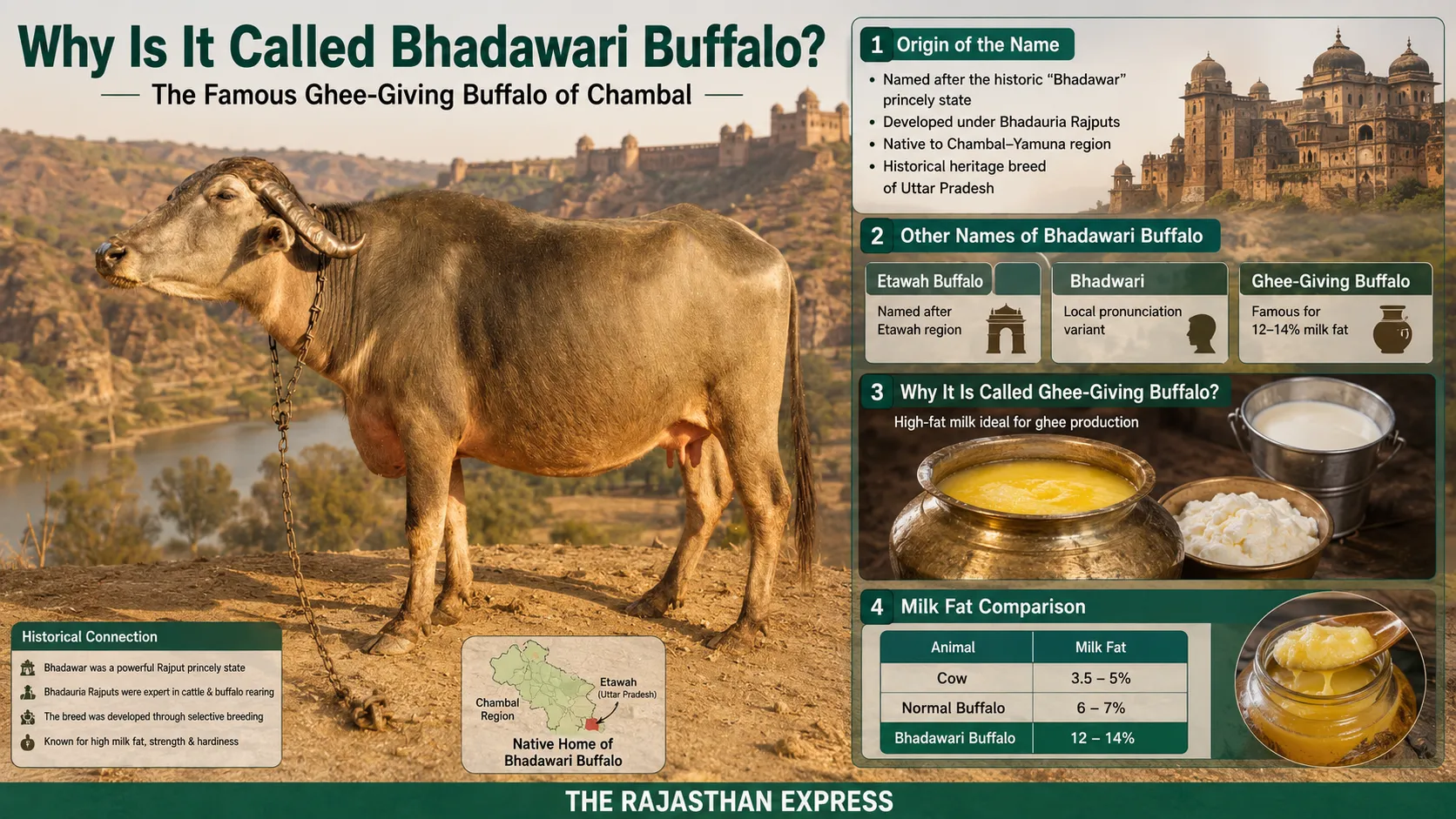
The Bhadawari buffalo is an extremely excellent and distinctive breed found in the Indian states of Uttar Pradesh and some parts of Madhya Pradesh. It is also known as Etawah Buffalo, because it is found abundantly in the Etawah region. The name Bhadawari buffalo is derived from the Bhadauria Rajput clan. Before independence, this buffalo used to be the pride of a princely state called ‘Bhadawar’. The kings and people of that state reared and nurtured this buffalo, hence it got the name ‘Bhadawari’. For this reason, another name of this breed is Etawah, because during the British period this area was part of the Etawah princely state.
Bhadawari Buffalo Origin and Native Breeding Tract
The Bhadawari buffalo is mainly spread across two states:
- Uttar Pradesh: Agra and Etawah districts (this is its main area)
- Madhya Pradesh: Bhind and Morena districts
All these districts are adjacent to each other, and here along the banks of the Yamuna, Chambal, and Utangan rivers, there are ravine (rough, undulating) areas.
Latitude and longitude range:
- This buffalo is found in the area between approximately 26° to 27° North latitude and 78° to 79° 51′ (approx 80°) East longitude. That is, this area is around Agra‑Etawah‑Bhind‑Morena.
Bhadawari Buffalo
| Conservation Status | Indigenous Indian Buffalo Breed (Needs Conservation) |
|---|---|
| Scientific Classification |
|
| Scientific Name | Bubalus bubalis |
| Other Names |
|
| Country of Origin | India |
| Native Breeding Tract |
|
| Latitude & Longitude Range | Approximately 26°–27° North latitude and 78°–79°51′ East longitude |
| Breed Registration | Registered Indigenous Buffalo Breed under ICAR-NBAGR, Karnal, Haryana |
| Main Uses |
|
| Origin of Name | Named after the historic princely state of Bhadawar, ruled by the Bhadauria Rajputs. The breed was traditionally reared in the Chambal–Yamuna region and later became associated with Etawah district. |
| Physical Characteristics |
|
| Milk Production |
|
| Milk Fat Percentage |
|
| Ghee Production Potential |
|
| Adaptability & Hardiness |
|
| Reproductive Performance |
|
| Body Measurements |
|
| Management System |
|
| Economic Importance |
|
| Bhadawari Buffalo Price (2026–2027 Estimate) |
|
| Population History |
|
| Major Threats |
|
| Breed Significance | Bhadawari is considered one of India’s most valuable indigenous buffalo breeds because of its exceptional milk fat percentage, ghee production potential, heat tolerance, and ability to thrive under low-input conditions. |
| Sources: ICAR-NBAGR Karnal; Department of Animal Husbandry & Dairying; The Rajasthan Express; Livestock Census 2019; Kaura (1961); Zachariah (1941) | |
Bhadawari Buffalo Milk Fat – The Highest Fat Buffalo Milk in India
The biggest identification of the Bhadawari buffalo is the huge amount of fat in its milk.
- The world’s highest milk‑giving buffalo is Murrah, but the highest fat in milk is found in Bhadawari buffalo milk.
- Bhadawari Buffalo Milk Fat Percentage : Bhadawari buffalo milk contains approximately 14 percent (14%) fat. Many records mention even more than 14%.
- For comparison: a good cow’s milk has barely 3.5 to 5% fat. That means Bhadawari milk has 3 to 4 times more cream than cow’s milk.
- This means: ghee, butter, yoghurt, and sweets made from this milk become very thick, aromatic, and are produced in larger quantities. This is why this breed is highly preferred by ghee makers.
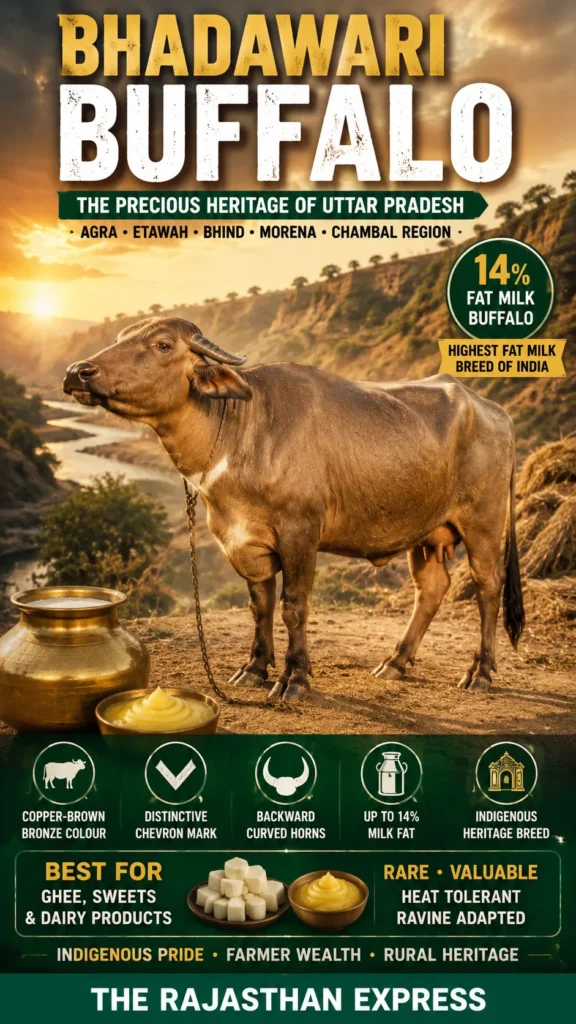
The Bhadawari buffalo is a riverine buffalo famous for its milk production and fat production. The biggest strength of the Bhadawari buffalo is that it survives and gives good milk even on very low‑quality fodder (dry straw, shrubs). It easily adapts to the ravines (difficult land with gullies and drains) of the Yamuna, Chambal, and Utangan rivers. That means whether you feed it expensive fodder or ordinary – it maintains its performance in every situation. It is expert at tolerating heat, diseases, and harsh conditions.
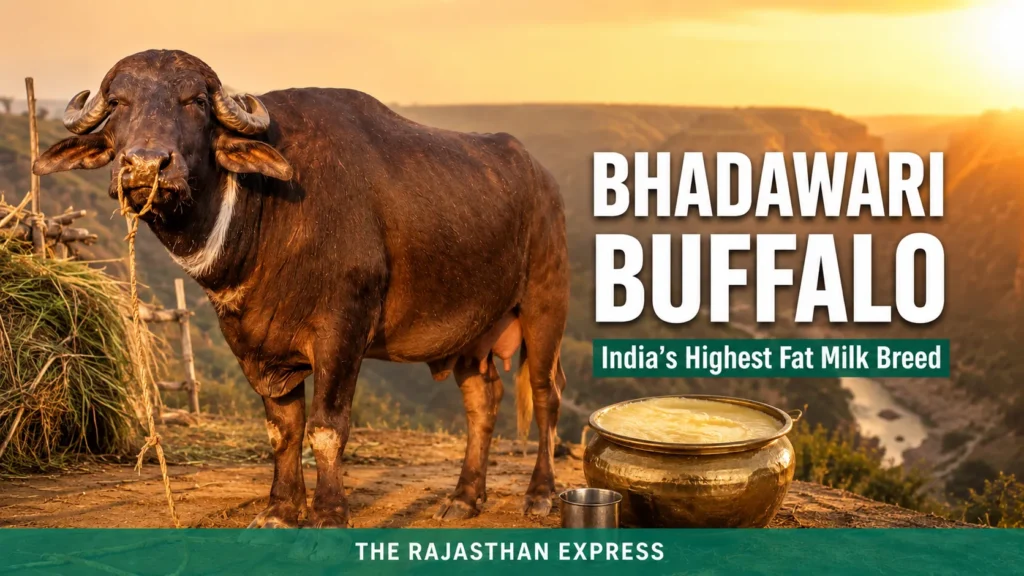
The Bhadawari buffalo is a dual‑purpose buffalo – that is, it gives milk and also does farm work (ploughing, cart).
- Milk: As mentioned above – low quantity but very creamy milk.
- Draught: This buffalo is very strong and tolerant. It can plough fields and pull carts without tiring even in the ravines of Yamuna and Chambal.
Although Bhadawari’s milk is extremely creamy, this breed does not give as much milk quantity as Murrah or Nili Ravi. Therefore, for commercial milk dairies, Murrah is more popular, but for ghee, butter, and sweet‑making businesses, there is no match for Bhadawari.
Registration and Recognition of Bhadawari Buffalo
Now regarding registration: the registration of indigenous breeds is done by the NBAGR (National Bureau of Animal Genetic Resources) located in Karnal, Haryana. For any breed to be registered, at least 1000 animals of that breed must be present in the country. The Bhadawari buffalo is an indigenous buffalo breed among India’s registered breeds. Indigenous cows in India are divided into three categories: first, milch breeds (such as Gir and Sahiwal); second, dual‑purpose breeds (such as Hariana and Ongole, which are good for both milk and ploughing); and third, draught breeds (such as Hallikar and Amritmahal, mainly used for pulling). It is also interesting to know that India’s first synthetic (mixed) cow is Friswal, created by crossing Sahiwal (37.5%) and Holstein Friesian (62.5%), but among pure indigenous breeds, the Gir cow holds a unique and high position.
Top 10 Highest Milk Producing Cow Breeds in India : By The Rajasthan Express
Must Read for Dairy Farmers & Livestock Owners
- Sahiwal Cow Characteristics
- Tharparkar Cow Milk Per Day
- Red Sindhi Cow Milk Per Day
- Rathi Cow Cow Milk Per Day
- Sanchori Cow Cow Milk Per Day
- Deoni Cow Cow Milk Per Day
- Hariana Cow Cow Milk Per Day
- Ongole Cow Characteristics
- Nimari Cow Milk Production
Buffalo breeds in India: Grouping based on origin
In India, buffaloes are divided into different groups according to their ancestral region (place of origin). Each region has its own special breeds, famous for milk, strength, or other qualities. In total, more than 22 buffalo breeds are registered in the country. Below, these groups are explained in simple language.
1. Murrah Group (Murrah Group) – Pride of the North‑West
This group includes the country’s most milch and famous buffaloes. Main breeds are:
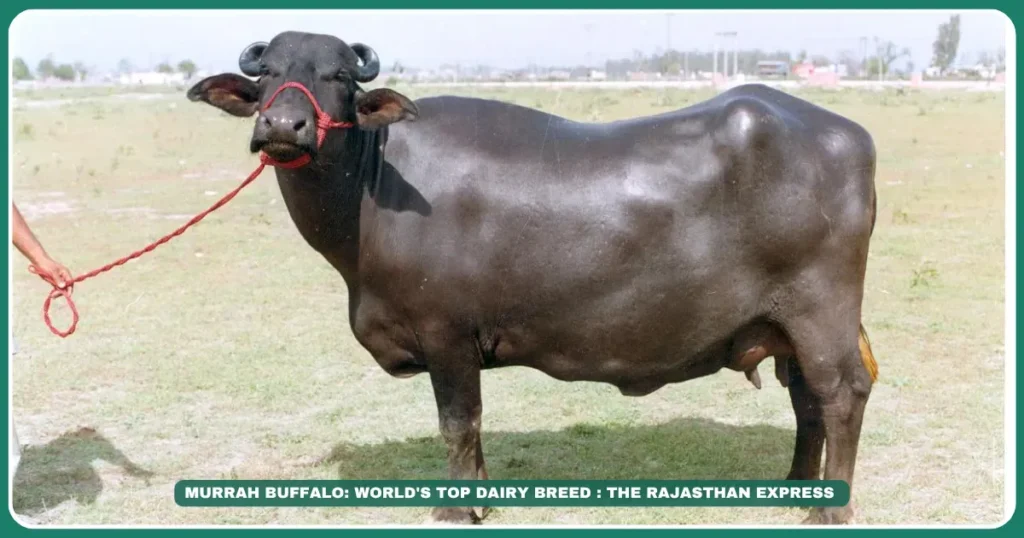
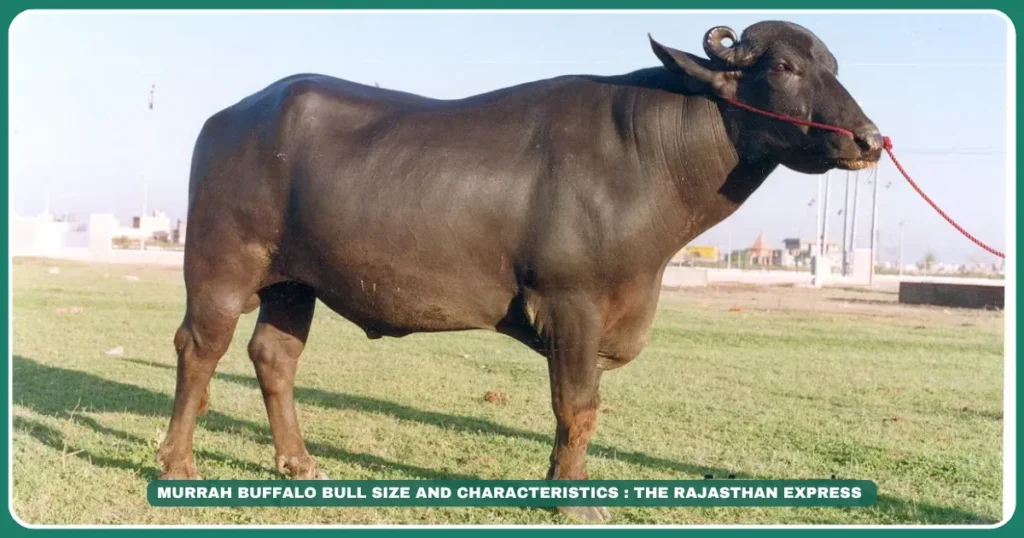
- Murrah – Famous breed of Haryana, known all over the world. This buffalo is famous for its abundant milk and is called ‘Black Gold’.
- Nili Ravi – Breed of Punjab. This buffalo is known for its low fat milk. Among all buffalo breeds of India, Nili Ravi milk has the lowest fat, about 4%. That means its milk is thinner compared to other buffaloes.
- Gojri – Found in Punjab and Himachal Pradesh. It is black in colour and small in stature, but easily adapts to harsh conditions.
2. Gujarat Group (Gujarat Group) – Strength of the Western Region
Gujarat has several strong milch breeds:
- Mehsana – Famous for good milk. This breed is found around Mehsana district of Gujarat.
- Surati – Buffalo of the Surat region of Gujarat. Its temperament is very calm and gentle, making it easy to rear.
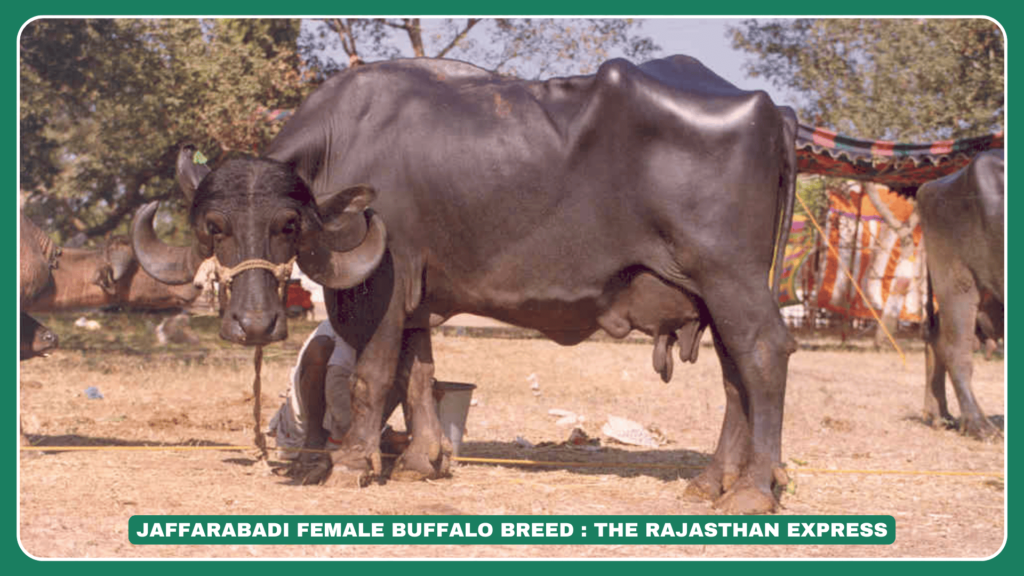
- Jafarabadi – Very large stature and heavy body. Known for its huge size.
- Banni – Found in the Banni region of Kutch district, Gujarat. It is fully adapted to desert conditions.
3. Uttar Pradesh Group (UP Group) – Buffalo of the plains
The main breed in this group is Bhadawari.
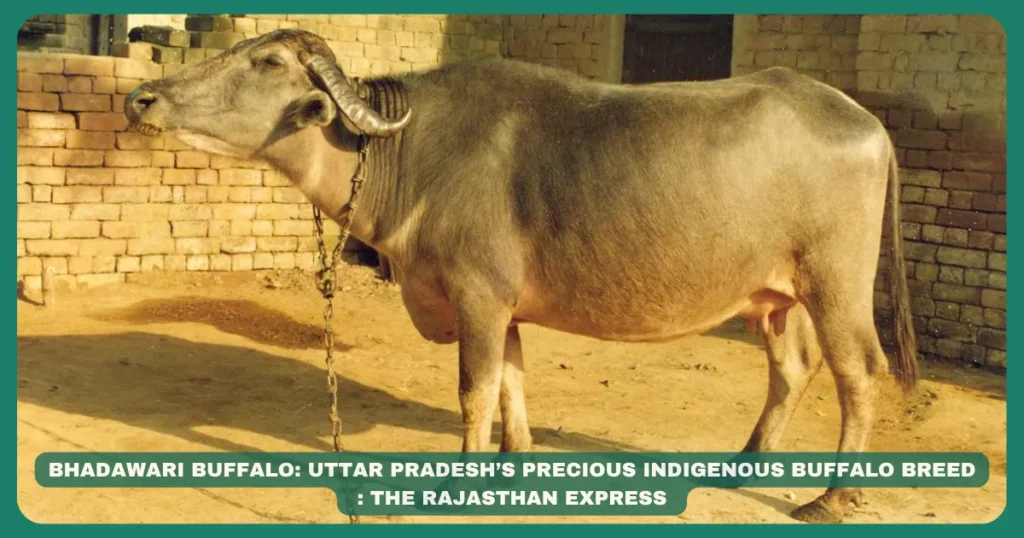
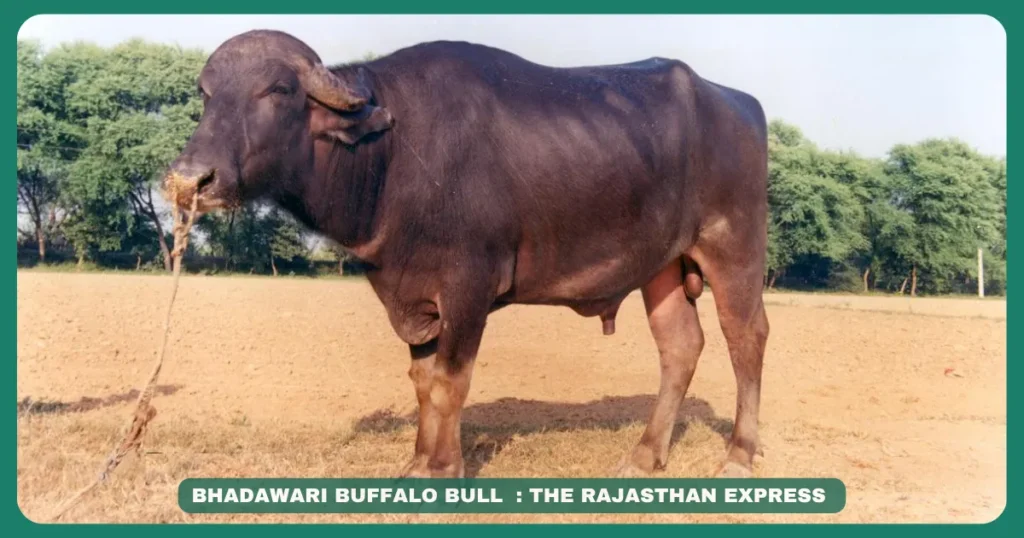
- Bhadawari – Found in Uttar Pradesh (Mathura, Agra, Etah) and around Madhya Pradesh. It is a good milk‑giving breed, but its biggest speciality is that among all buffalo breeds of India, Bhadawari milk has the highest fat (approx 14%). That means its milk is very thick and creamy, considered the best for making desi ghee. Its horns are short and twisted, and the body often has brown‑white spots.
4. Central India Group (Central India Group) – Prosperity of Eastern and Central Parts
This includes buffaloes from several states (Maharashtra, Odisha, Chhattisgarh):
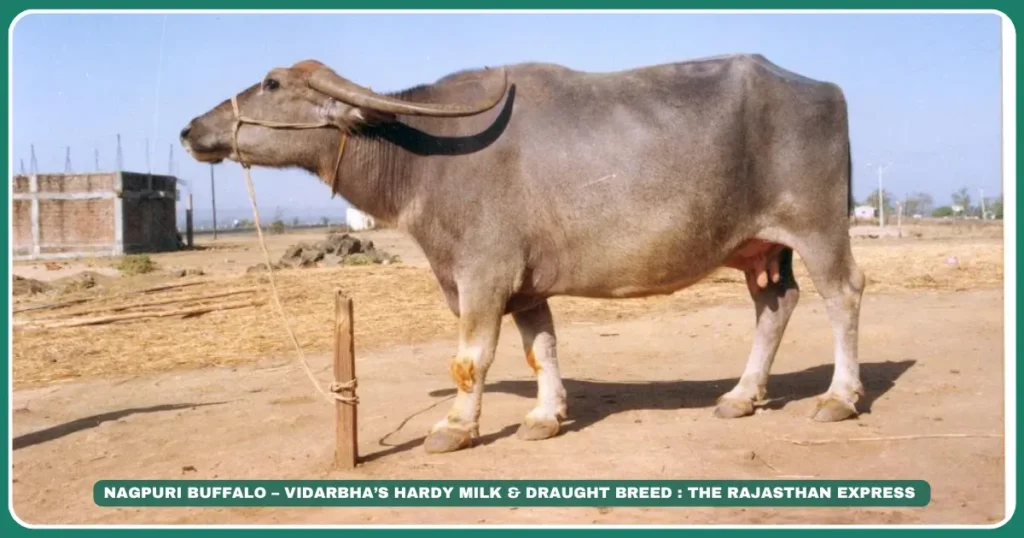
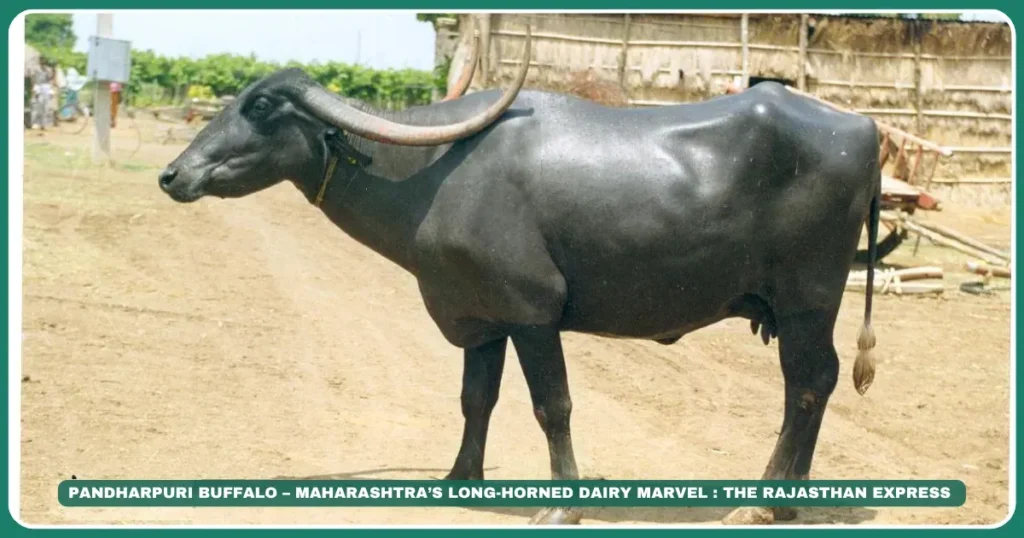
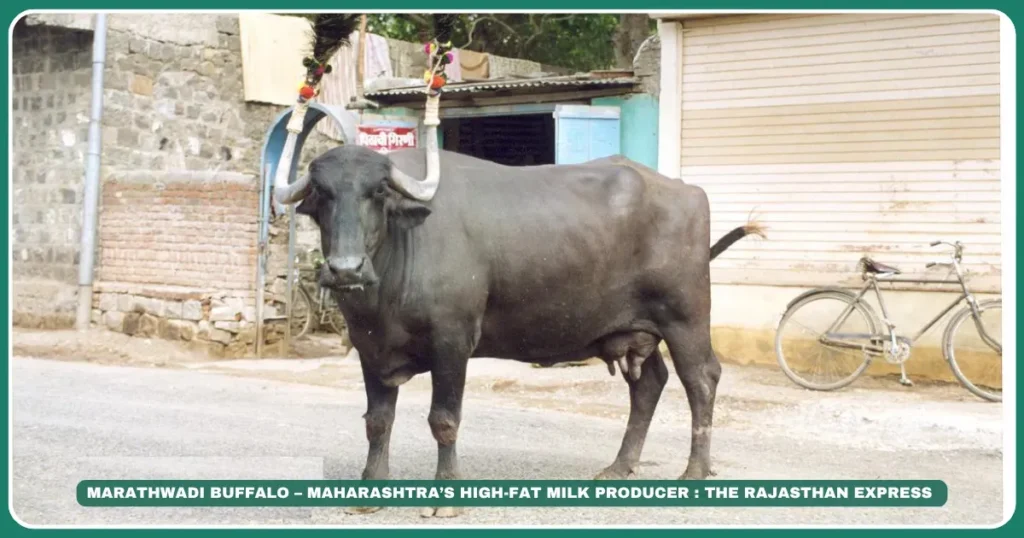
- Nagpuri, Pandharpuri, Marathwadi – Major breeds of Maharashtra. These are strong and working buffaloes.
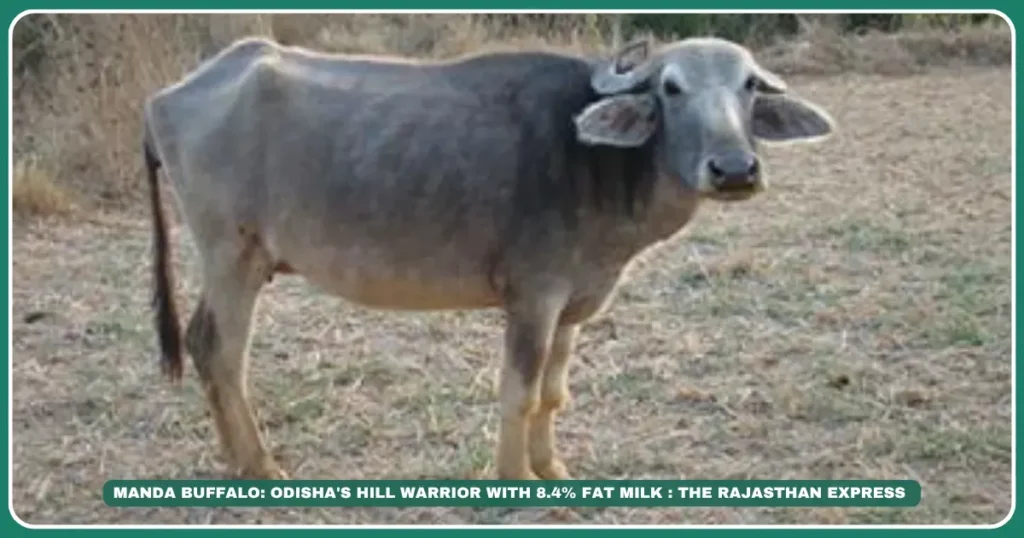
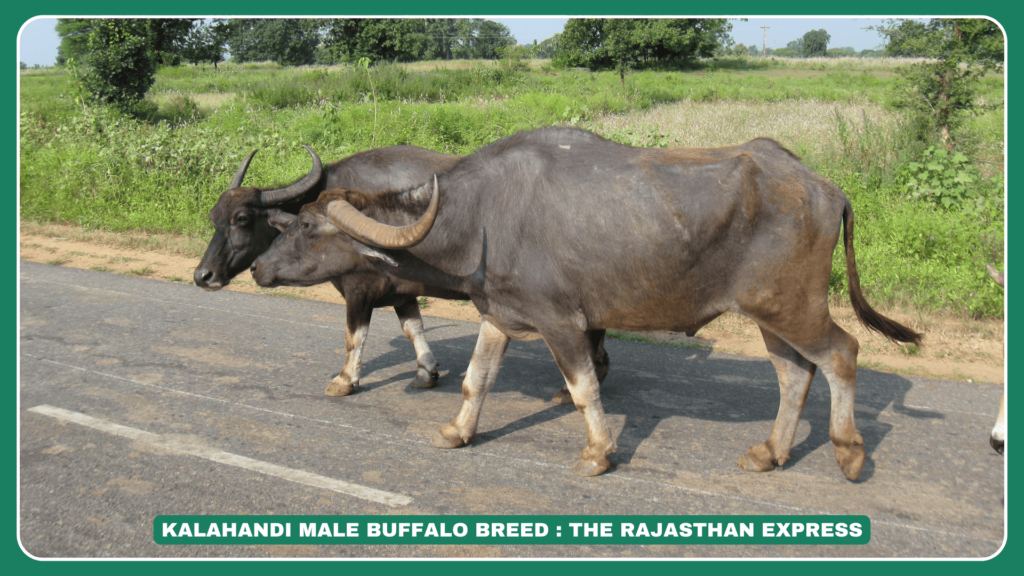
- Manda, Kalahandi, Chilka – Buffaloes of Odisha. Chilka buffalo is found especially around Chilka Lake.
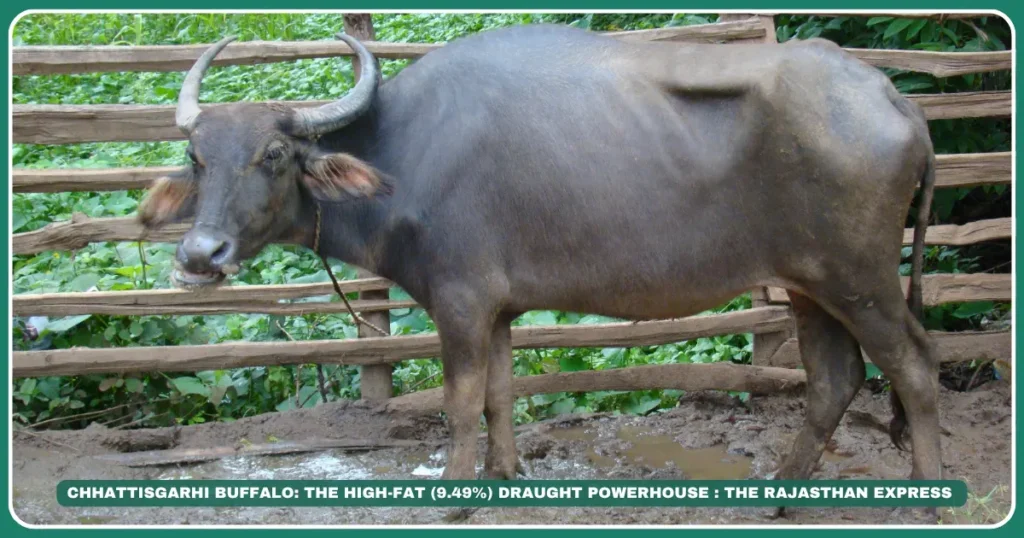
- Chhattisgarhi – Strong, working buffalo of Chhattisgarh. Used mainly for ploughing fields and carrying loads.
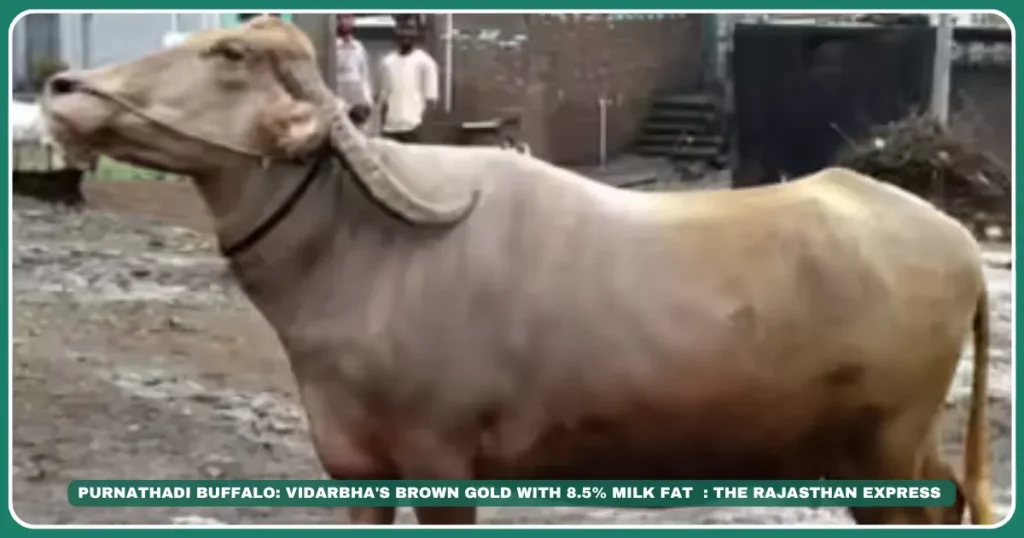
- Puranathadi – Newly registered breed from the Vidarbha region of Maharashtra.
- Melghati – Recently identified breed from the Melghat region of Maharashtra. Its speciality is high fat content in its milk.
5. South India Group (South India Group) – Small but strong breeds
Buffaloes in this group are small in body, but very hardy and tolerant in local conditions:
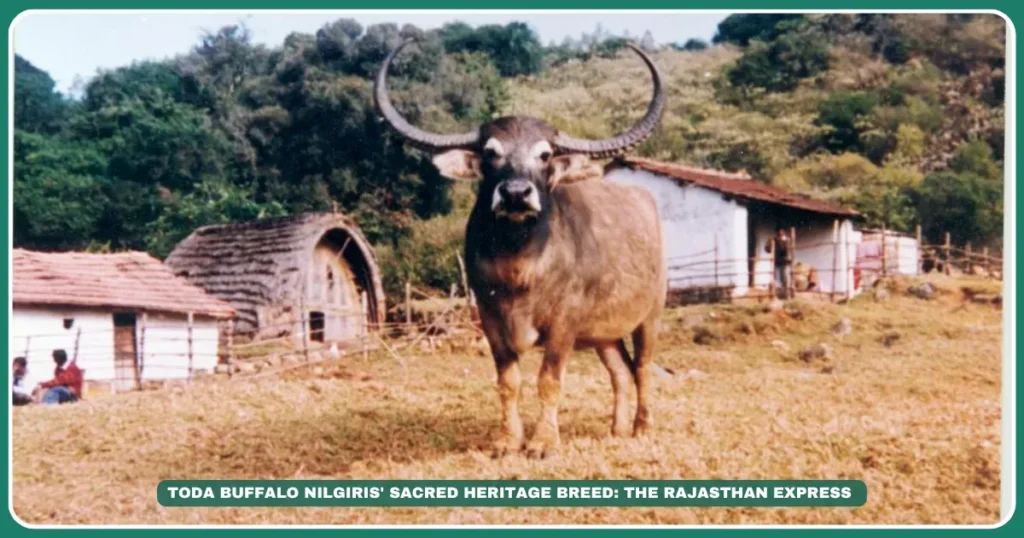
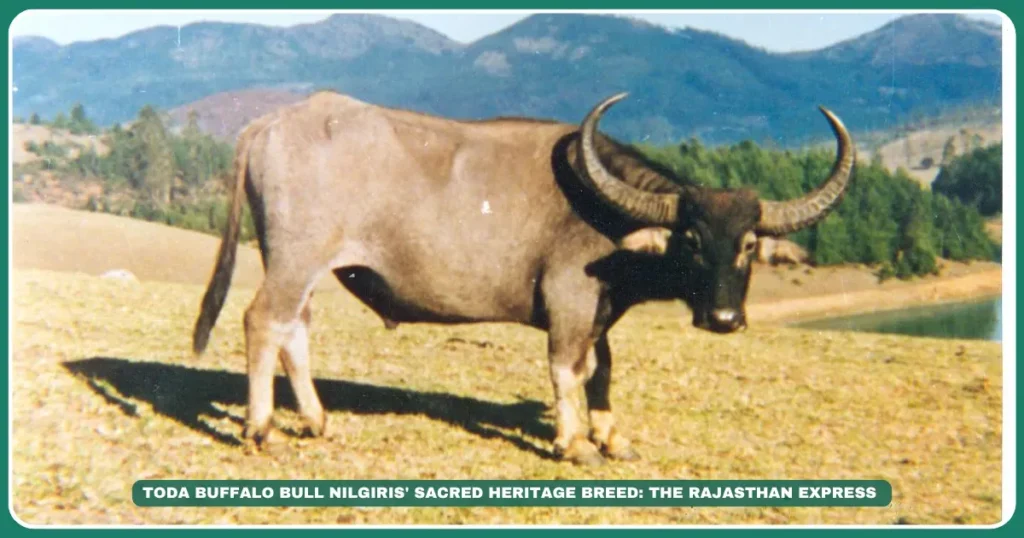
- Toda – Found in the Nilgiri hills of Tamil Nadu. This is a very unique and rare breed, reared by the Toda tribe.
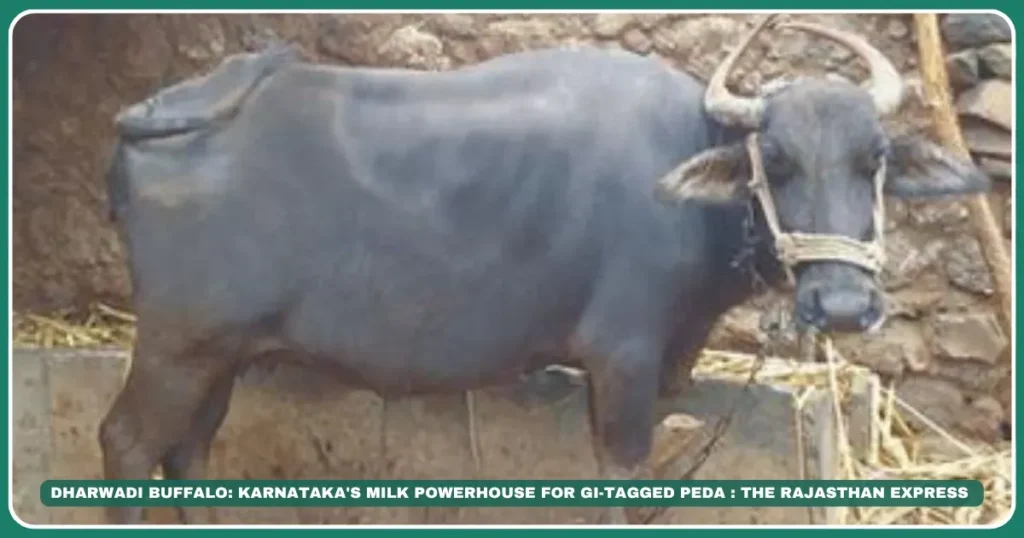
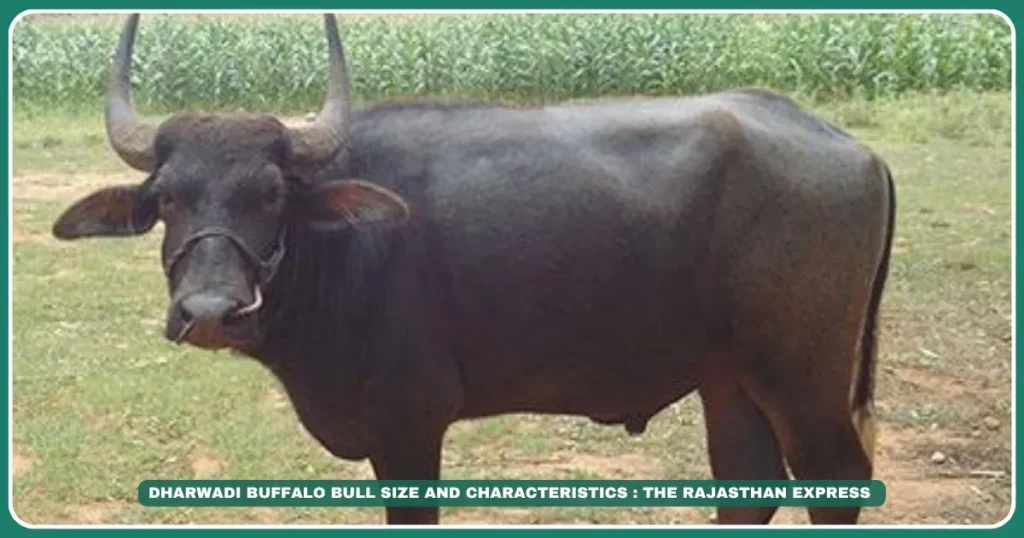
- Dharwari – Famous buffalo breed of Karnataka. Dharwad Peda made from the milk of this breed is very famous.
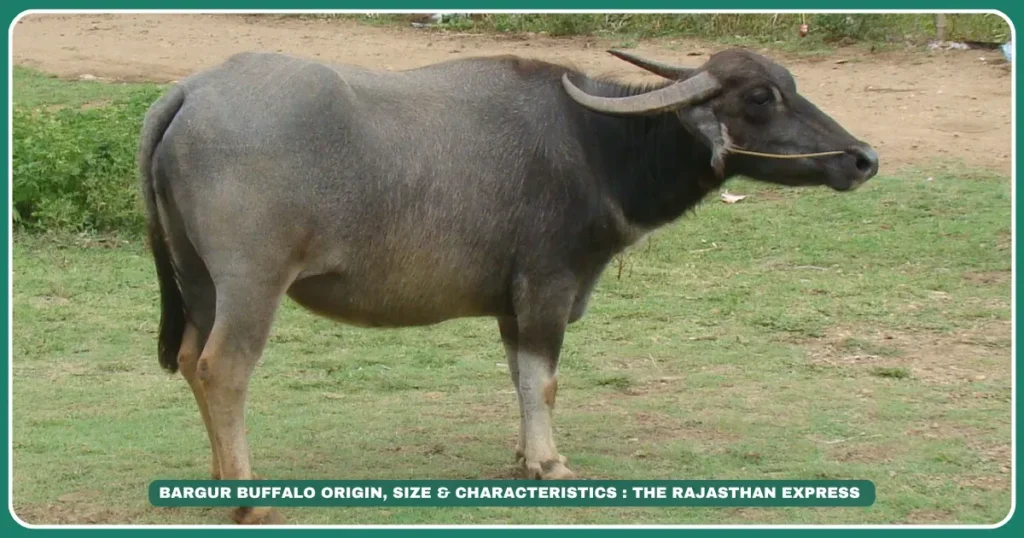
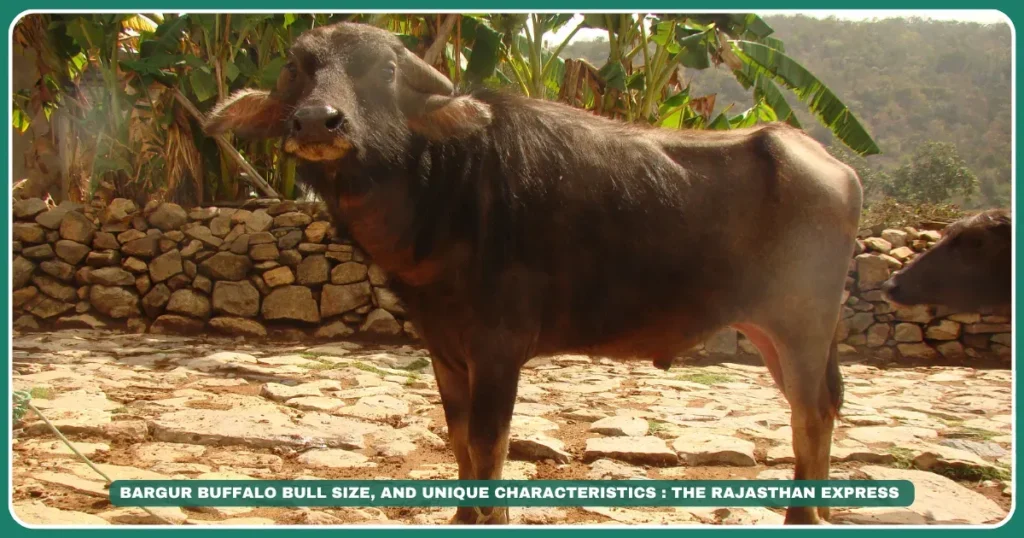
- Bargur – Working buffalo of the Bargur region of Tamil Nadu. It is small but extremely strong, used mainly for farm work in hilly areas.
6. Eastern India Group (Swamp Buffalo Group) – Swamp Buffalo Group
Completely different from other breeds, these are swamp buffaloes, found in north‑eastern states such as Assam, Manipur, Mizoram. They are different in appearance and behaviour from riverine buffaloes. Their main use is for work (especially in muddy paddy fields) and meat rather than milk:
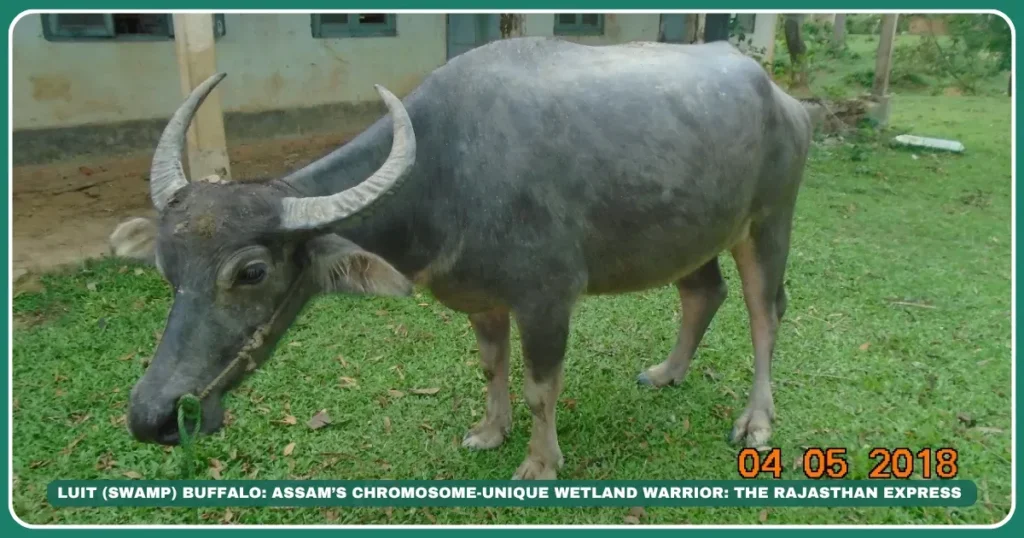
- Luit – Buffalo of the Brahmaputra river region (called Luit in Assam).
- Manah – Dual‑purpose breed of Assam – i.e., it gives some milk and can also do farm work.
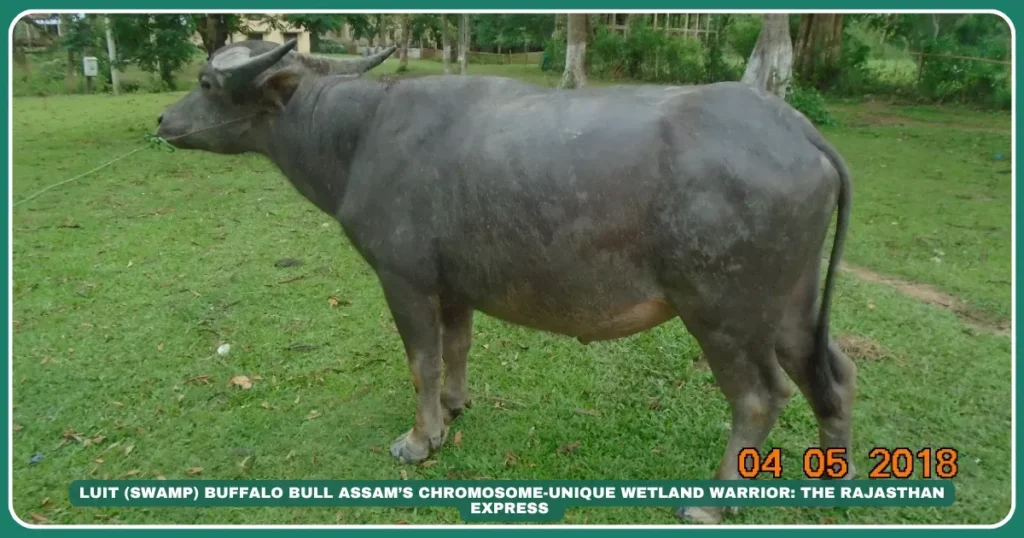
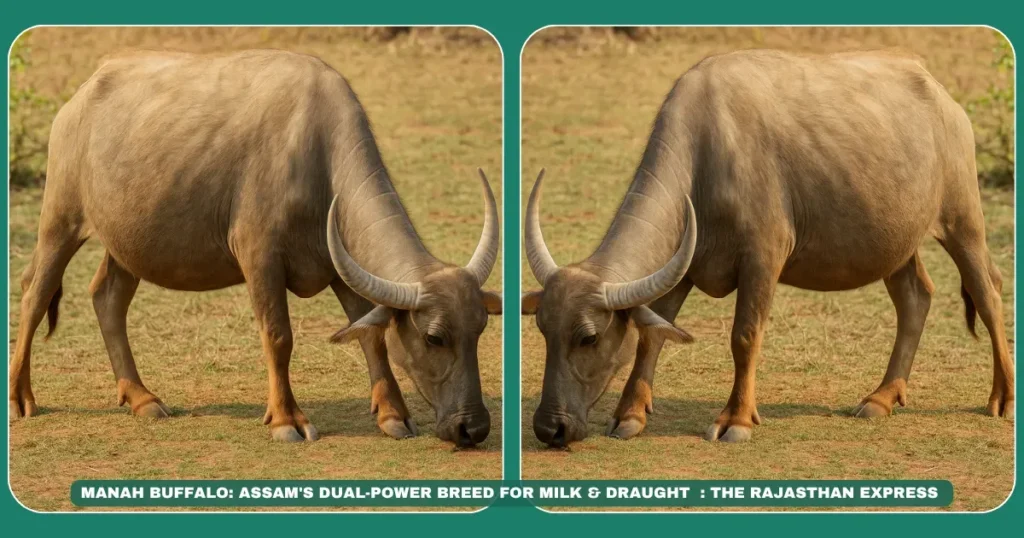
The diversity of buffaloes in India is very large. Murrah is number one in milk quantity. Nili Ravi milk has the lowest fat (4%), while Bhadawari milk has the highest fat (14%). Other breeds are famous for their own special qualities – some for strength, some for work, some for surviving harsh weather. Every region has its own heritage.
Bhadawari Buffalo Origin and Distribution
Bhadawari Buffalo Origin
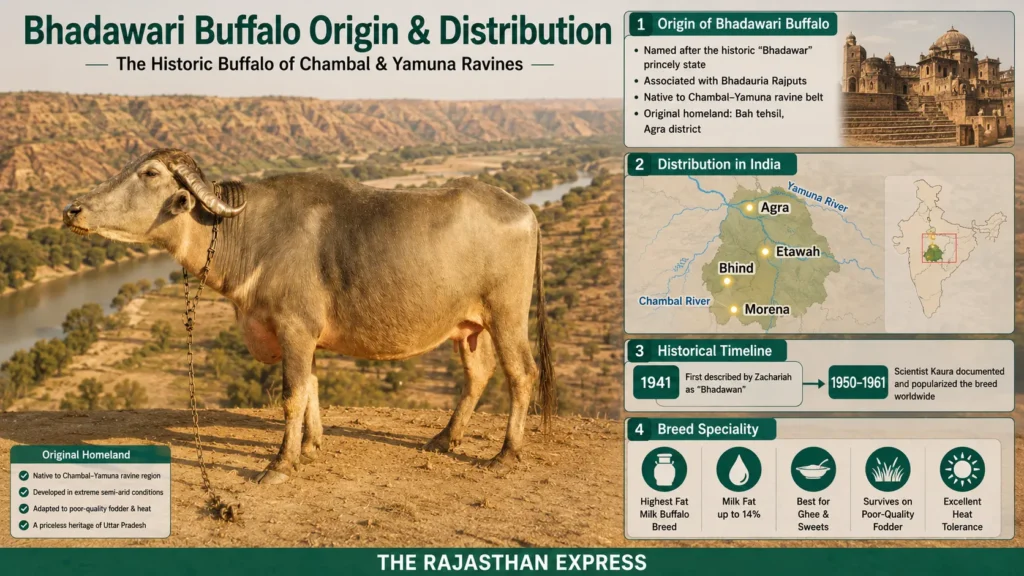
Bhadawari is a very unique and high‑quality registered indigenous buffalo breed of India. The first and most important thing about its origin is that it is named after a princely state from before independence. This princely state was “Bhadawar”. This princely state was spread over the area around the Chambal and Yamuna rivers, where the Bhadauria Rajputs ruled. Since these buffaloes were the heritage of that state and the pride of the Rajputs there, they got the name ‘Bhadawari’. It is also said that this breed is associated with Etawah city, but the real birthplace is considered to be the area of Bhadawar princely state, which was part of Bah tehsil of Agra district.
Now let’s talk about its history. The Bhadawari buffalo was first described in 1941 by a scientist named Zachariah under the name ‘Bhadawan’. Later, in 1950 and 1961, a scientist named Kaura studied it in great detail and gave this breed worldwide fame. Kaura clearly wrote in 1961 that the homeland of the Bhadawari buffalo was the ‘Bhadawar Estate’, not Etawah city, and it spread in the ravines of Chambal‑Yamuna.
Bhadawari Buffalo Breeding Tract
Now let’s know where this buffalo is found. Its breeding tract is mainly in two states – Uttar Pradesh and Madhya Pradesh. In Uttar Pradesh, it is found in Agra, Etawah, Jalaun, Auraiya districts. Meanwhile, in Madhya Pradesh, it is found in Bhind and Morena districts. The areas with the highest density include Bah tehsil of Agra, Chakarnagar and Barahpura blocks of Etawah, Ambah and Porsa tehsils of Morena, and Mehgaon and Ater tehsils of Bhind. Apart from this, it is also found scattered in Bulandshahr, Ghaziabad, Etah, Aligarh, Kanpur, and Kannauj districts.
Talking about geographical location (latitude and longitude): This buffalo is found in the area between approximately 26° North to 27° North latitude and 78° East to 79°51′ East longitude. That is, this range covers the western part of Uttar Pradesh and the northern part of Madhya Pradesh.
Now let’s know about the two biggest specialities of this breed:
- First speciality – Copper‑like colour: The colour of the Bhadawari buffalo is copper‑like bright and reddish‑brown. This is its easiest identification. Usually, most buffaloes are black or slate, but this one is copper‑coloured, which looks very beautiful.
- Second speciality – Highest milk fat: Among all buffalo breeds of India, the fat percentage in Bhadawari milk is the highest. It reaches about 14%. This means that very thick yoghurt, delicious butter, and pure ghee are made from its milk.
Additionally, the Bhadawari buffalo is a dual‑purpose breed. That is, it is used for both milk production and as a draught animal for agricultural work. It is so strong and tolerant that it can easily survive in severe hot weather up to 48°C, water scarcity, and the difficult conditions of the Chambal‑Yamuna ravines. The most interesting thing is that it does not have the habit of sitting in water (wallowing) all the time, unlike other breeds. Also, the mortality rate of its calves is very low and it breeds regularly, which is very beneficial for small farmers.
But there is also a matter of concern: in the last few decades, tempted by higher milk, people have started indiscriminately crossing this breed with Murrah buffalo. Due to this, the number of pure Bhadawari buffaloes is decreasing rapidly. In 1977, there were about 1.14 lakh pure Bhadawari buffaloes in Uttar Pradesh, which decreased to 98 thousand in 1991. And in 1995, it decreased to 37,700. However, later in 2013, their number was reported to have increased to 5.83 lakh, but this may include crossbreeds as well.
The Bhadawari buffalo is a priceless heritage of India, known for its copper colour, highest milk fat, and amazing ability to tolerate harsh conditions. The greatest emphasis today is on saving and conserving this breed.
How did Bhadawari buffalo get its name? (Origin of the Name)
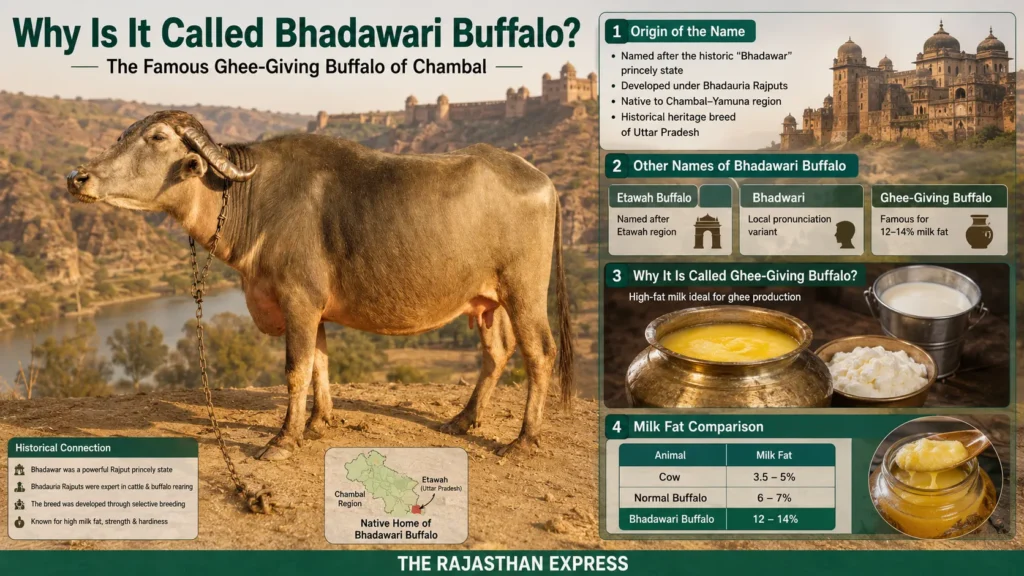
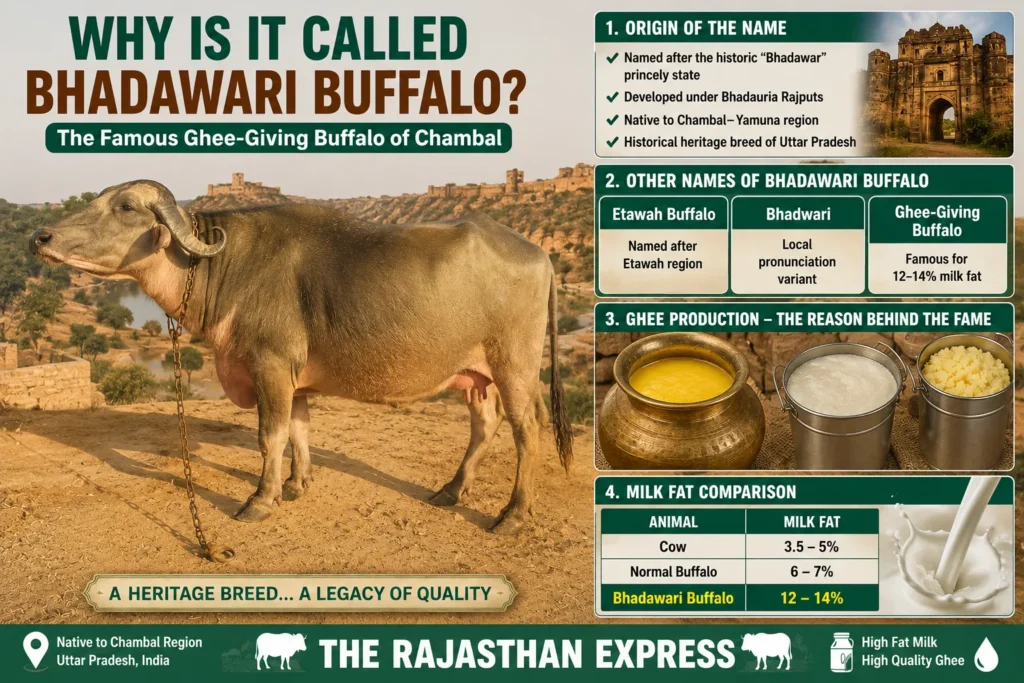
The name of this breed comes from an old princely state called “Bhadawar”, which existed before independence. This princely state was ruled by the Bhadauria Rajputs. Since this breed was reared, nurtured, and developed in this very Bhadawar region, its name became “Bhadawari”. That is, the name is directly related to its place of origin (Bhadawar region) and its rulers (Bhadauria Rajputs).
By what other names is the Bhadawari buffalo known? (Other Names of Bhadawari Buffalo (Bhadawari Bhains)
This breed is also called by the following names:
- Etawah (Etawah): This name is given after Etawah district of Uttar Pradesh, because the main area of this breed is Etawah and surrounding areas. It is also called “Etawah buffalo”.
- Bhadwari (Bhadwari): Sometimes with a slight difference in pronunciation, it is also called “Bhadwari”. This is a variant of the original name “Bhadawari”.
- “Ghee‑giving buffalo” (Ghee buffalo): This is a nickname. Bhadawari buffalo milk has very high fat content – about 12% to 14%. Due to such high fat, butter and ghee are produced in abundant quantities from its milk. That is why farmers and local people lovingly call it the “ghee‑giving buffalo”.
Understand in a little more detail:
- Meaning of fat: When we say that Bhadawari buffalo milk has 12% to 14% fat, it directly means – in 100 kg of milk, 12 to 14 kg of milk fat (butter) is present.
- How ghee is made: When this milk fat (butter) is heated, water and impurities are removed, and the pure yellow substance that remains is ghee. This process happens almost without any loss.
- Therefore: From 100 kg of milk, you get about 12 to 14 kg of pure ghee.
Main point: From 100 kg of milk of other buffaloes or cows, only 6‑7 kg of ghee is obtained, whereas the Bhadawari buffalo gives almost double the ghee. That is why calling it truly a “ghee‑giving buffalo” is absolutely appropriate.
In simple words, the name “Bhadawari” comes from its historical region (Bhadawar princely state), and it is also known by the names “Etawah”, “Bhadwari”, and “ghee‑giving buffalo”.
Identification of Bhadawari Buffalo (Bhadawari Buffalo Characteristics)
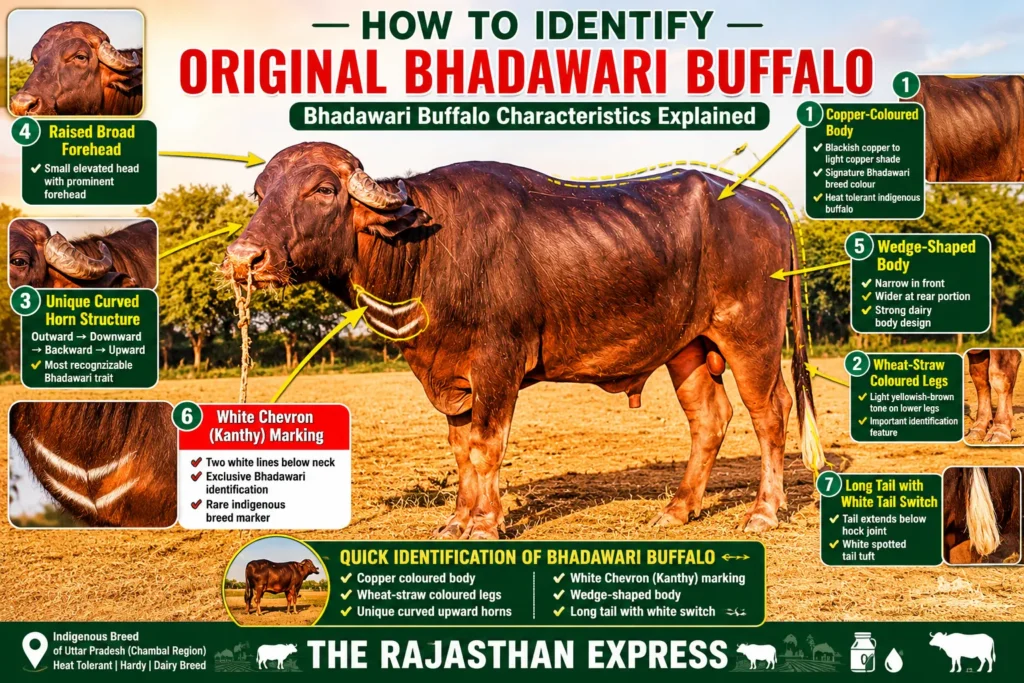
The Bhadawari buffalo is an excellent indigenous buffalo breed of India, found mainly in the Agra, Jalaun, Firozabad, and Etawah districts of Uttar Pradesh and the Bhind and Morena districts of Madhya Pradesh. This buffalo can be easily identified by its unique and beautiful appearance.
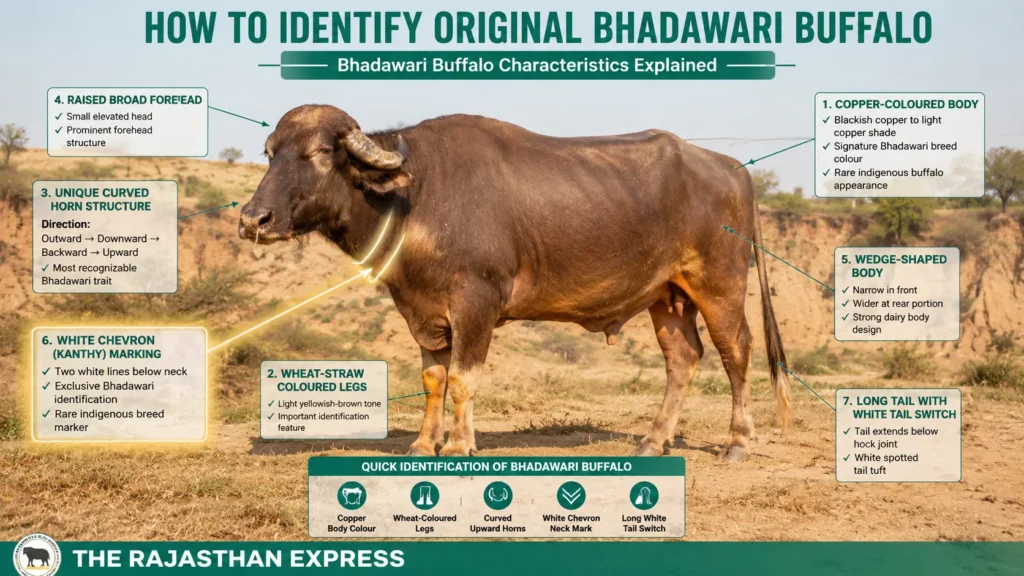
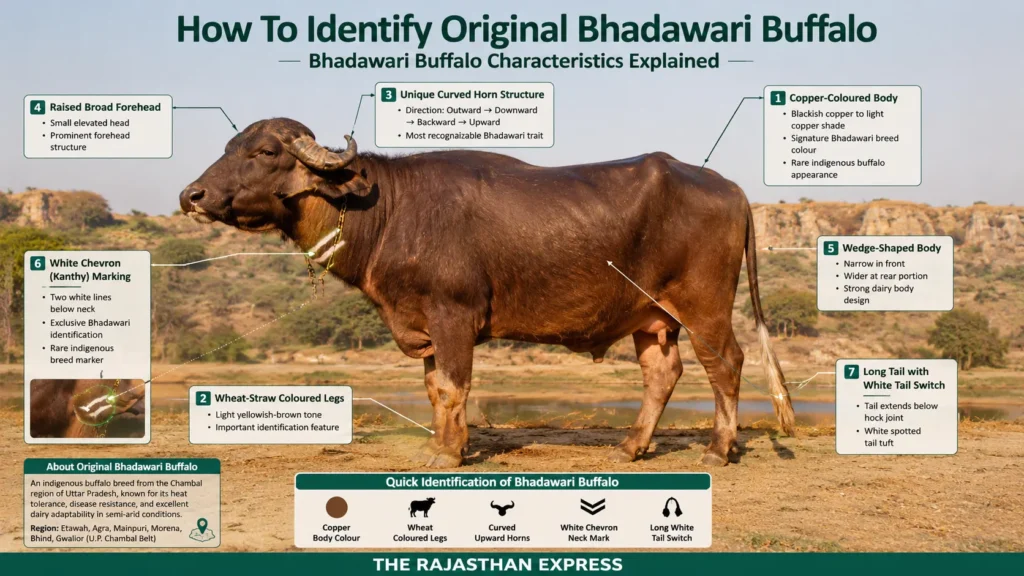
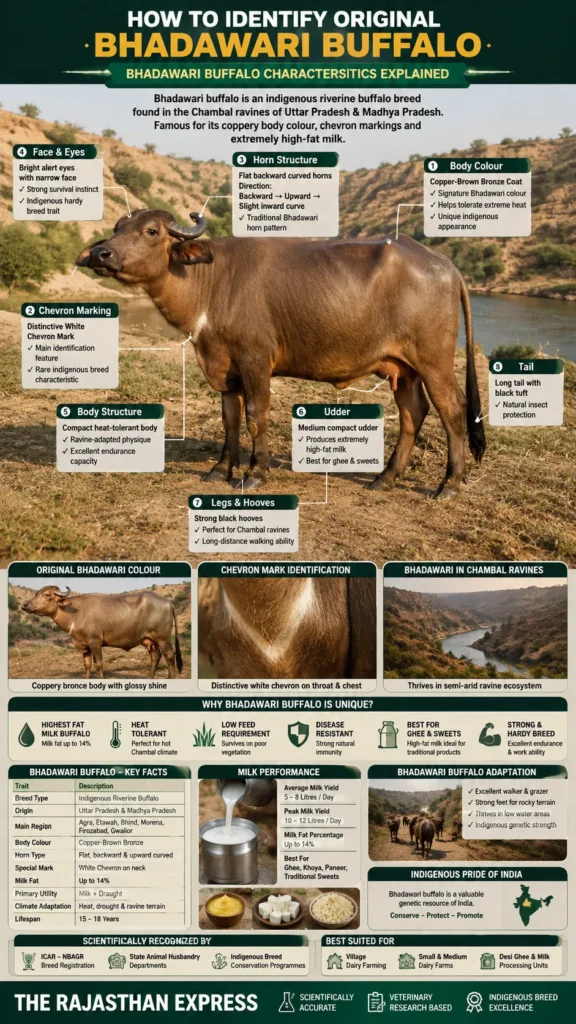
Bhadawari Buffalo Colour (Copper-Colored Buffalo Breed):
- The body colour of this buffalo is mainly copper‑like, which can range from blackish copper to light copper. The colour of its legs is wheat‑straw‑like (light yellowish‑brown), which is a special identification. Sometimes it may appear black, but its original colour is copper.
Horns of Bhadawari buffalo (Horns):
- The horns of the Bhadawari buffalo have a very special shape. They are black and first go slightly outward, then turn downward, then go backward exactly parallel to the neck, and finally turn upward. In simple words, these horns are upward‑curving and twisted. This horn shape is the biggest identification of this breed.
Bhadawari Buffalo Body Shape & Physical Structure:
- The body of the Bhadawari buffalo is medium‑sized. If you look from its head, it appears narrow, but becomes wider at the rear (around the hind legs). This is called wedge shape. That is, narrow in front (head), wide at the rear.
Head (Head):
- The head of Bhadawari is slightly smaller and more raised compared to other buffaloes. Its forehead is quite wide and slightly raised in the middle. Therefore, it looks not flat but prominent.
Neck and Chevron (Bhadawari Chevron (Kanthy Marking)):
- The most unique and unforgettable identification of the Bhadawari buffalo is – on the lower part of its neck (where the neck meets the chest), there are two white lines. Local people call this “Kanthy”. In English, it is called Chevron. These two lines are like someone made two white marks. Other buffaloes do not have these lines – only Bhadawari has them.
Tail (Tail):
- The tail of Bhadawari is very long. It is so long that it hangs down below the hock joint of the hind leg. The tail switch (the tuft at the very end of the tail) has white spots. Therefore, when seen from behind, the white tail switch is seen moving.
Quick Identification of Bhadawari Buffalo:
- The Bhadawari buffalo is identified by copper‑like colour, wheat‑straw‑like legs, curved horns (turning upward), two white lines on the neck (Chevron/Kanthy), and a long tail with white spots.
Bhadawari Buffalo Weight & Body Measurements (Male vs Female)
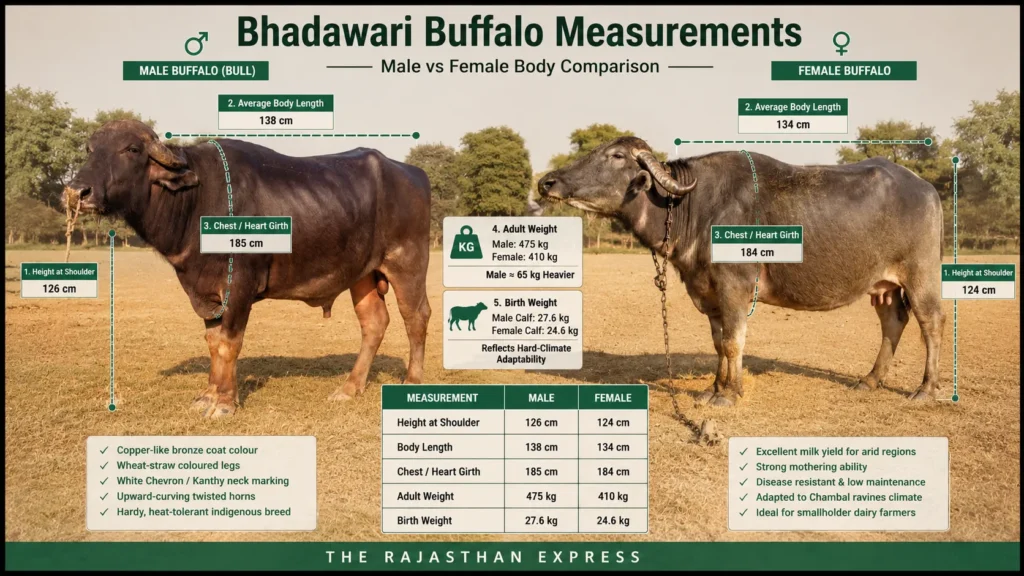
The body of the Bhadawari buffalo is slightly smaller and more agile than Murrah, but it is known for its copper‑like colour and strong build.
- Height at shoulder: Average height of male Bhadawari bull is about 126 cm, while female’s height is around 124 cm. That is, the male is slightly taller than the female.
- Body length: Male’s average body length is 138 cm and female’s is 134 cm.
- Chest / Heart girth: Male’s chest circumference is 185 cm and female’s is 184 cm. This is an important measure of the buffalo’s strength and milk capacity.
- Adult weight: A fully developed male Bhadawari bull weighs on average about 475 kg, while the female buffalo weighs about 410 kg. That is, the male is about 65 kg heavier than the female.
- Birth weight: Male calf’s average birth weight is 27.6 kg and female calf’s is 24.6 kg. This is slightly lower than Murrah, reflecting the breed’s ability to adapt to harsh conditions.
| Bhadawari Buffalo Weight & Body Measurements | ||
| Measurement | Male (Bull) | Female |
|---|---|---|
| Height at shoulder (Avg cm) | 126 cm | 124 cm |
| Body length (Avg cm) | 138 cm | 134 cm |
| Chest girth (Avg cm) | 185 cm | 184 cm |
| Adult weight (Avg kg) | 475 kg | 410 kg |
| Birth weight (Avg kg) | 27.6 kg | 24.6 kg |
| The Rajasthan Express : Bhadawari Buffalo Measurements | ||
Bhadawari Buffalo Management System – How is it reared?
The Bhadawari buffalo is mainly reared under a semi‑intensive system, but the most important thing is that it is stationary – i.e., most of the time it is tied in one place, not left completely open for grazing.
- Housing Management of Bhadawari Buffalo: In the Bhadawari region (Chambal‑Yamuna ravines), animal husbandry is mainly associated with farmers’ homes. Buffaloes are kept in both kutcha (mud) and pucca (brick) shelters. In most cases, this shelter is part of the farmer’s living space, such as a thatched shed in the courtyard or verandah. A covered shed with proper ventilation is built to protect from heat, rain, and cold.
- Feeding Management (Bhadawari Buffalo Feeding): The Bhadawari buffalo is given two types of feed – grazing fodder and concentrate. Farmers also take them to graze in the open, but most of the time they are tied stationary, so green fodder (such as berseem, oats, mustard, sorghum, pearl millet) is cut and brought from home. The most unique tradition of this breed is that for making concentrate, grains like barley, maize, and oats are first soaked in boiling water and then fed to the buffaloes after cooling. This soaking process is done to make the fodder easier to digest and to increase the fat in the milk. Normally, the diet of animals consists of 65% roughage and 35% concentrate to maintain the ICAR‑NBAGR balance in ruminants.
- Special precautions: Since this buffalo is mainly tied near farmers’ homes, pesticides are periodically sprayed in the shelter to protect against flies, mosquitoes, and diseases. Also, farmers rear this breed in desert or ravine areas where water and fodder are scarce, so the Bhadawari buffalo has learned to survive well on low resources.
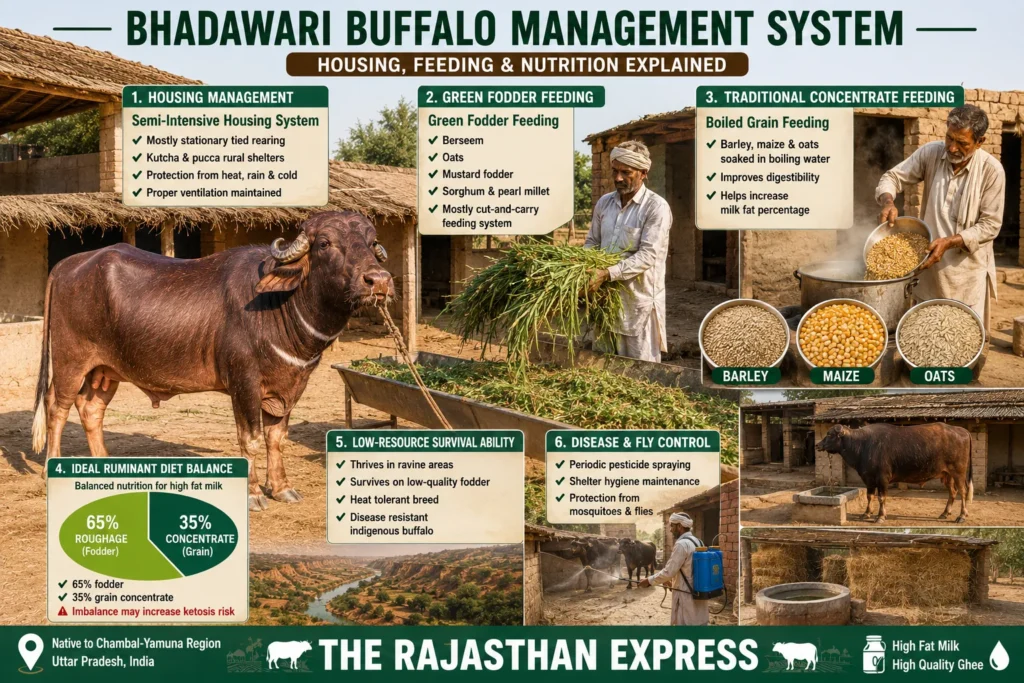
Note: For ruminant animals (like cows and buffaloes), the ideal ratio in the total diet is: ⅔ fodder : ⅓ grain (65% fodder, 35% grain). If this balance is disturbed (e.g., too much fodder and too little grain), the possibility of ketosis increases.
➤ The reason is imbalance of VFAs (Volatile Fatty Acids):
When this ratio is balanced, the normal ratio of VFAs produced in the rumen is:
🔸 Acetate : Propionate : Butyrate = 7 : 2 : 1
This means: Ketogenic (Acetate + Butyrate) : Glucogenic (Propionate) = 4 : 1
Explanation:
- Propionate forms glucose, so it is called Glucogenic VFA.
- Whereas Acetate and Butyrate form ketone bodies, so they are called Ketogenic VFA.
- If the glucose‑forming Propionate decreases and ketogenic fatty acids (Acetate, Butyrate) increase, the amount of ketone bodies in the blood starts increasing and ketosis can occur.
📌 In summary:
If the amount of fodder in the total diet given to the cow is very high and the amount of grain is low (i.e., the ⅔:⅓ ratio is disturbed), then due to deficiency of Propionate and excess of Ketone bodies, the risk of ketosis increases greatly.
Main Features of Metabolic Disease in Dairy Cattle
- These diseases are Non-Contagious — do not spread from one animal to another.
- In most cases, these diseases are related to the production system, hence they are also called Production Diseases.
- Especially pregnant and milk-producing animals (like cow and buffalo) are more susceptible to these diseases.
- The possibility of metabolic diseases increases with increasing milk production.
- In native cows (Zebu cattle), the highest possibility of metabolic disease is found in the third calving.
- In exotic cows (Exotic Cattle), this possibility is highest in the fifth calving.
- In buffaloes, the possibility of metabolic diseases is mostly in the fourth calving.
- The order of possibility of metabolic diseases is as follows:
Exotic Cow > Native Cow > Buffalo - The possibility of Downer Cow Syndrome, Ketosis, Postpartum Haemoglobinuria, and Mastitis disease is higher in exotic cows, especially in the Holstein-Friesian breed.
- These same diseases are found mostly in the Sahiwal breed in native cows.
- The possibility of Milk Fever is highest in Jersey cows.
We have also explained these diseases in detail.
Explore the key metabolic diseases in cattle with quick links to each section:
- Milk Fever – Calcium deficiency immediately after calving
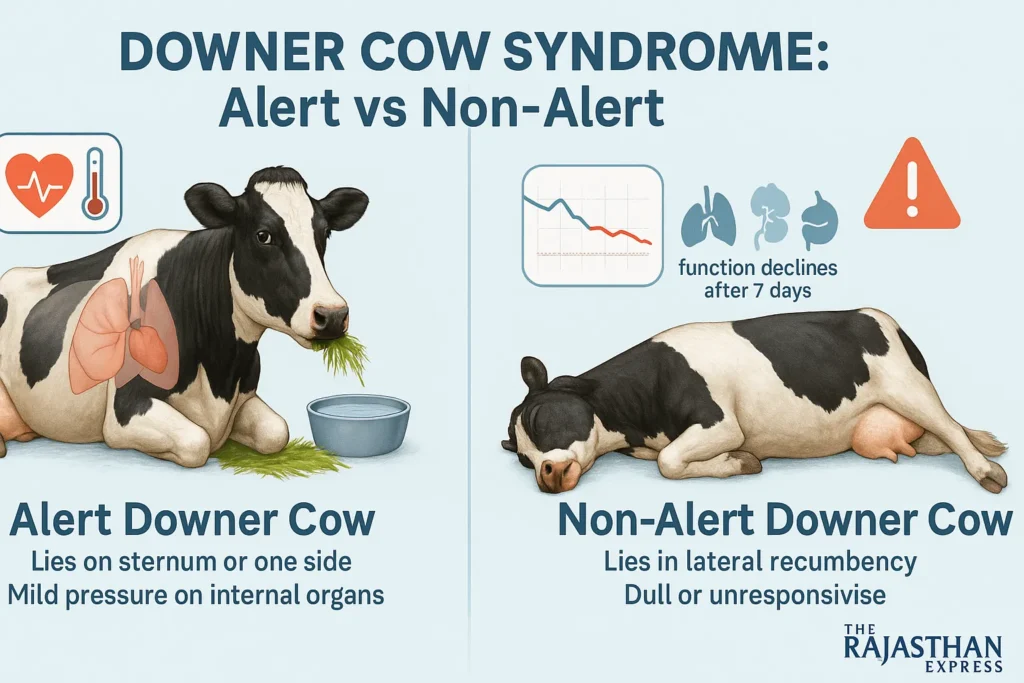
- Downer Cow Syndrome – Complications from prolonged lying after milk fever
- Ketosis In Cattle – Energy deficiency and ketone accumulation
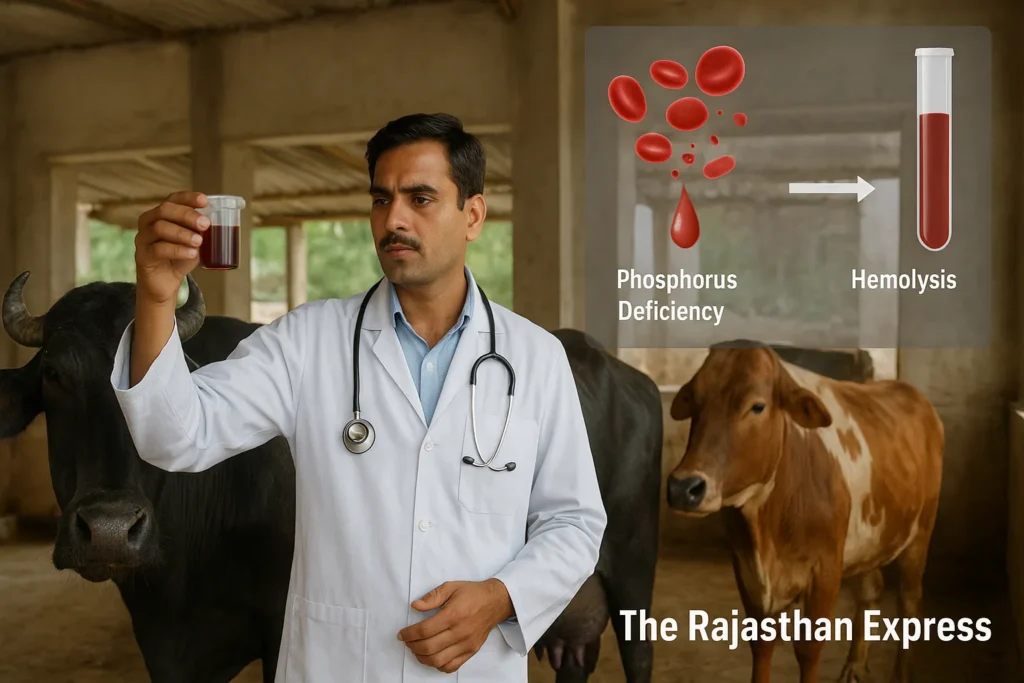
- Postparturient Haemoglobinuria – Red blood cell destruction due to phosphorus deficiency
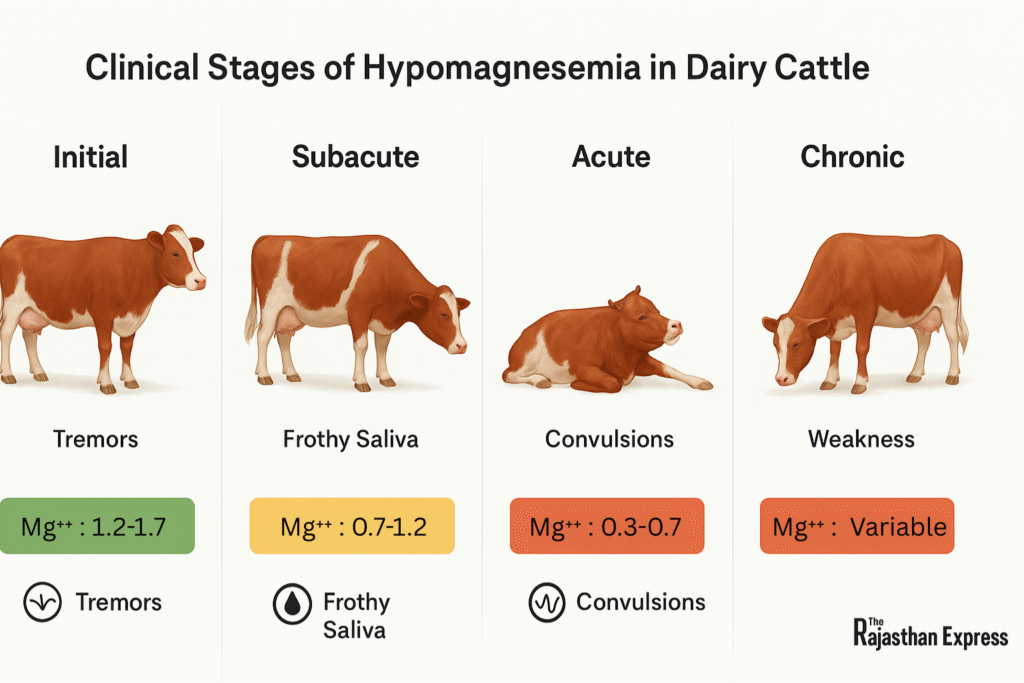
- Grass Tetany – Muscle cramps from magnesium deficiency
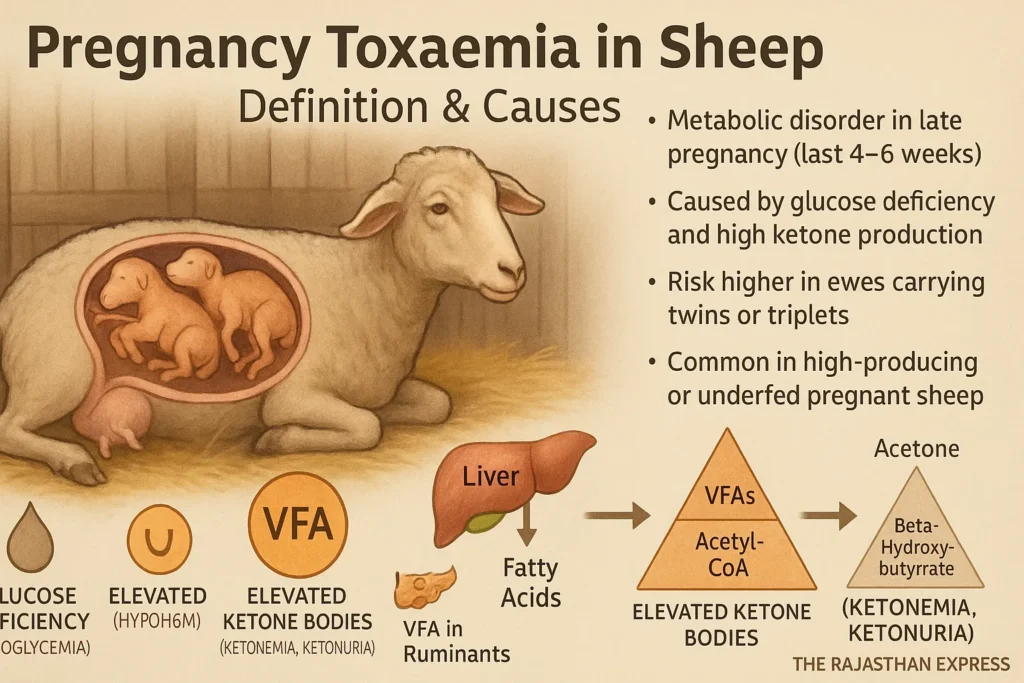
- Pregnancy Toxemia – Energy deficiency in late pregnancy
- Neonatal Hypoglycemia in Calves : Neonatal disorder marked by abnormally low blood glucose levels (<79 mg/dL or 2 mmol/L)
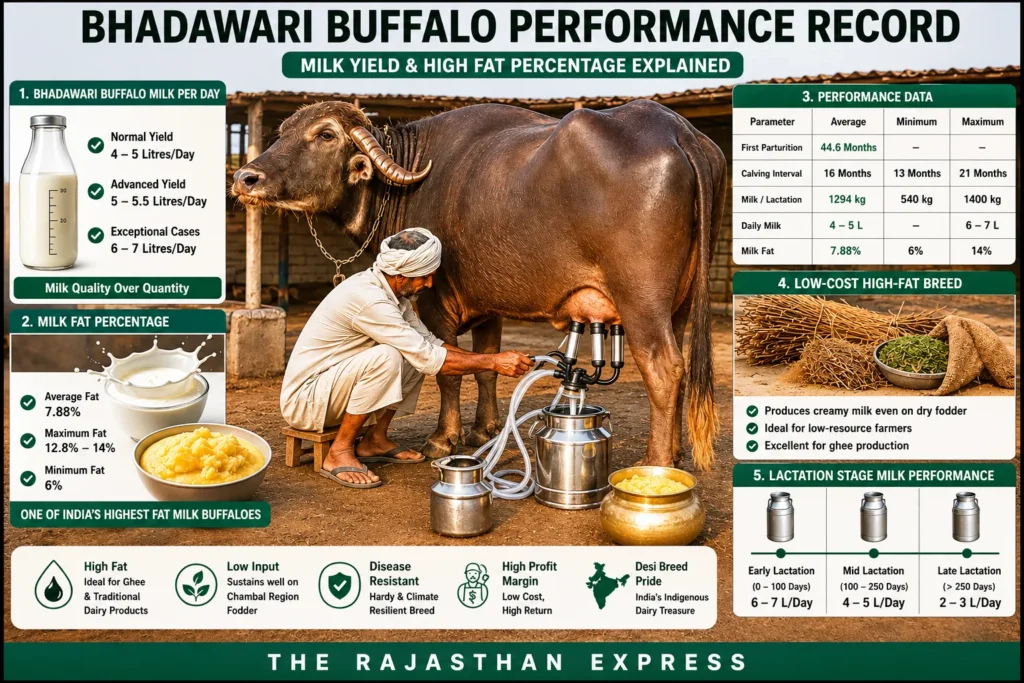
Bhadawari Buffalo Performance Record: Bhadawari Buffalo Milk Per Day
The Bhadawari buffalo is a major buffalo breed of India, mainly found in Jalaun, Auraiya, Etawah districts of Uttar Pradesh and surrounding areas. This breed is famous for its very high milk fat (butterfat). Let us understand its performance data:
1. Age at first parturition
- Average: 44.6 months (approximately 3 years 8.5 months)
- Minimum: Data not available (0 in table)
- Maximum: Data not available (0 in table)
In simple words: The Bhadawari buffalo gives its first calf at an average age of 3.5 to 4 years. It matures slightly later than other buffalo breeds (like Murrah), but once mature, it gives milk for a long time.
2. Parturition interval – time between two calves
- Average: 16 months
- Minimum: 13 months
- Maximum: 21 months
Main point: The Bhadawari buffalo has an average interval of 16 months between two calves. It can calve again in as little as 13 months (which is considered very good), but sometimes it may take up to 21 months depending on conditions. This means it gives one calf approximately every 1.5 years.
3. Bhadawari Buffalo Milk Per Lactation
The Bhadawari buffalo produces on average 1,294 kg of milk per lactation. According to ICAR‑NBAGR, a Bhadawari buffalo produces between about 540 kg and 1,400 kg of milk per lactation.
- Average: 1,294 kg (approx 1,255 litres, since 1 litre of milk weighs about 1.03 kg)
- Minimum: 540 kg (approx 524 litres)
- Maximum: 1,400 kg (approx 1,359 litres)
Bhadawari Buffalo Milk Per Day: A normal Bhadawari buffalo produces 4 to 6 litres of milk per day.
Main point: In one entire lactation period after calving, the Bhadawari buffalo gives an average of 1,294 kg (about 1,255 litres) of milk. In a well‑managed farm, it can give up to 1,400 kg, while in low‑resource conditions it may drop to 540 kg. This quantity is lower than higher‑yielding buffaloes like Murrah or Jafarabadi, but it is compensated by the quality of its milk.
How much milk does a Bhadawari buffalo give per day?
Based on the above data, let us calculate. The lactation period is usually considered 270‑300 days (about 10 months).
- A normal Bhadawari buffalo gives about 4 to 5 litres of milk per day.
- (Calculation: 1,294 kg ÷ 280 days ≈ 4.6 kg/day, which with milk density is ~4.5 litres)
- An advanced / high‑yielding Bhadawari buffalo gives about 5 to 5.5 litres of milk per day.
- (Calculation: 1,400 kg ÷ 280 days = 5 kg/day, i.e., ~4.8‑5 litres)
Note: This is the average daily milk. In the early months of lactation, milk may be higher (6‑7 litres/day) and in the later months lower (2‑3 litres/day). With excellent care and feed, it can sometimes reach 6‑7 litres per day, but the average is as stated. The real identification of this breed is not the quantity of milk but the extremely high fat in the milk.
4. Bhadawari Buffalo Milk Fat Percentage – the biggest speciality of this breed
- Average: 7.88% (approx 8%)
- Minimum: 6%
- Maximum: 12.8 – 14%
Main point: This is the data that makes the Bhadawari buffalo one of the most special buffalo breeds in the world. Usually, buffalo milk has 6‑7% fat, and cow’s milk has only 3‑4% fat. But Bhadawari buffalo milk has an average of 7.88% (about 8%) and sometimes up to 12.8% fat. That means its milk is very thick, creamy, and nutritious. Even from a small amount of milk, a lot of ghee is obtained.
5. Peculiarity of this breed
- The biggest peculiarity of the Bhadawari buffalo is that even when fed dry, coarse fodder (such as straw, dry grass), it still produces very high fat (butterfat) in its milk. That is, it has the amazing ability to convert low‑quality fodder into excellent creamy milk. This is why this breed is highly preferred by poor farmers with limited resources and in desert/semi‑desert areas. Low cost, good earnings – that is the strength of Bhadawari.
| Bhadawari Buffalo Performance Record: Bhadawari Buffalo Milk Per Day | |||
| Parameter | Average | Minimum | Maximum |
|---|---|---|---|
| Age at first parturition (months) | 44.6 | – | – |
| Parturition interval (months) | 16 | 13 | 21 |
| Milk yield per lactation (kg) | 1294 | 540 | 1400 |
| (in litres approx, density 1.03) | ~1255 L | ~524 L | ~1359 L |
| Daily milk yield (normal) | 4-5 L | – | – |
| Daily milk yield (advanced) | 5-5.5 L | – | 6-7 L (exceptional) |
| Milk fat percentage | 7.88% | 6% | 12.8 – 14% |
| The Rajasthan Express : Bhadawari Buffalo Performance Record | |||
Bhadawari Buffalo Price 2026-2027: Milk Per Day, Milk Fat, Characteristics & Profit Analysi
What factors does the price of Bhadawari buffalo depend on?
The milk yield of Bhadawari buffalo is considerably lower than that of Murrah. Murrah gives on average 8‑15 litres per day, while the average production of Bhadawari is about 4 to 5 litres per day (according to ICAR‑NBAGR data: 1294 kg per lactation; assuming a 300‑day lactation = ~4.3 litres/day). However, it compensates for this with its milk’s extremely high fat content, which can go up to 12.8%. That is, it is a ‘ghee‑giving buffalo’ that produces excellent quality milk on low fodder. Therefore, its price will be lower than Murrah, but it has its own special place.
1. Bhadawari Buffalo Milk Per Day – Biggest Factor Affecting Price
- Average milk per lactation: 1294 kg (approx 4.3 litres/day)
- Maximum milk per lactation: 1400 kg (approx 4.7 litres/day)
- Minimum: 540 kg (approx 1.8 litres/day)
Effect on price:
- Low milk‑yielding (2‑3 litres/day) → ₹15,000 – ₹25,000
- Average milk‑yielding (4‑5 litres/day) → ₹30,000 – ₹50,000
- Good and maximum capacity (5+ litres/day, i.e., up to 1400 kg) → ₹50,000 – ₹80,000
Note: The fat content in Bhadawari milk averages 7.88% and can go up to 12.8%. If a buffalo’s milk has more than 10% fat, its price can increase by another 10‑20%, because it becomes very economical for making ghee.
2. Earnings from milk – how many days to recover the cost?
Assume today (in 2026) the price of Bhadawari milk is ₹70 per litre (depending on fat, it could be ₹80‑90, but let’s take an average of ₹70).
- Total earnings from an average Bhadawari buffalo (1294 kg milk) = 1294 × 70 = ₹90,580 (in one lactation)
- Total earnings from an excellent Bhadawari (1400 kg milk) = 1400 × 70 = ₹98,000
If you bought a buffalo for ₹40,000, your cost would be recovered in just one lactation (₹90,000 income from milk). After that, pure profit.
One more thing: The maintenance cost of Bhadawari is lower than that of Murrah, because it manages on less fodder. Therefore, the profit percentage is good, even though the milk quantity is lower.
Bhadawari Buffalo Milk Fat & Ghee Profit Calculation– how many days to recover the cost?
Previously we calculated how many lactations it takes for a buffalo to recover its cost based on milk production. Now let us understand, based on ghee production, how many lactations it takes for a buffalo to recover its cost. Based on the average (1294 kg milk, 7.88% fat) and excellent (1400 kg milk, 10% fat) performance of Bhadawari buffalo, a full breakdown of earnings at different ghee rates is given below:
1. Average performance of Bhadawari buffalo (for 1 lactation)
- Total milk production: 1,294 kg
- Estimated ghee production: ~112 kg
(Calculation: 1294 kg milk × 7.88% fat = 102 kg fat, which yields about 112 kg ghee) - Total earnings from ghee:
- At ₹900/kg: ₹1,00,800 (112 kg × ₹900)
- At ₹1000/kg: ₹1,12,000 (112 kg × ₹1000)
2. Excellent performance of Bhadawari buffalo (for 1 lactation)
- Total milk production: 1,400 kg
- Estimated ghee production: ~155 kg
(Calculation: 1400 kg milk × 10% fat = 140 kg fat, which yields about 155 kg ghee) - Total earnings from ghee:
- At ₹900/kg: ₹1,39,500 (155 kg × ₹900)
- At ₹1000/kg: ₹1,55,000 (155 kg × ₹1000)
🤔 Difference compared to selling milk at ₹70 per litre
You considered the possibility of selling milk at ₹70 per litre. See the additional profit from selling ghee:
| Profit Comparison: Milk Sale vs Ghee Sale | |||
| Buffalo Performance | Earnings from Selling Milk at ₹70/litre | Earnings from Selling Ghee at ₹1000/kg | Additional Profit |
|---|---|---|---|
| Average (1294 kg) | ₹90,580 | ₹1,12,000 | ₹21,420 extra |
| Excellent (1400 kg) | ₹98,000 | ₹1,55,000 | ₹57,000 extra |
| The Rajasthan Express : Profit Comparison of Milk vs Ghee Sale | |||
💎 Key secret: Selling ghee is the best option
These figures clearly show that making and selling ghee from Bhadawari buffalo is far more profitable, especially when the market price is ₹900‑1000 per kg.
This means:
- Even on an average Bhadawari buffalo, you will earn ₹21,000 to ₹37,000 extra (depending on ₹900‑1000) compared to selling only milk.
- On an excellent Bhadawari buffalo, the difference in earnings becomes even larger. You can earn ₹39,000 to ₹57,000 extra (depending on ₹900‑1000).
✨ Advantage of making and selling ghee: Understand on a per‑litre basis
When we convert this earning into an equivalent milk price, the real strength of this breed becomes clear:
- Milk of average Bhadawari (7.88% fat) gives you ₹78 to ₹87 per litre (by making ghee).
- Milk of excellent Bhadawari (10% fat) can give you ₹100 to ₹111 per litre (by making ghee).
This is far higher than the ₹70 per litre from selling ordinary milk. Therefore, the real profit from rearing this breed lies only in selling ghee, and the excellent rates in your town make it an even more profitable deal.
3. Bhadawari Buffalo Colour & Breed Purity– copper colour and white lines
Identification of pure Bhadawari:
- Colour: Copper‑like reddish‑brown – this is the biggest identification of this breed.
- White stripe on the neck and a crescent‑shaped white mark on the forehead (sometimes).
- A completely black buffalo is not Bhadawari – that would be Murrah or another breed.
Effect of Purity on Bhadawari Buffalo Price:
- If the colour is lighter than copper or brown, or has a spot like Murrah – consider it crossbred and price is 50% lower.
- A NBAGR‑registered pure Bhadawari costs 30‑40% more than ordinary – approximately ₹60,000 – ₹1,00,000.
4. Age Factor in Bhadawari Buffalo Price– heifer, young, or old
According to NBAGR‑ICAR data:
- Average age at first calving: 44.6 months (approx 3.7 years)
- Calving interval: Average 16 months (13‑21 months)
Effect on price:
- Heifer (1‑2.5 years): Has not yet given milk – ₹15,000 – ₹25,000
- Young milch (3‑6 years): After first or second calving, at peak production – ₹35,000 – ₹70,000
- Old (8+ years): Milk drops – ₹10,000 – ₹15,000 (sometimes meat price)
Special point: Bhadawari remains useful for more years than Murrah because it reproduces regularly even in harsh conditions and has a good calving interval (16 months average).
5. Pregnant Bhadawari Buffalo Price – two benefits for one price
Buying a pregnant Bhadawari is very beneficial, because within a few months you get a calf (male or female).
Effect on price:
- The price of a pregnant buffalo is ₹10,000 – ₹20,000 higher than a normal one.
- Example: A buffalo otherwise worth ₹40,000 can sell for ₹50,000 – ₹60,000 if pregnant. Especially if 7‑8 months pregnant, it can go up to ₹70,000.
6. Pedigree Value in Bhadawari Breed of Buffalo
Pedigree is very important in Bhadawari because it is a rare breed. If a buffalo’s parents, grandparents are also known for high fat and good health, its price increases.
Effect on price:
- Bhadawari with recorded pedigree – can go up to ₹80,000 – ₹1,50,000.
- Champion buffalo (awarded in competitions) – up to ₹2 lakh.
7. Health & Vaccination Impact on Bhadawari Buffalo Price
A completely healthy Bhadawari with a vaccination certificate costs 10‑15% more than an unvaccinated one.
- Example: A ₹50,000 healthy buffalo may cost ₹55,000 – ₹57,500 if vaccinated.
8. Location & Appearance Affecting Bhadawari Buffalo for Sale
- Region: The native area of Bhadawari is Uttar Pradesh (Etawah, Agra, Auraiya) and Madhya Pradesh (Bhind, Morena). Price is lowest here. In cities like Delhi‑Mumbai, it is 30‑50% more expensive.
- Colour and appearance: The deeper the copper colour, the clearer the white stripe on the neck, and the heavier and more attractive the body – the higher the price. Light‑coloured or brown‑spotted ones sell for less.
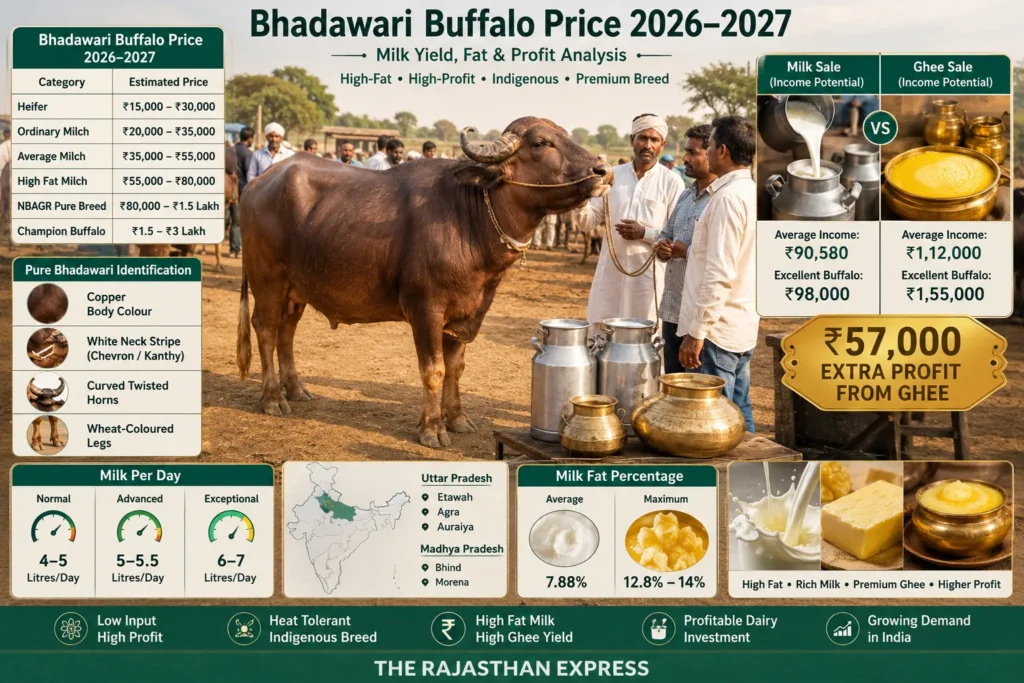
| Bhadawari Buffalo Price in India (2026–2027 Estimate) | |
| Category | Estimated Price (₹) |
|---|---|
| Heifer (1-2.5 years) – not yet milking | 15,000 – 30,000 |
| Ordinary milch (2-3 litres/day) | 20,000 – 35,000 |
| Average milch (4-5 litres/day) | 35,000 – 55,000 |
| Good milch (5+ litres/day, 12%+ fat) | 55,000 – 80,000 |
| Pure breed, NBAGR registered, pedigree, high fat | 80,000 – 1,50,000 |
| Champion / record-breaking (milk + fat) | 1,50,000 – 3,00,000 (very rare) |
| The Rajasthan Express : Bhadawari Buffalo Price in India | |
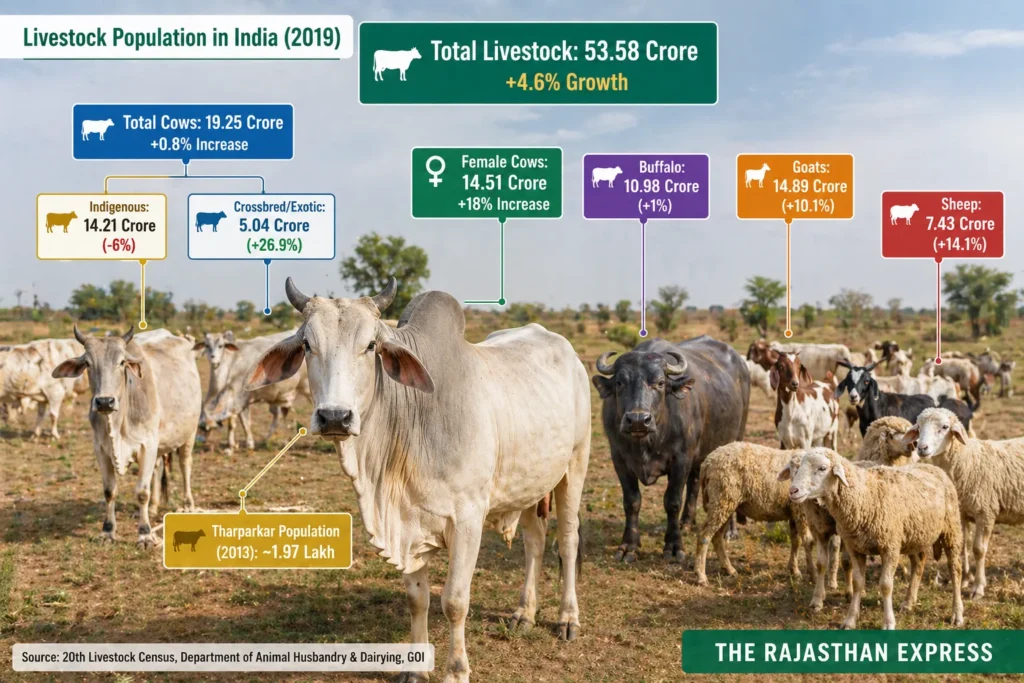
Livestock Population in India (20th Livestock Census 2019)
| Livestock Population in India (20th Livestock Census, 2019) | ||
| Particulars | 20th Livestock Census (2019) figure | Change from previous census (2012) |
|---|---|---|
| Total livestock | 53.58 crore (535.78 million) | +4.6% (increase) |
| Total cows (all types) | 19.25 crore (192.49 million) | +0.8% (increase) |
| Indigenous/unclassified cows | 14.21 crore (142.11 million) | -6% (decline) |
| Exotic/crossbred cows | 5.04 crore (50.42 million) | +26.9% (remarkable increase) |
| Female cows (Cows) | 14.51 crore (145.12 million) | +18.0% (much higher than previous census) |
| Buffaloes | 10.98 crore (109.85 million) | +1.0% |
| Goats | 14.89 crore (148.88 million) | +10.1% |
| Sheep | 7.43 crore (74.26 million) | +14.1% |
| The Rajasthan Express : Livestock Census 2019 | ||
Important point:
- While the total cow population has increased marginally by 0.8%, the population of female cows has seen a large increase of 18.0%. In contrast, the total population of indigenous cows (both male and female) has declined by 6%. These figures indicate that attention to milk production has increased, due to which the number of female animals has increased.
Bhadawari Buffalo Population History & Current Status
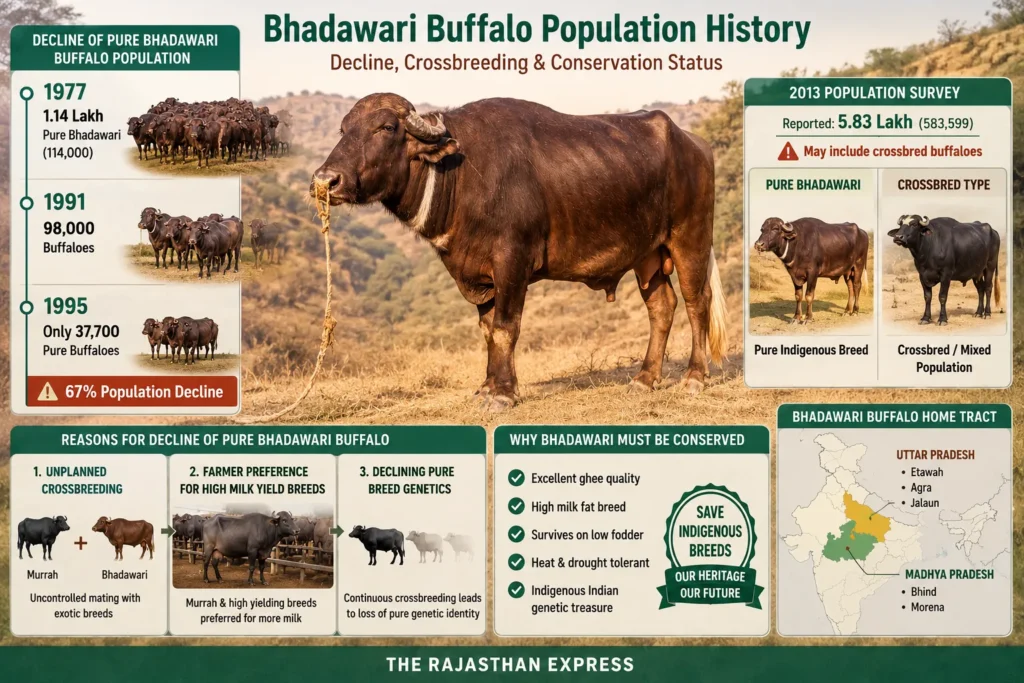
In the year 1977, the number of pure Bhadawari buffaloes in Uttar Pradesh was approximately 1.14 lakh (114,000). But by 1991, this had reduced to 98,000. Thereafter, between 1993 and 1995, NBAGR (National Bureau of Animal Genetic Resources) conducted a survey, which found that by 1995 their number had fallen to just 37,700. That is, between 1977 and 1995, the population of Bhadawari buffaloes declined by about 67% – a massive decrease. The main reasons for this decline were the increasing trend of crossbreeds, unplanned breeding, and farmers’ preference for higher milk‑yielding buffaloes (such as Murrah).
Bhadawari Buffalo Population Survey 2013
However, in 2013, the Department of Animal Husbandry conducted a breed survey, which reported the total number of Bhadawari buffaloes as 5.83 lakh (583,599). But one very important point must be understood about these figures. In this 2013 survey, a clear distinction may not have been made between pure Bhadawari and crossbred (mixed with Murrah or other breeds). That is, it may have included all buffaloes that had a Bhadawari‑like appearance (copper colour, white lines on the neck, etc.), even if they were not completely pure.
Main point: By 1995, the number of pure Bhadawari buffaloes had become very low (37,700). The higher number shown in 2013 (5.83 lakh) should not be understood to mean that the pure breed has increased; rather, this figure likely included crossbred and crossbred‑like buffaloes. Even today, the pure Bhadawari buffalo needs conservation, because it is very precious for its unique characteristics (good milk on low fodder, excellent ghee quality, strong body).
Complete guide to Bhadawari buffalo – price 2026, milk per day (4-5 litres), 12.8% fat, pure breed identification, ghee profits, and population status.
The Rajasthan Express: Your Trusted Source for Animal Care and Veterinary Science.
People Also Ask
What is the price of a Bhadawari buffalo in India?
– Heifer (1-2.5 years): ₹15,000 – ₹30,000
– Ordinary milch (2-3 litres/day): ₹20,000 – ₹35,000
– Average milch (4-5 litres/day): ₹35,000 – ₹55,000
– Good milch (5+ litres/day, 12%+ fat): ₹55,000 – ₹80,000
– Pure NBAGR registered with pedigree: ₹80,000 – ₹1,50,000
– Champion/record-breaking: ₹1,50,000 – ₹3,00,000 (very rare)
How much milk does a Bhadawari buffalo give per day?
What is the fat percentage of Bhadawari buffalo milk?
How to identify a pure Bhadawari buffalo?
– Colour: Copper-like reddish-brown (not black). A completely black buffalo is not Bhadawari – that would be Murrah.
– White stripe on the neck and sometimes a crescent-shaped white mark (chevron) on the forehead.
– Horns: Short, sickle-shaped, sometimes coiled.
– Body: Medium-sized, sturdy, adapted to harsh conditions.
– Origin: Native to Uttar Pradesh (Etawah, Agra, Auraiya) and Madhya Pradesh (Bhind, Morena).
Is selling ghee from Bhadawari buffalo more profitable than selling milk?
– Selling milk at ₹70/litre gives ₹90,580 per lactation.
– Selling ghee at ₹1000/kg gives ₹1,12,000 – an extra ₹21,420.
For an excellent Bhadawari (1,400 kg milk, 10% fat):
– Selling milk gives ₹98,000.
– Selling ghee gives ₹1,55,000 – an extra ₹57,000.
Equivalent milk price from ghee becomes ₹78-87/litre (average) and ₹100-111/litre (excellent) – much higher than ₹70/litre.
Where is the Bhadawari buffalo originally from?
What is the population status of pure Bhadawari buffalo?
What factors affect the price of a Bhadawari buffalo?
1. Milk yield – higher yield = higher price.
2. Fat percentage – over 10% fat adds 10-20% premium.
3. Breed purity – NBAGR registered pure animals cost 30-40% more.
4. Age – young milch (3-6 years) is most expensive.
5. Pregnancy – adds ₹10,000-20,000.
6. Pedigree – recorded ancestry can double the price.
7. Health and vaccination – adds 10-15%.
8. Location – cheaper in native UP/MP, 30-50% higher in cities.
What is the average age of first calving for Bhadawari buffalo?
Why is Bhadawari called a ‘ghee-giving buffalo’?
What are the main characteristics of Bhadawari buffalo?
– Colour: Copper-like reddish-brown with white neck stripe and sometimes a white crescent on forehead.
– Horns: Short, sickle-shaped, sometimes coiled.
– Milk fat: Very high (7.88% average, up to 12.8%).
– Milk yield: Low to moderate (4-5 litres/day).
– Hardiness: Thrives on low-quality fodder and harsh conditions.
– Temperament: Docile, calm.
– Calving interval: Approximately 16 months.
Where can I buy a pure Bhadawari buffalo for sale?
How does Bhadawari buffalo compare with Murrah buffalo?
– Milk yield: Murrah gives 8-15 litres/day; Bhadawari gives 4-5 litres/day.
– Milk fat: Murrah fat is 7-8%; Bhadawari fat is 7.88% average, up to 12.8%.
– Price: Murrah is more expensive (up to crores for champion bulls); Bhadawari is lower (max ₹3 lakh for record-breaking).
– Main use: Murrah is for high milk volume; Bhadawari is for high-fat ghee production.
– Hardiness: Both are hardy, but Bhadawari is more adapted to low-fodder, harsh conditions.
– Conservation status: Bhadawari is rarer and needs urgent conservation.

