By
ByOngole Cattle: Origin, Characteristics, and Global Significance
The Ongole cattle is a dual-purpose breed from India, primarily raised for milk production and agricultural draft work. It originates from the Ongole taluk in the state of Andhra Pradesh, which was part of the Nellore district until 1904, but now falls under Prakasam district. This breed is known not only for its good milk yield but also for its strength in handling heavy workloads.
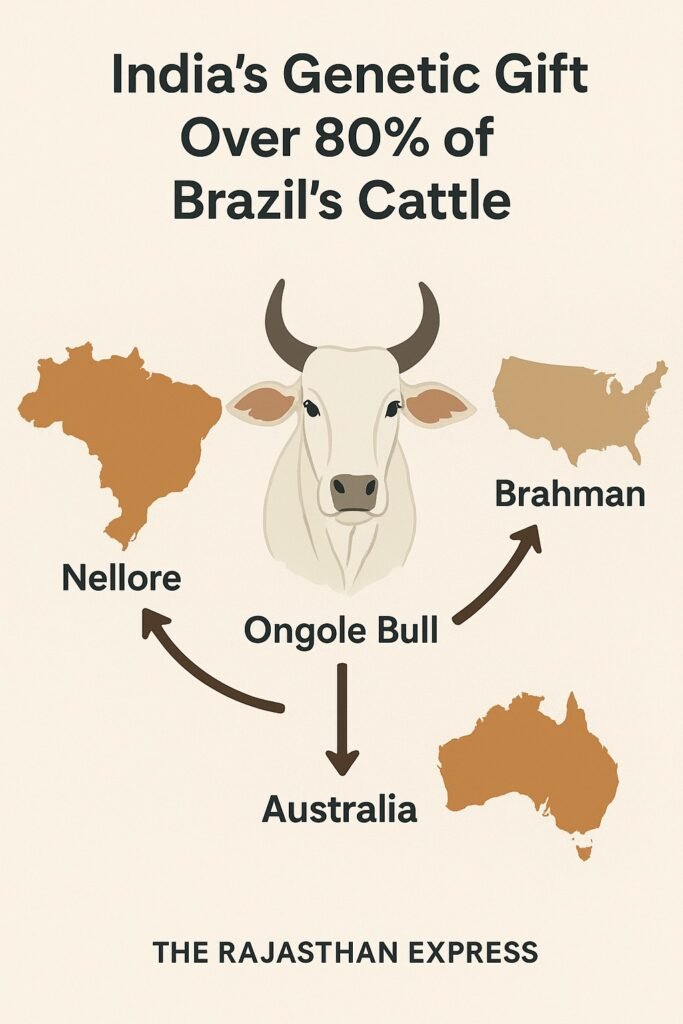
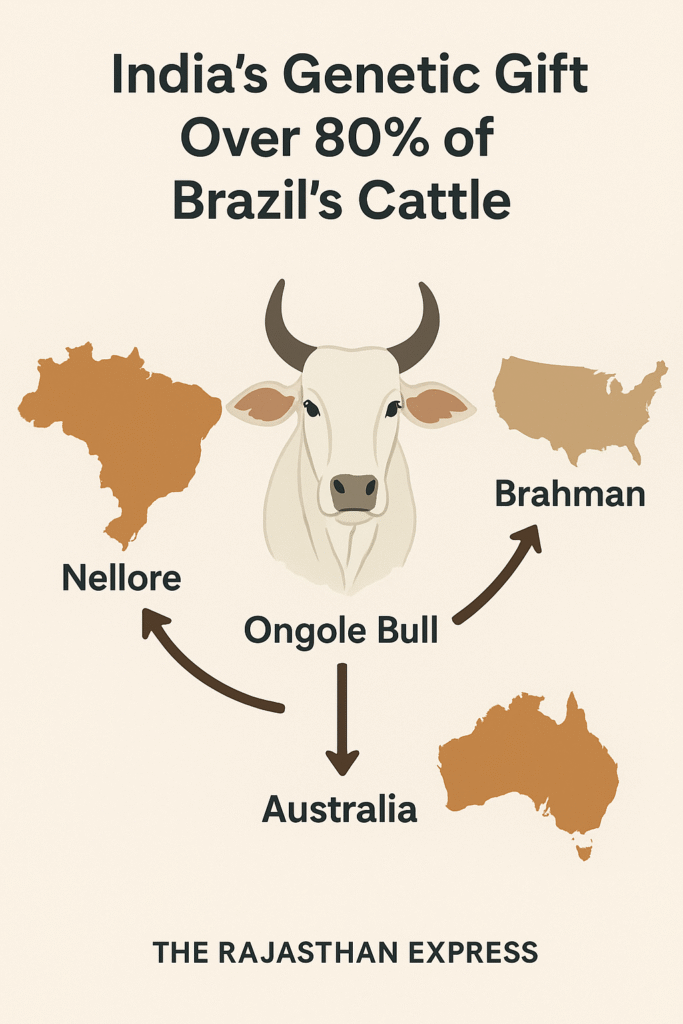
In 1868, Brazil imported this breed and developed a new crossbreed with local cows, naming it “Nellore” after the Nellore district in Andhra Pradesh. By the early 20th century, the demand for the Nellore breed had surged in Brazil, and today, more than 80% of the cows in Brazil are of the Nellore breed. This makes the Ongole cattle a distinct breed with significant global importance.
Indigenous Indian cattle breeds are also referred to as Zebu cattle (Bos indicus) or humped cattle. These native breeds are classified into three categories based on their utility: milk-producing breeds, draft breeds, and dual-purpose breeds. The Ongole cattle, being dual-purpose, are also renowned for their disease resistance, ability to tolerate heat, and ability to survive on minimal fodder. This breed is highly valued not only in India but also abroad, where it is sold at premium prices.
Ongole Cattle: In-Depth Profile
| Other Names / Synonyms | Nellore (International), Indian Zebu, Prakasam Cattle, Andhra White, Desi Ongole |
|---|---|
| Scientific Classification |
Kingdom: Animalia Phylum: Chordata Class: Mammalia Order: Artiodactyla Family: Bovidae Genus: Bos Species: Bos indicus (Zebu cattle) Breed Type: Humped Zebu, Indigenous Draft & Dairy Breed |
| Origin & Historical Significance |
|
| Conservation Status |
|
| Breeding Tract & Habitat |
|
| Physical Characteristics |
|
| Size & Weight |
|
| Production Characteristics |
|
| Genetic & Global Significance |
|
| Adaptability Traits |
|
| Global Distribution & Impact |
|
| Economic & Cultural Significance |
|
| Sources: National Bureau of Animal Genetic Resources (NBAGR); Food and Agriculture Organization (FAO); Brazilian Nelore Breeders Association; American Brahman Breeders Association; Guinness World Records; Indian Council of Agricultural Research (ICAR); Peer-reviewed livestock genetic studies. The Rajasthan Express | |
The Ongole breed has played a crucial role in the development of several foreign breeds, such as the American Brahman, Santa Gertrudis, and Brazil’s Indu-Brazil. In countries like the U.S., these breeds are primarily used for meat production. Due to its good milk yield and excellent disease resistance, the demand for Ongole cattle is high internationally, and they are sold at premium rates.
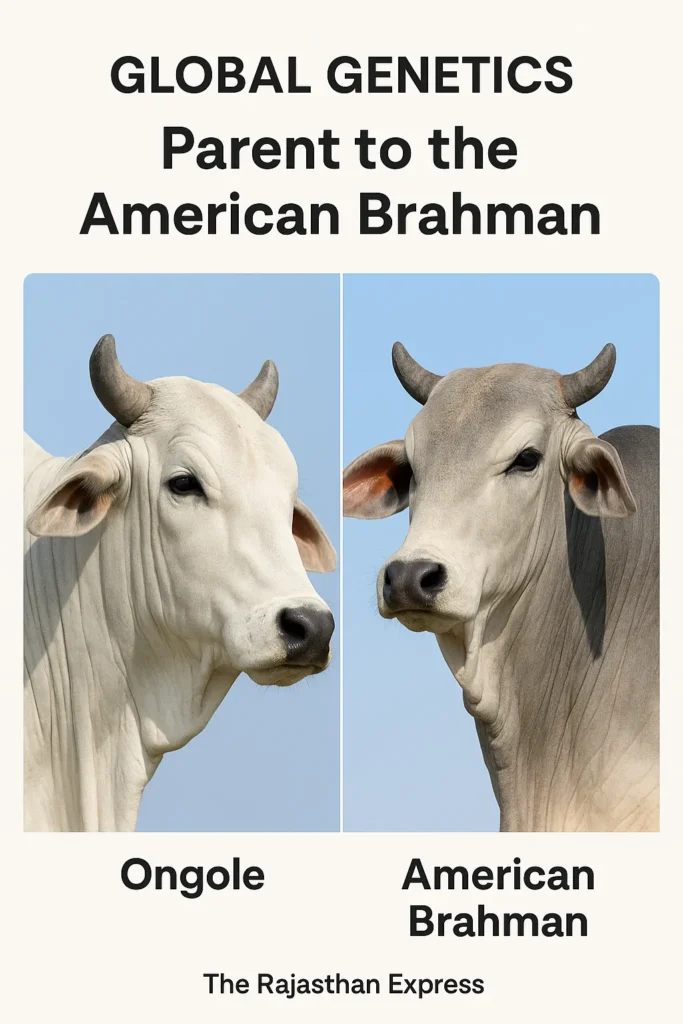
Although foreign breeds have benefited from support by large associations and government institutions, like the American Brahman Breeders Association (ABBA) for the American Brahman, the Ongole breed has not received such extensive backing. Despite this, the breed has spread worldwide due to its exceptional qualities.
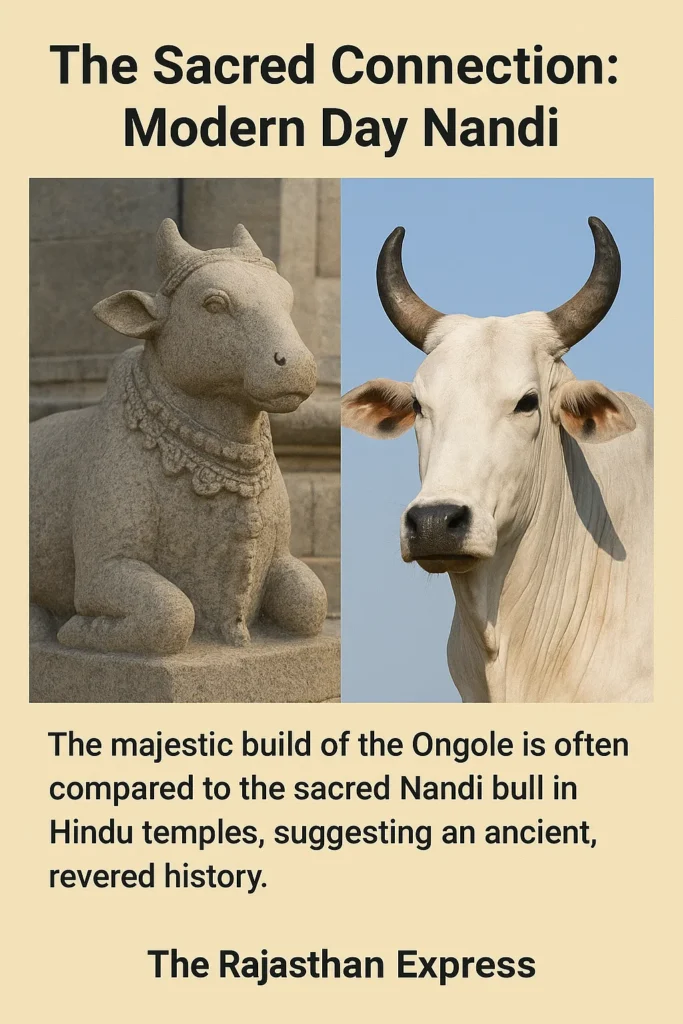
Until 1904, the Ongole region was part of the Nellore district, which is why it is referred to as “Nellore” in foreign markets. However, locals have always known it as Ongole because its main breeding tract was in Ongole. In India, statues of the sacred bull Nandi in Hindu temples dedicated to Lord Shiva are often compared to Ongole cattle, suggesting that the breed’s characteristics have been known since ancient times.
The Ongole cattle is one of the registered native breeds under the National Bureau of Animal Genetic Resources (NBAGR) of India, which has registered 53 indigenous breeds, including the Ongole. The NBAGR headquarters is located in Karnal, Haryana. The Ongole breed has played a vital role in India’s agriculture and milk production, and it is raised in various parts of the country.
Ongole Cattle Origin and Historical Background
The Ongole cattle originated in the Ongole taluk of Andhra Pradesh, which was part of the Nellore district until 1904. This is why the breed is also known by the name “Nellore.” The Ongole breed developed over several centuries along the eastern coast of the Indian subcontinent, in the deltas of the Penna, Krishna, and Godavari rivers, under the care and selection of local farmers. The breed is named after its birthplace, Ongole taluk. Later, Ongole taluk was transferred from the Nellore district to Guntur district, but the city of Ongole is now part of Prakasam district, named after Andhra Pradesh’s famous leader Tanguturi Prakasam Pantulu.
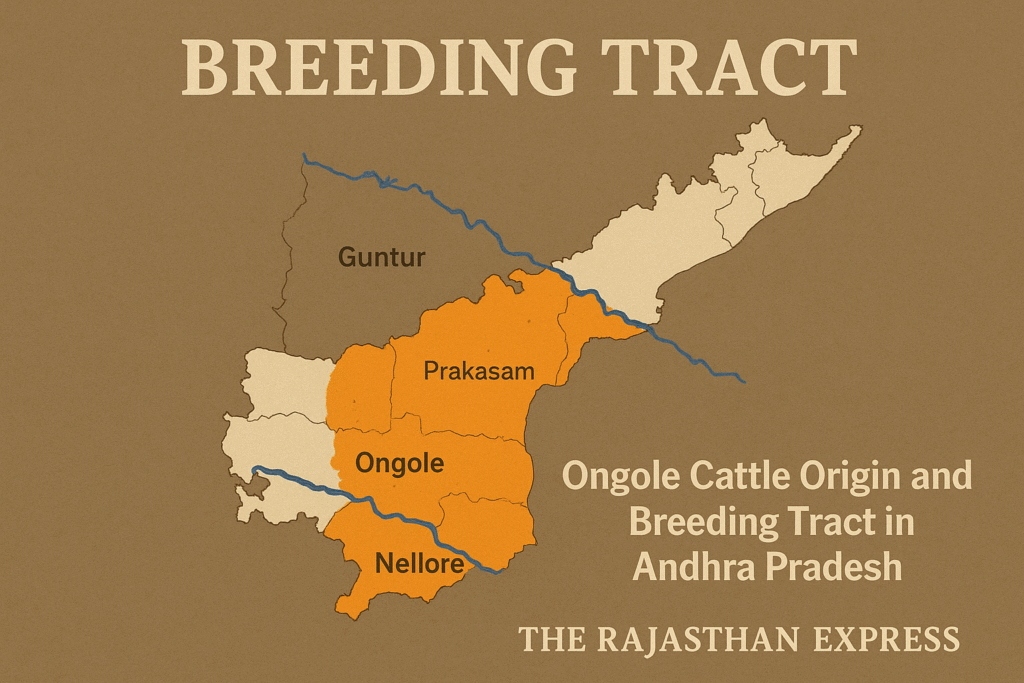
The city of Ongole is primarily known for the Ongole cattle, which the locals use for both milk production and draft work in agriculture. Villages in this taluk such as Cheruvukomupalem, Throvagunta, Muktinuthalapadu, Dasarajupalli, Koppolu, Narsapuram Agraharam, Pellur, Pernamitta, and Vengamukkapalem are home to pure Ongole bulls. Pure Ongole bulls can also be found in villages like Karumanchi, Nidamanur, Pondur, Jayavaram, Tungatur, and Karvadi, as well as along the banks of the Moosi River, south of the Krishna River, and north of the Penna River.
In 1858, the district collector of Nellore initiated the Ongole cattle exhibition, aiming to encourage the breeding of high-quality Ongole cattle and prevent poor breeding practices. These exhibitions continued annually until 1871, promoting better breeding among small and large breeders.
In addition to these exhibitions, the government introduced a key rule in 1867 requiring that each village reserve 30% of its non-agricultural land for common grazing to ensure adequate pasture for Ongole cattle. In August 1952, the central government launched the Key Village System (KVS) scheme, aimed at castrating scrub bulls (inferior bulls with poor breeding capacity) to prevent unwanted breeding and promote artificial insemination for breed improvement. Under this scheme, artificial insemination was also promoted for Ongole cattle breeding.
Crossbreeding began in the late 1950s and 1980s, and Ongole cattle were used for crossbreeding. This resulted in the decline of pure Ongole breed populations. To prevent this, the Ongole exhibitions were restarted. The Agricultural College in Coimbatore reared Ongole cattle until 1924-25, and the Hosur farm, established in 1919, reared Ongole cattle until 1933-34. Ongole cattle were also kept at the Chittaladevi farm, established in 1918, with the aim of increasing milk yield, reducing the calving interval, and producing stud bulls for distribution in breeding villages. The Livestock Department established a mixed livestock farm with Ongole cattle and Nellore sheep in Chittaladevi in 1986. The Ongole cattle germplasm unit was set up in 1986 at the Lam farm by the A.P. Agricultural University. Ongole cattle were previously housed at farms in Visakhapatnam and Kakinada. The Ongole cattle breeders’ association was established on August 27, 1951.
To prevent the decline in the Ongole breed population, Andhra Pradesh Agricultural University initiated a network project for genetic improvement of the Ongole breed through auxiliary herd breeding trials, with support from the state’s Livestock Department and financial assistance from the Indian Council of Agricultural Research (ICAR). A gene plasma unit for Ongole cattle was set up at Lam Farm, which included a bull-rearing, semen freezing, and data processing center. Auxiliary breeding herds were established at the Livestock Department’s Ongole cattle breeding farms at Ramatheertham, Chittaladevi in Prakasam district, and the University’s farms in Kurnool district. In 1994, additional university farm auxiliary herds and farmers’ auxiliary herds were added at Lam Farm.
The Ongole breed shares similarities with the Gaolao cattle of Madhya Pradesh and the Sibi Bhagnari cattle from Balochistan. The Sibi Bhagnari breed is the largest of the Zebu cattle and originated from Sibi in Balochistan. It is found in Pakistan and India’s Punjab, where it is reared for both milk production and draft work. Bhagnari cattle are also known by the name “Dajjal.” The Gaolao breed is made up of the Wardha district of Maharashtra, Balaghat and Hind Vastra of Madhya Pradesh and Rajnandgaon district of Chhattisgarh. It is an Indian Zebu breed, registered by NBAGR, reared for both agricultural work and milk production.
The adaptability, disease resistance, and ability of the Nellore or Ongole breed to thrive on low and dry fodder have been successfully utilized to improve local breeds of European origin.
| The Rajasthan Express : All Cattle Breeds Registered by NABGR | |||
| S.N. | Breed | Home Tract | Accession Number |
|---|---|---|---|
| 1 | Amritmahal | Karnataka | INDIA_CATTLE_0800_AMRITMAHAL_03001 |
| 2 | Bachaur | Bihar | INDIA_CATTLE_0300_BACHAUR_03002 |
| 3 | Bargur | Tamil Nadu | INDIA_CATTLE_1800_BARGUR_03003 |
| 4 | Dangi | Maharashtra and Gujarat | INDIA_CATTLE_1104_DANGI_03004 |
| 5 | Deoni | Maharashtra and Karnataka | INDIA_CATTLE_1108_DEONI_03005 |
| 6 | Gaolao | Maharashtra and Madhya Pradesh | INDIA_CATTLE_1110_GAOLAO_03006 |
| 7 | Gir | Gujarat | INDIA_CATTLE_0400_GIR_03007 |
| 8 | Hallikar | Karnataka | INDIA_CATTLE_0800_HALLIKAR_03008 |
| 9 | Hariana | Haryana, Uttar Pradesh and Rajasthan | INDIA_CATTLE_0520_HARIANA_03009 |
| 10 | Kangayam | Tamil Nadu | INDIA_CATTLE_1800_KANGAYAM_03010 |
| 11 | Kankrej | Gujarat and Rajasthan | INDIA_CATTLE_0417_KANKREJ_03011 |
| 12 | Kenkatha | Uttar Pradesh and Madhya Pradesh | INDIA_CATTLE_2010_KENKATHA_03012 |
| 13 | Kherigarh | Uttar Pradesh | INDIA_CATTLE_2000_KHERIGARH_03013 |
| 14 | Khillar | Maharashtra and Karnataka | INDIA_CATTLE_1108_KHILLAR_03014 |
| 15 | Krishna Valley | Karnataka | INDIA_CATTLE_0800_KRISHNAVALLEY_03015 |
| 16 | Malvi | Madhya Pradesh | INDIA_CATTLE_1000_MALVI_03016 |
| 17 | Mewati | Rajasthan, Haryana and Uttar Pradesh | INDIA_CATTLE_1705_MEWATI_03017 |
| 18 | Nagori | Rajasthan | INDIA_CATTLE_1700_NAGORI_03018 |
| 19 | Nimari | Madhya Pradesh | INDIA_CATTLE_1000_NIMARI_03019 |
| 20 | Ongole | Andhra Pradesh | INDIA_CATTLE_0100_ONGOLE_03020 |
| 21 | Ponwar | Uttar Pradesh | INDIA_CATTLE_2000_PONWAR_03021 |
| 22 | Punganur | Andhra Pradesh | INDIA_CATTLE_0100_PUNGANUR_03022 |
| 23 | Rathi | Rajasthan | INDIA_CATTLE_1700_RATHI_03023 |
| 24 | Red Kandhari | Maharashtra | INDIA_CATTLE_1100_REDKANDHARI_03024 |
| 25 | Red Sindhi | On organized farms only | INDIA_CATTLE_0000_REDSINDHI_03025 |
| 26 | Sahiwal | Punjab and Rajasthan | INDIA_CATTLE_1617_SAHIWAL_03026 |
| 27 | Siri | Sikkim and West Bengal | INDIA_CATTLE_2221_SIRI_03027 |
| 28 | Tharparkar | Rajasthan | INDIA_CATTLE_1700_THARPARKAR_03028 |
| 29 | Umblachery | Tamil Nadu | INDIA_CATTLE_1800_UMBLACHERY_03029 |
| 30 | Vechur | Kerala | INDIA_CATTLE_0900_VECHUR_03030 |
| 31 | Motu | Odisha, Chhattisgarh and Andhra Pradesh | INDIA_CATTLE_1526_MOTU_03031 |
| 32 | Ghumusari | Odisha | INDIA_CATTLE_1500_GHUMUSARI_03032 |
| 33 | Binjharpuri | Odisha | INDIA_CATTLE_1500_BINJHARPURI_03033 |
| 34 | Khariar | Odisha | INDIA_CATTLE_1500_KHARIAR_03034 |
| 35 | Pulikulam | Tamil Nadu | INDIA_CATTLE_1800_PULIKULAM_03035 |
| 36 | Kosali | Chhattisgarh | INDIA_CATTLE_2600_KOSALI_03036 |
| 37 | Malnad Gidda | Karnataka | INDIA_CATTLE_0800_MALNADGIDDA_03037 |
| 38 | Belahi | Haryana and Chandigarh | INDIA_CATTLE_0532_BELAHI_03038 |
| 39 | Gangatiri | Uttar Pradesh and Bihar | INDIA_CATTLE_2003_GANGATIRI_03039 |
| 40 | Badri | Uttarakhand | INDIA_CATTLE_2400_BADRI_03040 |
| 41 | Lakhimi | Assam | INDIA_CATTLE_0200_LAKHIMI_03041 |
| 42 | Ladakhi | Jammu and Kashmir | INDIA_CATTLE_0700_LADAKHI_03042 |
| 43 | Konkan Kapila | Maharashtra and Goa | INDIA_CATTLE_1135_KONKANKAPILA_03043 |
| 44 | Poda Thurpu | Telangana | INDIA_CATTLE_3600_PODATHURPU_03044 |
| 45 | Nari | Rajasthan and Gujarat | INDIA_CATTLE_1704_NARI_03045 |
| 46 | Dagri | Gujarat | INDIA_CATTLE_0400_DAGRI_03046 |
| 47 | Thutho | Nagaland | INDIA_CATTLE_1400_THUTHO_03047 |
| 48 | Shweta Kapila | Goa | INDIA_CATTLE_3500_SHWETAKAPILA_03048 |
| 49 | Himachali Pahari | Himachal Pradesh | INDIA_CATTLE_0600_HIMACHALIPAHARI_03049 |
| 50 | Purnea | Bihar | INDIA_CATTLE_0300_PURNEA_03050 |
| 51 | Kathani | Maharashtra | INDIA_CATTLE_1100_KATHANI_03051 |
| 52 | Sanchori | Rajasthan | INDIA_CATTLE_1700_SANCHORI_03052 |
| 53 | Masilum | Meghalaya | INDIA_CATTLE_1300_MASILUM_03053 |
| 54 | Frieswal (Synthetic Breed) | Uttar Pradesh and Uttarakhand | INDIA_CATTLESYNTHETIC_2024_FRIESWAL_04001 |
| The Rajasthan Express : All Cattle Breeds Registered by NABGR | |||
Ongole Cattle Global Distribution and Influence
Ongole cattle are predominantly found in large numbers in the town of Ongole in the Indian state of Andhra Pradesh. This breed is highly adaptable to hot climates and performs well even in poor grazing conditions. Ongole cattle are known for their strong resistance to Foot-and-Mouth Disease (FMD) and Bovine Spongiform Encephalopathy (BSE, also known as Mad Cow Disease). Due to these unique traits, many countries have imported this Zebu breed from India.
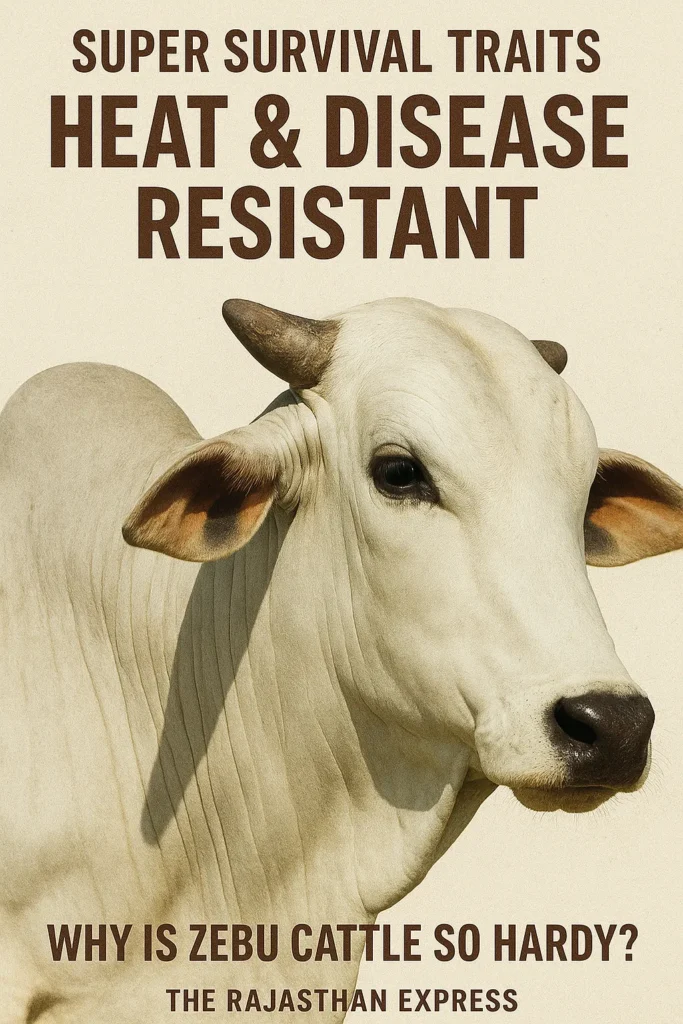
Ongole cattle have been exported to several countries. The United States imported them mainly for beef production, while Brazil imported them for both beef and milk production, contributing to the development of the Nellore and Indu-Brazil breeds. Sri Lanka, Fiji, and Jamaica imported them for draft purposes, while Australia imported Ongole cattle for their adaptability to hot climates and beef production. Switzerland imported Ongole cattle for their disease resistance. Other countries, such as Argentina, Paraguay, Mexico, Colombia, Indonesia, the Philippines, and Malaysia, have also imported Ongole cattle.
In 1868, Brazil imported Ongole cattle and crossbred them with local breeds to create a new breed named ‘Nellore.’ By the early 20th century, the population of Nellore (or Ongole) cattle in Brazil reached up to 80%. In 1885, the United States imported two Zebu bulls from India, one from the Gir breed and the other from the Ongole breed, to Texas. These bulls were crossbred with local taurine cattle, leading to the creation of the ‘Brahman‘ breed in the U.S.

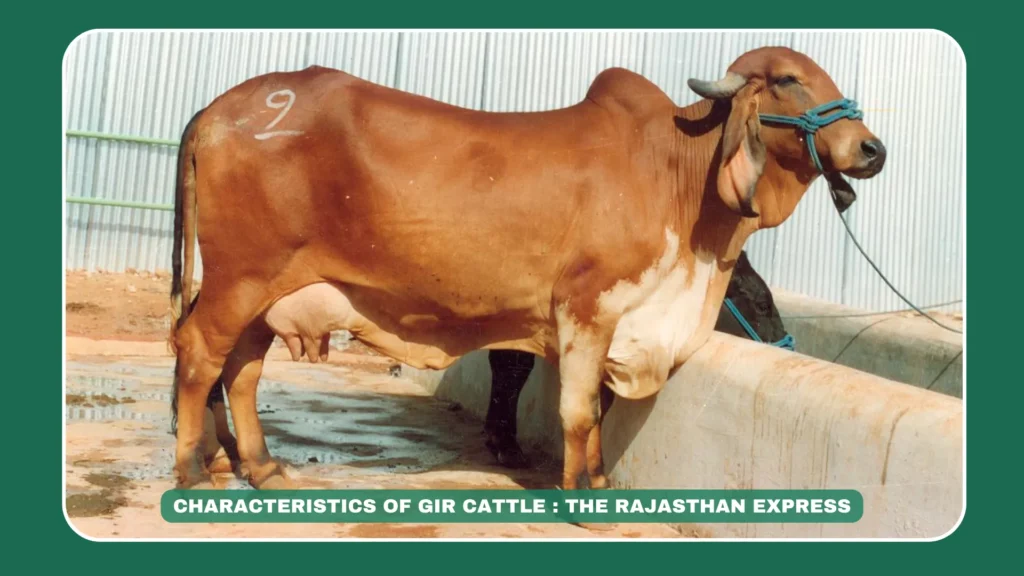
Brazil also imported Gir and Kankrej breeds from India and crossbred them with local cattle to develop the ‘Indu-Brazil’ or ‘Indo-Brazilian’ breed, also known as ‘Induberlaba.’ The Indu-Brazil breed is a Brazilian breed that originated from the Indian Zebu cattle, Gir, and Kankrej. In Brazil, the Kankrej breed is known as ‘Guzerá.’ The Kankrej breed is one of the largest and most important dual-purpose breeds in India, primarily used for milk production and agricultural work.
🇧🇷 The Brazilian Success Story: From Ongole to Nelore
The transformation of the Ongole into the Nelore breed in Brazil is one of modern agriculture’s greatest success stories.
- Historical Import: Brazil first imported Ongole cattle from India as early as 1868 . The breed was named “Nelore” after the Nellore district in Andhra Pradesh, which was historically linked to the Ongole region .
- Dominance in the Beef Industry: Through dedicated selective breeding, the Nelore became perfectly suited to Brazil’s tropical climate. Today, it is the undisputed backbone of the Brazilian beef industry, constituting approximately 80% of the country’s massive cattle population of 225 million head . This success is a powerful demonstration of the Ongole’s extraordinary genetic potential when systematically developed for specific production goals.
- 🐂 The Record-Breaking Viatina-19 : The cow Viatina-19 set a Guinness World Record in 2025 for being the most expensive cattle ever sold, fetching a price of $4.8 million (approximately ₹40 crore) at an auction in Minas Gerais, Brazil .
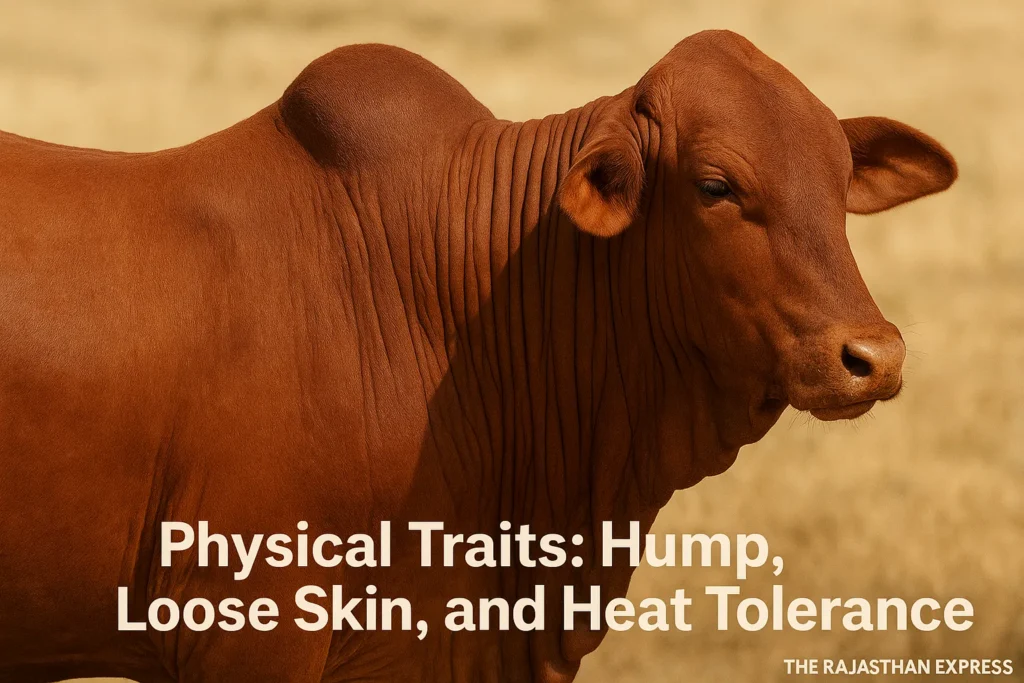
- Exceptional Genetics and Physique: Viatina-19 is a Nelore cow, a breed descended from India’s Ongole cattle. Weighing 1,101 kg, she is about twice the weight of an average cow of her breed, which showcases her superior genetics. Her physical traits, including her white coat, loose skin, and prominent hump, are characteristic of the breed and contribute to its heat tolerance.
- A Champion Cow: Beyond her auction price, Viatina-19 has also won the title of “Miss South America” at the prestigious “Champion of the World” cattle competition in Texas, USA.
- Global Demand for Genetics: The primary reason for her high value is the high global demand for her superior genetics. Her embryos are sold to breeders worldwide who wish to incorporate these elite traits into their own herds. A veterinarian involved described her as “the closest to perfection attained so far”.
🌍 Influence on International Breeds
The genetic influence of Ongole cattle extends far beyond purebred populations, having fundamentally contributed to several internationally significant breeds.
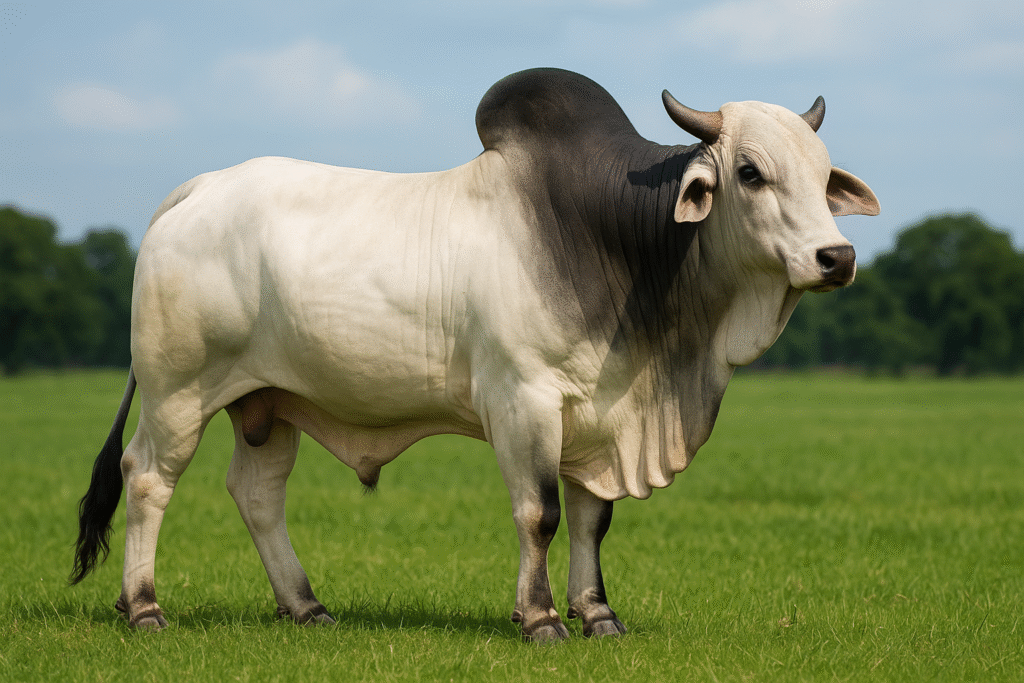
- American Brahman: Developed in the United States starting in 1885, the American Brahman is a cornerstone breed for tropical and subtropical cattle production. It was created by crossbreeding American local cattle with Indian Zebu breeds, primarily Gir, Kankrej, and Ongole (Nellore). The Brahman is renowned for its exceptional heat tolerance and disease resistance.
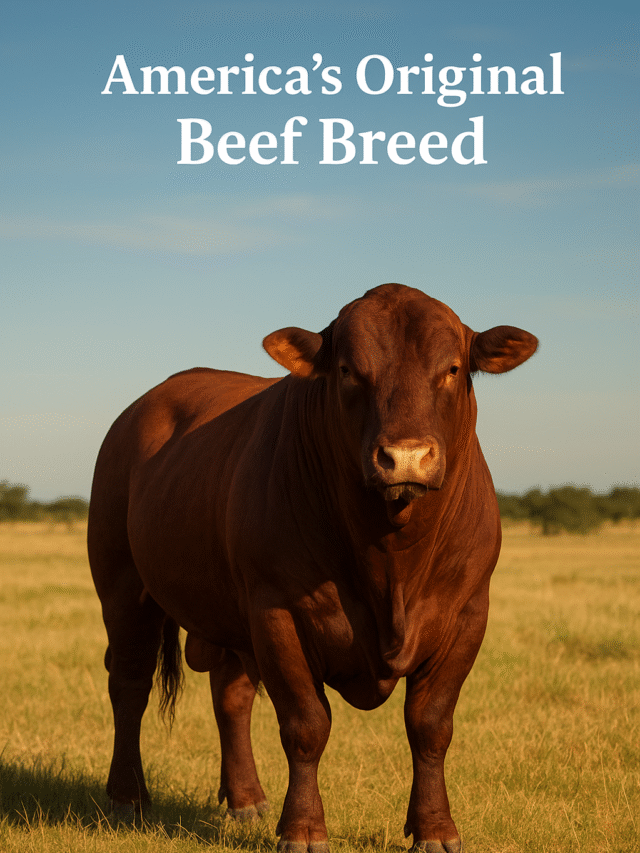
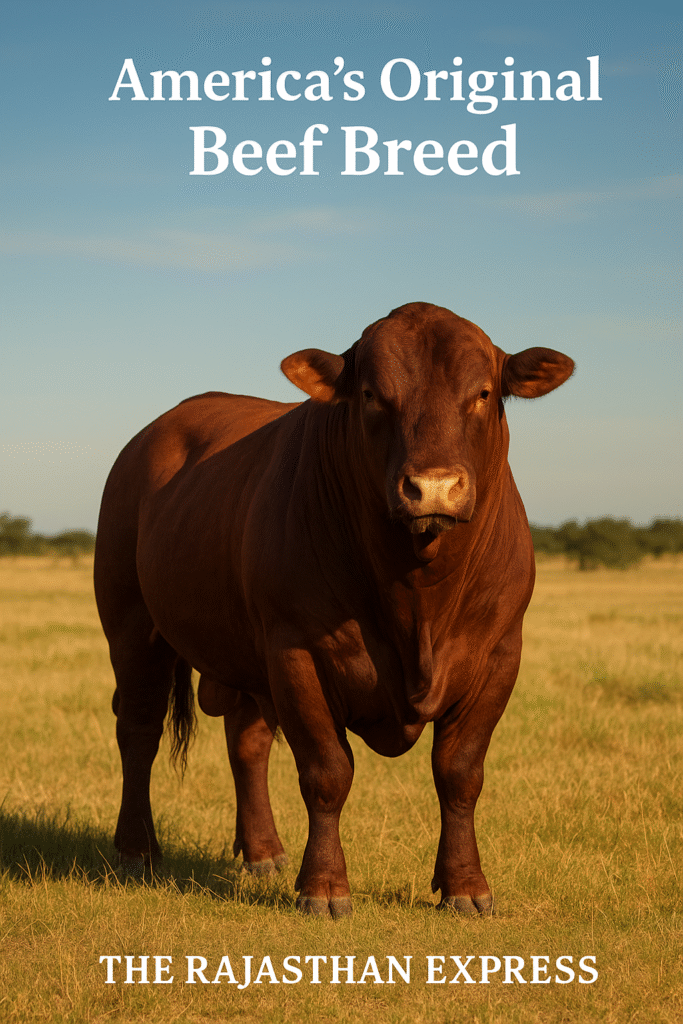
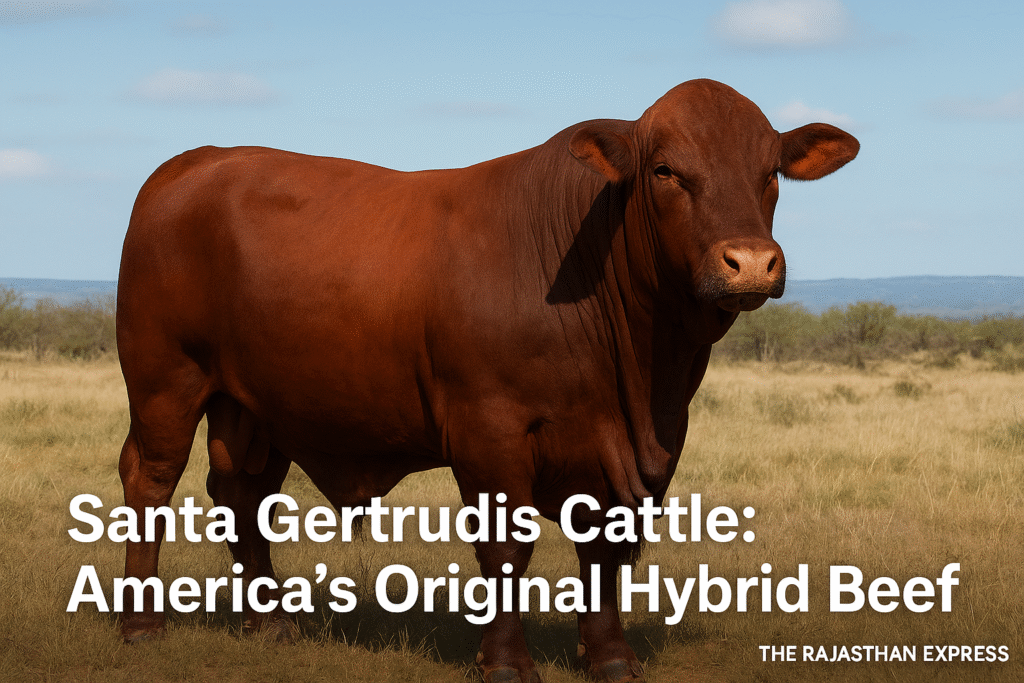
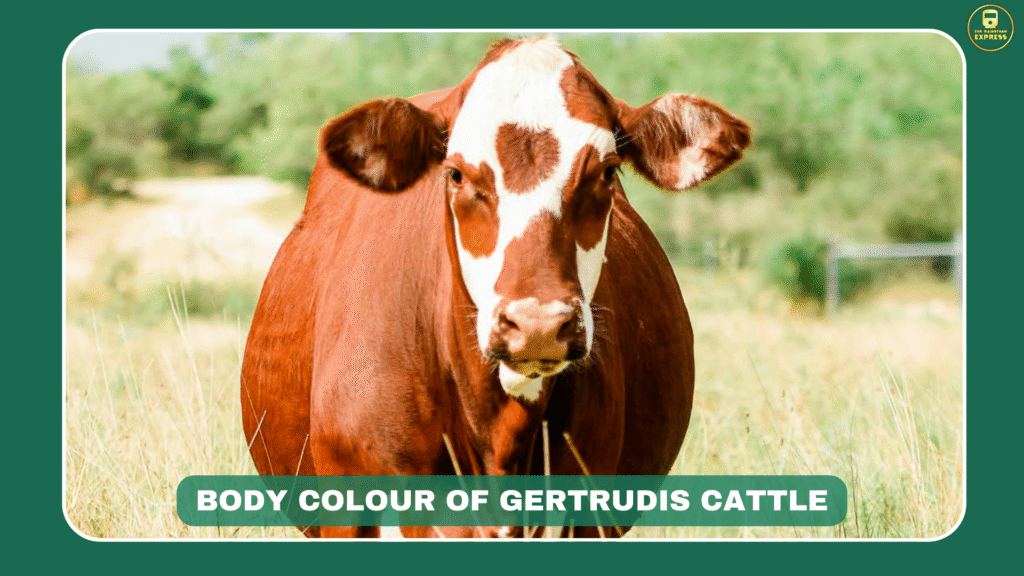
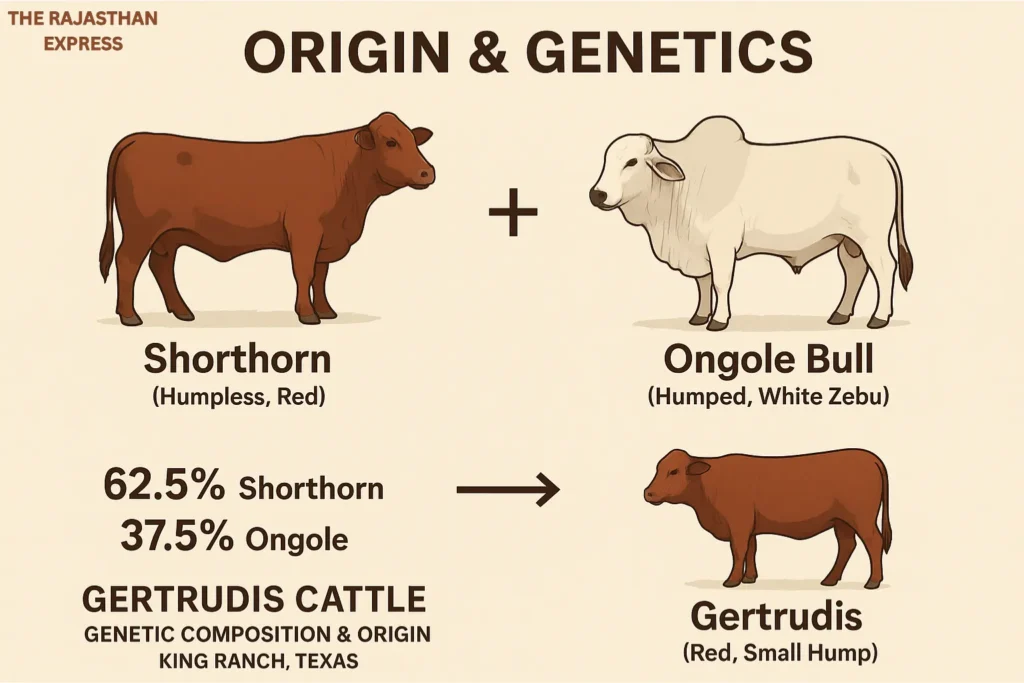
- Santa Gertrudis: Developed on Texan ranches like the King Ranch, this robust beef breed strategically incorporates Ongole bloodlines to enhance its heat tolerance and disease resistance.
- Other Breeds: The Ongole’s genetics have also influenced other composites like the Indu-Brazil, a Brazilian breed developed from Ongole, Gir, and Kankrej genetics.

| The Rajasthan Express : Global Impact of Ongole Cattle | |||
| Hybrid/Crossbreed Name | Genetic Composition | Primary Purpose | Region/Country |
|---|---|---|---|
| Nelore | Developed from Ongole cattle | Beef production | Brazil |
| American Brahman | Derived from Ongole and other Zebu breeds (like Gir) | Beef production, tropical adaptation | United States |
| Santa Gertrudis | Incorporates Ongole bloodlines | Beef production, heat tolerance | United States (Texas) |
| Peranakan Ongole (PO) | Ongole crossbred with Bos javanicus (Bali cattle) | General purpose | Indonesia |
| Simental Ongole Crossbred | Cross between Simmental and Ongole | Meat quality studies | Indonesia |
| Indu-Brazil | Composite of Ongole, Gir, and Kankrej | Beef production | Brazil |
| The Rajasthan Express : Global Legacy and Influence of Ongole Cattle | |||
Alternative Names of Ongole Cattle
Ongole cattle originated in the Ongole taluk of Andhra Pradesh, India, and are thus named after this region. In 1868, Brazil imported Ongole cattle from India and crossbred them with local breeds to develop a new breed, named ‘Nellore’ after Ongole taluk, which was then part of Nellore district. Hence, Ongole cattle are also referred to as ‘Nellore.’
Breeding Tract of Ongole Cattle
The Ongole breed, named after the town of Ongole in Andhra Pradesh, is primarily found in the districts of Prakasam, Nellore, Kurnool, Guntur, and East Godavari in Andhra Pradesh. Its breeding tract extends from the Krishna River in the north to the Penna River in the south, from the Nallamala Forest Range in the west to the Coromandel Coast in the east. The riverbanks of Gundlakamma, Madigandi, Paleru, Munneru, Musi, and Chilkaleru are well-known for excellent grazing lands.

Initially, this region was difficult for agriculture, and Ongole cattle were the main source of livelihood for local farmers. Farmers raised them and improved their financial situation by selling milk and ghee. Over time, they developed the Ongole breed through natural selection, which was used for milk production and agricultural work. These cattle were a source of wealth for farmers, with livestock serving as their ‘savings accounts’ and calves as ‘interest.’
In the 1850s, with the construction of the Krishna and Godavari canals and the development of irrigation facilities, the demand for Ongole bulls for draft work increased. The breeding area expanded to the Krishna, Godavari, and Northern Sarkar regions, and the breed is now also found in Telangana’s Nalgonda and Mahbubnagar districts.
Main Uses of Ongole Cattle
Ongole cattle, a native breed of southern India, are used for both agricultural work and milk production. In India, they are primarily considered a dual-purpose breed. However, in other countries such as the U.S., Brazil, Canada, and Australia, Ongole cattle are mainly raised for beef production.
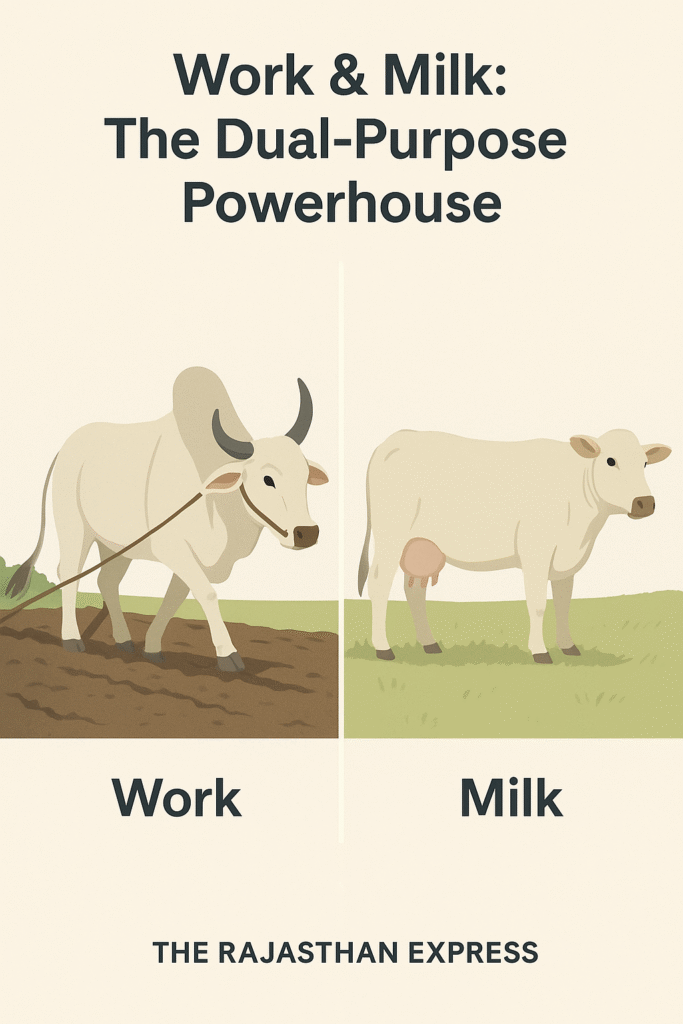
- Milk Production:
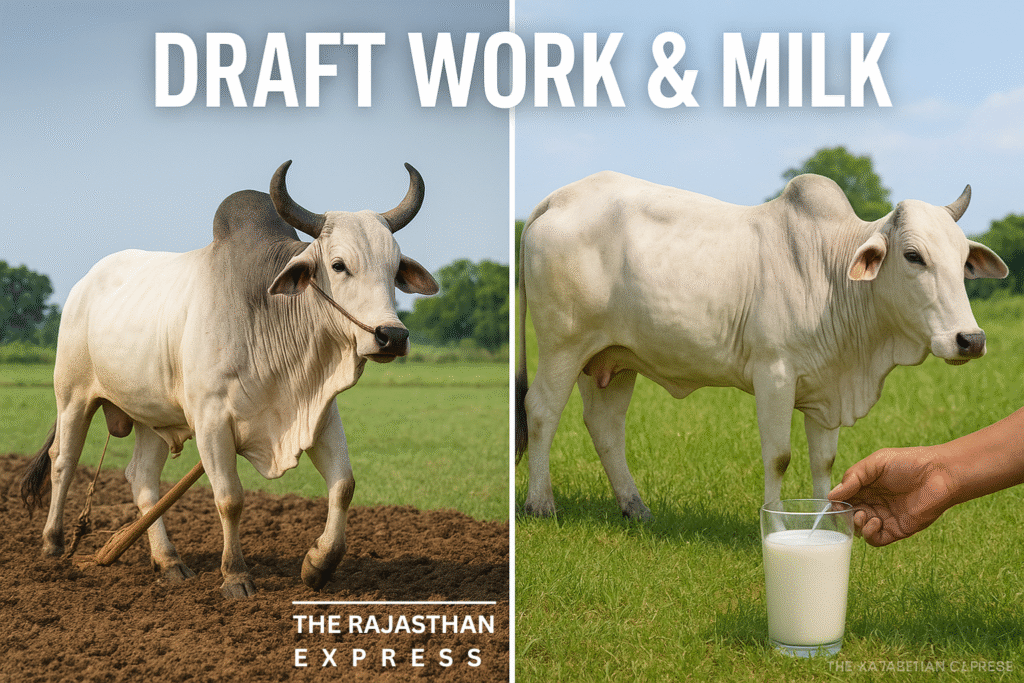
Farmers in Andhra Pradesh raise Ongole cattle for milk production. They improve their economic situation by selling milk and ghee. - Draft Work:
Ongole cattle are particularly useful for draft work, such as plowing fields. Ongole bulls can work efficiently in hot climates, making them valuable for agricultural purposes.
Ongole Cattle Physical Characteristics and Appearance
1. Size and Stature
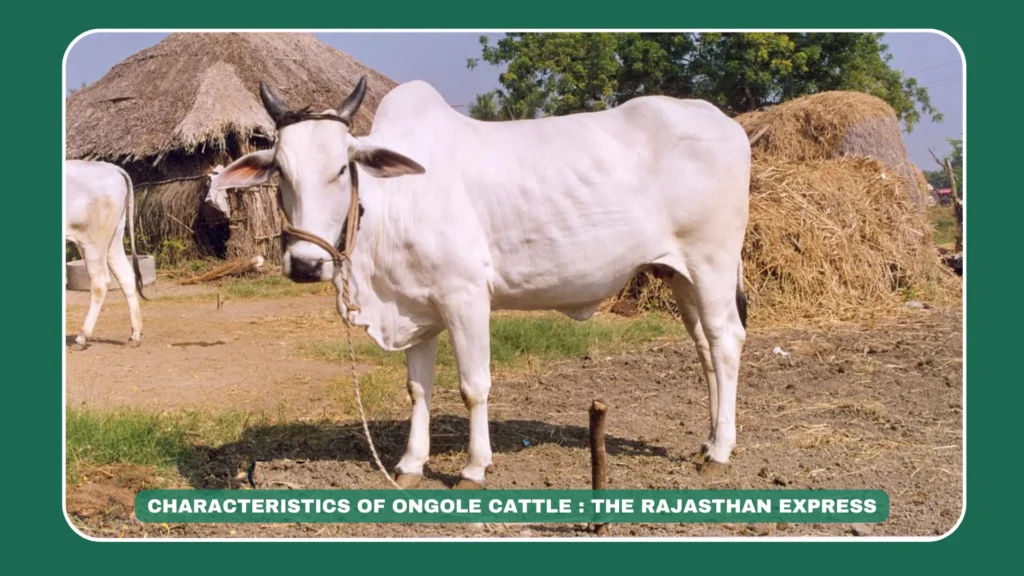
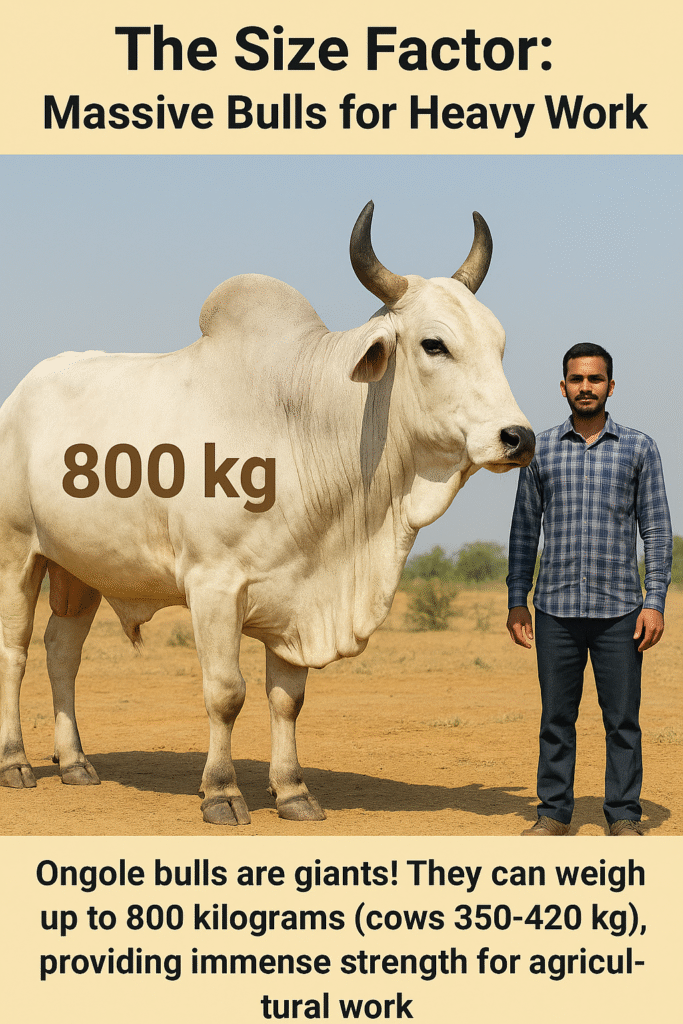
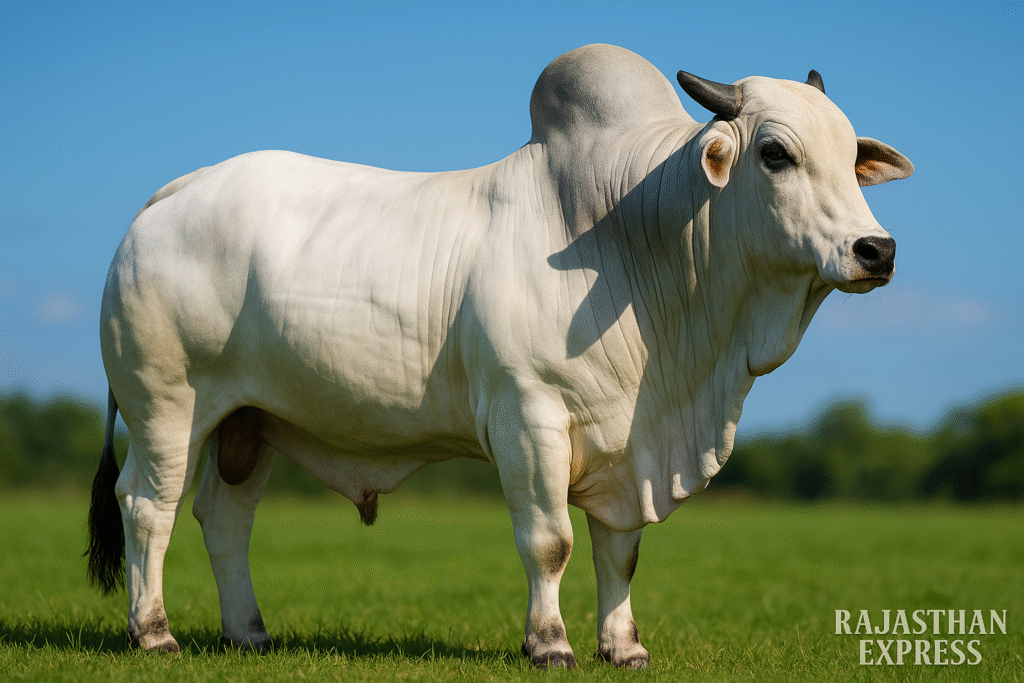
Ongole cattle rank among the largest and most substantial cattle breeds native to India. The breed is characterized by its impressive physical dimensions, with bulls typically weighing between 800-900 kg (1,764-1,984 lbs) and standing approximately 1.7 meters (5.6 feet) tall at the shoulder.
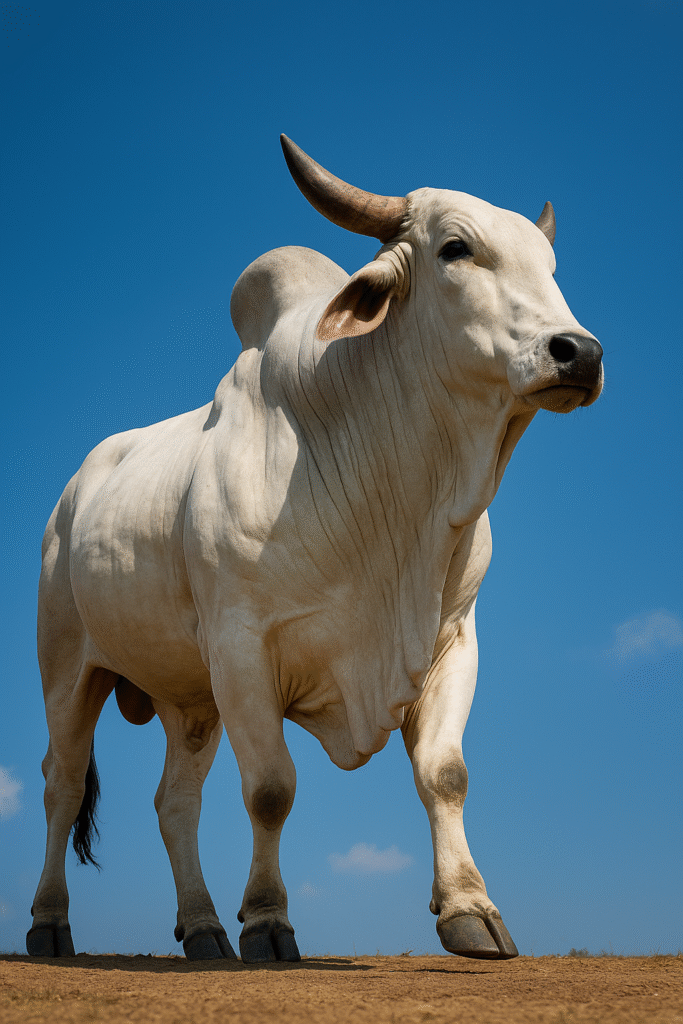

An Ongole bull size comparison with Brahman cattle—an American breed developed from Ongole genetics—shows a comparable and robust stature, though the Brahman has been further refined for specific traits in Western markets. The females, while slightly smaller, are still substantial animals, with average weights ranging from 432-455 kg (953-1,003 lbs).
The breed possesses a substantial frame, with body lengths reaching 144-147 cm in bulls and 139-144 cm in cows. Their impressive heart girth measurements—173 cm in bulls and 165 cm in cows—contribute to a great lung capacity and overall stamina. This powerful build is what makes them exceptionally well-suited for heavy draught work, even in hot, demanding climates.
2. Distinctive Physical Features
Ongole cattle display several characteristic features that make them easily identifiable:
- Body:
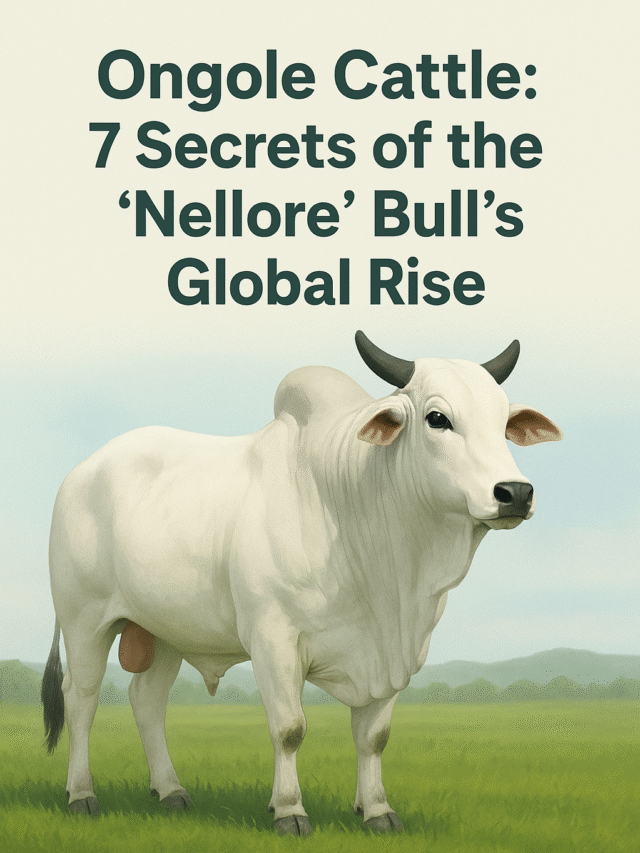
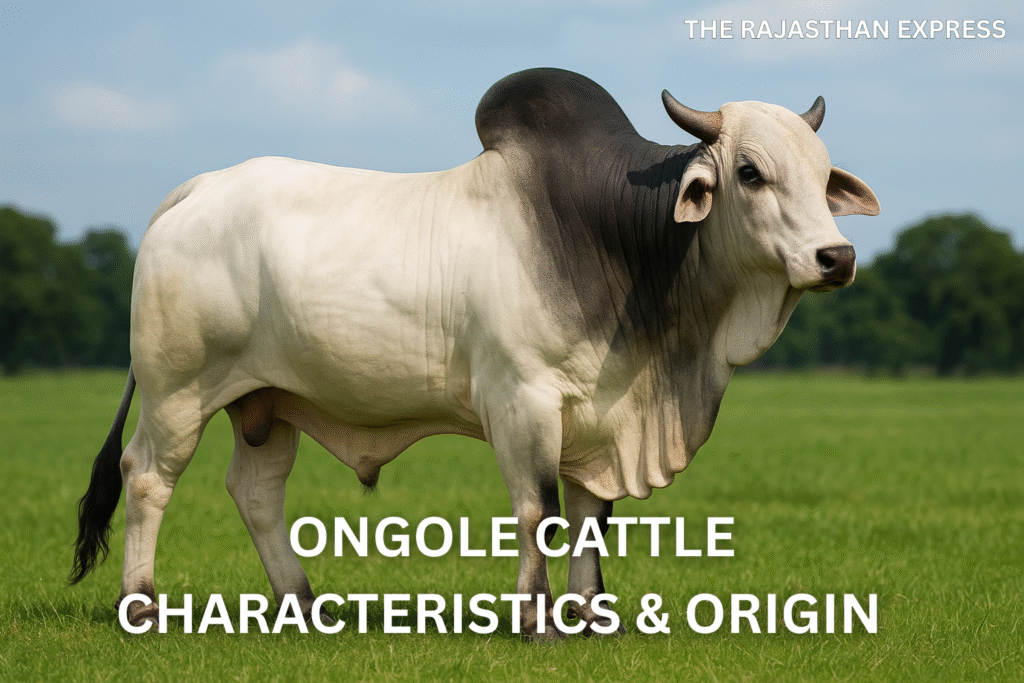
Ongole cattle are large in size. Ongole bulls weigh around 800 kilograms, while cows weigh between 350 and 420 kilograms. They have long bodies with strong and muscular legs. The skin of the Ongole breed is glossy white, locally called ‘Padakatiru.’ The skin is of medium thickness, flexible, and soft, with occasional black spots. - Color:
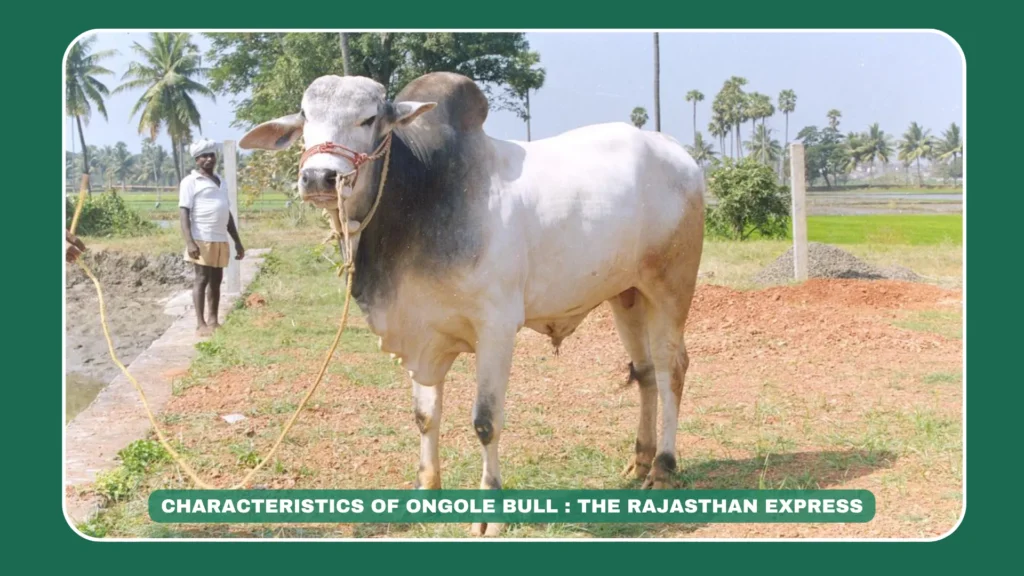
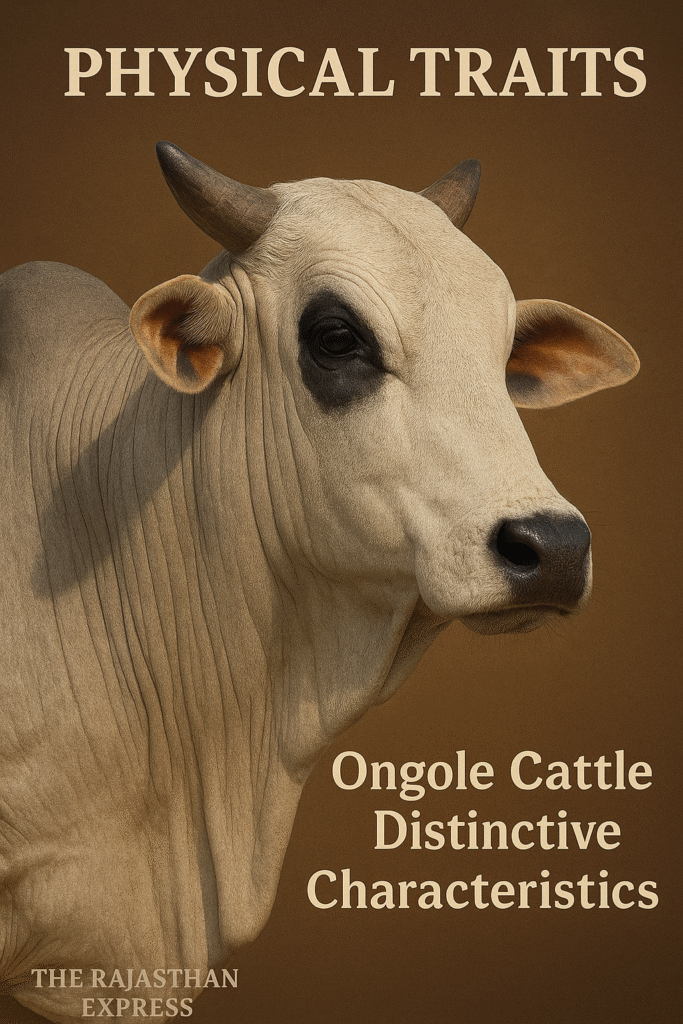
The color of Ongole cattle is generally white, but occasionally red or red-and-white cattle can also be seen. Ongole bulls have dark brown patches on their heads, necks, and humps, which are considered their distinguishing marks. Additionally, their front and hind legs have black marks on the knees and pastern joints. A ¼ to ½ inch wide black ring of skin surrounds their eyes, another notable characteristic. Their eyes are large, oval-shaped, and appear prominent.
- Ears:
Ongole cattle have medium-sized ears, measuring 9 to 12 inches in length, and slightly drooping. - Skin:
The skin of Ongole cattle is soft, loose, and of medium thickness, with black spots. Their skin has numerous sweat glands, which help them regulate body temperature in hot climates. The black color of their skin absorbs heat from the sun. Their skin and white coat reflect about 85% of the sun’s radiation back into the environment, helping them stay cool in hot conditions. - Tail:
The tails of Ongole cattle are long and reach the ground. The tail is white, but the tip has a black mark or switch.
- Horns:
Ongole cattle have short, solid horns that grow outward and backward from the corners of their heads. Their horns are 10 to 15 centimeters long, with a thick base and no cracks, making them very strong. Some cattle may have loose horns due to improper cell development. Ongole cows have thinner horns compared to bulls. - Distinctive Features:
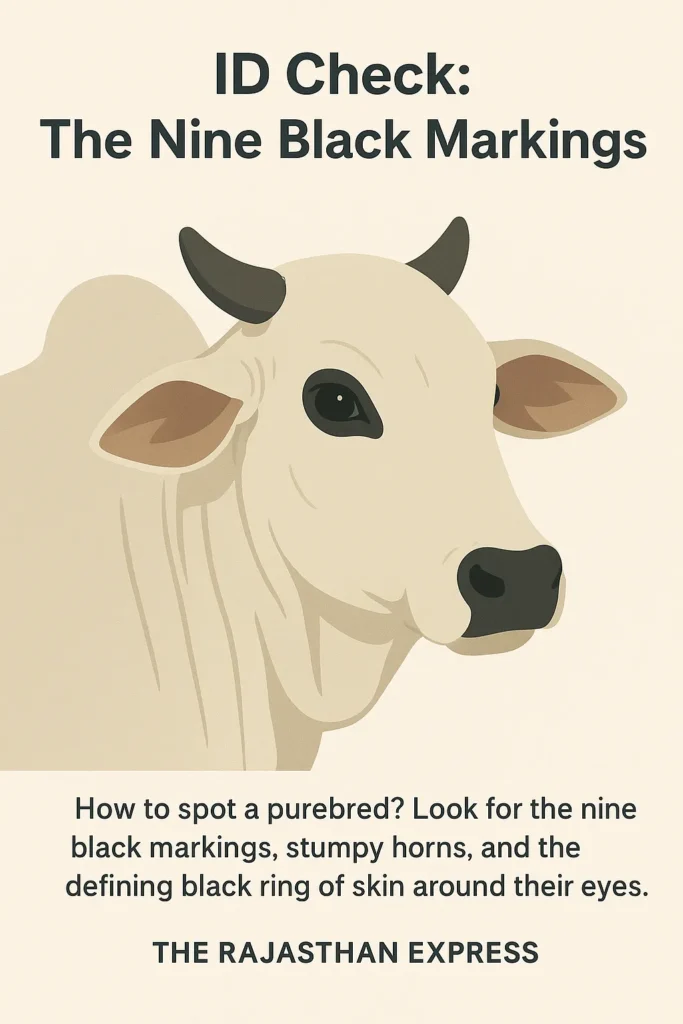
Ongole cattle are known for their majestic and confident gait, referred to as the “royal walk.” Their hump is wing-shaped and distinct. Farmers identify this breed by its three lengths (legs, shoulders, and back), seven small parts (muzzle, ears, neck, dewlap, flank, sheath, and tail), and nine black markings (muzzle, eyes, ear tips, knees, pasterns, sheath, tail tip, anus, and scrotal tip). - Hump:
Ongole bulls have a well-developed hump, which is straight and filled on both sides. The hump is wing-like, neither concave nor sunken. Their eyelids are white, muzzles are flesh-colored, hooves are light-colored, and they often have black spots on their bodies. Dark brown marks may be seen on the rear side of Ongole cattle. - Dewlap:
Ongole cattle have a well-developed dewlap. The most prominent dewlap among Indian cattle breeds is found in the Sahiwal breed. - Navel Flap:
Ongole cattle have loose skin that hangs down to the navel flap. The Sahiwal breed has the most prominent dewlap and navel flap among native breeds.
The Nine Black Markings and Heat Tolerance Mechanism
The Ongole cattle nine black markings explained represent a distinctive breed characteristic. These include black coloration on the muzzle, eyes, ear tips, knees, pasterns, sheath, tail tip, anus, and scrotal tip. This dark pigmentation on extremities is a natural adaptation, believed to provide protection against intense solar radiation in tropical environments.
The Ongole cattle heat tolerance mechanism is a remarkable feature, comprising several key adaptations:
- Coat Color: Their white or light grey coat is highly reflective, sending back a significant amount of solar radiation and reducing heat absorption.
- Skin Properties: The skin beneath the coat is dark and contains numerous sweat glands for effective evaporative cooling. The loose skin also helps in repelling insects.
- Anatomical Advantages: They possess long legs, which minimize heat absorption from the ground.
- Behavioral Adaptations: These cattle make postural adjustments and orient themselves to minimize sun exposure, requiring shade for only a small fraction of their grazing time.
Average Measurements of Ongole Cattle
- Males (Ongole Bull):
- Height: 147.47 cm
- Body Length: 144.11 cm
- Heart Girth: 173.49 cm
- Weight: 434 kg
- Calf Birth Weight: 28 kg
- Females (Ongole Cow):
- Height: 143.94 cm
- Body Length: 139.55 cm
- Heart Girth: 165.29 cm
- Weight: 382 kg
- Calf Birth Weight: 26 kg
Milk Production:
The Ongole cow is primarily raised for milk production and as draught animals for agricultural work. The average milk yield of an Ongole cow in one lactation period is about 798 kilograms, with an average fat content of 3.79%. This breed is valued for its disease resistance and ability to survive on minimal and dry fodder, making it an excellent choice for improving local cattle stocks in various countries.
- Milk Yield Per Lactation: 798 kg
- Fat Percentage in Milk: 3.79%
- Average Age at First Calving: 45 months (approximately 3.75 years)
- Calving Interval: 13.12 months
Population Statistics of Ongole Cow:
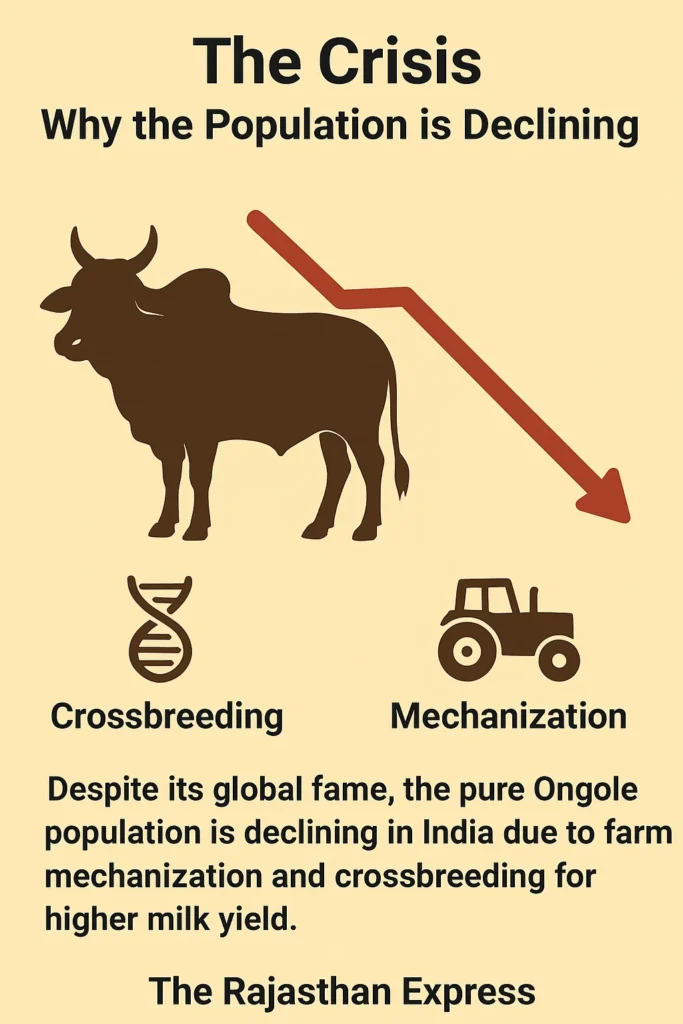
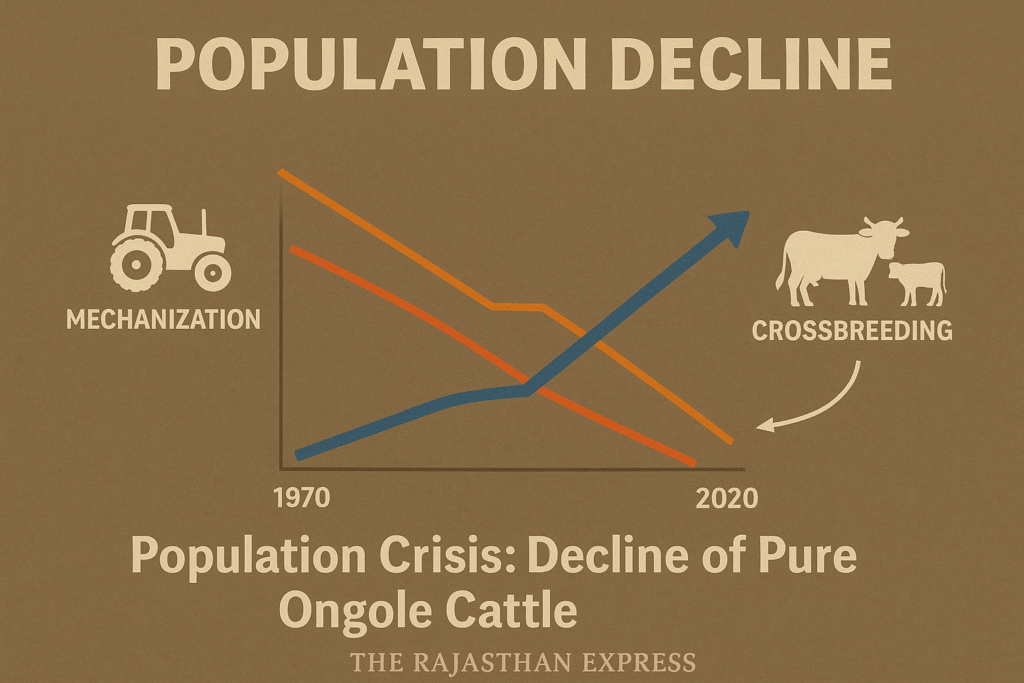
The population of Ongole cattle has been steadily declining, primarily due to modernization in agricultural practices, the introduction of commercial crops, and the increasing use of machinery in farming in the Ongole region. Historically, Ongole cattle were used as draught animals, but the rise of mechanization has reduced the demand for work animals. In addition, crossbreeding efforts with high milk-producing exotic breeds like Jersey and Holstein to meet the growing demand for milk has contributed to the decline of Ongole cattle numbers.
According to the 2003 livestock census, India had 185.1 million cattle and 97.9 million buffaloes. Between 1982 and 1997, there was a 6.98% increase in cattle numbers, but from 1997 to 2003, there was a 10.06% decline. On the other hand, buffalo numbers increased by 29.61% from 1982 to 1997 and by 8.09% between 1997 and 2003. The decrease in cattle numbers and the rise in buffalo population is attributed to the mechanization of farming, which has reduced the utility of draught cattle, while buffaloes are increasingly preferred for milk production. Currently, more than 60% of milk production in India comes from buffaloes, while 40% comes from cows.
In Andhra Pradesh, the 2003 livestock census reported 9.3 million cattle and 10.6 million buffaloes. Between 1982 and 1987, cattle numbers in the state declined by 19.55%, and between 1997 and 2003, they decreased by 12.28%. During the same period, buffalo numbers grew by 10.96% and 10.06%, respectively.
Although India has not conducted breed-specific cattle censuses, making it difficult to estimate the population of each breed, a survey conducted by the Lam Livestock Research Station in Guntur district revealed that in 60 villages, there were 7,341 purebred Ongole cows, with each farmer owning an average of 4.7 Ongole cattle. According to a 2000 report by the National Bureau of Animal Genetic Resources (NBAGR), the estimated population of Ongole cows was around 35,055.
Currently, there are 8 organized herds of Ongole cattle in Andhra Pradesh. In addition, many rural-level cooperative societies and breeders’ associations also maintain significant numbers of Ongole cattle. They are primarily found in Banvasi (Kurnool district), Kantevani (East Godavari district), Kampasagar (Nalgonda district), Mahanandi (Kurnool district), Ramathirtham (Prakasam district), Government Dairy (Visakhapatnam), and APAU (Lam, Guntur district).
Learn how the Ongole breed became the Nellore cattle that constitutes over 80% of the Brazilian herd, a true global genetic success story.
THE RAJAHSTAN EXPRESS
People Also Ask
What is Ongole Known For?
How Much Milk Does an Ongole Cow Produce?
How to Identify an Ongole Cow?
- Body Size: Ongole cows are large in size. Bulls weigh approximately 800 kilograms, while cows weigh between 350 and 420 kilograms. They have a long body with strong, muscular legs.
- Color: The primary color is white, but they can also be red or red-and-white. Bulls often have dark brown patches on their heads, necks, and humps. Black markings can be found on the knees and joints of their legs.
- Eye Characteristics: There is a black ring around the eyes that measures 1/4 to 1/2 inch wide. The eyes are large and oval-shaped.
- Ears: The ears are medium-sized, measuring 9 to 12 inches in length, and they droop slightly downwards.
- Skin: The skin is soft, loose, and of medium thickness, with black spots. The presence of more sweat glands helps regulate body temperature.
- Heat Adaptability: Their skin absorbs heat and reflects radiation from the sun back into the environment, making them well-suited to hot climates.