
 By
Do Goldendoodles Shed? The Truth About Low-Shedding and Hypoallergenic Claims
If you are considering a Goldendoodle, you have likely heard the popular claim: “Goldendoodles are low-shedding and hypoallergenic.” This is one of the main reasons families choose this crossbreed over a Golden Retriever or other heavy-shedding breeds.
But is this claim entirely accurate?
The honest answer is more nuanced. Goldendoodles can shed — some more than others. The amount depends on genetics, coat type, and the individual dog, not simply on the breed name or generation label. Understanding the reality of Goldendoodle shedding will help you make an informed decision and set realistic expectations before bringing one home.
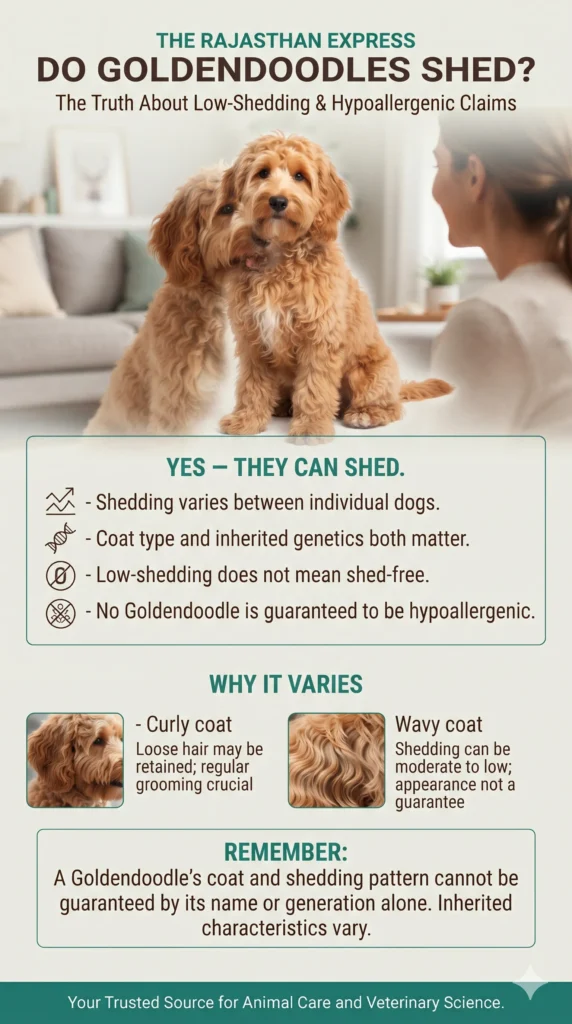
The Simple Answer: Yes, Goldendoodles Can Shed
Goldendoodles are often described as “low-shedding,” and for many dogs, this is true. However, low-shedding does not mean shed-free.
Some Goldendoodles shed very little. Others shed moderately. A few may shed more than their owners expected. This variation exists because the Goldendoodle is a hybrid or crossbreed — a deliberate mix of the Golden Retriever and the Poodle — and no two puppies inherit exactly the same combination of genes.
Even puppies from the same litter can have different coat types and different shedding patterns.
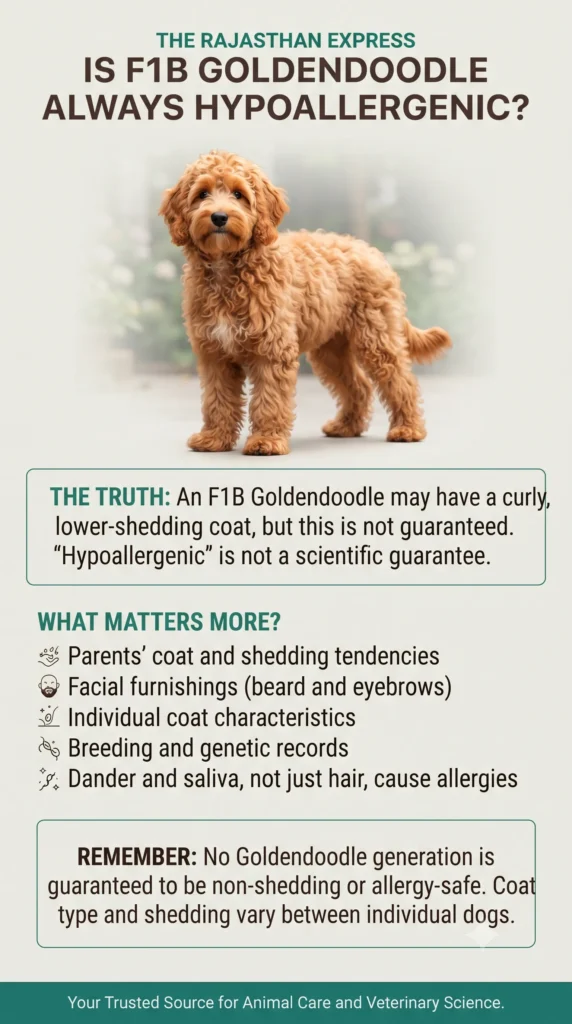
Why Shedding Varies So Much in Goldendoodles
The Goldendoodle’s coat is the result of complex genetics inherited from both parents.
- The Golden Retriever is a moderate to heavy shedder with a dense double coat.
- The Poodle has a curly, continuously growing coat that sheds very little.
When the two are crossed, the resulting puppies can inherit:
- A curly coat (more Poodle-like) — usually the lowest shedding
- A wavy coat (a mix of both) — moderate shedding
- A straight coat (more Golden Retriever-like) — often the highest shedding
Because coat type is not guaranteed, shedding is not guaranteed either.
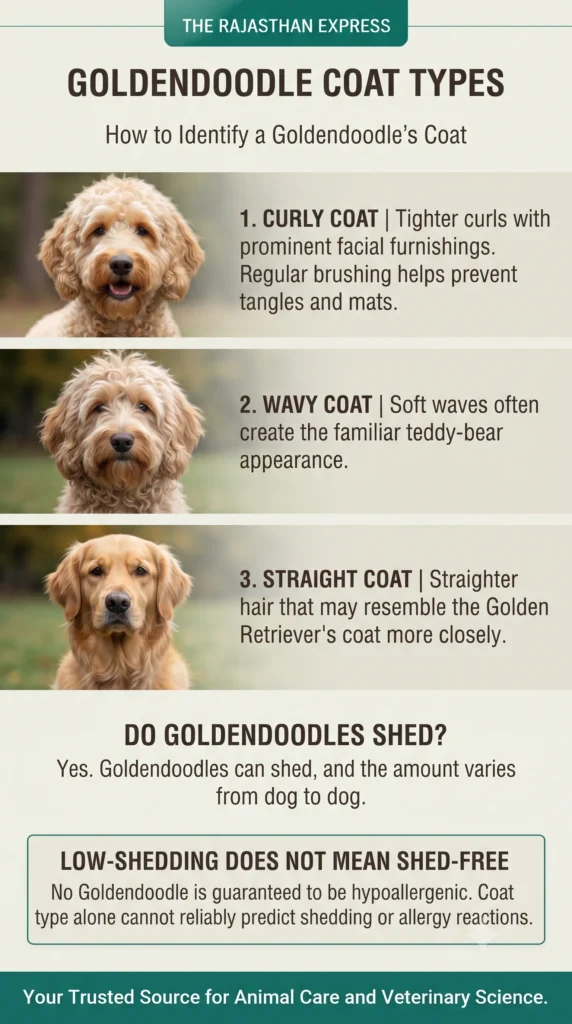
Goldendoodle Coat Types and Their Link to Shedding
The Goldendoodle typically has one of three coat types. Each has a different grooming requirement and shedding tendency.
Curly Coat Goldendoodle
- Appearance: Tightly curled hair, similar to a Poodle, with prominent facial furnishings (longer hair on the face).
- Shedding: Generally the lowest among the three types.
- Grooming: Requires daily or several-times-weekly brushing to prevent tangles and mats. Professional grooming every 6–8 weeks is often recommended.
Wavy Coat Goldendoodle
- Appearance: Soft waves, often creating the popular “teddy bear” look. This is the most common coat type.
- Shedding: Moderate. Some shedding is typical, but usually less than a Golden Retriever.
- Grooming: Slightly easier to maintain than the curly coat, but still requires regular brushing.
Straight Coat Goldendoodle
- Appearance: Straight or slightly wavy hair, closer to the Golden Retriever’s coat. Facial furnishings may be less visible.
- Shedding: Often the highest of the three types, as the coat leans more toward the Golden Retriever.
- Grooming: Regular brushing is still important, and shedding may be more noticeable around the home.
Important: These are general tendencies, not guarantees. A curly-coated Goldendoodle can still shed, and a straight-coated one may shed less than expected. Individual genetics matter more than coat type alone.
The Hypoallergenic Myth: What You Need to Know
No dog is 100% hypoallergenic. This is a crucial point that veterinary sources consistently emphasize.
Allergies to dogs are not caused by hair alone. They are primarily triggered by proteins found in the dog’s:
- Saliva
- Skin flakes (dander)
- Urine
A low-shedding coat can reduce the amount of hair and dander distributed around the home, which may help some allergy sufferers. However, it does not eliminate allergens entirely.
If you or a family member has dog allergies, the responsible approach is to:
- Spend time with the specific puppy or its parents before committing.
- Consult a veterinarian or allergy specialist for personalized advice.
- Understand that individual reactions vary — some people react to one dog and not another, even within the same breed or crossbreed.
The term “hypoallergenic” is often used in marketing, but it is not a scientific guarantee. Treat it with appropriate caution.
Does the Generation Label (F1, F1B, F2) Predict Shedding?
Many breeders and buyers believe that an F1B Goldendoodle — a backcross of an F1 Goldendoodle with a Poodle — is guaranteed to be low-shedding. This is not entirely true.
- F1B Goldendoodles typically have approximately 75% Poodle genes, which increases the likelihood of a curly, low-shedding coat.
- However, likelihood is not certainty. An F1B puppy can still inherit a straighter coat and shed more than expected.
- The Goldendoodle Association of North America (GANA) advises that for coat and shedding, genetic selection is more reliable than generation labels.
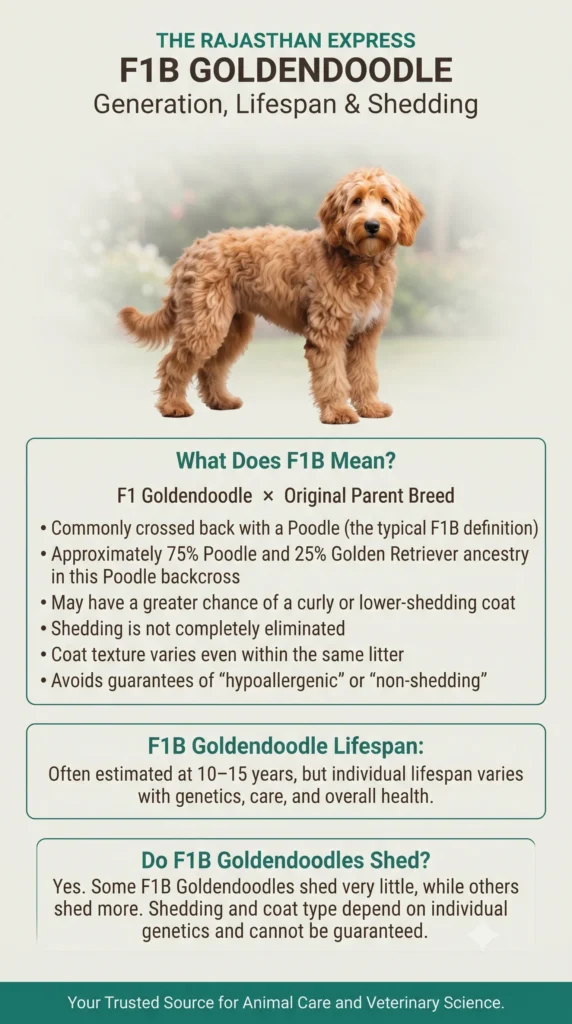
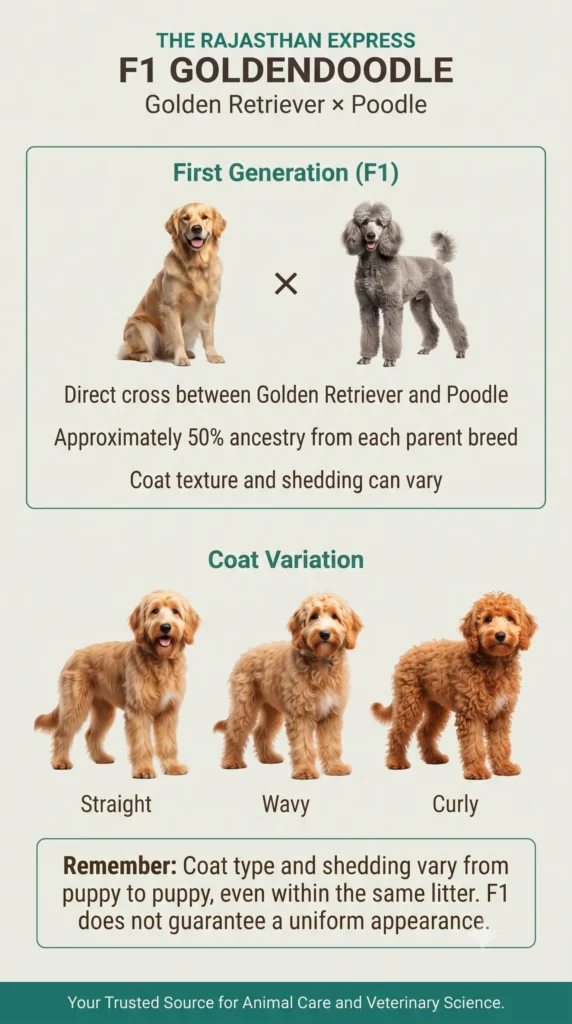
In other words, the F1, F1B, or F2 label tells you about the dog’s family tree — not what its coat will actually be like.
What to Look At Instead
- The parents’ coats and their shedding tendencies
- The puppy’s facial furnishings (beard and eyebrows), which often indicate a curlier coat
- The breeder’s records and genetic testing practices
These are more reliable indicators than a generation label alone.
Practical Tips for Managing Goldendoodle Shedding
If you bring a Goldendoodle into your home, here are practical steps to manage shedding and keep the coat healthy:
- Brush regularly. Curly coats may need daily brushing; wavy and straight coats can often be brushed several times a week.
- Schedule professional grooming. Every 6–8 weeks is a common recommendation, especially for curly coats.
- Bathe as needed. Over-bathing can dry out the skin; use a dog-specific shampoo and follow your groomer’s or veterinarian’s advice.
- Check ears regularly. Goldendoodles have hanging ears, which can trap moisture and hair, increasing the risk of ear infections. Clean and dry them regularly.
- Maintain a healthy diet. Nutrition affects skin and coat health, which can influence shedding.
- Use a good vacuum. Even low-shedding dogs produce some hair and dander; regular cleaning helps manage allergens in the home.

Conclusion: What to Realistically Expect
Goldendoodles are often lower-shedding than many other breeds, but they are not shed-free, and no Goldendoodle is guaranteed to be hypoallergenic.
The amount a Goldendoodle sheds depends on:
- Its individual genetics
- Its coat type (curly, wavy, or straight)
- The parents’ coats and shedding patterns
- The generation (as a general tendency, not a guarantee)
If low shedding is a priority for you, look beyond the breed name and generation label. Ask about the puppy’s parents, examine their coats, and speak with the breeder honestly about what to expect. And if allergies are a concern, consult a specialist and spend time with the dog before making a decision.
A Goldendoodle can be a wonderful, loving companion — but understanding its coat and grooming needs beforehand will help you provide the care it deserves and set realistic expectations for your home.
Do Goldendoodles shed? Learn the truth about Goldendoodle shedding, why coat type and genetics matter more than generation labels, and why no dog is truly hypoallergenic
THE RAJASTHAN EXPRESS

