 By
ByNali Breed: Origin, Characteristics, Wool Quality, and Uses of Nali Sheep in Rajasthan
Nali Sheep Breed
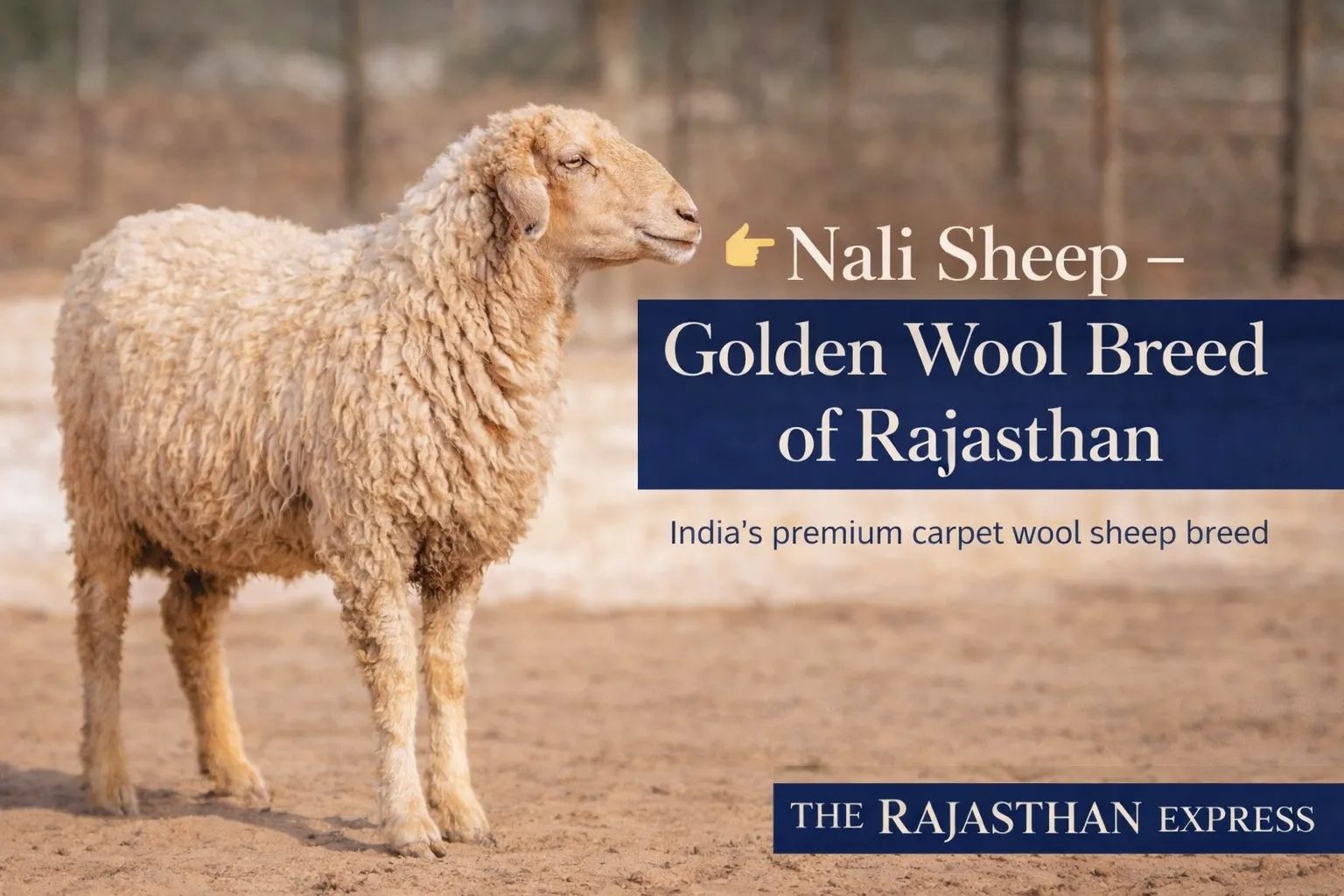
The Nali breed is one of the major indigenous sheep breeds of India, registered by NBAGR. This breed is mainly found in the Sri Ganganagar and Hanumangarh districts of Rajasthan state. Nali sheep in Rajasthan are considered one of the important sheep breeds of north-western India.
The name “Nali” is associated with the Ghaggar River that flows in Rajasthan. In the local language, the uneven and flood-affected area formed along the banks of the Ghaggar River is called “Nali.” For this reason, the sheep breed found in this region came to be known as the Nali sheep breed.
The Nali sheep is known for its long fibers, white color, and thick wool. The Nali sheep wool quality is considered good, making this breed quite useful and profitable for livestock farmers.
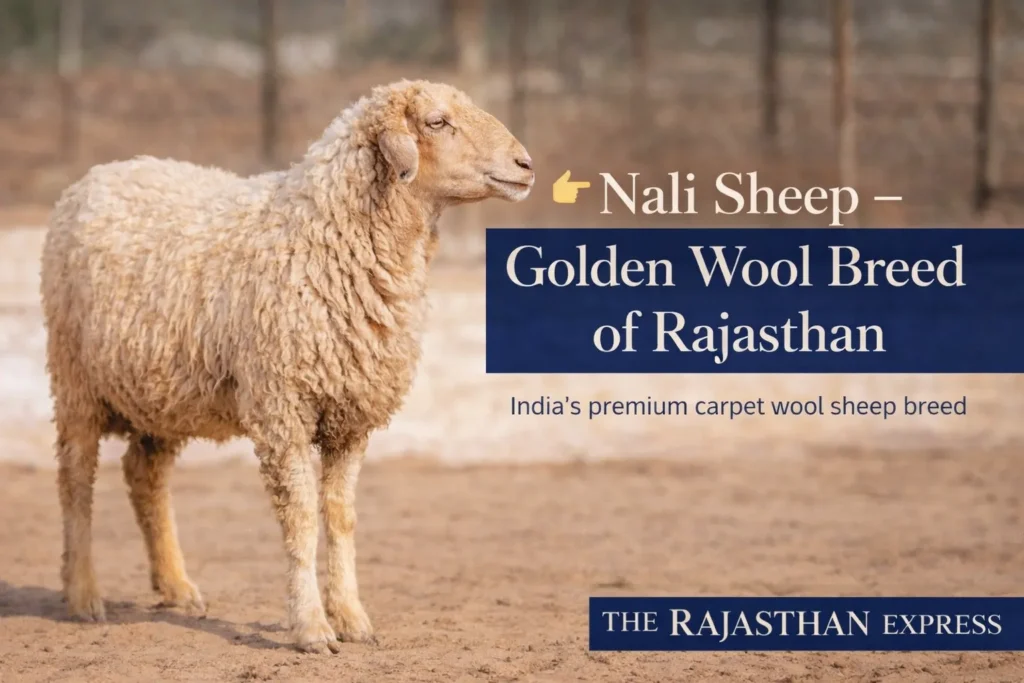
The biggest specialty of the Nali sheep is its yellow wool. The only sheep breed in Rajasthan that truly produces yellow wool is the Nali sheep.
In Rajasthan, the Nali sheep is known for its yellow and golden-yellow wool.
Nali Sheep Breed
| Breed Name | Nali Sheep |
|---|---|
| Other Names | Nali; Yellow Wool Sheep of Rajasthan |
| Breed Type | Indigenous Carpet Wool Breed |
| Origin | North-Western India (Rajasthan & Haryana) |
| Breeding Tract | Sri Ganganagar, Hanumangarh, Churu, Jhunjhunu (Rajasthan); Hisar & Rohtak (Haryana) |
| Geographical Coordinates |
Latitude: 28°06′–29°49′ N Longitude: 73°50′–75°30′ E |
| Name Origin | Named after the “Nali” region along the Ghaggar River flood plains, characterized by low-lying moist areas with natural grasses. |
| Recognition | Registered by ICAR–NBAGR (National Bureau of Animal Genetic Resources) |
| Primary Utility | Carpet Wool & Meat Production |
| Climate Adaptation | Adapted to arid & semi-arid climates; tolerates 4.7°C–42.1°C; survives under low rainfall (~29.6 cm annually) and limited fodder. |
| Management System | Extensive grazing system; seasonal migration practiced |
| Physical Characteristics |
|
| Average Body Measurements (NBAGR) |
|
| Wool Characteristics |
|
| Growth Performance |
|
| Reproductive Traits |
|
| Mortality Rate |
|
| Flock Structure | Average flock size ≈280 (35 males, 174 females, 71 lambs) |
| Special Identity | Only recognized Rajasthan breed producing true yellow/golden-yellow wool, especially prominent in March shearing. |
| Population Status | Declining trend historically; part of Rajasthan’s ~79 lakh total sheep population (2019 census). |
| Conservation Status | Requires conservation due to crossbreeding pressures and population decline. |
| Sources: ICAR–NBAGR; FAO (2010); Rajasthan Livestock Census; National Commission on Agriculture; The Rajasthan Express | |
Nali Sheep Origin and Where Nali Sheep Is Found In
The Nali sheep origin traces back to north-western India, where it developed mainly in the arid and semi-arid regions of Rajasthan and Haryana. This breed is especially famous for carpet wool production and is well adapted to local climatic conditions. For a long time, this breed has been reared by traditional shepherds.
The breeding tract of Nali sheep is mainly spread across Sri Ganganagar, Jhunjhunu, and Churu districts of Rajasthan, and Hisar and Rohtak districts of Haryana. This region lies between 73°50′ to 75°30′ East longitude and 28°06′ to 29°49′ North latitude. The area primarily has a semi-arid to arid climate, where rainfall is limited, temperatures fluctuate extremely, and natural pastures are of moderate quality.
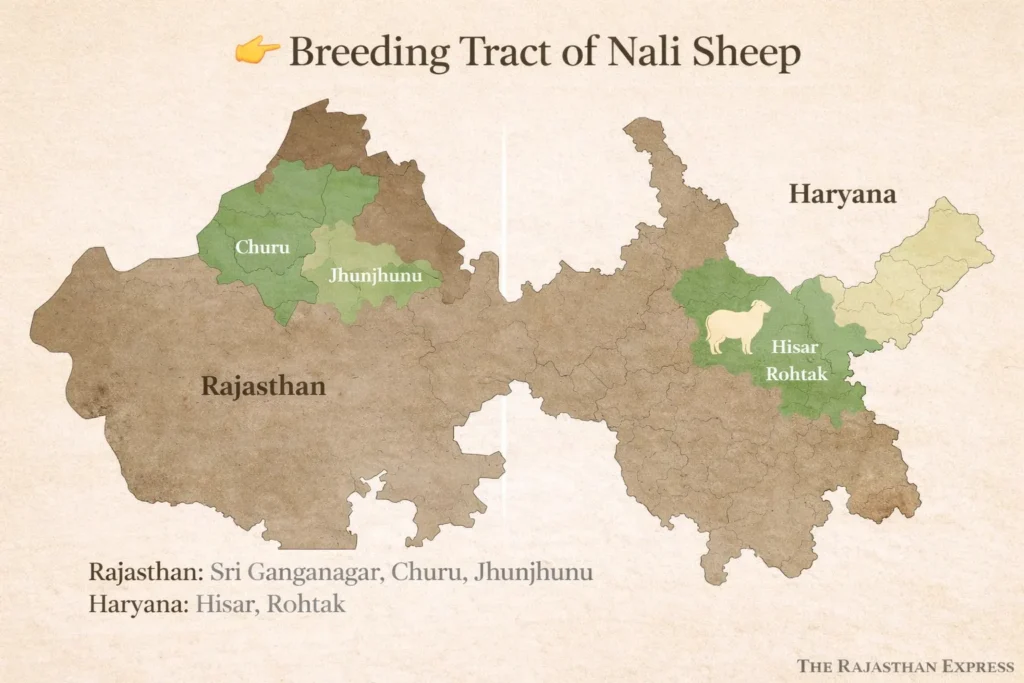
The name of this breed is linked to a specific geographical region located in the Sri Ganganagar and Hanumangarh districts of Rajasthan, locally known as “Nali.” This region falls in the low-lying and fertile plains along the Ghaggar River, where during the monsoon season, excess river water spreads and fills the surrounding areas. As a result, the region remains moist for a long time and natural grasses and fodder grow in good quantity, which is considered favorable for sheep rearing.
In this “Nali” region, a distinct sheep breed developed over a long period, which later came to be known as the Nali sheep after the name of the area. Thus, the name of this breed is deeply connected to its geographical environment and natural conditions.
The Nali sheep has successfully adapted to these conditions and is capable of providing satisfactory production even under an open grazing-based management system. This breed is considered especially suitable for grazing on flat plains and light sandy soils.
Breeding Tract of Nali Sheep
| Breeding Tract of Nali Sheep | ||
| Location | Minimum | Maximum |
|---|---|---|
| Longitude | 73° 50′ | 75° 30′ |
| Latitude | 28° 06′ | 29° 49′ |
| The Rajasthan Express : Nali Sheep Breeding Tract | ||
Nali Sheep Is Used For: Purpose of Rearing
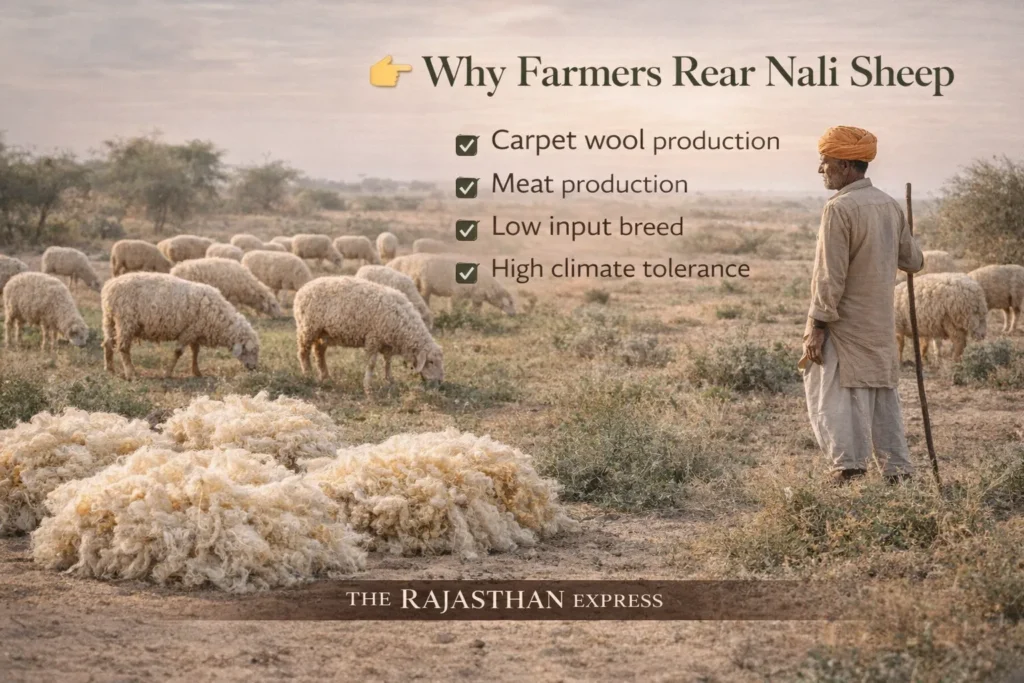
Nali sheep is used for both wool and meat production. Its wool is of medium quality and is mainly used for making blankets, durries, and coarse fabrics. Along with this, due to its good body weight and fast growth ability, this breed is also considered useful for meat production.
In the rural areas of Sri Ganganagar and Hanumangarh districts, this sheep serves as an important source of income for farmers, as it can be reared at low cost and regularly provides economic benefits in the form of wool and lambs.
Adaptability of Nali Sheep
Climate and Environment
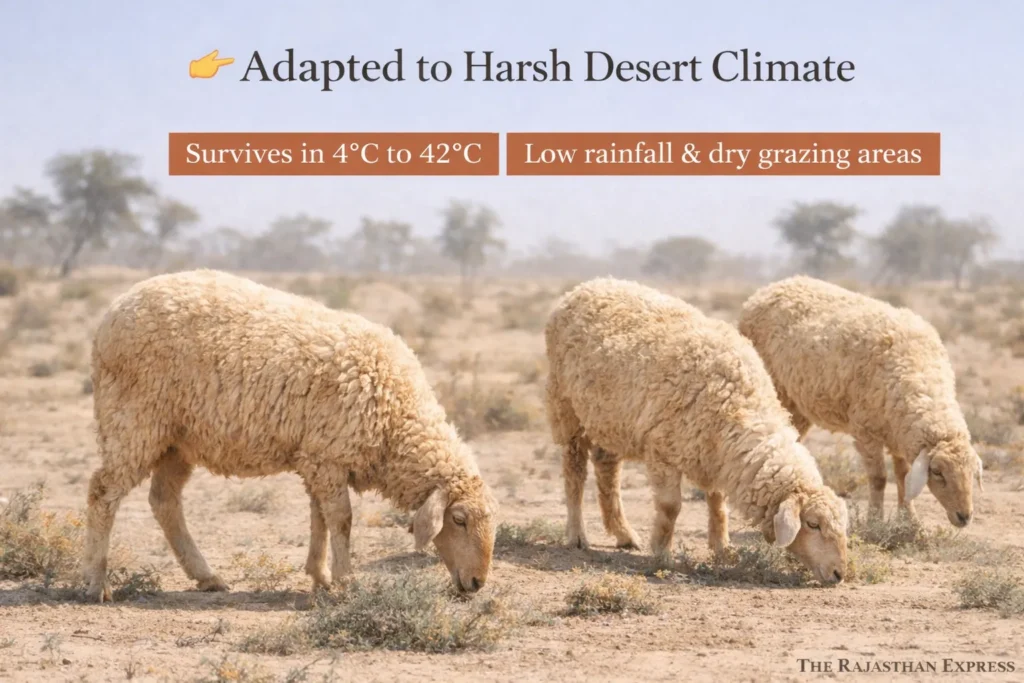
Nali sheep is found in the arid and semi-arid regions of the Indian states of Rajasthan and Haryana. This breed has the ability to survive well even in harsh weather and difficult grazing conditions.
- Average Temperature: 17°C to 32.9°C
- Temperature Range: Minimum 4.7°C to Maximum 42.1°C
- Relative Humidity: Morning approximately 61%, Evening 36%
- Humidity Range: Morning 33–80%, Evening 18–56%
- Annual Rainfall: Approximately 29.63 cm
Nali sheep can survive even in very hot, dry, and low-rainfall areas. It is capable of gaining body weight and producing wool even under conditions of low water availability, limited fodder, and difficult grazing environments. Its disease resistance capacity is also good, enabling it to survive for a long time in harsh environments.
Identification and Nali Sheep Breed Characteristics
Size and Conformation (Morphology)
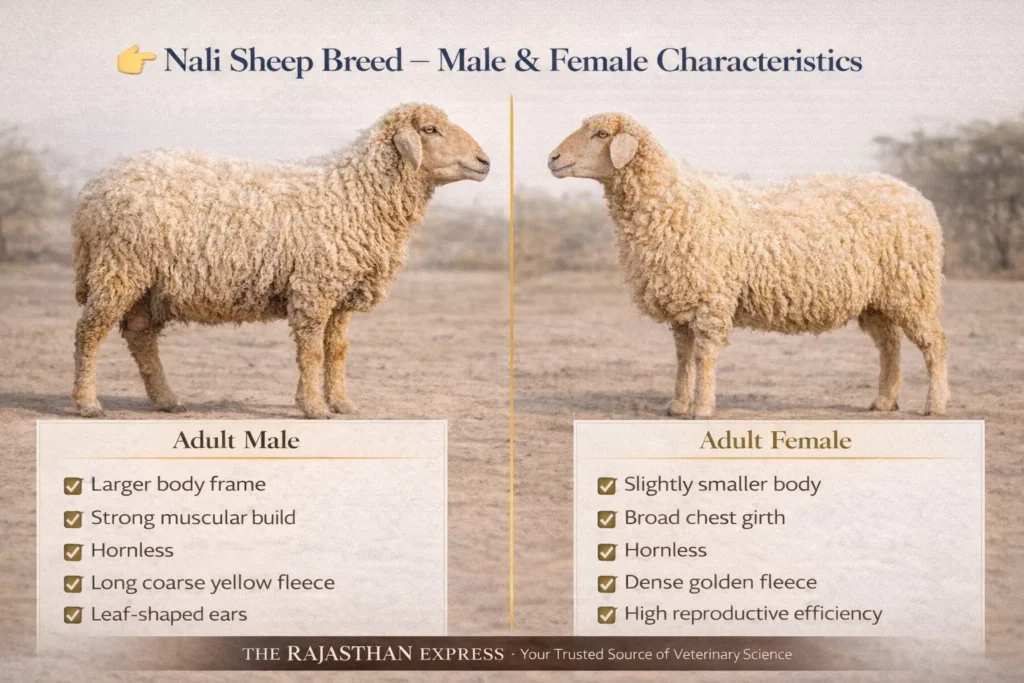
The Nali sheep breed is a medium-sized breed with a strong and well-balanced body structure.
Colour
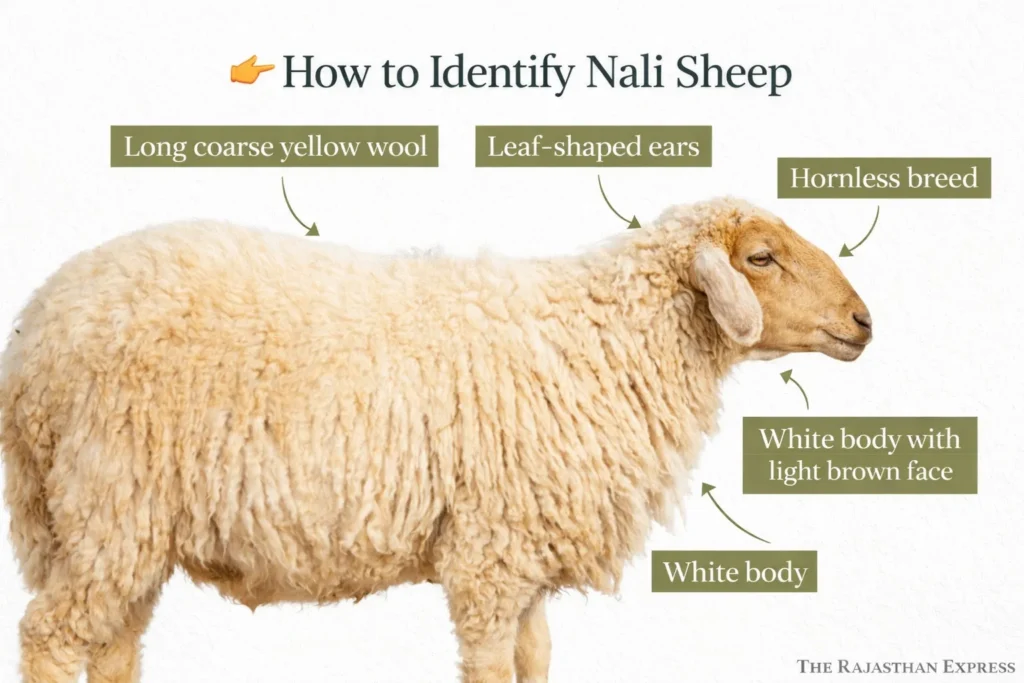
- The main body colour is white.
- The face is light brown, which may sometimes extend up to the neck.
- The skin colour is pink.
Horns
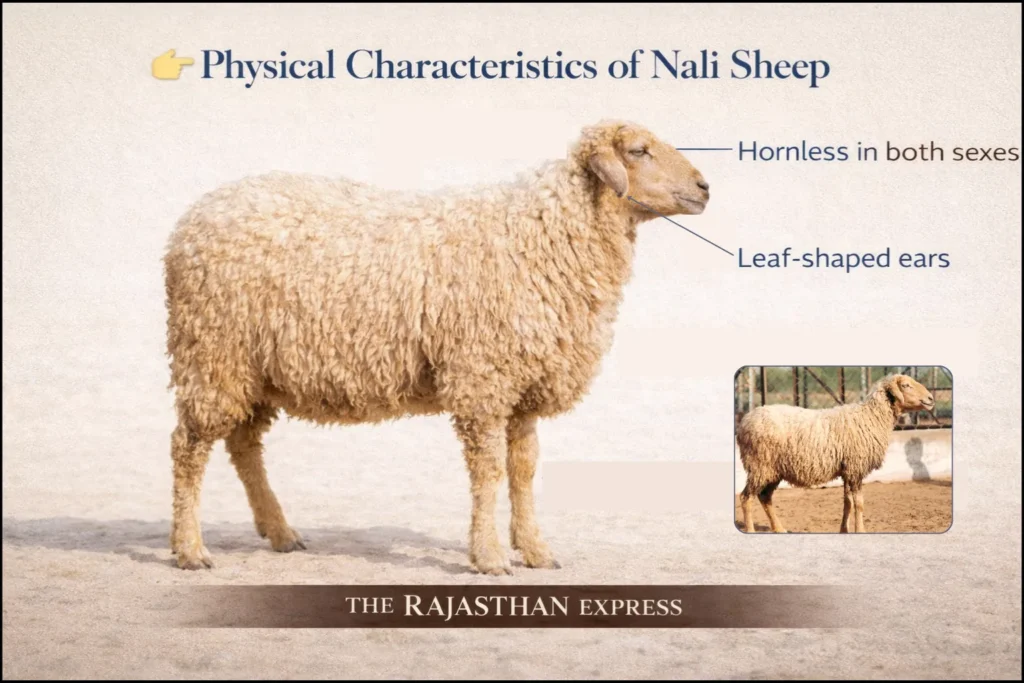
- Both males and females are polled (hornless).
- Horn size and number: 0, meaning both are hornless.
Ears
- The ears are large and leafy. The leaf-shaped ears are a main identification feature of Nali sheep.
- The average ear length is approximately 11.62 cm.
Tail
- The tail is short to medium and thin.
- The average length is approximately 17.14 cm.
Wool / Hair
- The wool is white, coarse, dense, and long-stapled coarse wool.
- Wool is also present on the forehead, belly, and legs.
- The wool type is coarse / carpet wool.
Visible Characteristics
- Large leafy ears and white wool are its main identification features.
- This breed is capable of wool production and can survive even in low-nutrition areas.
Physical Measurements of Nali Sheep
The average body weight of adult male Nali sheep is approximately 38.85 kg, while adult females weigh about 31.38 kg on average. Birth weight data for males and females separately is not available, but the overall average birth weight is reported to be approximately 3.02 kg. Overall, these measurements indicate that the Nali sheep is a balanced, strong, and production-oriented breed.
The average body length is recorded as 65.7 cm in males and 66.2 cm in females, indicating that both have a balanced body proportion. The average height at withers is 65.3 cm in males and 64.1 cm in females, establishing it as a medium-sized sheep breed.
Chest girth averages 76.7 cm in males and approximately 80.1 cm in females, indicating that females may have relatively better body capacity for pregnancy and milk production. Overall, the body structure of the Nali sheep is considered strong, balanced, and suitable for good production even under limited resources.
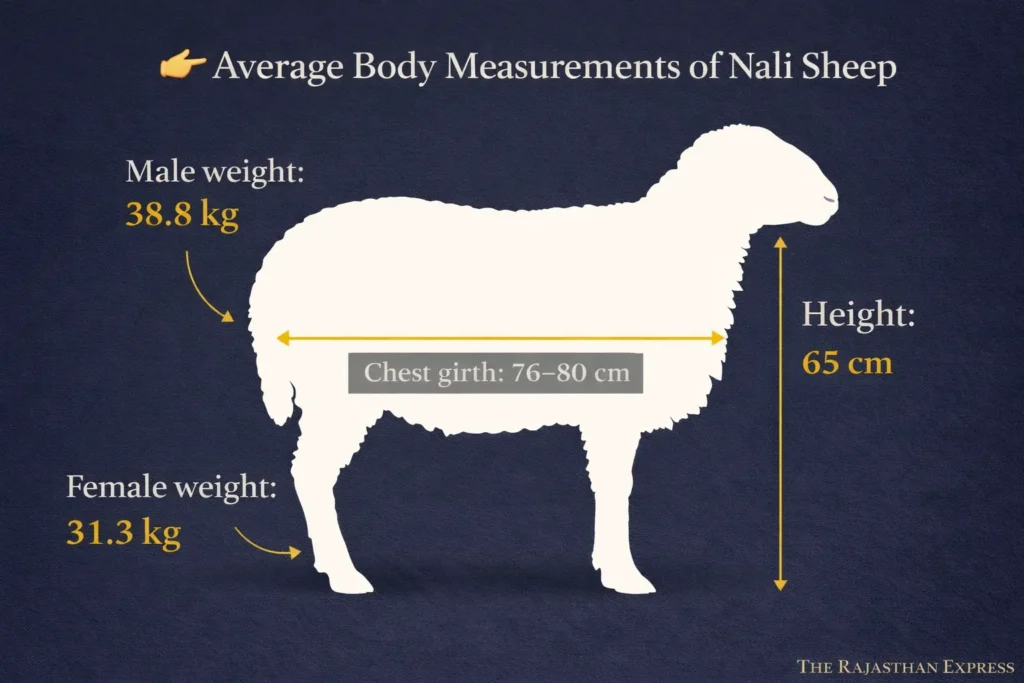
Average Body Measurements (ICAR–NBAGR)
| Average Body Measurements (ICAR–NBAGR) | ||
| Parameter | Male (Avg) | Female (Avg) |
|---|---|---|
| Height (cm) | 69.16 | 64.39 |
| Body length (cm) | 68.95 | 64.17 |
| Heart girth (cm) | 80.03 | 75.95 |
| Body weight (kg) | 38.85 | 31.38 |
| Birth weight (kg) | Overall birth weight: 3.02 kg | |
| Source: ICAR–NBAGR , The Rajasthan Express | ||
Body Measurements of Adult Animals (FAO & Personal Observations)
| Body Measurements of Adult Animals (FAO & Personal Observations) | ||||
| Parameter | Adult Males (Mean ± SE) | n | Adult Females (Mean ± SE) | n |
|---|---|---|---|---|
| Body weight (kg) | 34.61 ± 1.75 | 20 | 24.34 ± 0.50 | 1420 |
| Body length (cm) | 65.69 ± 0.96 | 16 | 66.18 ± 0.09 | 1423 |
| Height at withers (cm) | 65.25 ± 0.74 | 16 | 64.11 ± 0.13 | 1423 |
| Chest girth (cm) | 76.69 ± 1.08 | 16 | 80.09 ± 0.36 | 1423 |
| Source: FAO (2010) and Personal observations & The Rajasthan Express | ||||
Flock Structure of Nali Sheep
Nali sheep are generally reared in large flocks. A group of sheep is called a flock. An average flock consists of about 280 sheep, including approximately 35 males, 174 females, and 71 lambs. Shepherds graze them in open pastures and also practice seasonal migration.
Mortality Rate in Nali Sheep
Under farm conditions, mortality rate up to 3 months of age is found to be approximately 24%, while from 3 to 12 months it is also about 24%, and in adults it is around 10%. In farmers’ flocks, these rates are slightly lower, where mortality up to one year of age is about 17% and in adults about 6%.
Performance of Nali Sheep
Nali sheep in Rajasthan is mainly reared for meat and wool production. It is not reared for milk production, as in rural areas its milk is generally used only for rearing lambs.
From the perspective of meat production, the growth rate of Nali sheep is considered satisfactory. The average birth weight of lambs is approximately 2.9 kg. At weaning, that is, 3 months after birth, it increases to approximately 10.2 kg. At six months of age, the average body weight is about 13.3 kg, at nine months 14.5 kg, and at twelve months approximately 17.7 kg.
Feed conversion efficiency averages about 19.8 percent. A feed conversion efficiency of 19.8% means that approximately 20 percent of the feed consumed by the sheep is converted into body weight gain. When slaughtered at five months of age, the dressing percentage is found to be approximately 48.3 percent. Male lambs not selected for breeding are generally sold at 6 to 9 months of age, providing early economic returns to farmers.
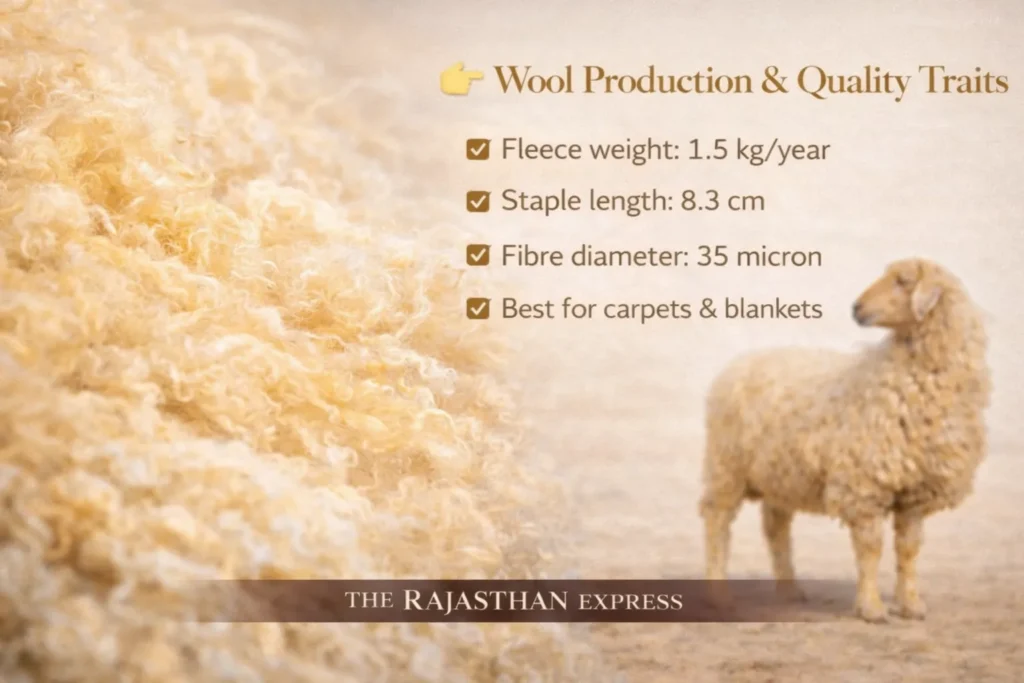
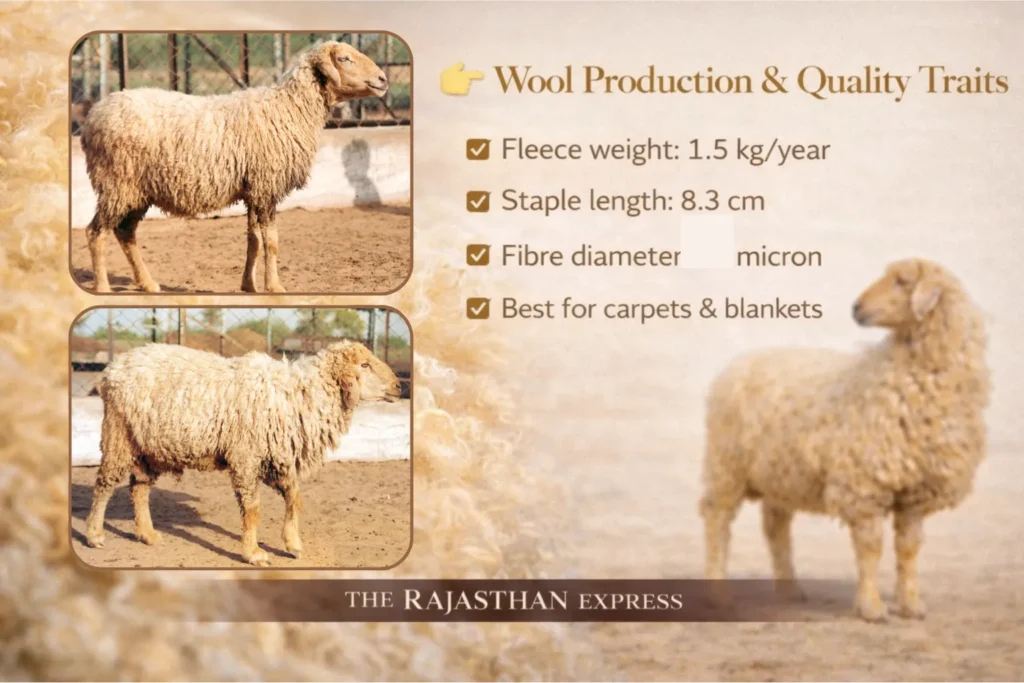
In terms of wool production and Nali sheep wool quality, this breed is considered to produce medium-quality wool. On average, approximately 1.46 kg of greasy wool is obtained per sheep in six months. Magra sheep also produces about 1.5 kg of wool per year. The staple length averages 8.3 cm, while the average fiber diameter is about 35 microns, making it suitable for coarse woolen products such as blankets and durries.
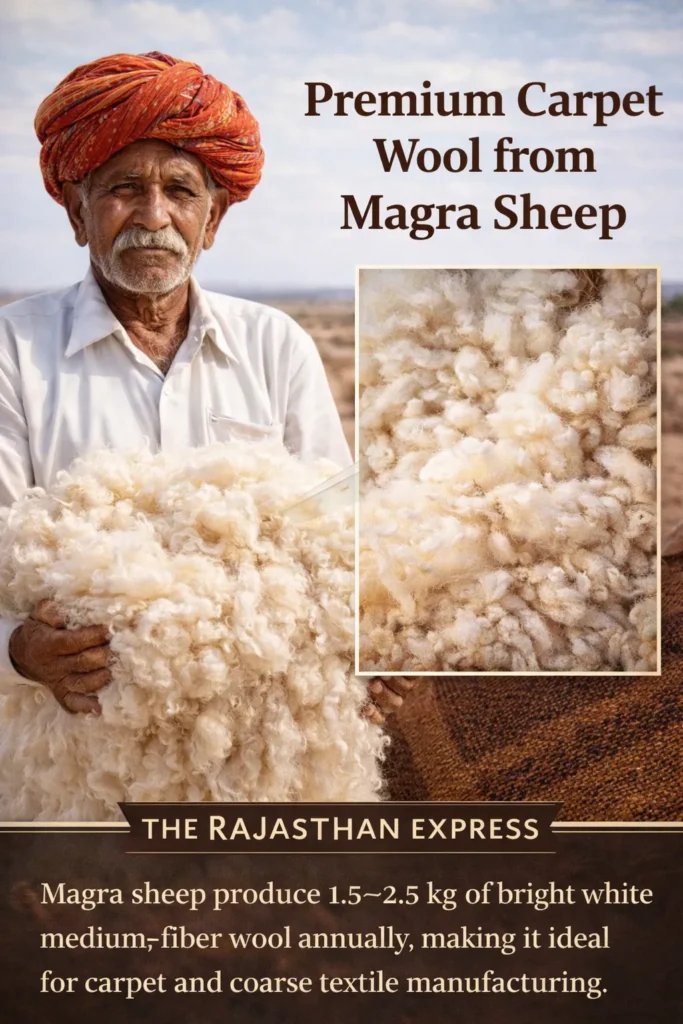
Medullation in wool is approximately 30.7 percent, and wool density is recorded at about 1271 fibers per square centimeter. The wool obtained from both shearings in March and September is generally yellow in color, with September wool having a light golden hue.
| Performance Traits of Animals (Meat and Wool Production) | |||
| Trait | Value (Mean ± SE) | n | Notes / Source |
|---|---|---|---|
| Meat Production: Body Weight (kg) Sources: 3, 4, 7, 27, 34, 40 | |||
| At birth | 2.88 ± 0.03 | 726 | — |
| At weaning | 10.19 ± 0.14 | 263 | — |
| 6 months | 13.30 ± 0.20 | 174 | — |
| 9 months | 14.54 ± 0.21 | 91 | — |
| 12 months | 17.74 ± 0.31 | 74 | — |
| Feed conversion efficiency (%) | 19.78 ± 2.56 | 12 | Age at slaughter: 5 months |
| Dressing percentage (%) | 48.25 ± 3.29 | 12 | On pre-slaughter live weight |
| Slaughter age (males not for breeding) | 6–9 months | — | Usually sold |
| Wool Production and Quality Sources: 3, 4, 13, 20, 21, 35, 48 | |||
| Average 6-monthly greasy fleece weight (kg) | 1.46 ± 0.10 | 6702 | — |
| Staple length (cm) | 8.31 ± 0.14 | 604 | — |
| Average fibre diameter (μ) | 34.92 ± 0.69 | 935 | — |
| Medullation (%) | 30.74 ± 0.40 | 374 | — |
| Fleece density (cm²) | 1271.33 ± 37.28 | 72 | — |
| Compiled Performance Traits Data (Meat and Wool Production): The Rajasthan Express | |||
Special Identity of Nali Sheep
The biggest specialty of Nali sheep is its yellow wool. The only sheep breed in Rajasthan that truly produces yellow wool is the Nali sheep.
In Rajasthan, Nali sheep is known for its yellow and golden-yellow wool. This breed is mainly found in the districts of Ganganagar, Hanumangarh, Churu, and Jhunjhunu. The wool sheared in the month of March is especially yellow and shiny, which can be easily identified.
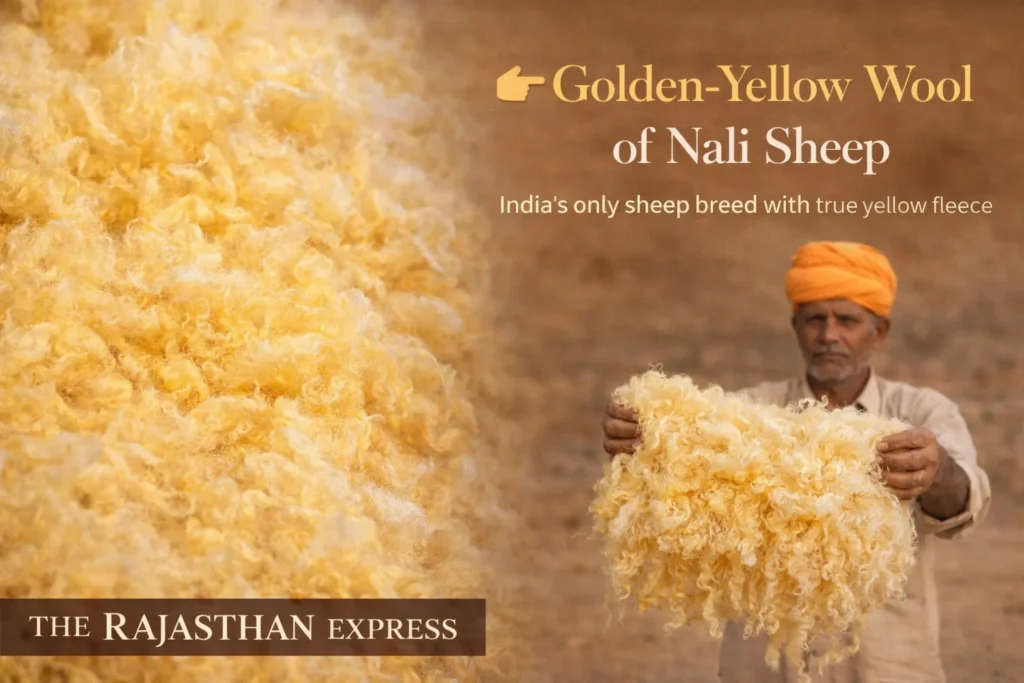
Main Facts About Nali Sheep
- Specialty: White, coarse, and long wool that carries a yellow shine in March.
- Region: Northern parts of Rajasthan (Ganganagar, Churu, Hanumangarh) and bordering areas of Haryana.
- Note: Marwari sheep also produces light yellow-white wool, but for true yellow wool, the Nali breed is considered prominent.
Reproductive Capacity of Nali Sheep
The reproductive capacity of the Nali breed is considered moderate, and it is an adapted breed for dry and hot regions. Its reproductive performance is as follows:
Reproductive Performance
- Female Nali sheep become fit for reproduction at approximately 18 months of age.
- Male sheep become ready for breeding at approximately 12 months of age.
- Generally, only one lamb is born at a time.
- The lambing percentage is approximately 67%, meaning out of every 100 females, about 67 successfully reproduce.
- Under farm conditions, the average age at first breeding is 23 months, and the average age at first lambing is approximately 32–33 months.
- The parturition interval ranges between 12–18 months.
| Reproductive Performance Traits of the Nali Sheep Breed | ||||
| Trait | Average | Minimum | Maximum | Notes / Remarks |
|---|---|---|---|---|
| Age at first parturition (months) | 18 | 0 | 24 | — |
| Parturition interval (months) | 12 | 0 | 18 | — |
| Milk yield per lactation (kg) | 0 | 0 | 0 | Not milked |
| Milk fat (%) | 0 | 0 | 0 | Not milked |
| Litter size born | 1 | 0 | 0 | — |
| The Rajasthan Express : Nali Sheep Breed Data | ||||
Nali Sheep Population
In the Nali region of Rajasthan, the total number of sheep according to the 1972 census was 8.45 lakh, which decreased to 6.90 lakh in 1977. In Haryana, according to the 1972 census, the population of Nali sheep was approximately 2 lakh, while data for 1977 is not available.
In the year 1972, the number of adult male sheep was 62 thousand, and the number of adult female sheep was 4.44 lakh. This clearly shows that the population of this breed in Rajasthan has been continuously declining.
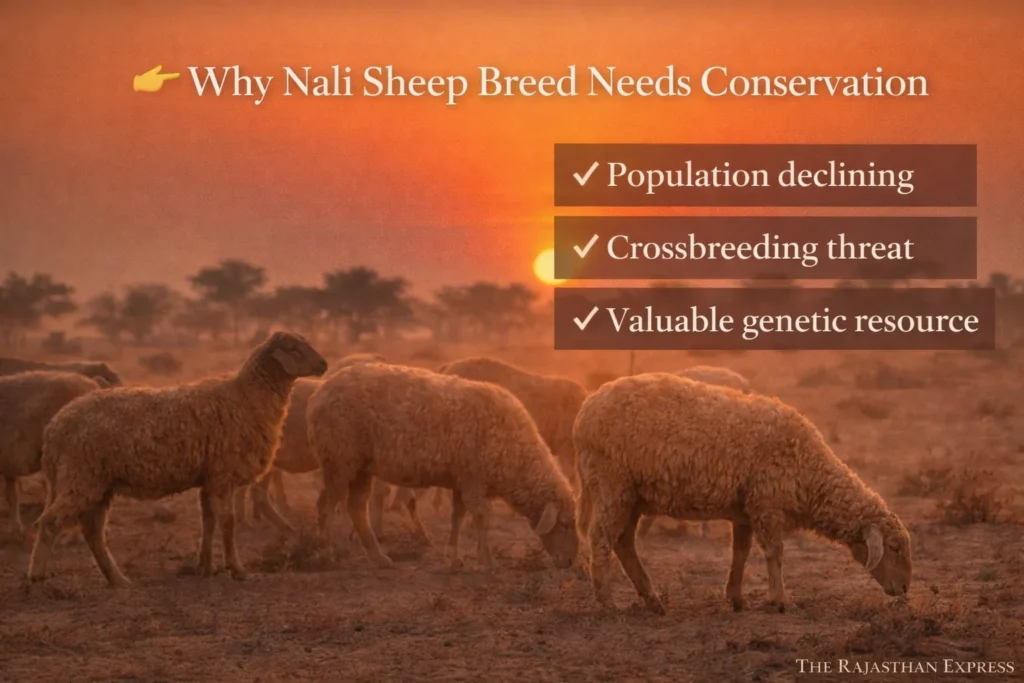
The National Commission on Agriculture recommended crossbreeding Nali sheep with exotic fine wool breeds to improve apparel wool production and quality. The Nali sheep breed is a good carpet wool-producing breed, and among the sheep breeds of Rajasthan, its wool is considered the densest and heaviest. Considering its declining population and large-scale crossbreeding programs, conservation of this breed is highly necessary.
The Nali sheep origin lies in the arid and semi-arid regions of north-western India, especially in the Sri Ganganagar, Churu, and Jhunjhunu districts of Rajasthan and some parts of Haryana. Recent censuses do not provide a clearly separate population figure for Nali sheep, but it constitutes an important part of the total sheep population of Rajasthan.
According to the 2019 census, the total sheep population in Rajasthan was approximately 79 lakh, which is 12.95% lower compared to 2012.
Summary of Nali Sheep Breed Characteristics
- Nali sheep is found in north-western India, mainly Rajasthan and parts of Haryana.
- Nali sheep in Rajasthan is primarily reared for wool and meat production.
- Nali sheep is used for carpet wool and satisfactory meat production.
- The breed produces medium-quality carpet wool with notable density and weight.
- Due to continuous crossbreeding and declining numbers, conservation efforts are essential.
Complete guide to Nali sheep breed of Rajasthan—India’s only true golden-yellow wool breed. Characteristics, origin in Sri Ganganagar & Churu, wool quality (35μ, 8.3 cm), body measurements, and conservation needs.
THE RAJASTHAN EXPRESS
KEYWORDS: Nali breed,Nali sheep is used for,Nali sheep is found in,Nali Sheep images,Nali sheep in rajasthan,Nali sheep price,Nali sheep is found in,Nali sheep breed characteristics,nali sheep wool quality,nali sheep origin,nali sheep breed . Important Word Highlight And Bold
People Also Ask About Nali Sheep
Where is the Nali sheep found in India?
Which region in Rajasthan is famous for Nali sheep?
What is the origin of the Nali breed?
In which districts of Haryana is the Nali sheep found?
- Hisar district
- Rohtak district
What are the main Nali sheep breed characteristics?
- Medium-sized body with strong and balanced structure
- White body color
- Light brown face (sometimes extending to the neck)
- Pink skin
- Large leafy ears (main identifying feature)
- Short to medium thin tail
- Coarse, dense, long-stapled carpet wool
- Wool present on forehead, belly, and legs
- Good adaptability to harsh climates
- Moderate reproductive performance
- Strong disease resistance
Do Nali sheep have horns?
How much does an adult Nali sheep weigh?
- Adult male average body weight: 38.85 kg
- Adult female average body weight: 31.38 kg
- Adult males: 34.61 ± 1.75 kg
- Adult females: 24.34 ± 0.50 kg
Is the Nali sheep a medium-sized breed?
- Height at withers (Male): approx. 65 cm
- Height at withers (Female): approx. 64 cm
- Body length: approx. 65–66 cm
What is Nali sheep wool used for?
- Blankets
- Durries
- Coarse woolen fabrics
- Carpet-type products
- Staple length: approx. 8.3 cm
- Fiber diameter: approx. 35 microns
- Medullation: approx. 30.7%
What is the annual wool yield of a Nali sheep?
- Approximately 1.46 kg of greasy wool per sheep in six months.
- Shearing occurs twice a year (March and September).
- Approximate annual yield: 2.5–3 kg (depending on management and nutrition).
Why does Nali wool turn yellow?
- Wool obtained in March is especially yellow and shiny.
- September wool often carries a light golden hue.
- The yellow coloration is a natural breed characteristic.
What is the current Nali sheep price in Rajasthan?
- Body weight
- Age
- Health condition
- Market demand
- ₹8,000 to ₹15,000 per animal
- Male breeding animals may fetch higher prices depending on quality and performance traits.

