 By
ByMagra Sheep (Magra Breed) – Origin, Characteristics, Wool Yield, Performance & Complete Guide
Magra Sheep is a very famous and useful indigenous breed of India, found mainly in the Rajasthan region’s Bikaner area. This sheep is known for its bright white wool, strong heat tolerance, and ability to survive well on sparse fodder. For pastoralists in Rajasthan’s desert and arid zones, this breed is therefore considered highly beneficial.
The name “Magra” was given because this breed first developed and was found in large numbers in a region locally called the “Magra area.” The sandy, undulating dunes of Bikaner and its surroundings were traditionally called Magra. Since this sheep was reared there for generations, people began calling it the “Magra sheep.”
In Rajasthani language, the word “Magra” means stony, uneven, or gravelly area. Regions like Ajmer, Pali and Rajsamand are also called Magra because of their geographic features. The Magra sheep got this name also because the breed can live easily and produce well even in harsh, dry, and difficult areas.
Although the name is the same, Magra sheep are not found in the districts where the Rajasthan government’s “Magra Regional Development Program” runs. That scheme is mainly implemented in Ajmer, Bhilwara, Pali, Chittorgarh and Rajsamand districts, while the true rearing area of Magra sheep is the Bikaner, Jaisalmer, Nagaur and Churu districts. This clearly shows that although the names are the same, the areas are different.
It can be said that both the Magra tract and the Magra sheep derive their name from the word “Magra,” which means stony or harsh land, but they represent two different regions of Rajasthan. The Magra sheep was named because the breed was first developed and more widely reared in the area locally called the Magra region. Earlier it was called the Bikaneri sheep, but later during scientific identification its name was given as Magra out of respect for its native area.
Magra sheep are also known by various names such as Bikaneri, Bikaneri Chokhla, Chakri and Magreti. Initially it was called only Bikaneri sheep, but later it became known by the name Magra. This breed is found in the Bikaner, Nagaur, Jaisalmer and Churu districts, but the true and pure Magra sheep are mostly found in the eastern and southern parts of the Bikaner district.
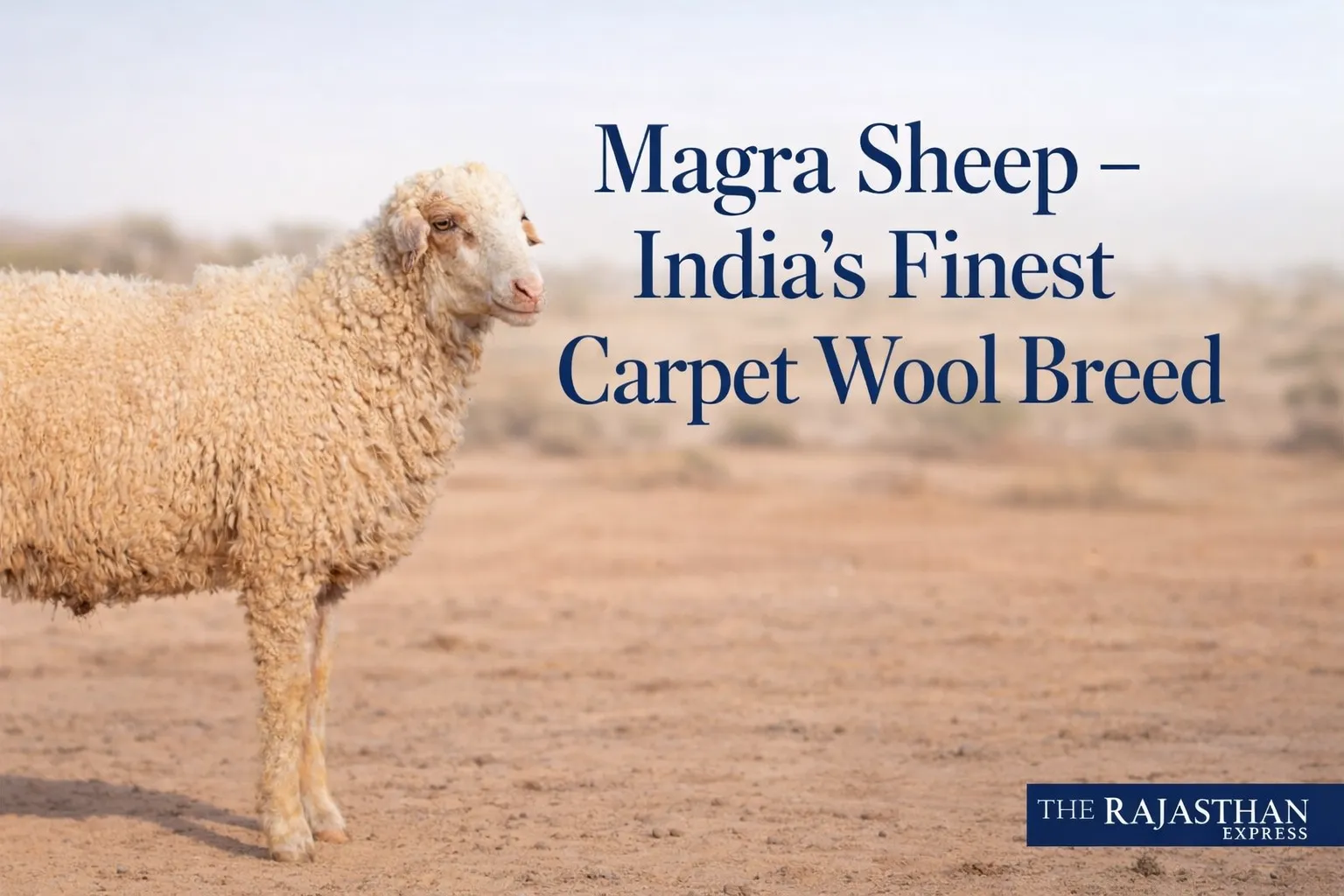
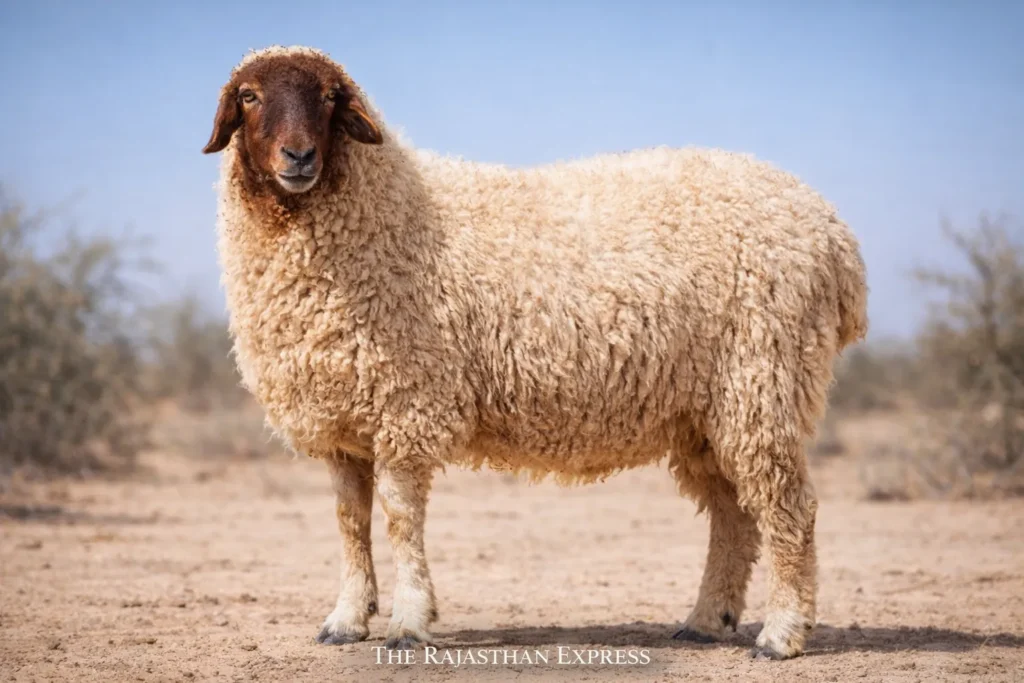
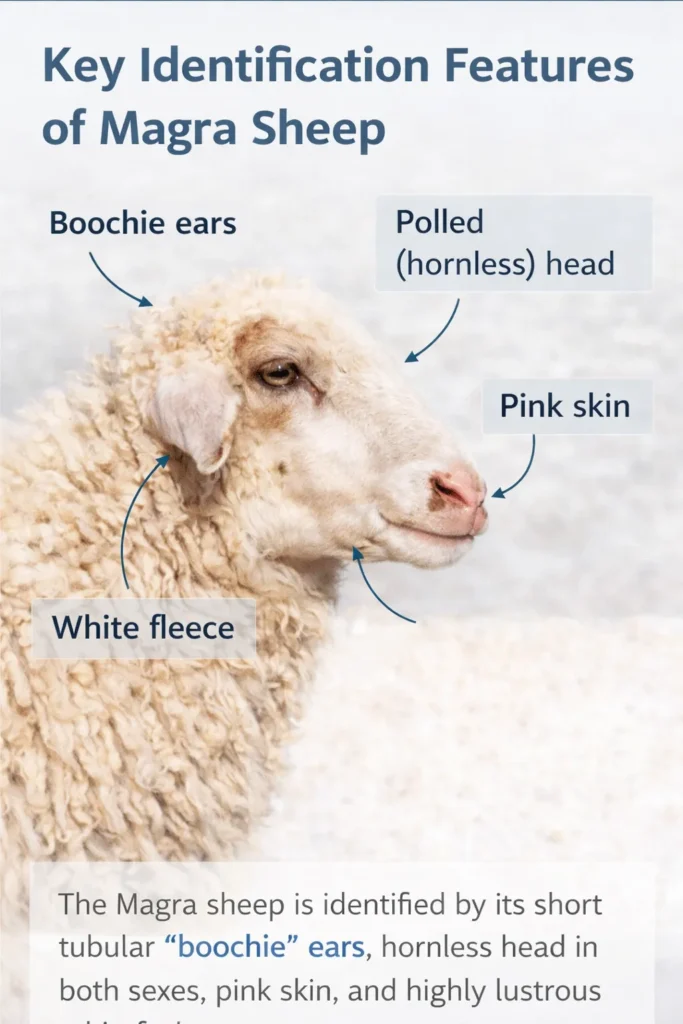
Magra sheep appear medium-sized, yet are quite strong and agile in body. Their color is mostly entirely white. Sometimes light brown or tawny marks appear near the eyes on the face. Their ears are small, thick and tube-like, locally called “buchi ears.” A special feature is that both rams and ewes typically do not have horns. Their skin is pink and the wool is so glossy that it looks clean from a distance.
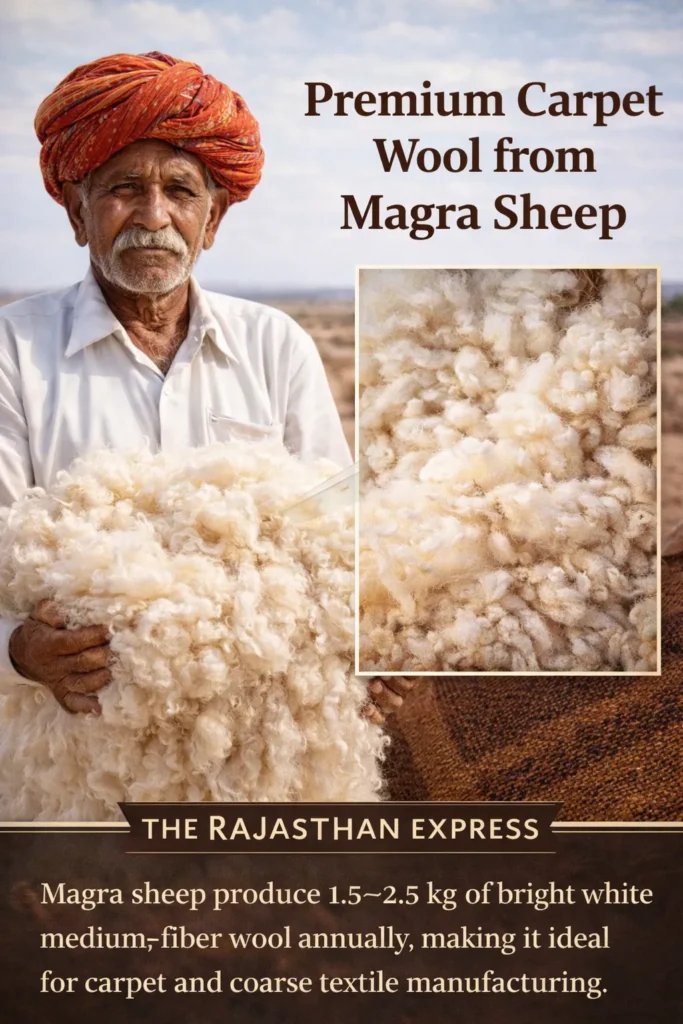
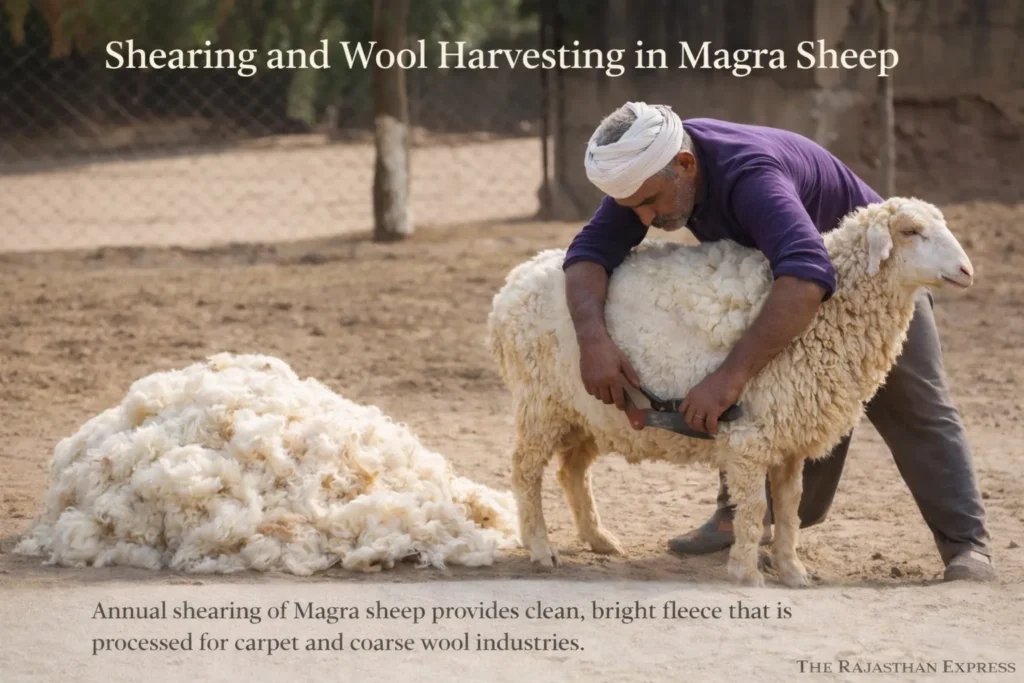
The biggest identity of this sheep is its very white, soft and glossy wool, which is considered the best for making carpets. For this reason, Magra sheep wool fetches a good price in the market. One Magra sheep gives about 1.5 to 2.5 kilograms of wool per year, which increases the farmers’ income.
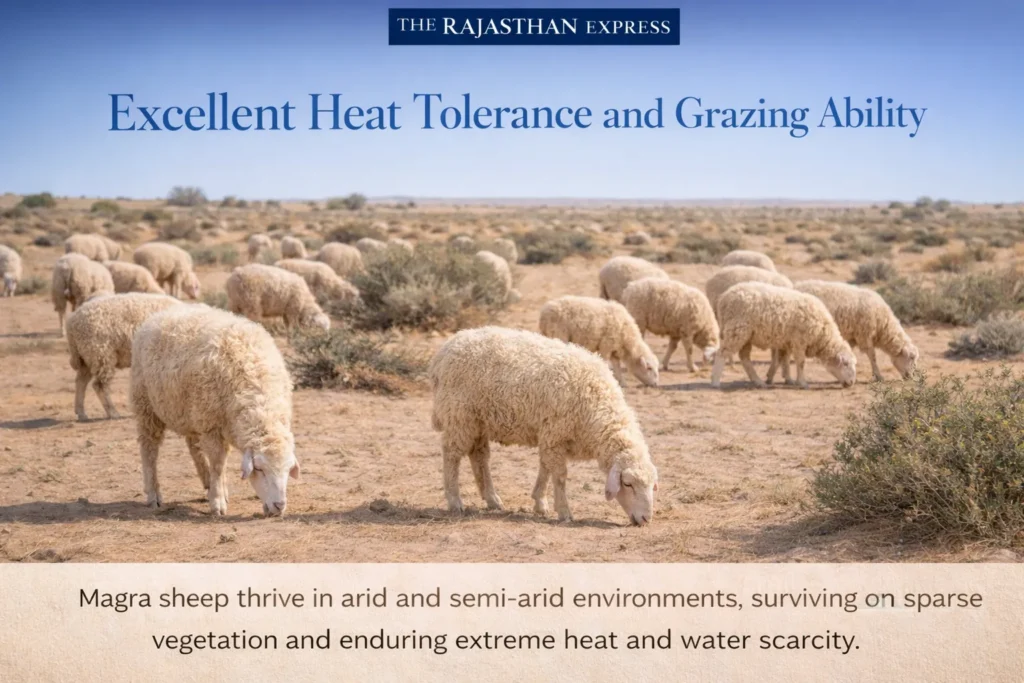
Magra sheep can easily live in Rajasthan’s extreme heat, hot winds (loo), water scarcity and dry pastures. They eat shrubs, tree leaves, dry grass and low-nutrition fodder and still produce well. Therefore this breed is considered very beneficial for small and poor farmers.
In terms of breeding, these sheep generally give one lamb at a time. The age at first lambing is about one and a half to two years, and they lamb every 14–16 months. Twin lambs are rare, but because of the excellent wool this breed is given more importance.
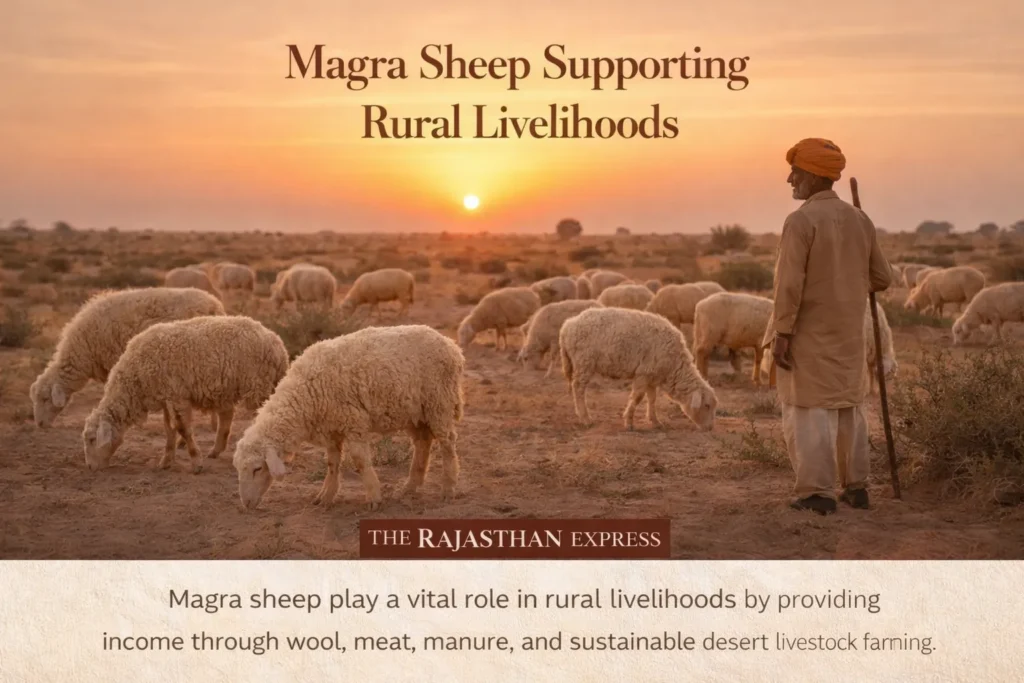
In many villages of Rajasthan, Magra sheep are not just an animal but a reliable source of family income. Farmers meet their daily needs from its wool, lamb and manure. This is why the government and the animal husbandry department are paying special attention to the conservation and improvement of this breed so that its purity is maintained and its production can be increased in the future.
In simple words, the Magra sheep is the pride of Rajasthan’s desert soil — a strong-bodied, bright white-wooled, heat-tolerant breed that gives good income at low cost and is considered the firm pillar of rural life.
Magra Sheep (Magra Breed)
| Other Names | Bikaneri, Bikaneri Chokhla, Chakri, Magreti, Raata Chakriya, Boochie Kan Desi |
|---|---|
| Breed Type | Indigenous Carpet Wool Breed |
| Species | Ovis aries |
| Origin | Bikaner District, North-Western Rajasthan, India |
| Native Tract | Bikaner (Eastern & Southern parts – Pure strain cradle area); also found in Nagaur, Churu, Jaisalmer, Sri Ganganagar & Hanumangarh |
| Geographical Coordinates |
Latitude: 27°50′–28°10′ N Longitude: 73°10′–73°30′ E |
| Agro-Climatic Zone | Arid & Semi-Arid Desert (Eastern Thar Desert Region) |
| Primary Utility | Carpet Wool Production (Secondary: Meat & Manure) |
| Management System | Extensive Grazing System; Permanent/Stationary Flocks |
| Adaptability | Highly tolerant to extreme heat (Loo winds), drought, water scarcity, low rainfall and sparse vegetation; survives on shrubs, pods, dry grasses and thorny plants. |
| Physical Characteristics |
|
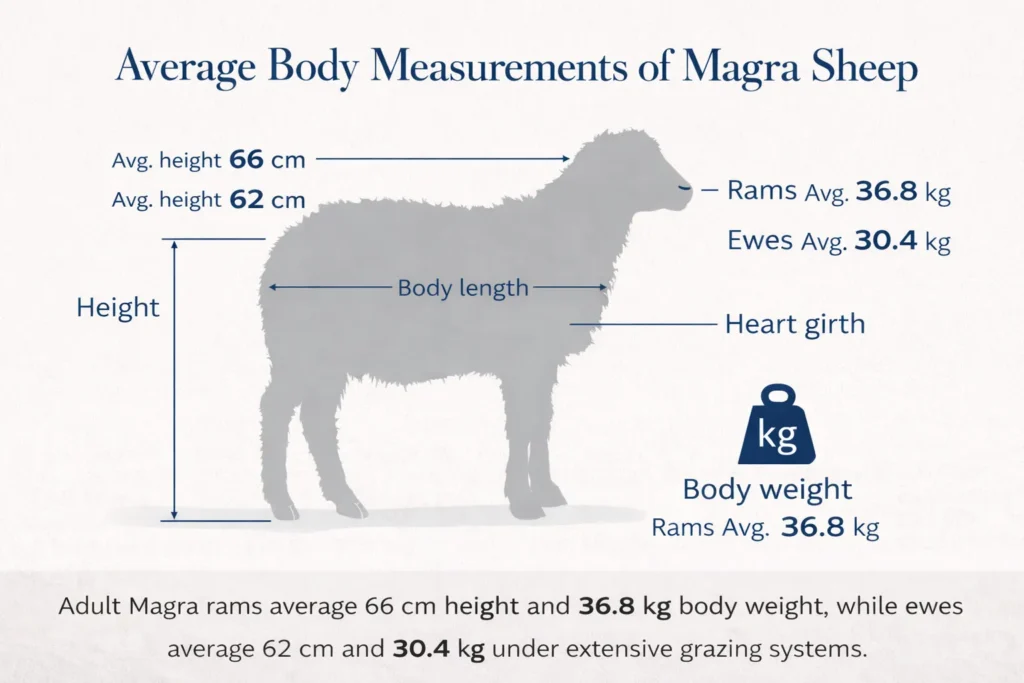
| Average Body Measurements |
|
| Wool Characteristics |
|
| Reproductive Performance |
|
| Meat Performance | Dressing Percentage: ~44.75% (Medium Category) |
| Economic Importance | Major livelihood source for pastoralists in desert Rajasthan; valued for high-price white wool and low maintenance cost. |
| Population Status |
|
| Conservation Focus | Pure strain preserved mainly in Bikaner district; supported by Government breeding & genetic improvement programs. |
| Sources: Department of Animal Husbandry, Govt. of India; Breed Survey 2013; Rajasthan Livestock Records ; The Rajasthan Express. | |
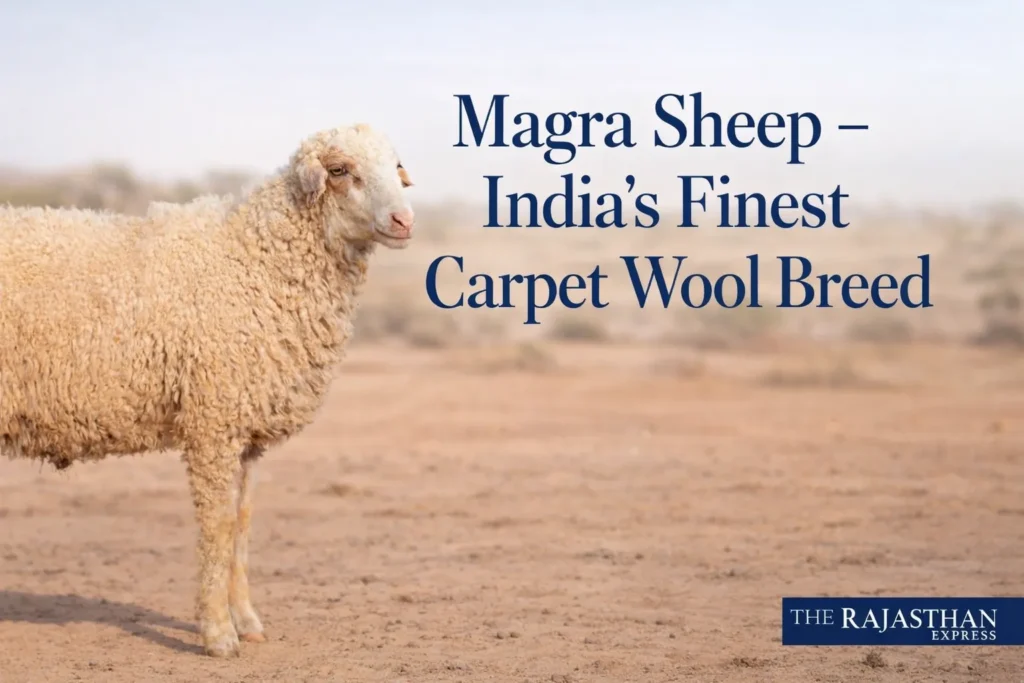
Magra sheep Origin — Origins and Distribution of Magra Sheep
Magra sheep is a very special and useful indigenous breed of the Indian state of Rajasthan. Its origin is considered to be the north-western desert region of Rajasthan. It was first developed in the Bikaner area, where pastoralists selected good-quality sheep over generations to create this breed. Bikaner, Lunkaransar and Nokha areas are its major original localities, which is why it was earlier called “Bikaneri sheep.” Later it started being called “Magra sheep” after the name of its region. Locals also know it as “Chakri” and “Bikaneri Chokhla.”
Magra sheep developed in areas with very hot temperatures, low rainfall and limited fodder. Still, this sheep survives easily and produces well under these harsh conditions. That is why the breed is considered hardy, tolerant and beneficial for pastoralists. Its wool is glossy, pure white and of very high quality, especially used for carpet making and demanded worldwide.
Today the main breeding and rearing area of Magra sheep is the north-western districts of Rajasthan, with Bikaner considered the most prominent center. In addition, it is found in good numbers in Sri Ganganagar, Hanumangarh, Churu and Nagaur districts. This breed is found in the Bikaner, Nagaur, Jaisalmer and Churu districts, but the true and pure Magra sheep are mostly found in the eastern and southern parts of the Bikaner district. These areas have dry climates, low rainfall and higher temperatures. The local vegetation mostly consists of shrubs, dry grasses and thorny plants. Magra sheep evolved in these conditions and give good production even on sparse grazing.
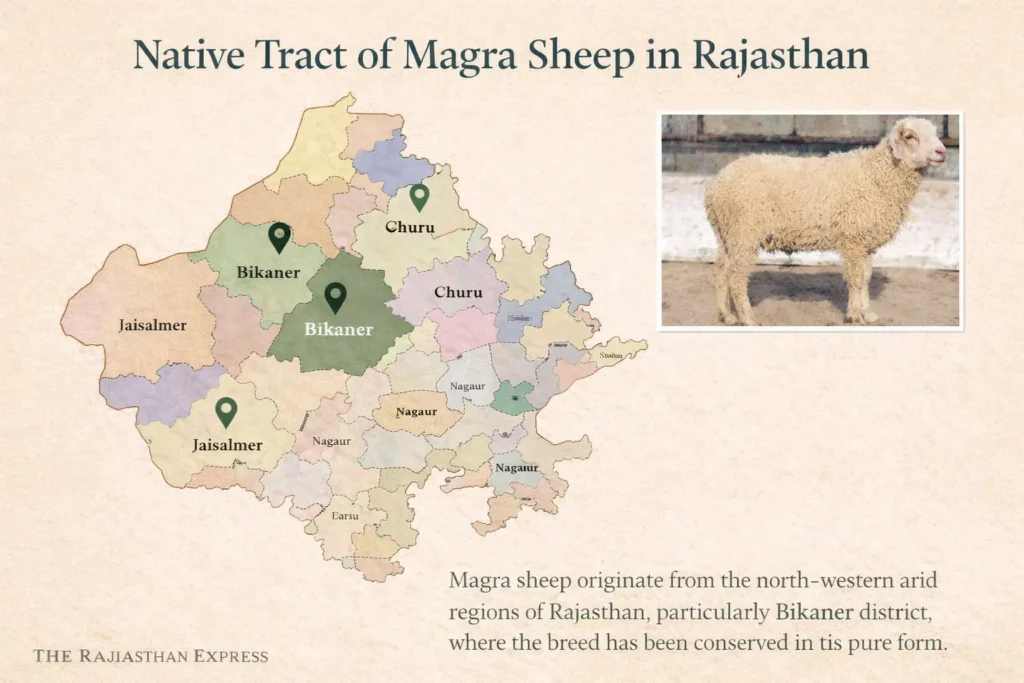
In recent years, some spread of Magra sheep has also been seen into southern Rajasthan districts such as Banswara, Chittorgarh, Dungarpur and Udaipur. Although most sheep in these areas are crossbred or brought from outside, this indicates that the Magra breed can adapt to different climates and geographic conditions. These regions receive somewhat more rainfall and offer better pastures, which improves sheep health and growth.
Geographically, the traditional Magra area falls approximately between 27°50′ to 28°10′ North latitude and 73°10′ to 73°30′ East longitude. This region is mainly connected with the eastern part of the Thar Desert and the western edge of the Aravalli Range. The land here is sandy, sometimes stony and slightly undulating—very suitable for grazing-based animal husbandry. That is why Magra sheep can graze long distances and remain active even in difficult terrains.
A special aspect of Magra sheep distribution is that its pure strain still remains primarily safe in the eastern and southern parts of the Bikaner district. This area is called the true “breeding center” or “cradle area” of the breed. Sheep found in other districts are often somewhat different from pure Magra sheep because of crossbreeding with local breeds. For this reason, the animal husbandry department and research institutes make Bikaner the main center for Magra sheep conservation and improvement programs.
In simple language, the Magra sheep’s original area is Bikaner in Rajasthan, and its distribution is mainly concentrated in the dry north-western districts of Rajasthan, with limited spread into southern Rajasthan. Due to its origin, ability to adapt to harsh conditions and high-quality wool production, Magra sheep is considered a precious livestock heritage not only of Rajasthan but of all India.
Read More About : NBAGR Registerd Sheep Breed
Origin Of Magra Sheep — Magra sheep origin (Location coordinates)
| Origin of Magra Sheep — Geographic Coordinates | ||
| Location | Minimum | Maximum |
|---|---|---|
| Longitude (Deg Min) | 73° 10′ | 73° 30′ |
| Latitude (Deg Min) | 27° 50′ | 28° 10′ |
| THE RAJASTHAN EXPRESS : YOUR TRUSTED SOURCE OF VETERINARY SCIENCE. | ||
Other Names of Magra Sheep (Magra Sheep Breed / Magra Breed)
Magra Sheep is found in the Bikaner district of Rajasthan state; therefore, it is also known as Bikaneri Chokhla. Magra sheep are also called by other names such as Magreti, Raata Chakriya, Chakri, Boochie Kan Desi, etc.
Magreti
- This name is associated with the Magra region of Rajasthan (the sandy areas of western Rajasthan), where this breed has traditionally been reared. Therefore, it came to be locally known as “Magreti.”
Bikaneri Chokhla
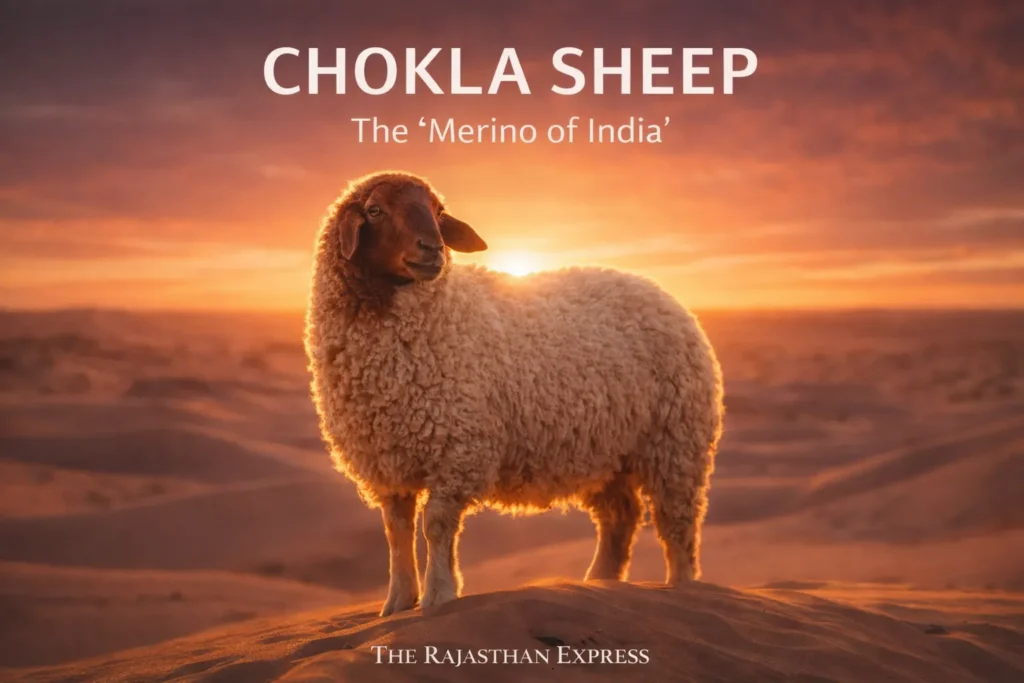
- The main distribution area of the Chokla breed has been the Bikaner district. Based on regional identity, it was called “Bikaneri Chokhla.”
Raata Chakriya
- This name became popular because of the reddish-brown color (raata) found on the face and legs of this breed, and the circular/curved wool structure locally referred to as “chakri.”
Chakri
- This is a shortened local name of Chokla, used in everyday village language. The name is linked to the wool pattern and regional pronunciation.
Boochie Kan
- The ears of this breed appear small and slightly cut or curved, which in the local language are called “boochi.” Because of this special physical feature, the breed got this name.
Desi
- This name was given because it is a local, indigenous breed that has been reared in Rajasthan for a long time, distinguishing it from exotic or crossbred sheep.
For What Purpose Is Magra Sheep Reared in Rajasthan?
Magra Sheep is counted among the best carpet wool–producing breeds of Rajasthan. It plays an important role in the livelihood of people living in the Bikaner district and other arid and semi-arid regions of Rajasthan. It is mainly reared for wool and meat production.
In districts such as Churu, Bikaner, Ganganagar, and Jhunjhunu and nearby villages, most flocks consist of Chokla, Magra, and Nali sheep, which reflects its usefulness and ability to survive under harsh conditions.
Read More About : Chokla sheep characteristics
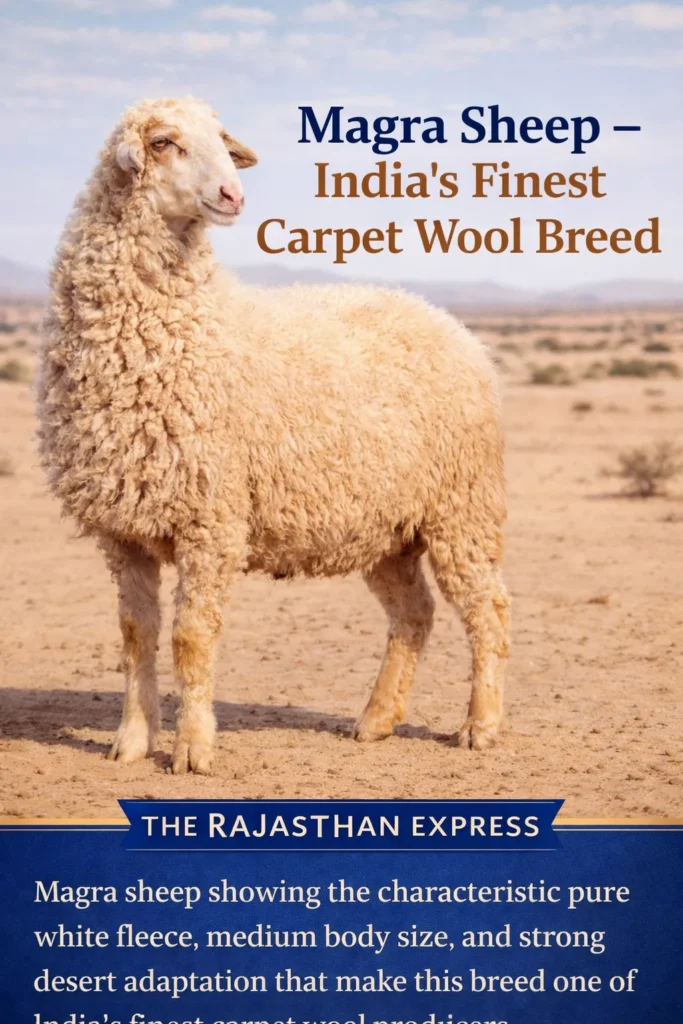
Morphological Characteristics of Magra Sheep (Magra Sheep Characteristics)
Body
- Magra sheep are a medium-sized, strong-built, and attractive breed. Their most important identity is their extremely bright, pure white wool, which is why their wool is counted among the best carpet wool in India.
- The body is well-balanced and well-shaped. The back is straight, the chest is broad, and the legs are strong, enabling them to graze over long distances. The skin color is generally pink, which is clearly visible beneath the white wool.
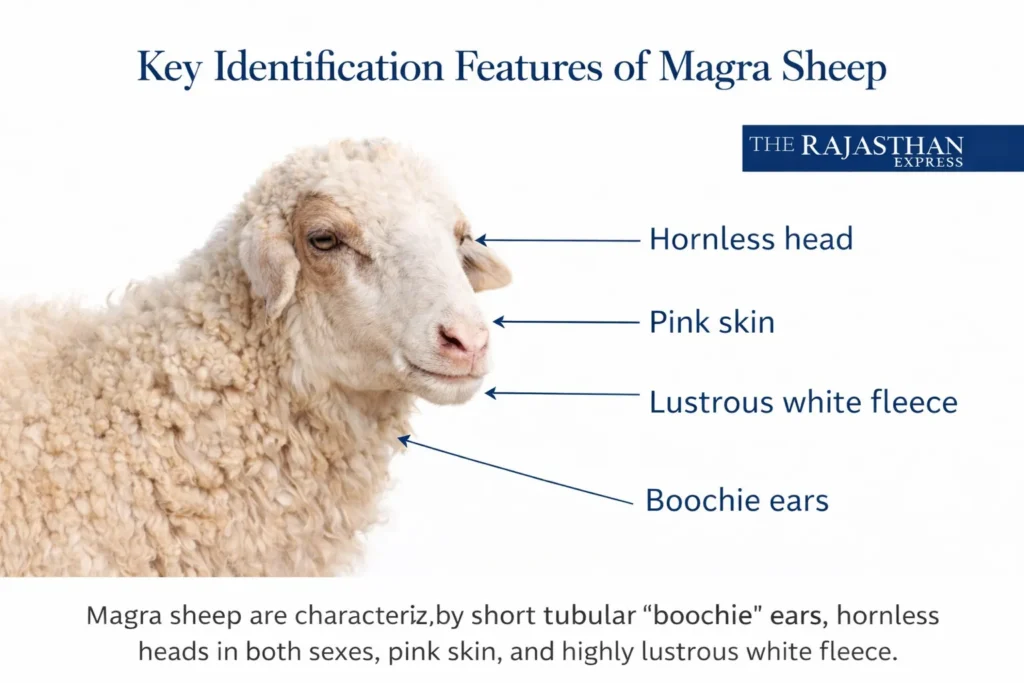
Color of Magra Sheep
- From the color perspective, the body is completely white. However, light brown or tan patches are sometimes found around the eyes on the face, which is a main identification mark of this breed. The skin color is pink.
Ears
- The ears are small, thick, tube-shaped, and slightly erect, locally called “Boochie Kan”—a major identification feature of the Magra breed.
Horns
- Both males and females are generally hornless (polled), which is considered a distinct feature of this breed. This characteristic differentiates it from other sheep breeds of Rajasthan.
Wool Quality (Magra Sheep Wool)
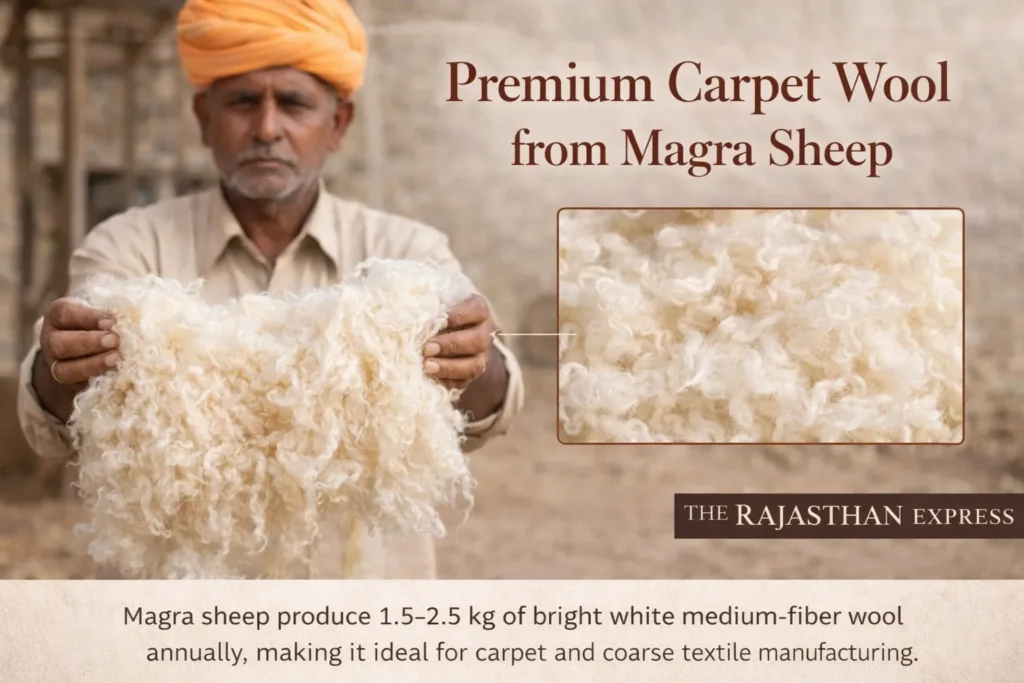
- The wool quality is of medium grade, but it is extremely white, bright, and silky in touch. The wool is not very dense, but its length and whiteness make it highly suitable for the carpet industry.
- Magra sheep produce soft, carpet-type wool. The fiber length is about 5–6 cm.
- The fiber type is medium, making it best suited for coarse fabrics and carpet manufacturing.
- Overall, the appearance of Magra sheep is strong, attractive, and highly useful from a commercial perspective. Because of its pure white and shiny wool, it holds a place among India’s best carpet wool breeds.
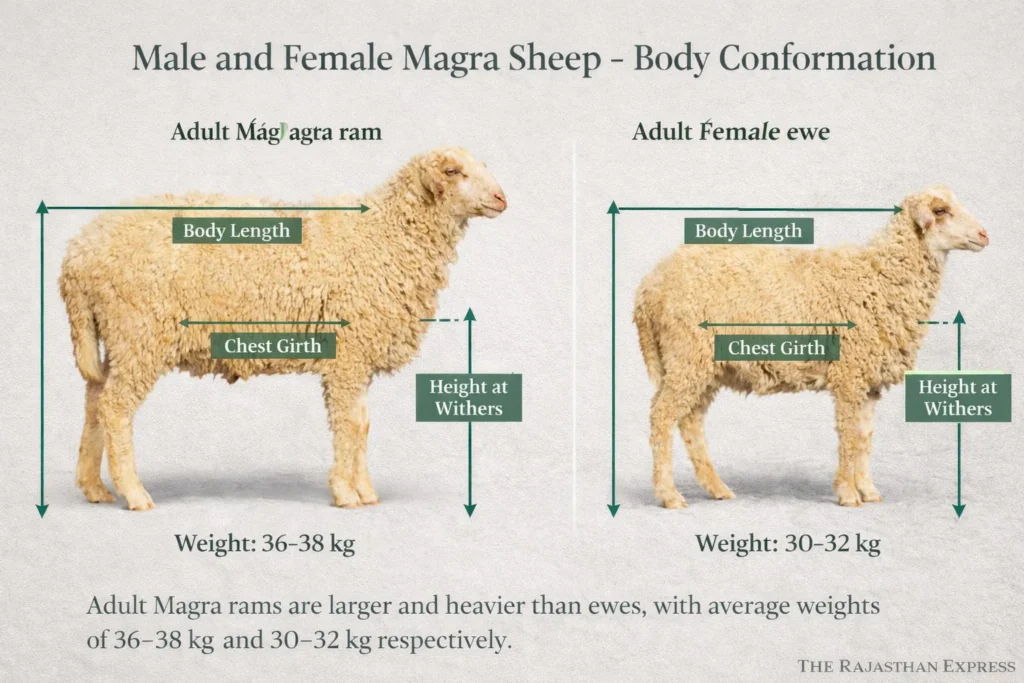
Physical Measurements, Management, Performance and Features of Magra Sheep
🔹 Physical Measurements
Magra sheep are a medium-sized breed mainly found in desert areas.
- Average height of males: 66.1 cm
- Body length (male): 65.3 cm
- Chest girth (male): 78.3 cm
- Average weight (male): 36.8 kg
- Average height of females: 62.8 cm
- Body length (female): 61.7 cm
- Chest girth (female): 74.7 cm
- Average weight (female): 30.4 kg
At birth, the average weight of male lambs is about 2.2 kg, and female lambs about 2.4 kg.
These measurements show that Magra sheep have a strong body structure, balanced frame, and are well suited for grazing.
| Average Measurement of Magra Sheep | ||
| Parameter | Male | Female |
|---|---|---|
| Height (Avg cm) | 66.1 | 62.8 |
| Body Length (Avg cm) | 65.3 | 61.7 |
| Heart Girth (Avg cm) | 78.3 | 74.7 |
| Weight (Avg Kg) | 36.8 | 30.4 |
| Birth Weight (Avg Kg) | 2.2 | 2.4 |
| THE RAJASTHAN EXPRESS : YOUR TRUSTED SOURCE OF VETERINARY SCIENCE. | ||
🔹 Management System (Management of Magra Sheep)
Magra Sheep are mainly reared under an extensive management system. They are generally maintained in permanent flocks, and their primary feed source is natural grazing.
They easily graze on shrubs, tree leaves, pods, dry grasses, and low-height vegetation. Even under difficult climatic conditions, low rainfall, and limited fodder resources, this breed can survive efficiently. Therefore, it is especially suitable for desert regions.
🔹 Production and Reproductive Performance of Magra Sheep (Performance)
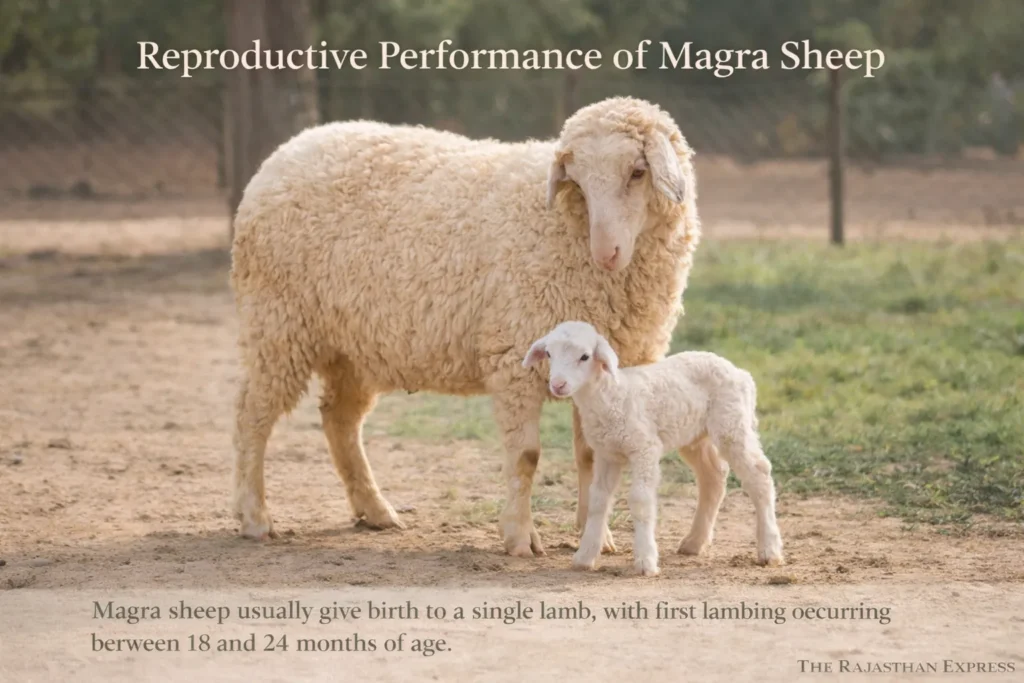
The age at first lambing of Magra Sheep generally ranges between 18 to 24 months. On average, one ewe gives birth to one lamb every 15 months. Most Magra sheep produce a single lamb, while twin births are comparatively rare. Twin lambs are found more frequently in Chokla sheep.
This breed is mainly reared for wool production; therefore, milk production has little commercial importance. In terms of wool yield, one Magra sheep produces approximately 1.5 to 2.5 kilograms of wool per year. The staple length of the wool is generally 5 to 10 centimeters, and the fiber diameter is about 22 to 26 microns, which makes it high-quality carpet wool. The dressing percentage is around 44.75%, which falls in the medium category for meat production.
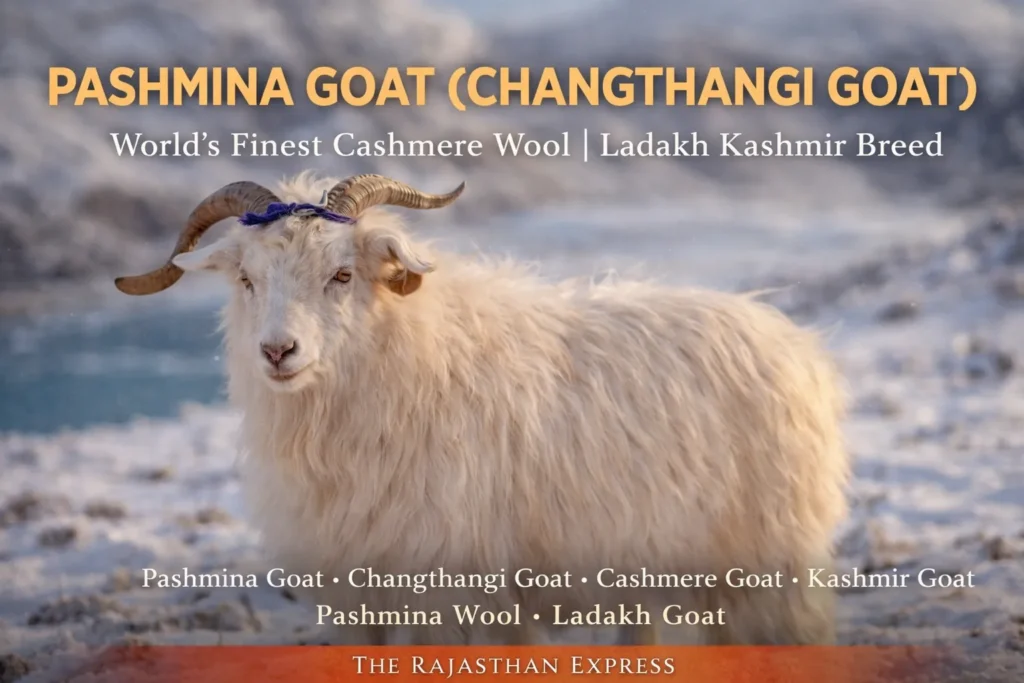
Comparative example: If we talk about the Kashmiri/Pashmina goat, it produces about 250 grams of pashmina hair per year, whereas Magra sheep are specifically known for their coarse and shiny carpet wool.
| Performance Record of Magra Sheep | |||
| Parameter | Average | Minimum | Maximum |
|---|---|---|---|
| Age at First Parturition (Months) | — | 18 | 24 |
| Parturition Interval (Months) | 15 | — | — |
| Milk Yield per Lactation (kg) | — | — | — |
| Milk Fat (%) | — | — | — |
| Litter Size Born | 1 | — | — |
| Fleece Weight (kg/year) | — | 1.5 | 2.5 |
| Staple Length (cm) | — | 5 | 10 |
| Fibre Diameter (µ) | — | 22 | 26 |
| Dressing Percentage | 44.75% (Generally, sheep have about 51% dressing percentage.) | ||
| THE RAJASTHAN EXPRESS : YOUR TRUSTED SOURCE OF VETERINARY SCIENCE. | |||
Read More About : Changthangi Goat Characteristics – Cashmere Goat Breeds
Sheep Breeds in Rajasthan (Sheep Breeds in Rajasthan)
- Chokla Sheep
- Magra Sheep
- Marwari Sheep
- Malpura Sheep
- Nali Sheep
- Sonadi Sheep
- Pugal Sheep
- Jaisalmeri Sheep
- Kheri Sheep
Population of Magra Sheep (Magra Sheep Breed Population)
Magra Sheep is an important wool-producing breed of Rajasthan, and its population has increased over time.
In the year 2003, based on the livestock census and the distribution area of the breed, its estimated population was approximately 2,00,000. At that time, this number reflected limited recognition of the breed, traditional rearing methods, and limited improvement programs.
In 2013, according to the breed survey conducted by the Department of Animal Husbandry, Dairying & Fisheries, Government of India, the population of Magra sheep increased to approximately 5,07,915. This growth indicates the rising popularity of Magra sheep among farmers, especially because of its high-quality white wool. Government conservation schemes, scientific breeding programs, and improved animal husbandry services have also played an important role in increasing its population.
Overall, the increasing population of Magra sheep shows that this breed is economically useful, environmentally adaptable, and relatively secure from a conservation perspective. However, continuous scientific efforts are still required to maintain its purity and improve its wool production capacity.
| Population of Magra Sheep | |||
| Sr. No. | Year | Population | Source |
|---|---|---|---|
| 1 | 2003 | 2,00,000 | Based on Livestock Census (2003) and distribution area of the breed |
| 2 | 2013 | 5,07,915 | Estimated Livestock Population Breed Wise Based on Breed Survey 2013, Department of Animal Husbandry, Dairying & Fisheries, Government of India, New Delhi |
| THE RAJASTHAN EXPRESS : YOUR TRUSTED SOURCE OF VETERINARY SCIENCE. | |||
People Also Ask About Magra Sheep
Where did the Magra sheep breed originate?
Which districts of Rajasthan are known for Magra sheep?
Is the Magra sheep found outside of Rajasthan?
What are the unique physical characteristics of Magra sheep?
What is the average body weight of a Magra ram and ewe?
How does Magra sheep differ from the Chokla breed?
What makes Magra sheep wool lustrous?
Is Magra wool used for handmade carpets?
What is the annual wool yield of a Magra sheep?
Why is Magra wool preferred over other Rajasthani breeds?
Is Magra a dual-purpose breed?
What is the lifespan and lambing rate of Magra sheep?
What are the best management practices for rearing Magra sheep in arid climates?
Complete information about Magra Sheep breed including Magra sheep origin, characteristics, wool yield (1.5–2.5 kg/year), performance, lifespan (12–15 years) and population trends in Rajasthan.
THE RAJASTHAN EXPRESS