 By
ByChangthangi Goat / Pashmina Goat (Kashmir Goat – Cashmere Goat Breeds)
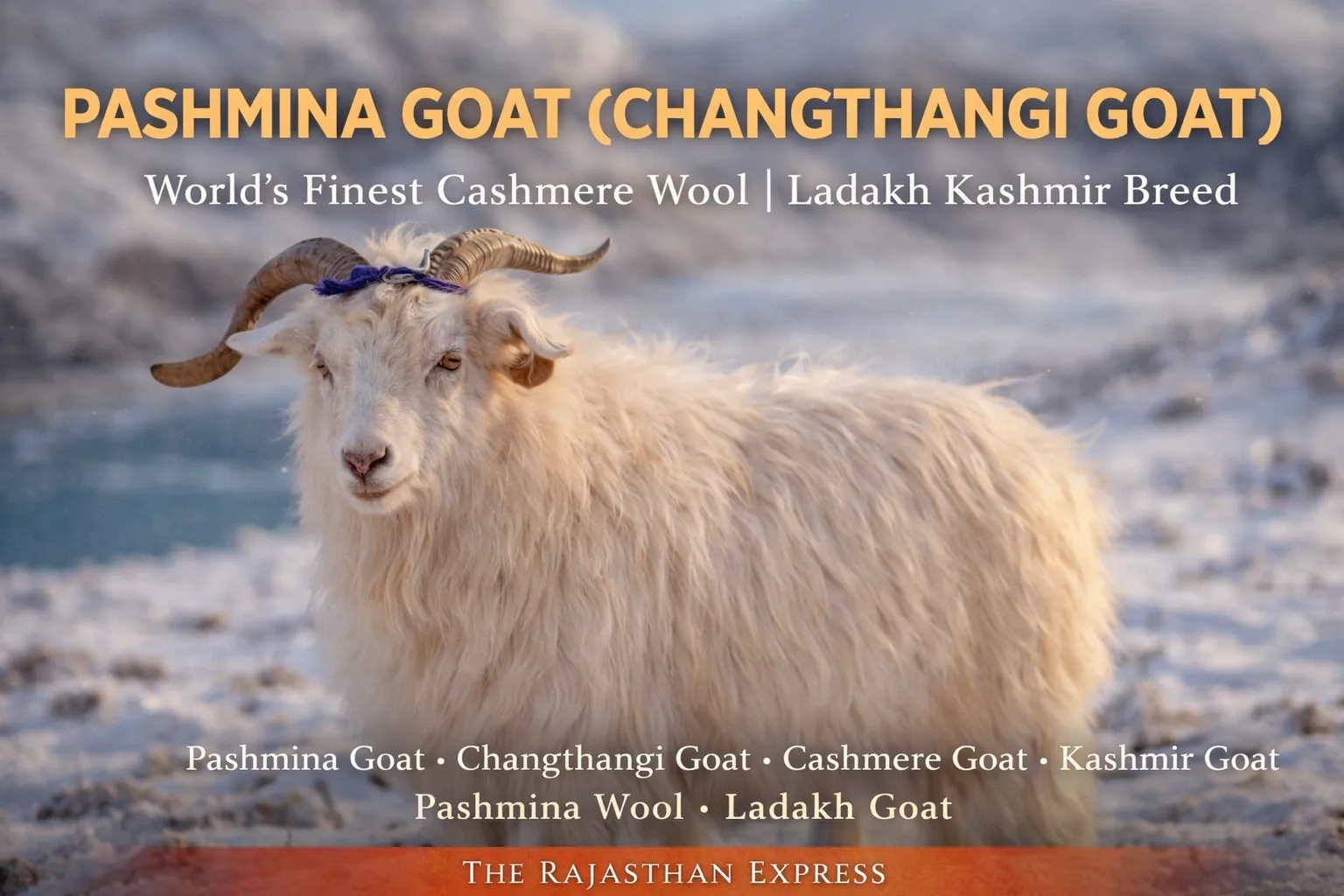
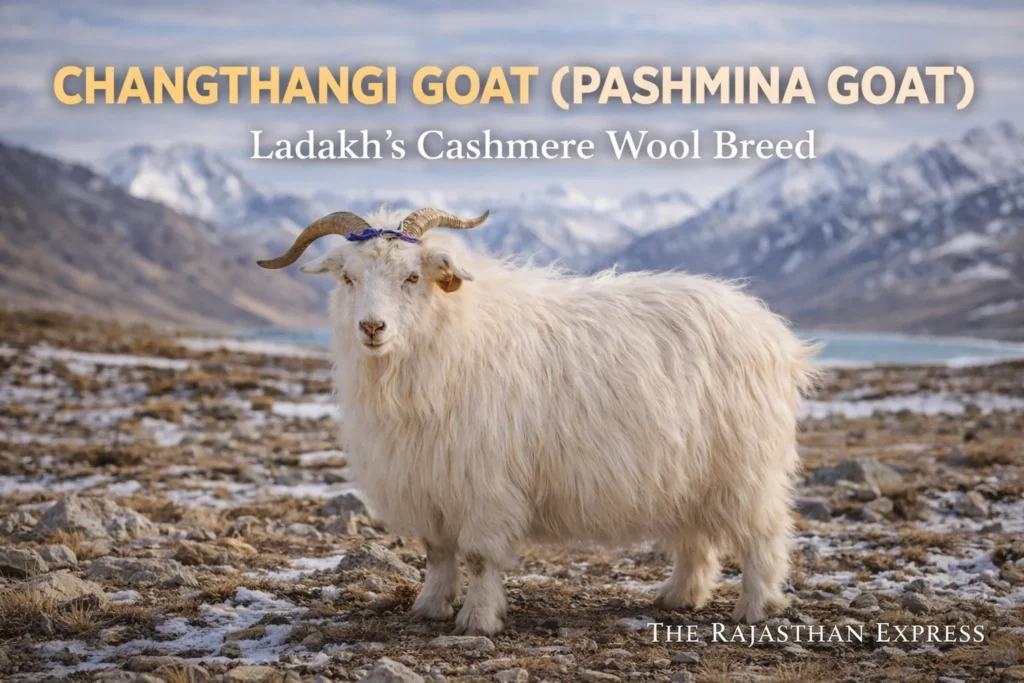
The Changthangi goat is a famous breed, known worldwide for its precious Pashmina wool. This goat is mainly found in the Ladakh region of Jammu and Kashmir, especially in the Changthang area of Leh district, which is located near the border of Tibet. The soft undercoat present in the bodies of Changthangi and Chegu goats is the real Pashmina wool. Because of this, the Changthangi goat is commonly called the “Pashmina goat.” Pashmina shawls made from this wool are sold at very high prices in the international market.
This breed is fully adapted to the extremely cold and harsh climate of this region. The nomadic Changpa pastoralists traditionally rear them. The fine fiber obtained from the Changthangi goat is considered the foundation of Kashmir’s famous shawl industry. The specialty of Pashmina wool is that it is extremely light and warm, absorbs moisture easily, and is easy to dye, which is why its quality is considered superior worldwide.
According to a study conducted by Sher-e-Kashmir University of Agricultural Sciences and Technology, Kashmir, detailed data were collected from 50 villages and surrounding areas of the Changthang region. This included information on the environment of this breed, rearing practices, physical characteristics, body measurements, production capacity, quantity and quality of Pashmina, milk and meat production, and reproduction-related information.
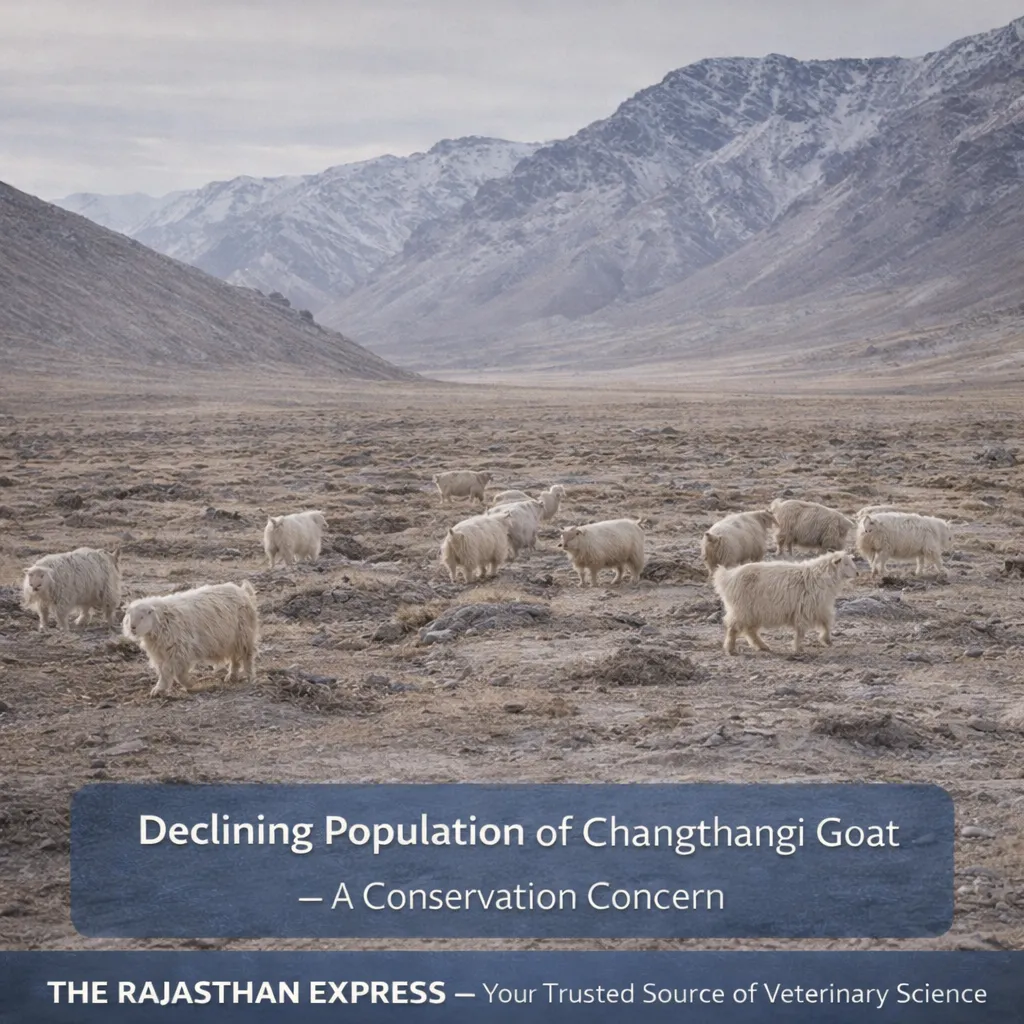
Apart from Pashmina, this goat is also used for meat, milk, manure, hide, and for carrying loads. However, a major problem with this breed is its declining population, which has now been almost restricted only to the Changthang region. The climate here is very harsh, with temperatures reaching up to 40°C in summer and dropping to -40°C in winter. Because of this, caring for goats is challenging, and a higher mortality rate has been observed.
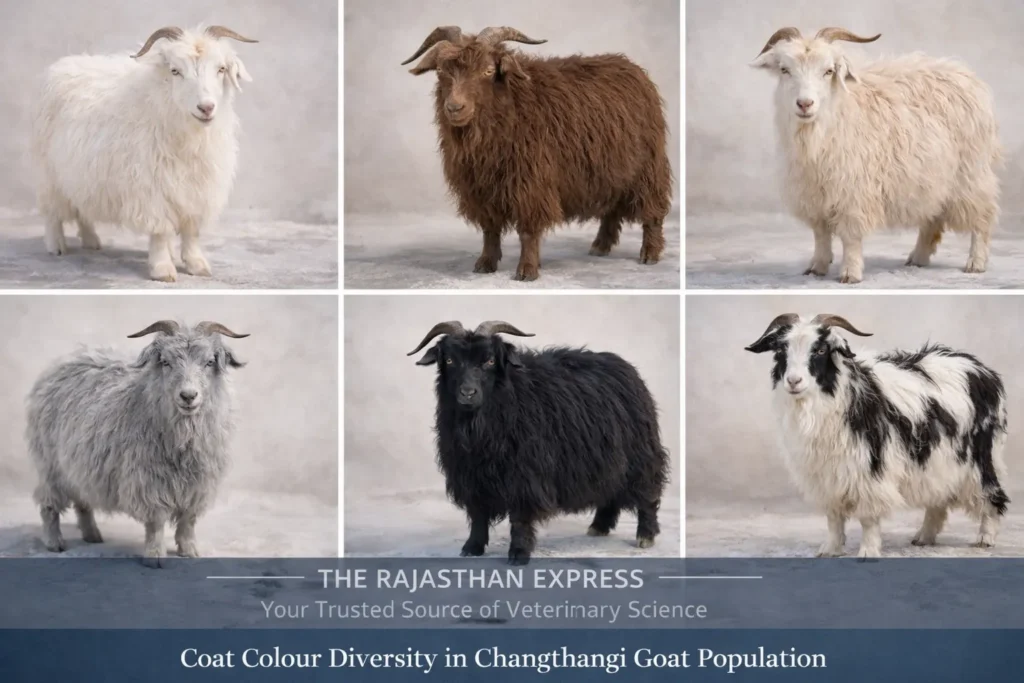
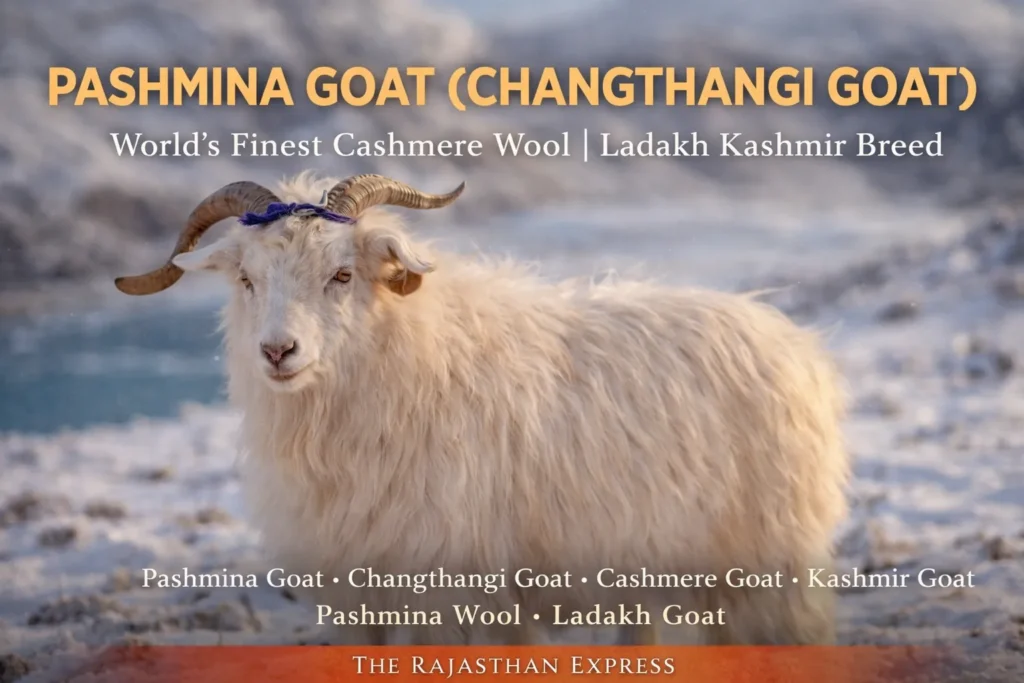
Most Changthangi goats are white in color, but animals in brown, red, fawn, grey, and black shades are also found. Their horns are generally brown and curved. On average, about 248 grams of Pashmina is obtained from one goat. The study also evaluated many important traits such as the percentage of fine hair, percentage of guard hair, dust content, fiber length, and fiber diameter. According to the data, the proportion of fine hair was found to be the highest, due to which the quality of this wool is considered extremely excellent. The main breeding season of this breed is between July and November.
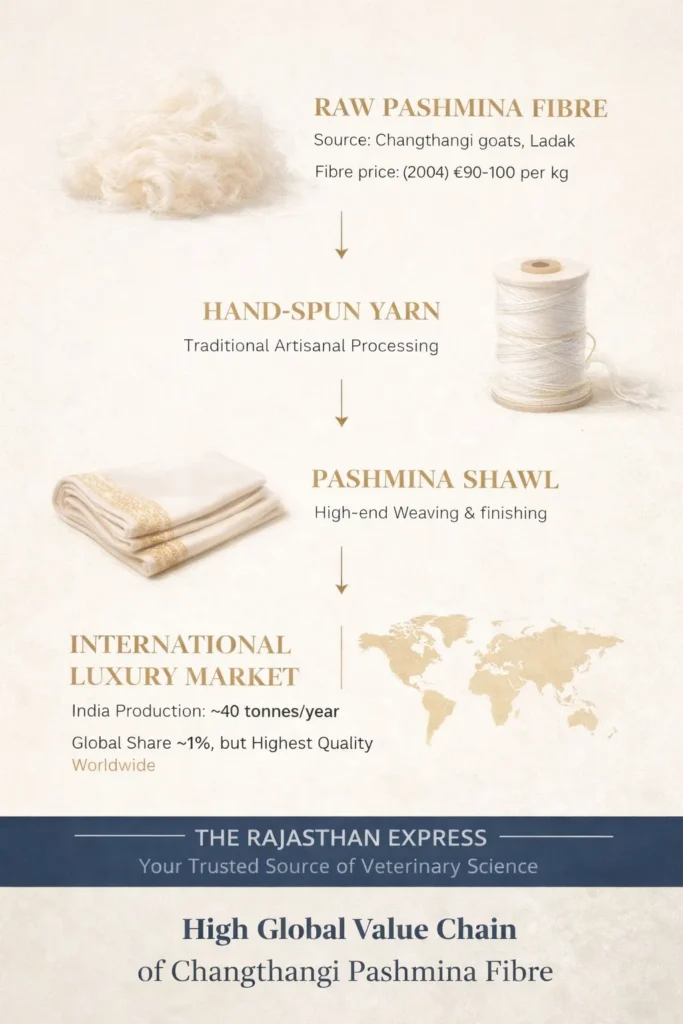
When the use of Shahtoosh fiber was banned, the importance of Pashmina increased even more for its excellent quality. Pashmina is considered to have the highest value among domestic animal fibers. In 2004, its price in the international market was between 90 and 180 Euros per kilogram. Its price depends on the fineness of the fiber, color, length, and purity. In India, Changthangi and Chegu are the only two breeds that produce real fine Pashmina. India produces around 40 tons of Pashmina annually, which is less than 1% of global production, yet based on quality it is considered the best in the world.
The main reason for the rapidly declining number of Pashmina goats is the low economic benefit from livestock rearing in this region and the high mortality rate of goats. Therefore, scientific improvement programs are needed for the conservation of this breed. Before any scientific breeding program, it is necessary to know the actual data of the breed, such as population, production capacity, reproductive capacity, and economic characteristics.
For this purpose, an extensive field survey was started to evaluate the traits and characteristics of the Changthangi goat under real field conditions of the Changthang region. The information obtained from this survey will not only help in conserving this priceless breed but will also prove useful in its scientific and systematic management.
Changthangi Goat (Pashmina Goat)
| Scientific Classification | |
|---|---|
| Kingdom | Animalia |
| Phylum | Chordata |
| Class | Mammalia |
| Order | Artiodactyla |
| Family | Bovidae |
| Subfamily | Caprinae |
| Genus | Capra |
| Species | Capra hircus |
| Breed | Changthangi |
| Other Names | Changra, Pashmina Goat, Kashmir Goat, Cashmere Goat (India) |
| Breed Type | Indian Indigenous High-Altitude Fiber Goat Breed |
| Domestication | Derived from wild goat ancestors (~10,000 years ago, Fertile Crescent region) |
| Primary Utility | Pashmina (Cashmere) Fiber Production |
| Other Uses | Meat, Milk (limited), Manure, Hide, Load Carrying (Rangu males) |
| Native Region | Changthang Plateau, Leh District, Union Territory of Ladakh, India (32°30′–34°00′ N, 77°50′–79°10′ E) |
| Breeding Tract Area | ~24,000 sq. km high-altitude cold desert (4,000–5,500 m above MSL) |
| Climate Adaptation | Extremely cold & dry desert climate Temperature range: –40°C (winter) to +40°C (summer) Low rainfall, dry snowfall, strong winds |
| Rearing Community | Nomadic Changpa pastoralists (Buddhist community) |
| Physiological Adaptation | Thick double coat insulation Efficient oxygen utilization High basal metabolic rate Strong hooves for rocky terrain |
| Genetic Origin (Scientific Views) |
Believed to have originated from:
|
| Recognition & Research Bodies | ICAR (Indian Council of Agricultural Research) NBAGR, Karnal SKUAST-K, Srinagar Genome study: PubMed ID 40815313 |
| Physical Characteristics |
|
| Pashmina Fiber Production |
|
| Fiber Properties | Extremely soft, light, 3× warmer than sheep wool, 40% stronger than mohair, non-medullated, slight crimp Market value (2004): €90–180/kg Considered world’s finest domestic animal fiber |
| Hair Types |
Double Coat:
|
| Breeding Season | July – November |
| First Kidding Age | ~27 months (2.5 years) |
| Kidding Interval | ~13 months |
| Milk Production | Average 273 ml/day (mainly for kids) |
| Body Weight | Birth: 1.5 kg 3 months: ~7.8 kg 6 months: ~14.5 kg Adult male: ~35 kg (slaughter age) |
| Milk Production | ~273 ml/day (mainly for kid nourishment) |
| Meat Performance | Dressing Percentage: ~42.6% Carcass Weight (Male avg.): 15.27 kg |
| Feeding System | Extensive grazing system Natural alpine grasses, legumes & shrubs Winter supplementation: barley, dry fodder, 200–400 g concentrate |
| Housing System | Open stone enclosures (no roof) 300 goats in 9×9 m winter enclosure No drainage required (dry climate) |
| Major Diseases | FMD, Goat Pox, Enterotoxemia, Brucellosis, Coccidiosis Regular vaccination & deworming practiced |
| Kidding Interval | ~13 months |
| Kid Mortality | 1–2 months: 28% Overall (birth–1 year): ~54% Causes: Cold stress, respiratory disease, predators |
| Population Status | 2003: 158,491 2013 Breed Survey: 196,210 Restricted mainly to Changthang region Declining due to harsh climate & low economic returns |
| Economic Importance | Source of world-famous Kashmiri Pashmina shawls One of the finest natural fibers globally Major livelihood source for Changpa pastoralists |
| Genomic Highlights | 2,113 genes under natural selection Key genes: HOXC13, FOXN1, LEF1, BMP2, SMAD3, FGF5 Active pathways: Wnt, BMP/TGF-β, Hedgehog, PI3K-Akt Marker-assisted breeding potential |
| Special Achievement | World’s first cloned Pashmina goat “Noori” (India, 2012) |
| Conservation Need | Scientific breeding programs required Climate change threat ICAR project for characterization & conservation |
| Sources: ICAR Project Report; NBAGR Karnal; SKUAST-K Research; Genome-wide selective sweep analysis (PubMed 40815313); Government of India Breed Survey; Field studies in Changthang ; The Rajasthan Express. | |
ICAR & NBAGR Contribution to Changthangi Goat (Changthangi Goat Origin & Conservation Research)
The large regional study conducted on Changthangi goats of Ladakh was carried out by the Department of Animal Genetics and Breeding, Sher-e-Kashmir University of Agricultural Sciences and Technology (SKUAST-K), Shuhama, Srinagar. This research was completed under a special project of the Indian Council of Agricultural Research (ICAR) —
“Characterization, Improvement and Conservation of Pashmina (Changthangi) Goats in Ladakh (Jammu & Kashmir).”
The main objective of this project was to stop the continuously declining population of the Changthangi goat and help in the conservation of India’s indigenous livestock breeds. To carry out this work scientifically and in a standardized manner, the National Bureau of Animal Genetic Resources (NBAGR), Karnal, the country’s premier national institution for this subject, prepared four fully developed and systematic questionnaires. Based on these questionnaires, a detailed study of all traits and characteristics of the Changthangi goat was carried out.
During the study, information was collected from 15 different levels and from 50 villages and their surrounding areas. All these villages were spread across different parts of the Changthang region, which is considered the main breeding area of the Changthangi goat.
Other Names of Changthangi Goat (Kashmir Goat Name – Pashmina Goat in Kashmir)
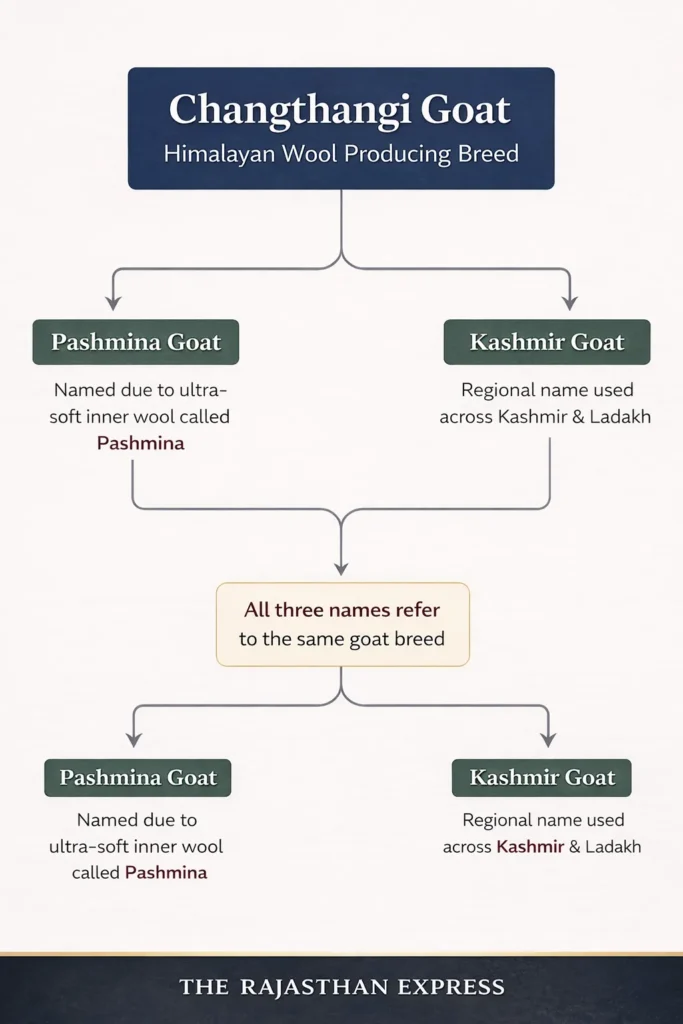
The extremely soft inner hair found in the bodies of Changthangi and Chegu goat breeds is called “Pashmina.” Because of this, local people often call the Changthangi goat by the name “Pashmina Goat.” Apart from this, in many places it is also called the “Kashmir Goat.” Thus, Changthangi Goat, Pashmina Goat, and Kashmir Goat — all these three names are used for the same breed.
Origin and History of the Kashmir / Changthangi Goat (Changthangi Goat Origin)
Nowadays, in most books and research papers, this breed is referred to as the Changthangi goat, named after its native region. Local people also call it Changra (Chang = Changthang, Ra = Goat). The real birthplace of this goat is the Changthang region of Leh district in Ladakh.
In 2019, after the implementation of the Jammu and Kashmir Reorganisation Act, Ladakh is no longer a part of Jammu and Kashmir but has become a separate Union Territory.
This Ladakh goat is small in size, produces Pashmina wool, and is also used for carrying loads in many places. This breed is found across the Tibetan plateau and is much smaller compared to other goats of North India.
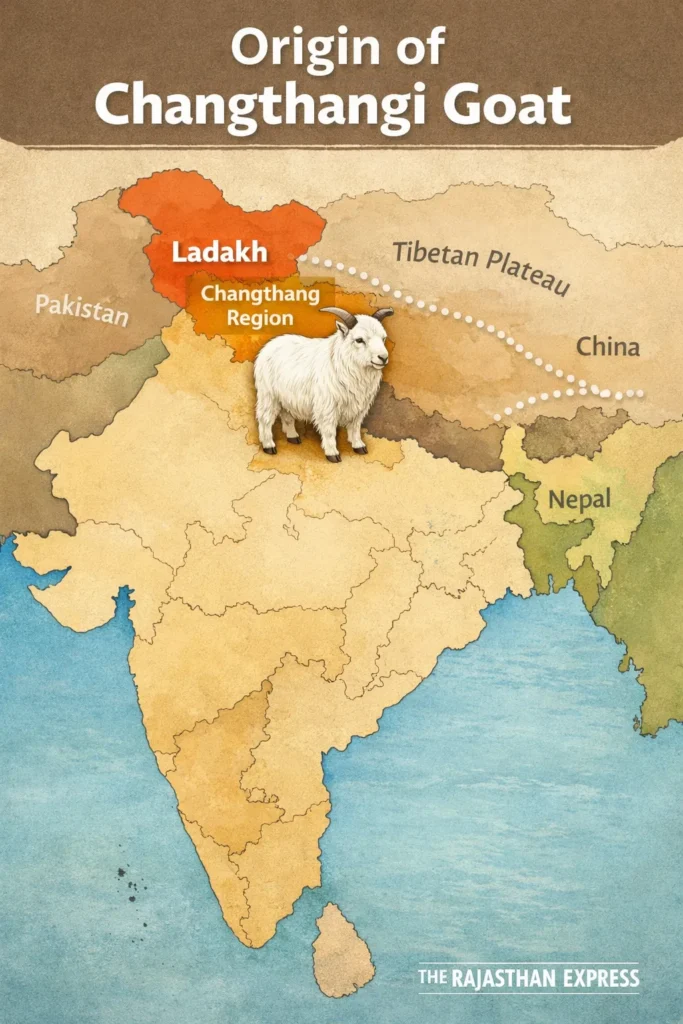
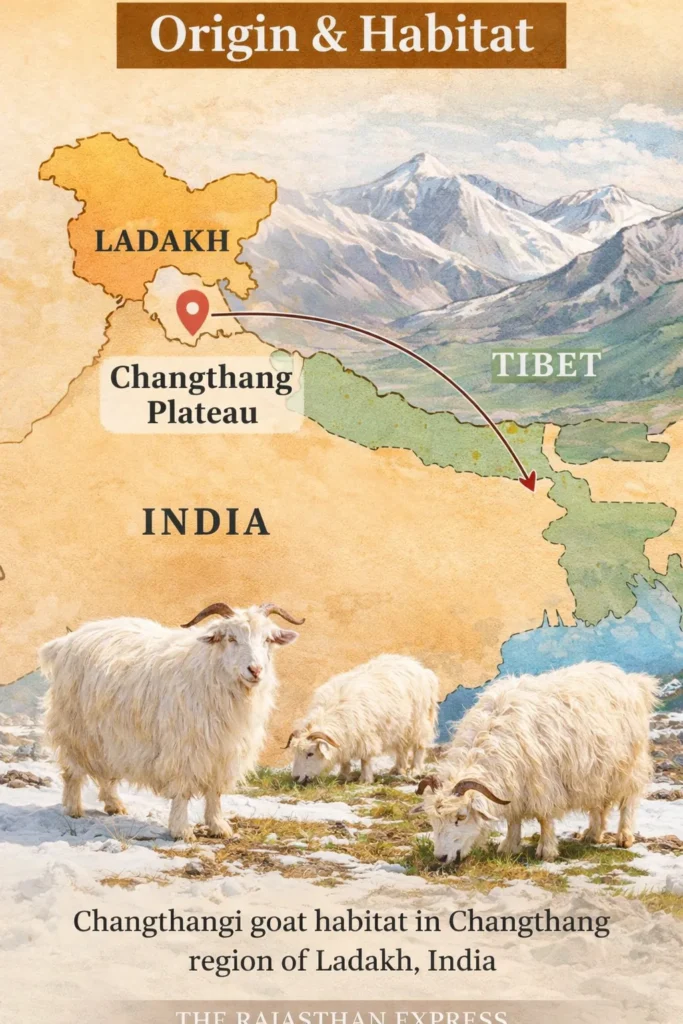
Different Views on the Origin of Changthangi Goat (Changthangi Goat IUCN Status Context & Scientific Views)
Scientists have different opinions regarding where the Kashmiri / Changthangi goat originated from:
- Some scientists like Harris (1962), Mishaarev (1963), Epstein (1969), and Roberts (1969) believe that this goat developed from the Markhor (Capra falconeri).
- On the other hand, researchers like Kiyatkin (1968) consider it to have originated from the Asian Wild Goat (Capra hircus blythi).
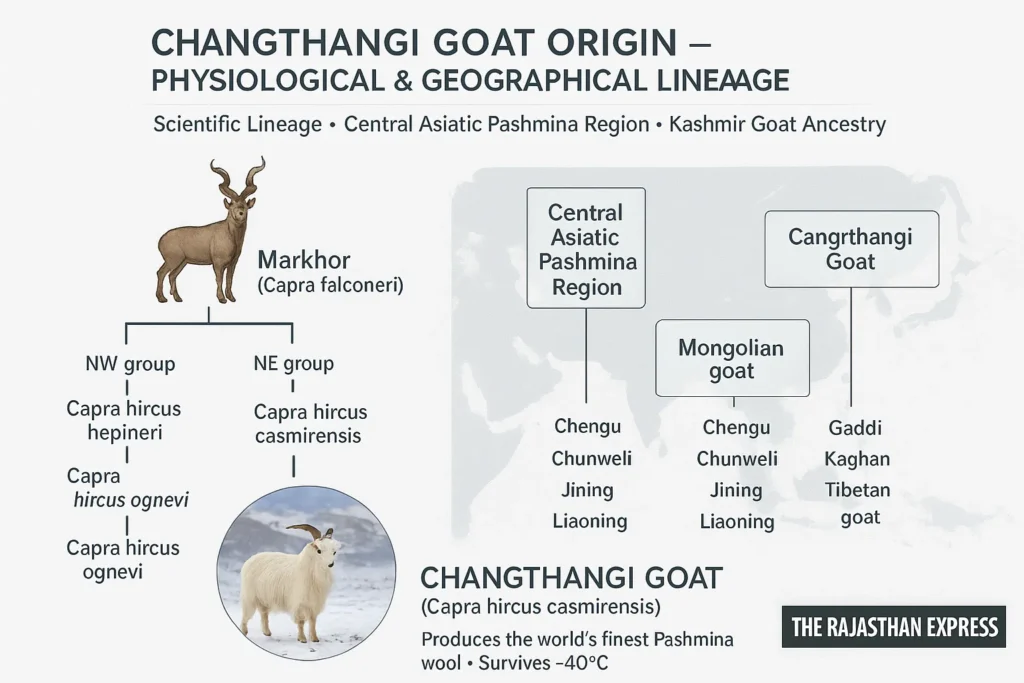
Main Domestication Centers of Pashmina Goats (Cashmere Goat Breeds Background)
Three main domestication centers of these goats are considered:
- North–East Kyrgyzstan
- South–East Tibet
- North–West Mongolia
This classification is based on the number of scales present on the guard hair of goats. This microscopic structure of hair indicates that goats of these regions might have developed from different wild species.
Breeding Region of Changthangi Goat (Changthangi Goat Origin – Pashmina Goat in Kashmir)
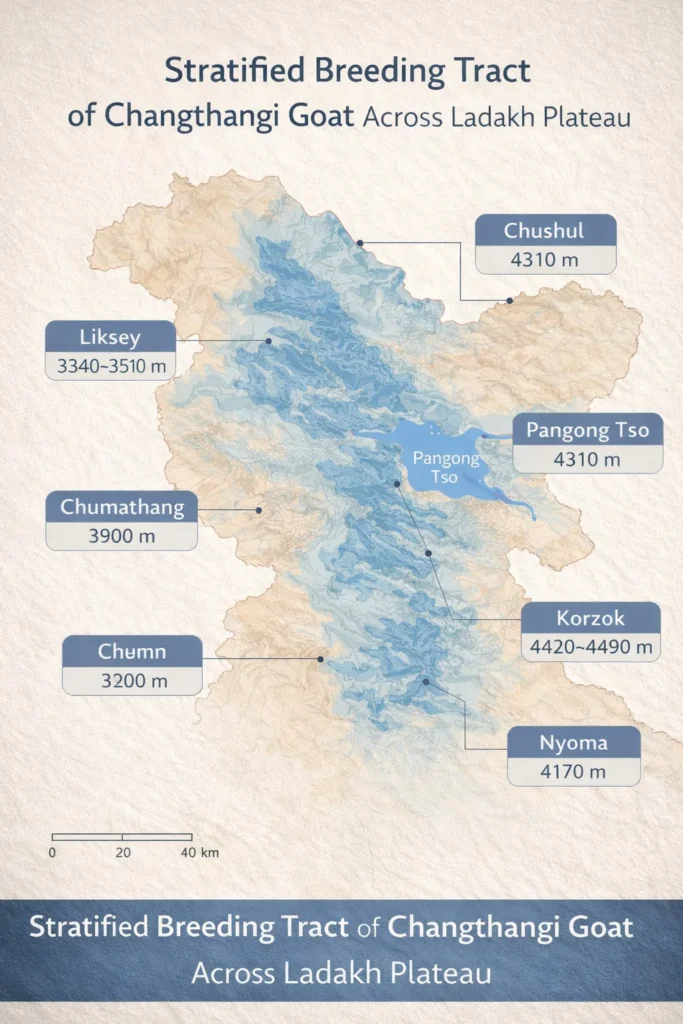
The real breeding region of the Changthangi goat spreads over about 24,000 square kilometers, which is known as Changthang. Earlier, this area came under the Leh district of the Union Territory of Jammu and Kashmir, but now Leh district is part of Ladakh.
This entire region lies between 32°30′ to 34°00′ North latitude and 77°50′ to 79°10′ East longitude.
It is a high-altitude cold and dry desert region, where the altitude generally ranges from 4,000 to 5,500 meters. It is surrounded by the Karakoram and the Great Himalayan ranges, and the land is mostly rocky, uneven, and barren.
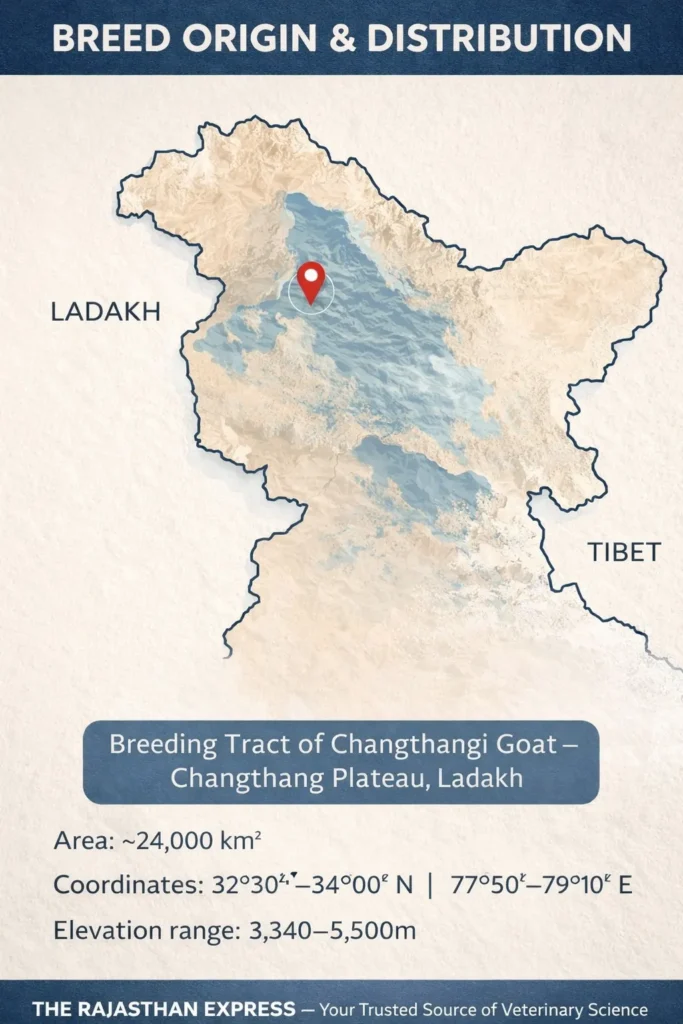
Administrative Division of Changthang Region
The Changthang region is administratively divided into two parts:
- Durbuk
- Nyoma
The altitude here varies from 3,340 meters (Liksi village) to 4,560 meters (Korzok village).
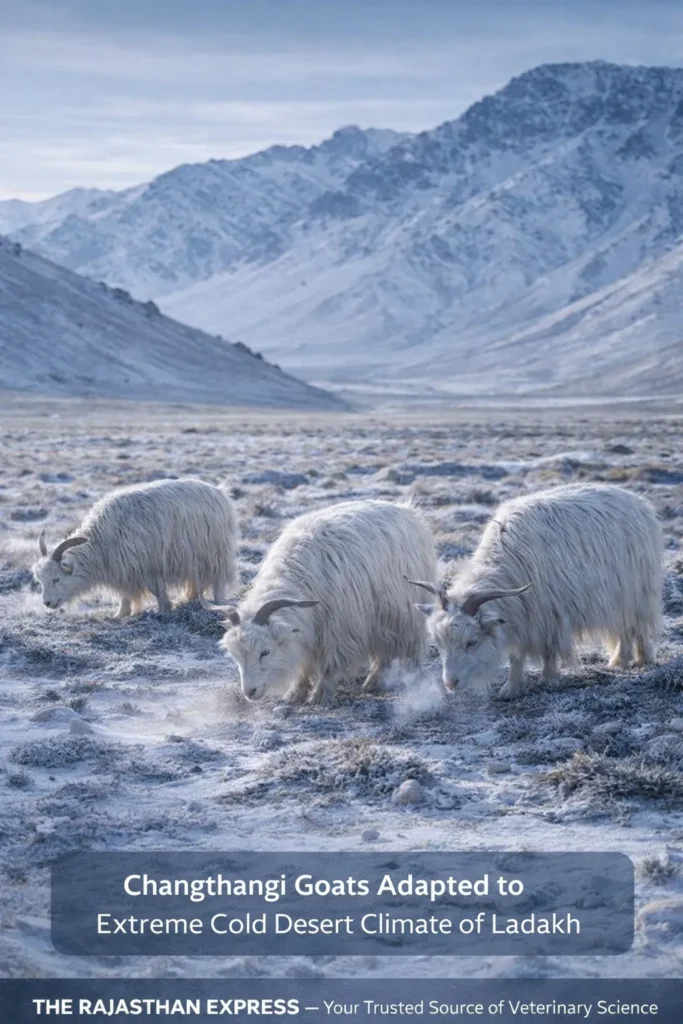
Changthangi goats are often grazed in pastures as high as 5,200 meters. This area is extremely cold, dry, and remains covered with snow most of the year. Therefore, the grass and vegetation here are like the grazing lands of a Cold Desert.
| Breeding Tract of Changthangi Goat | ||
| Stratum Name | Elevation (M above MSL) | Villages / Areas Covered |
|---|---|---|
| Liksey | 3340 – 3510 | Shara, Liksey, Tulka, Tulka Pho, Trachit |
| Chumathang | 4000 – 4050 | Chumathang, Keria, Ney, Skithmong & Kesar |
| Chushul | 4310 | Chushul Valley |
| Pangong Tso | 4300 – 4420 | Man-Merik, Spangmik, Kakstl & Phobrang |
| Kargyam | 4320 – 4500 | Satuu, Lungburma, Kharbulu, Chibru, Tibetan Settlement |
| Durbuk | 3890 – 4000 | Tangste, Durbuk, Shyok, Shashakul, Tharuk & Chelam |
| Samad | 4560 | Samad Valley, Rahchun and adjoining areas |
| Kharnak | 4560 | Kharnak valley and adjoining areas |
| Kurzook | 4420 – 4490 | Kurzook, Samdho, Ankum and Monastery |
| Nyoma | 4170 | Nidder, Nyoma, Mud, Tibetan Settlement |
| Anley | 4200 | Rango, Anley, Khaldo, Pongog |
| Koyal | 4200 | Koyal & Demjok and adjoining area |
| Tasga | 4400 | Tsaga village |
| Phobrang | 4500 | Phobrang, Urgoo and Lukung |
| Rumtse | 3500 | Rumtse, Gaya, Miru |
| The Rajasthan Express : Breeding Tract of Changthangi Goat | ||
Climate and Geographical Features of Changthang (Changthangi Goat Habitat)
The climate of Changthang is very harsh and dry, which is why it is also called the “Cold Himalayan Desert.” The weather changes very rapidly here. July and August are the warmest months, while January is considered the coldest month. The temperature in this region can range from –40°C to +40°C, making it one of the harshest climatic zones in India.
Rainfall here is very low, and mostly dry snowfall occurs. The humidity in the air varies between 13% to 90%. The maximum humidity is usually observed when the temperature is very low.
Strong winds blow in this region, due to which snow accumulates in valleys and sometimes does not melt completely even in summer. As soon as the snow melts in summer, grass and other grazing plants start growing here, which form the main base of livestock rearing.
From November to April, high mountain passes remain completely covered with snow. During this period, Changthang is almost cut off from the outside world. Means of transportation and communication become very limited, and people depend mostly on natural resources for their needs.
Community Rearing the Changthangi Goat (Pashmina Goat in Kashmir)
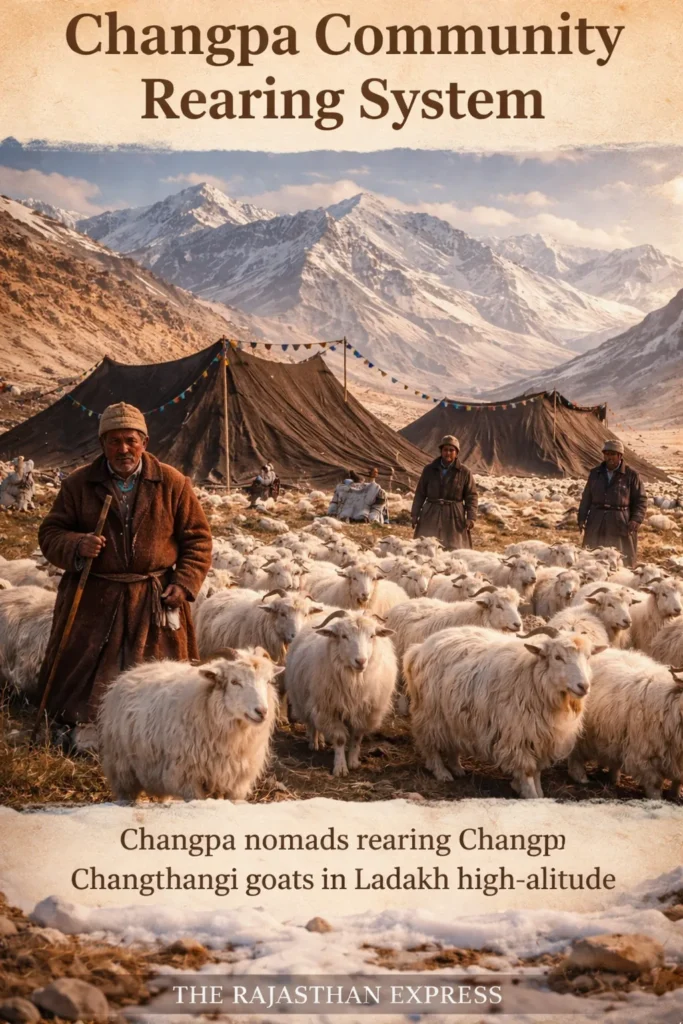
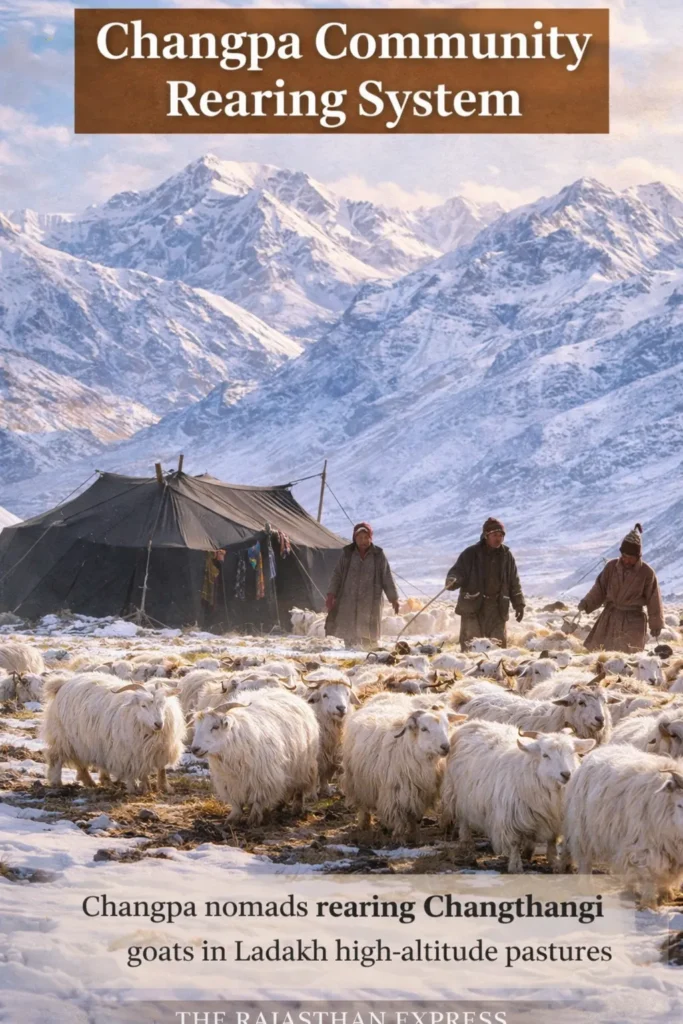
Most of the people living in the Changthang region belong to the Changpa tribe. They are traditionally nomadic pastoralists and followers of Buddhism.
The main livelihood of the Changpa community depends on goats, sheep, and yak. Even today, although some people have started settling permanently, most families still practice traditional livestock rearing, where their herds keep moving across open pastures.
The Changpa people migrate seasonally, meaning they move their animals from one pasture to another according to the weather. These routes are predetermined and formed with mutual agreement between villages. Experienced shepherds of the village take care of the herds.
People from villages like Khamak, Samad, and Korzok travel long distances throughout the year with their livestock. During these journeys, they live in traditional tents called Rebo, which are made of wool or hides.
Korzok village is located at an altitude of about 4,560 meters above sea level. A little barley cultivation is done here, which is considered one of the highest agricultural lands in the world. However, crops here depend heavily on weather conditions and sometimes do not fully mature.
Markhor Goat (Capra falconeri)
The Markhor is a species of wild goat, scientifically named Capra falconeri. This species is mainly found in the northern mountainous regions such as Pakistan-administered Kashmir, Gilgit-Baltistan, Chitral, Hunza Valley, Neelum Valley, and Kalash regions.
Markhor is an important and rare species, which has been given the status of a Protected Species at the international level.
Identification of Changthangi Goat (Changthangi Goat Characteristics – Cashmere Goat Breeds)
Body Size
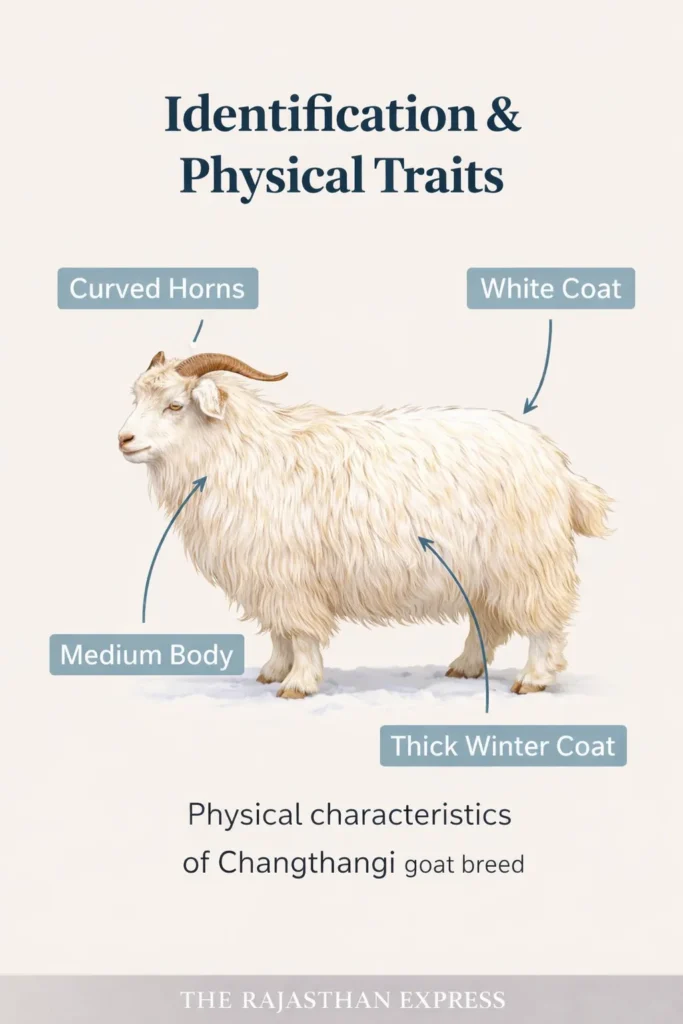
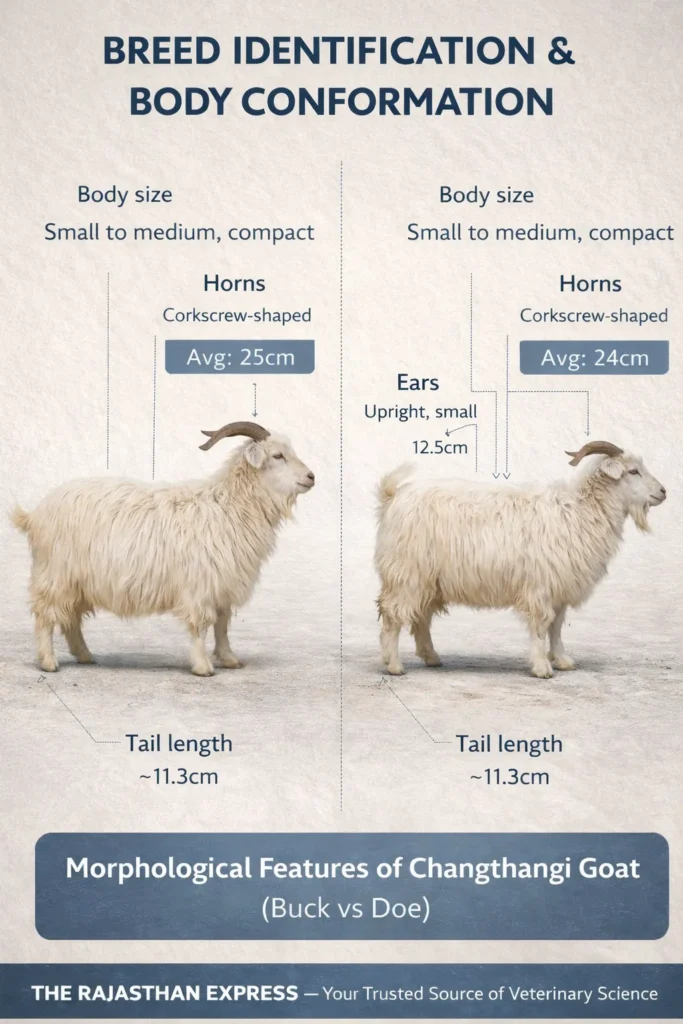
- The body of the Changthangi or Kashmiri goat is medium-sized, well-shaped, and strongly built.
Body Color (Kashmir Goat Name Colour Traits)
- Most goats of this breed are white in color. Apart from this, brown, red, fawn (light yellowish-brown), grey, and black goats are also found. Sometimes a combination of white–black or white–fawn color is also seen.
Hair Color and Coat Coverage (Relation to Changthangi Goat Price & Pashmina Quality)
- The market value of Pashmina fiber is greatly influenced by its color. In this context, the predominance of white coat color in the Changthangi goat breed is considered highly important.
- The price of Pashmina fiber is highly affected by its color. White Pashmina gets the highest price because it is rare and can be easily dyed without bleaching.
- All the Changthangi goats kept in the two government animal farms of Leh were found to be completely white. This shows that if breeding is done properly, the population of white-colored goats can be increased.
- If a well-planned breeding program is followed, then it is possible to maintain a population consisting mainly of white-colored animals in the region.
- However, colorful and spotted goats are still found in local herds, showing that genetic diversity regarding color still exists in this breed.
Head Structure
- Most goats have a slightly convex and long head. The face appears conical.
Ears
- The ears of the Changthangi goat are straight and short. The ears of male goats (12.50 cm) were found slightly longer than those of females (12.20 cm).
Horns (Key Identity Feature Affecting Kashmir Goat Price)
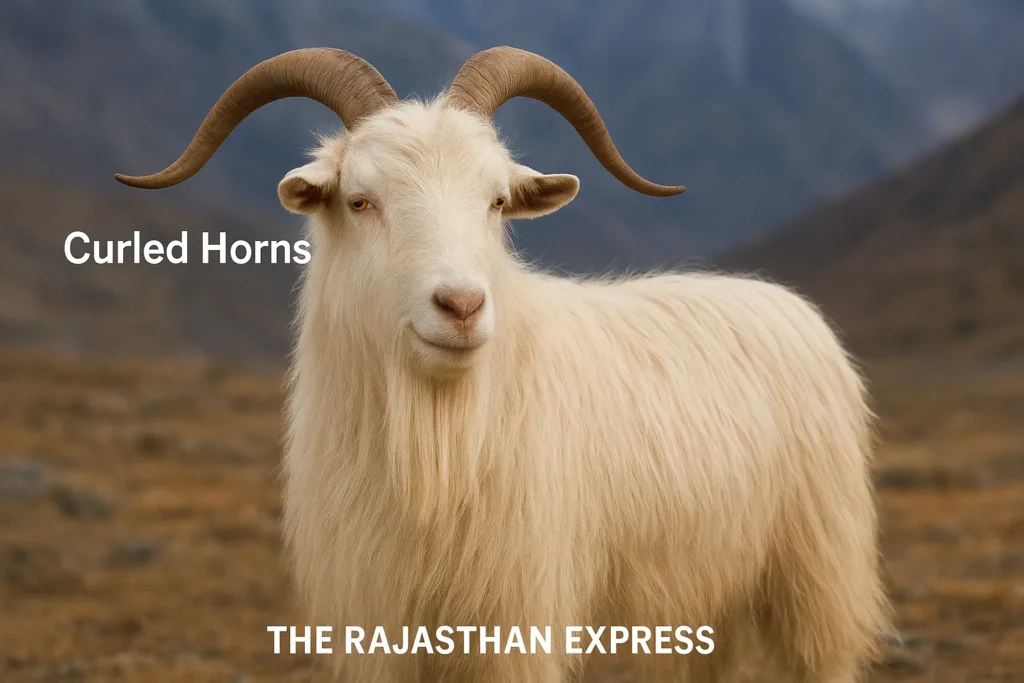
- All adult Changthangi goats have two horns. Polled (hornless) goats are not found here. Their horns are generally large and appear corkscrew-shaped, first bending outward, then rising upward, and then curving inward. This corkscrew shape is considered a special identifying feature of this breed.
- Previous studies have found that the hornless condition (polledness) in goats is considered harmful, as it is sometimes associated with intersex conditions.
- Most Changthangi goats have brown-colored horns, but some were also found with black and white horns.
- Based on horn shape, about 87.5% goats had curved horns, while about 12.5% had straight horns. Horns of males are generally slightly longer than females. The average horn length is about 25 cm in males and about 24 cm in females.
Tail
- The tail of this breed is usually small to medium-sized. About 4% goats had very small tails, while about 96% animals had medium-length tails.
- In all goats, the tail is thin and straight. The tail length of males and females is almost the same—about 11.33 cm in males and 11.25 cm in females.
Pashmina Production (Changthangi Goat Pashmina – Kashmir Goat Price in India Context)
The wool of the Changthangi goat is double-coated. One goat produces about 250 grams of Pashmina per year. Its length is about 4 centimeters and its thickness is only about 12 micrometers, which makes it extremely soft and fine.
The climate of the Changthang region is very cold—the temperature can range from –40°C to +40°C and rainfall is very low. In such harsh weather, Pashmina shawls are extremely useful for warmth.
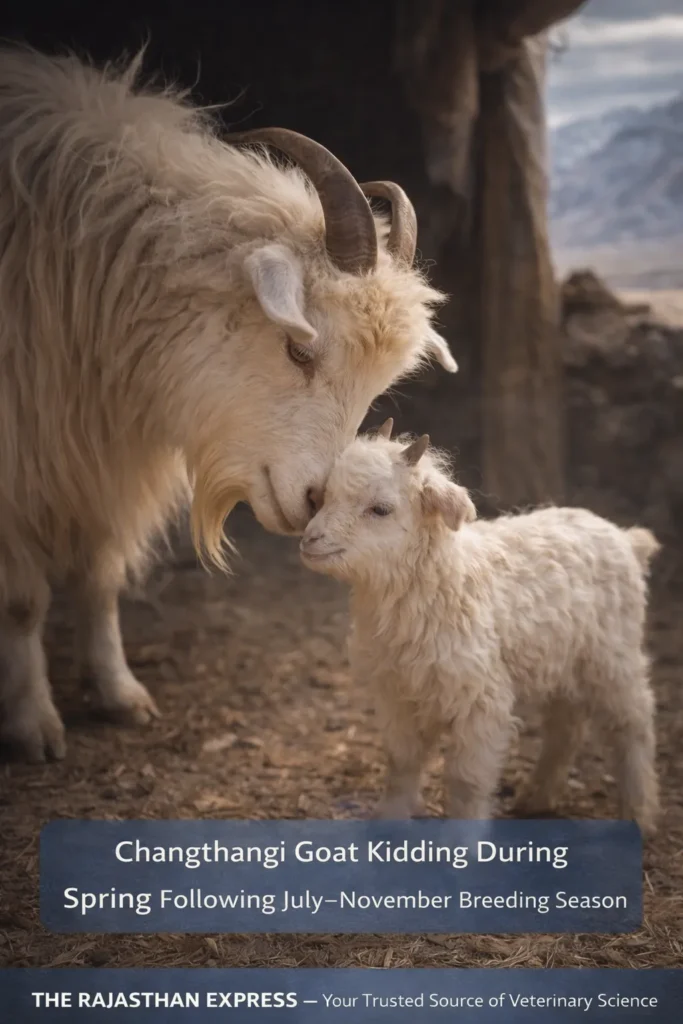
Breeding Season of Changthangi Goat
- In Kashmiri or Changthangi goats, the main breeding season remains between July and November.
Morphometric Measurements (Changthangi Goat Growth Pattern)
At birth:
- Male kids have greater body length
- Female kids have greater girth length and height at withers
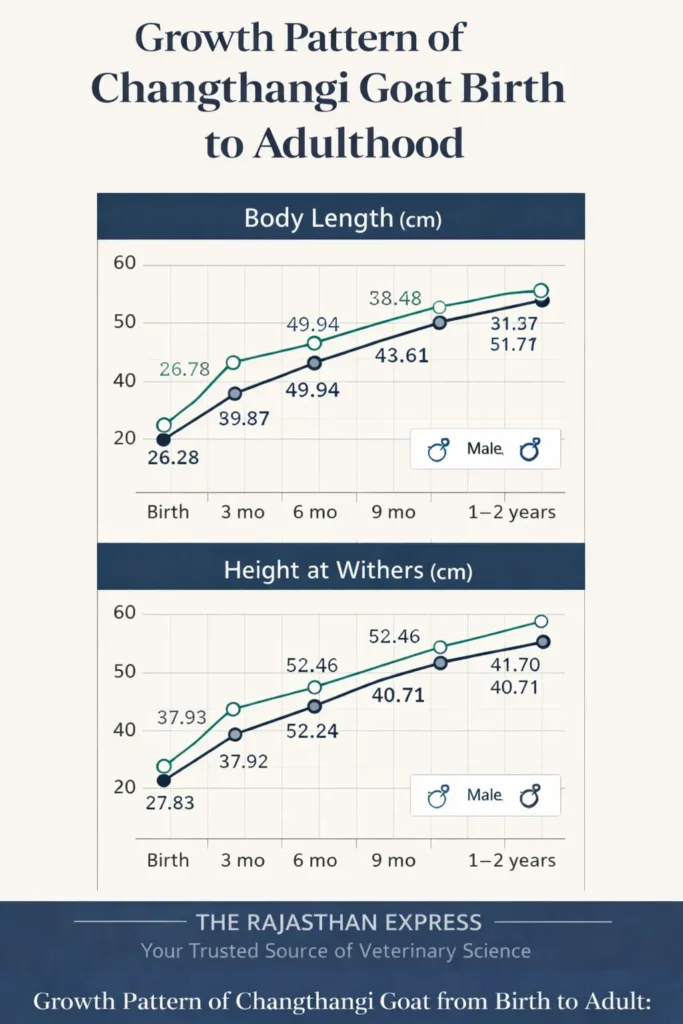
However, at the age of 3, 6, and 9 months, male goat kids surpass females in all three measurements—
body length, girth length, and height at withers.
At the age of 1–2 years, the situation changes slightly:
- Female goats were found to have more body length
Male goats had more girth length and height at withers
| Measurements of Changthangi Goat for Different Morphometric Traits | ||||||||||
| Traits | Birth Male (N=341) |
Birth Female (N=346) |
3 months Male (N=325) |
3 months Female (N=316) |
6 months Male (N=340) |
6 months Female (N=333) |
9 months Male (N=352) |
9 months Female (N=356) |
1–2 years Male (N=385) |
1–2 years Female (N=372) |
|---|---|---|---|---|---|---|---|---|---|---|
| Body length (cm) | 26.78 ± 1.02 | 26.28 ± 1.03 | 38.48 ± 0.67 | 37.97 ± 0.64 | 49.94 ± 1.10 | 49.87 ± 1.12 | 43.41 ± 0.70 | 41.61 ± 0.56 | 51.31 ± 0.68 | 51.77 ± 0.70 |
| Length at girth (cm) | 27.13 ± 0.90 | 27.23 ± 0.84 | 40.42 ± 0.65 | 40.41 ± 0.52 | 54.48 ± 1.09 | 53.40 ± 1.09 | 54.89 ± 0.67 | 52.06 ± 0.55 | 65.85 ± 0.50 | 64.71 ± 0.51 |
| Height at wither (cm) | 28.07 ± 0.69 | 28.32 ± 0.60 | 37.93 ± 0.57 | 37.92 ± 0.58 | 52.46 ± 1.07 | 52.24 ± 1.17 | 41.70 ± 0.41 | 40.71 ± 0.33 | 52.71 ± 0.42 | 51.99 ± 0.44 |
| The Rajasthan Express : Morphometric Measurements of Changthangi Goat | ||||||||||
Pashmina Production and Quality in Changthangi Goat (Cashmere Goat Breeds Excellence)
Changthangi goat is especially famous for its Pashmina wool. This wool is also known by names such as Kashmir wool, Pashm, Pashmina Tift, Tiftik, or Tibetan wool. Changthangi goat produces about 249 grams of Pashmina per year. It is considered one of the finest natural fibers in the world, with a thickness of only 8–15 microns. Due to such fineness, very high-quality, expensive, and soft woolen products are made from it. This fiber is non-medullated and has a slight crimp.
In comparison, based on weight, Pashmina wool is three times warmer than sheep wool. But because it is very fine, it is slightly weaker and absorbs rainwater quickly. In terms of strength, Pashmina is about 10% less strong than sheep wool, but about 40% stronger than Mohair obtained from Angora goats.
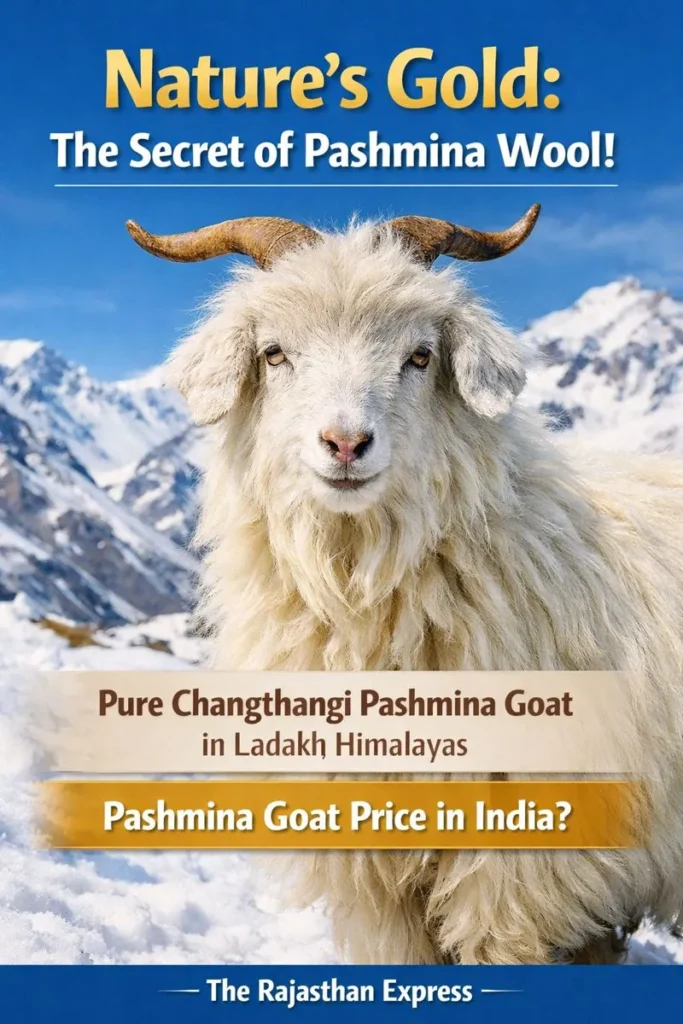
Types of Hair on Changthangi Goat
Changthangi goats have two types of hair:
- Guard Hair
- Pashmina Fibres
Guard hair is long and coarse, mostly found on the neck, upper body, and hind legs. Pashmina fibers are present all over the body but are highest under the belly. Pashmina fibers are formed from secondary follicles, whereas guard hair grows from primary follicles.
The natural process of Pashmina formation is considered to begin with the start of summer (around 21 June, the longest day of the year) and continues till the end of winter (21 December, the shortest day).
Thus, the body of the Changthangi goat naturally produces Pashmina according to the season, which is later collected by combing and converted into the world’s finest wool.
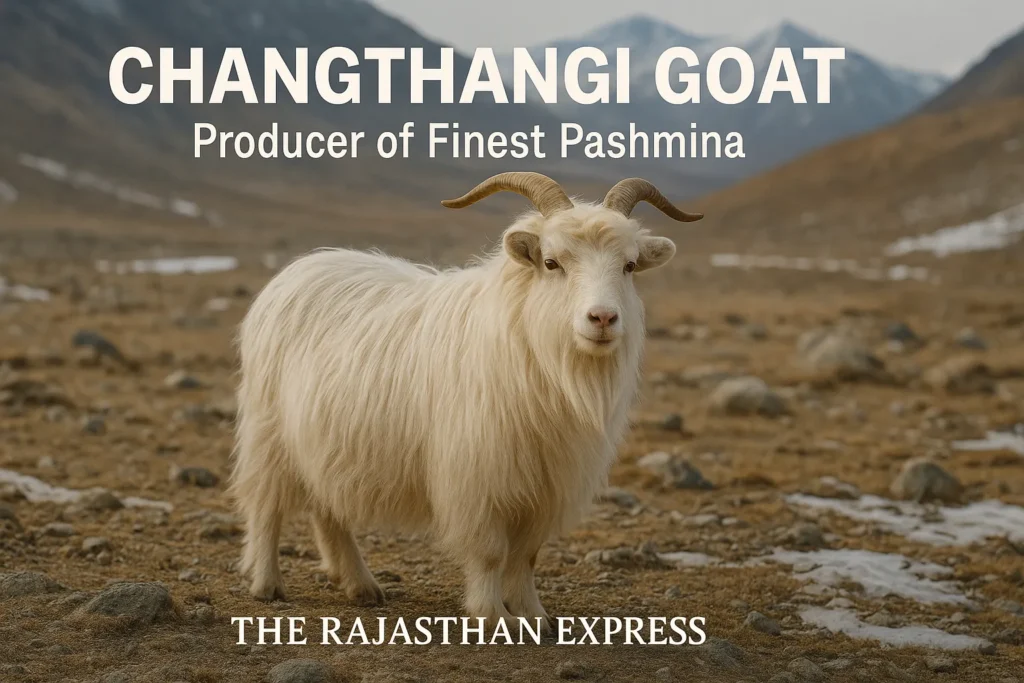
Studied Parameters of Pashmina Quality
Average results found:
- Fine hair percentage – 62%
- Guard hair – 32%
- Dust loss – 12%
- Fiber length – 4 cm
- Guard hair length – 57 mm
- Scouring yield – 70%
- Fiber diameter – 12 micrometers
How Pashmina is Collected from Changthangi Goat (Pashmina Goat Baby to Adult Fibre Cycle)
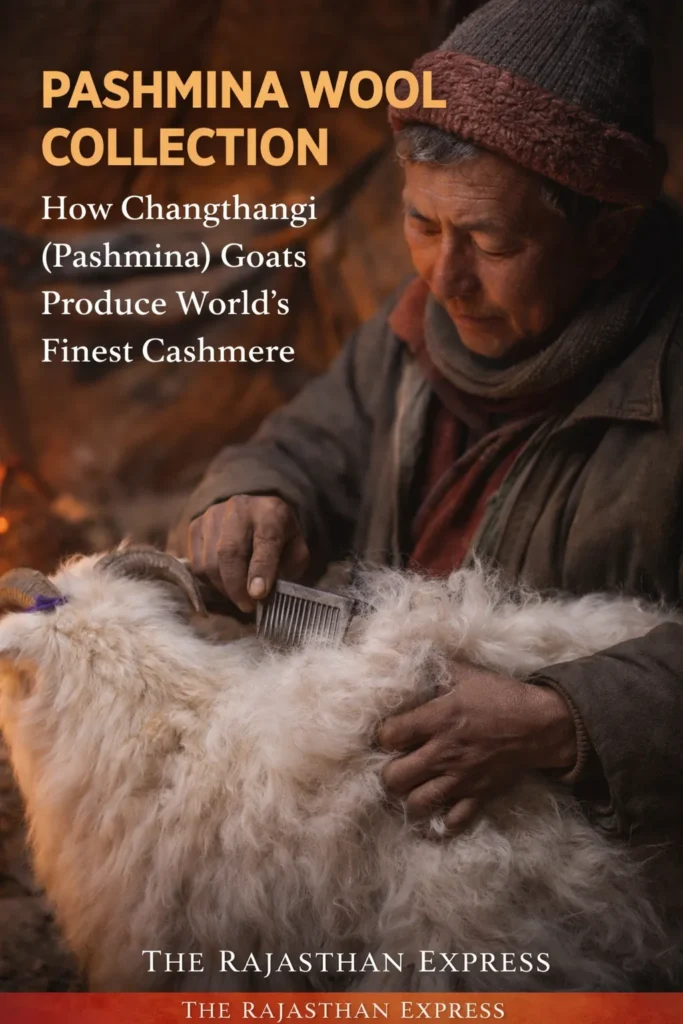
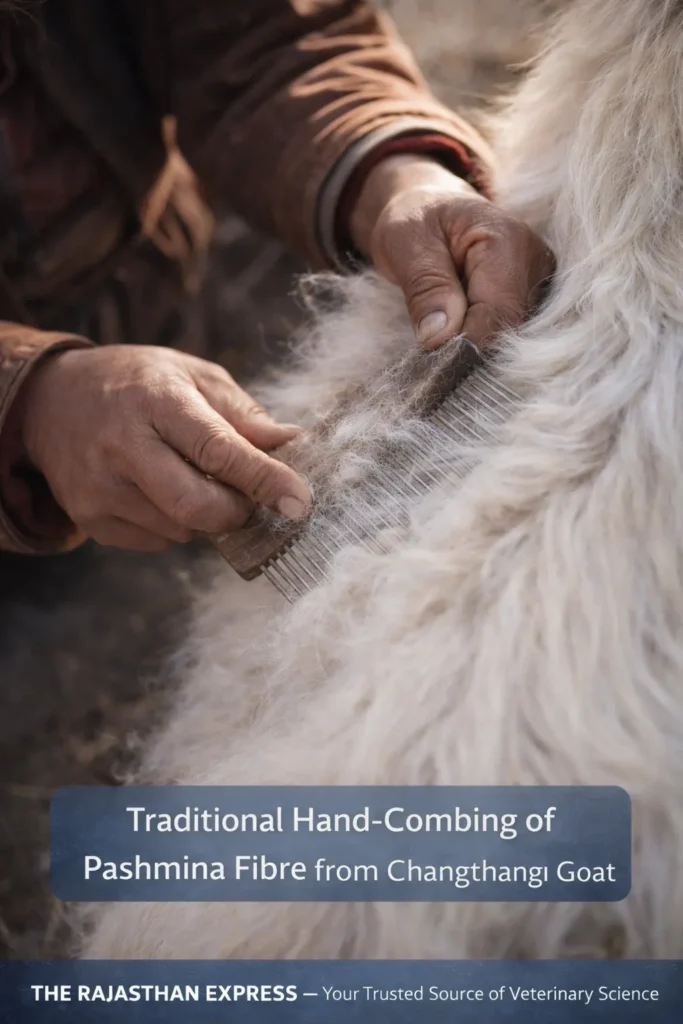
In the Changthang region, the temperature drops to –40°C. To survive such cold, a fine wool grows on Pashmina goats’ bodies which protects them. As soon as summer begins (in May–June), this wool naturally starts shedding. People collect this wool either by combing with special iron combs or by cutting with scissors.
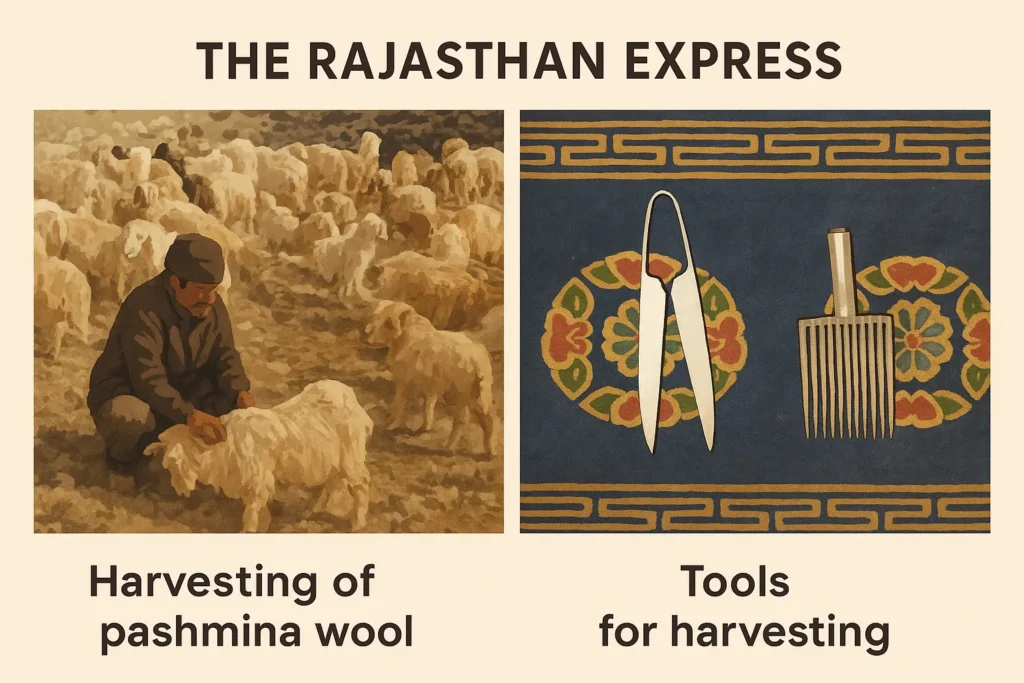
Pashmina is collected only once a year, at the end of spring, when it becomes loose from the skin but remains trapped under the outer coarse hair. It may take 2 to 7 days to collect all the Pashmina from one goat. During this process, the goat’s legs are tied with a rope and then combed. The shed Pashmina sticks in the comb teeth and is removed gradually. Some goats shed their wool in 2–3 combing sessions, while others require more.
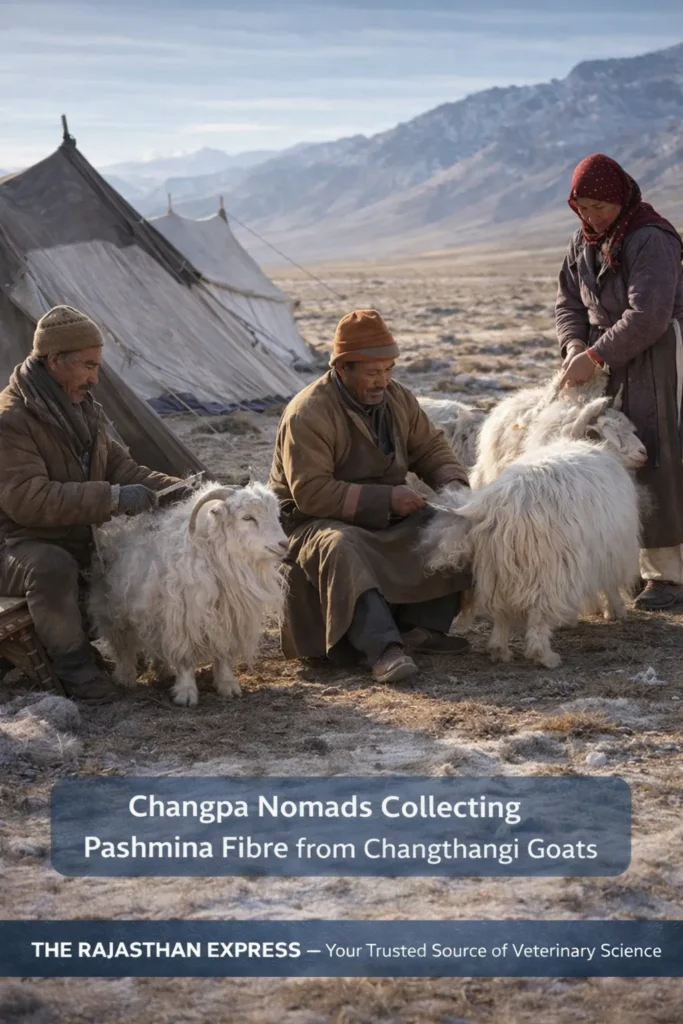
The wool collected by combing contains coarse hair, which is later separated to obtain clean Pashmina. This wool is sorted according to its color. Pashmina is collected for the first time when the goat is about one year old. In settled villages, wool is sometimes cut and then separated by hand.
Pashmina Quantity and Quality (Impact on Changthangi Goat Price & Kashmir Goat Price in India)
Quantity
- On average, one goat produces about 248 grams of Pashmina per year, but this can vary from 50 grams to 650 grams. Male goats produce more Pashmina than females, and its quantity increases with age.
Quality
- About 62% of the obtained wool is fine Pashmina, and about 32% is coarse hair.
- The average length of fine Pashmina fiber is 4 cm, and coarse hair length is about 5.7 cm.
- The fiber diameter of Pashmina is only 12 microns (much thinner than human hair).
- After washing, about 70% pure wool remains.
- The Pashmina fibers of male goats are finer than those of female goats. Also, the thickness of fibers varies according to the age of the goats.
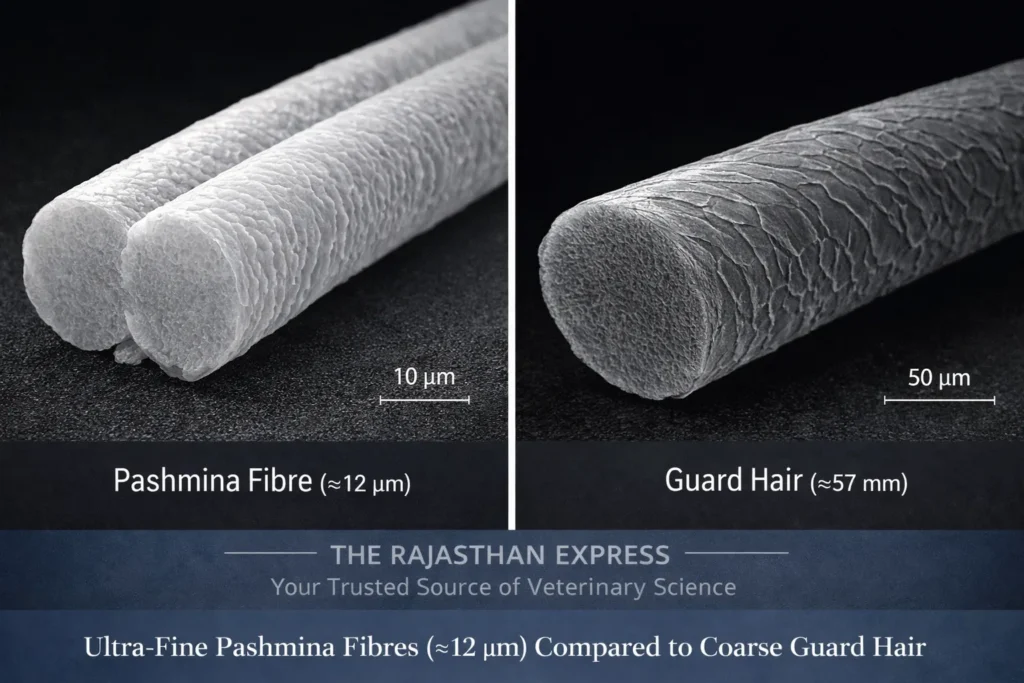
Changthangi Goat Pashmina: The Genetic Reason Behind the World’s Finest Wool
The Changthangi goat is a unique goat breed found in the extremely cold and high-altitude mountainous regions of Ladakh. This goat produces the world’s finest, warmest, and most expensive natural wool — Pashmina. Due to its unmatched softness and warmth, Pashmina is often called “nature’s gold.” This wool is used to make the famous Kashmiri shawls. For this reason, the Changthangi goat is also known as the Pashmina goat or Cashmere goat.
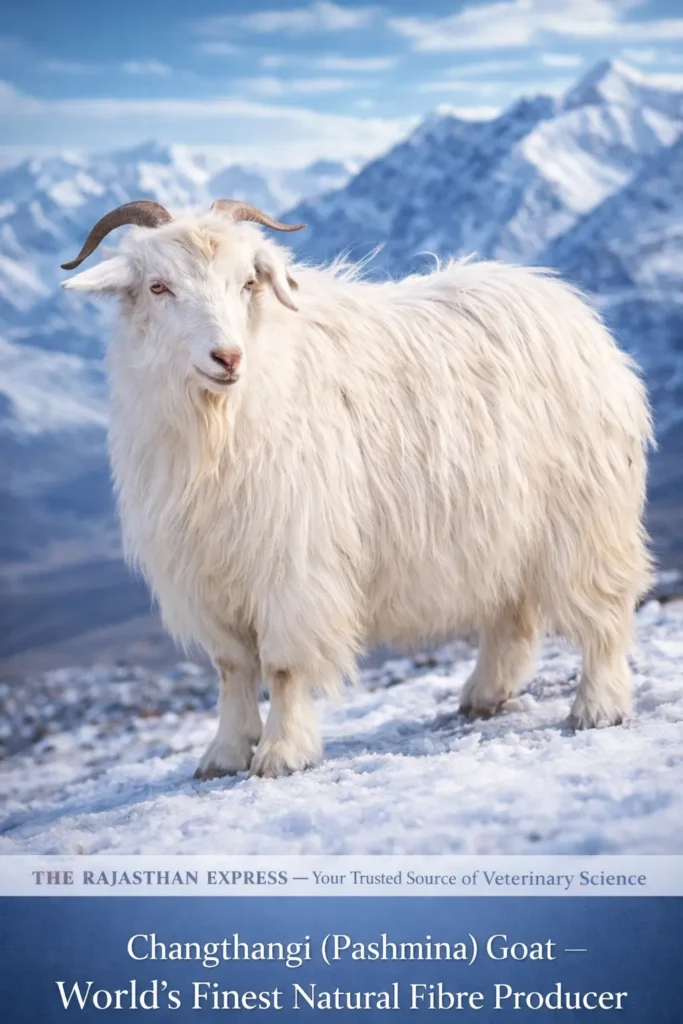
This wool is about eight times warmer than regular wool and eight times thinner than human hair. Its thickness is only 12–16 micrometers, making it extremely soft and highly useful in cold climates.
For many years, it remained a mystery to scientists how the Changthangi goat produces such fine and superior wool. Modern genetic research has now clearly shown that the main reason lies in the special structure of the hair follicles in their skin and the presence of specific genes.
Research Objective
The main objective of this research was to understand why the Changthangi goat produces such high-quality and fine Pashmina. Scientists wanted to know whether any special genetic reasons or unique genes were responsible for this.
For this purpose, researchers compared the genome of the Changthangi goat with that of the Jamunapari goat found in lower and warmer regions. The aim was to identify which genes make the Changthangi goat adapted to high altitude, cold climate, and superior wool production.
Research Methodology
To understand the genes of the Changthangi goat, scientists used advanced genomic techniques and computer-based bioinformatics tools. These mainly included analytical methods such as Tajima’s D, FST, and XP-EHH.
With the help of these methods, scientists were able to identify which parts of the Changthangi goat genome were affected by natural selection and how they changed over time.
These analyses revealed several genomic regions linked to wool fineness, softness, and warmth. In this way, the study provided clear scientific evidence that the excellent quality of Changthangi goat wool is due to its unique genes.
Research Findings and Key Highlights
The study found that:
- 2,113 genes in the Changthangi goat genome have changed due to natural selection within this breed.
- 839 genes showed clear genetic divergence between Changthangi and Jamunapari goats.
Many of these genes play important roles in determining the quality of Pashmina wool. They can be classified into four main groups:
1. Genes Related to Hair Follicle Development
- These are called “master switch genes” because they control when and how the wool production process begins. Major genes include HOXC13, FOXN1, LEF1, BMP2, and SMAD3.
- These genes regulate the structure, number, and activity of hair follicles, thereby determining wool quality.
2. Genes Related to Wool Structure Formation
- Wool is mainly made of keratin and related proteins called KRTAP (Keratin-Associated Proteins). The KRT and KRTAP genes provide the “building blocks” of wool — such as fineness, elasticity, and strength. Special forms of these genes in the Changthangi goat are what make Pashmina so soft and warm.
3. Genes Related to Tissue Structure and Cellular Strength
- Genes such as COL1A2 and ITGA4 keep the skin and surrounding tissues strong and stable.
- Because of these, hair follicles remain healthy and produce high-quality wool.
4. Genes Related to Metabolic Processes
- Genes such as ADCY4 and RPS6KB1 regulate energy production and utilization in the body. Wool formation requires a lot of energy — these genes provide the necessary energy and resources.
Functional Pathways of Genes
The study found that certain biochemical signaling pathways are highly active in the Changthangi goat. These mainly include:
- Wnt Pathway
- BMP/TGF-β Pathway
- Hedgehog Pathway
- PI3K-Akt Pathway
All these pathways build hair follicles and control wool growth. In simple terms, these are the gene pathways that “speed up” the wool production process, and in Changthangi goats, they were found to be more active than in other breeds.
In addition, researchers identified certain important “hub genes” that regulate many other genes:
- FGF5
- SMAD7
- COL1A2
These genes manage multiple processes related to wool quality, fineness, and growth — acting like “master controllers.”
Balance of Physiological Signaling Pathways
Wool growth depends on many internal signals. This research revealed that Changthangi goats maintain a very fine and precise balance between stimulating (Go) and inhibiting (Stop) signals. This means that although genes exist in all goats, gene expression levels in Changthangi goats were observed to be higher compared to other breeds.
1. Stimulating (Go) Signals
These pathways promote wool growth:
- Wnt
- BMP/TGF-β
- Hedgehog
- PI3K-Akt
Their activity was very high in Changthangi goats, which is why their wool grows faster and with superior quality.
2. Inhibitory (Stop) Signals
- Oncostatin M signaling
This signal slows down wool production in other goat breeds, but in Changthangi goats, it was found to be much less active. As a result, their wool continues to grow steadily without interruption.
Gene Expression and Cellular Activity
The mere presence of genes in the body is not enough — they must also be activated at the right time and in the right amounts. When scientists performed transcriptome analysis of Changthangi goat skin, they found that wool-related genes — especially KRT and KRTAP — were far more active than in other goat breeds.
This means that the skin cells of Changthangi goats produce wool more rapidly and efficiently, whereas in other breeds, these same genes are not as active.
The study also identified important hub genes such as FGF5, SMAD7, and COL1A2. These genes act as central controllers of the wool production process, activating or regulating many other genes, thereby affecting both wool structure and quality.
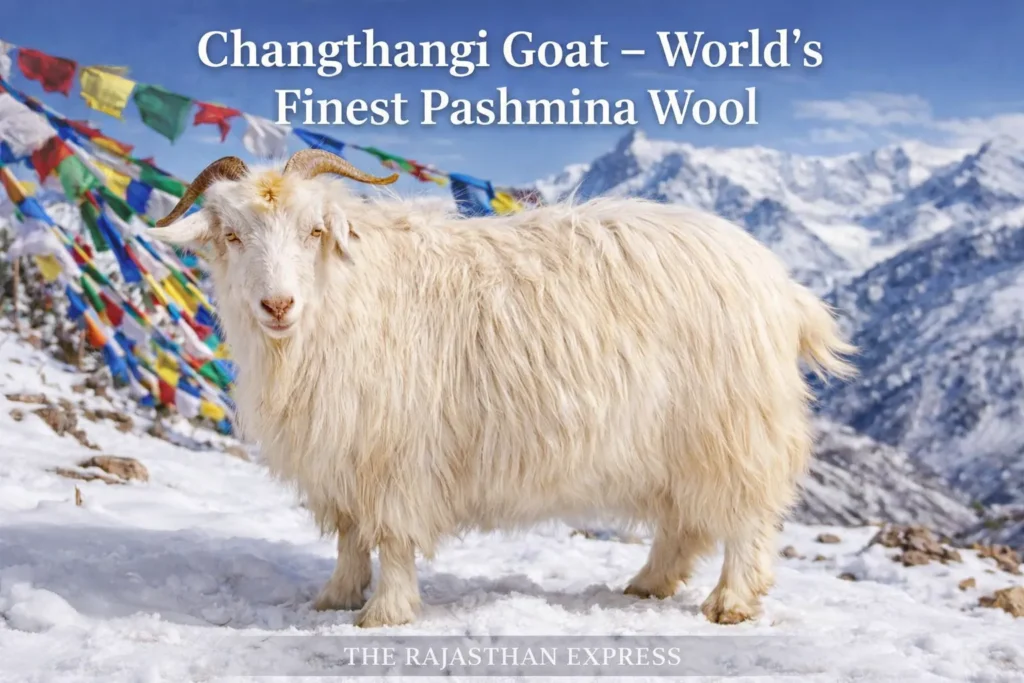
Practical Benefits of the Research
This research clearly explains for the first time which specific genetic factors are responsible for the high quality of Pashmina wool. It provides a new biological and genetic understanding of Changthangi goat wool production. In the future, this information can be used to increase productivity and make the Pashmina industry more sustainable.
One major benefit of this study is that scientists can now use DNA testing to quickly and accurately identify goats capable of producing high-quality Pashmina. This type of selection is called marker-assisted breeding. This method is faster and more effective than traditional selection, increasing breeding efficiency and maintaining consistent wool quality.
In 2012, Indian scientists created the world’s first cloned Pashmina goat named “Noori.” This achievement shows that advanced breeding techniques can increase the number of goats with superior genetic traits. Cloning allows the production of exact copies of exceptional animals so that high-quality Pashmina can be obtained in larger quantities.
Today, climate change has become a major challenge for the Changthangi breed. Rising temperatures and changing weather patterns are reducing both the quality and quantity of wool. At such a time, the genetic knowledge gained from this study can support breed conservation, better resource management, and sustainable production. This information can prove extremely valuable for protecting the Changthangi goat and developing the Pashmina industry in the future.
This scientific discovery clearly shows that the secret behind the extremely fine and valuable Pashmina wool of the Changthangi goat lies in its unique genetic structure. With this knowledge, selecting and breeding goats capable of producing high-quality Pashmina will become even easier.
Research Source
Source: https://pubmed.ncbi.nlm.nih.gov/40815313/
Title: Genome-wide selective sweep analysis in high-altitude Changthangi goats reveals candidate genes for pashmina fiber production
Authors: Ram Parsad, Sonika Ahlawat, Mahanthi Vasu, Pooja Chhabra, Upasna Sharma, Reena Arora, Rekha Sharma
Changthangi Goat Growth Rate, Milk Production, Meat Yield, Feeding, and Housing Management
Growth Rate in Changthangi Goats
At birth, female kids are slightly heavier than male kids. However, after some time, the growth rate of male kids becomes faster, and by 3 months of age, they become heavier than female kids. At 6 months of age, no significant difference in body weight is observed between males and females. Between 9 and 12 months, weight gain slows down, although this period is generally considered a phase of rapid growth. This happens because during this age, the weather is extremely cold and grazing availability is very limited. Overall, in terms of body weight, male goats are found to be equal to or sometimes better than females.
| Body Weight (kg) of Changthangi Goat of Different Sexes and Ages | ||||
| Age | Male (N) | Male Mean ± SE | Female (N) | Female Mean ± SE |
|---|---|---|---|---|
| Birth | 341 | 1.47 ± 0.08 | 346 | 1.54 ± 0.07 |
| 3 months | 325 | 7.89 ± 0.28 | 316 | 7.45 ± 0.18 |
| 6 months | 340 | 14.45 ± 0.38 | 333 | 14.45 ± 0.37 |
| 9 months | 352 | 15.94 ± 0.20 | 356 | 13.40 ± 0.17 |
| 1–2 years | 385 | 16.67 ± 0.17 | 372 | 16.12 ± 0.17 |
| N = Sample size — meaning how many kids’ data were taken in that age group. | ||||
Milk Production in Changthangi Goat
The milk of the Changthangi goat is mainly consumed by its kids. Whatever small amount remains is used at home. The Changthangi goat produces about 273 milliliters of milk per day, which may range between 170 and 500 milliliters per day. The Changthangi goat gives birth for the first time at around two and a half years (27.4 months) of age. After one kidding, the next kidding occurs at an interval of about 13 months.
Between February and April, milk is generally not extracted from female goats because the weather is extremely cold and dry, and grazing availability is very limited. Due to inadequate nutrition, all the milk is allowed to be consumed by the kids so that their health and survival remain protected.
From May to September, when sufficient green fodder is available in pastures, a small quantity of milk is extracted from female goats for household use.
Meat Production in Changthangi Goat
When goats are reared for meat, they are generally slaughtered at 20 to 60 months of age.
Male goats are slaughtered earlier, usually between 20–32 months, whereas female goats are kept longer and slaughtered at around 32–60 months of age.
Male goats are generally heavier than females, so the total meat yield from them is higher. However, the dressing percentage — that is, the proportion of live weight converted into clean carcass — is found to be almost the same in both males and females.
| Meat Production in Changthangi Goats | ||||||
| Sex (Number) | Weight at Slaughter (kg) | Carcass Weight (kg) | Dressing Percentage (%) | Skin Weight (Dry) (kg) | Skin Length (cm) | Skin Width (cm) |
|---|---|---|---|---|---|---|
| Male (62) | 35.85 ± 0.56 | 15.27 ± 0.31 | 42.65 ± 0.54 | 2.95 ± 0.14 | 101.48 ± 2.40 | 56.98 ± 1.41 |
| Female (87) | 27.67 ± 0.34 | 11.75 ± 0.21 | 42.66 ± 0.64 | 2.22 ± 0.09 | 93.12 ± 1.35 | 52.59 ± 1.25 |
| Total (149) | 31.04 ± 0.45 | 13.22 ± 0.23 | 42.66 ± 0.43 | 2.52 ± 0.08 | 96.75 ± 1.34 | 54.43 ± 0.95 |
| The Rajasthan Express : Meat Production Performance of Changthangi Goats | ||||||
Meaning of Terms
- Carcass weight: The weight of the remaining meat and bones after slaughter and skin removal.
- Dressing percentage: The percentage of slaughter weight that is obtained as carcass meat. It indicates how “meaty” the animal is.
Generally, the dressing percentage in goats is considered 49%, in sheep 50%, and the highest dressing percentage is in pigs at 72%.
Feeding Management of Changthangi Goat
Changthangi goats are grazed on natural pastures throughout the day during summer. These goats graze in open fields from morning till evening. Whatever natural grasses grow in this region are fully grazed by the animals. Fodder grown in lower regions is not fed to them. In summer, when snow melts, nutrient-rich clover grows in the pastures. In winter, conditions change — goats feed on dry surface grasses, herbs growing beneath sand, and small shrubs, which they uncover by scraping the soil with their hooves.
Only during heavy snowfall, when all grasses are buried under snow, are goats fed barley, grain-based concentrate feed, and dry fodder. This concentrate feed is provided at subsidized rates by the Sheep Husbandry Department. Since fodder and nutrition availability in this entire region is limited, pasture conservation and improvement are extremely important for livestock here.
Vegetation and Pasture Resources
Vegetation in the Changthang region is sparse and scattered. Due to the harsh climate and low rainfall, plant growth remains limited. The vegetation here mainly falls into three categories:
- Cushion plants
- Dwarf plants
- Woody plants
Only 5–6 types of grasses growing along riverbanks and marshy areas form the main fodder source for animals. In dry areas, goats also eat the roots of certain shrubs, which provide additional nutrition.
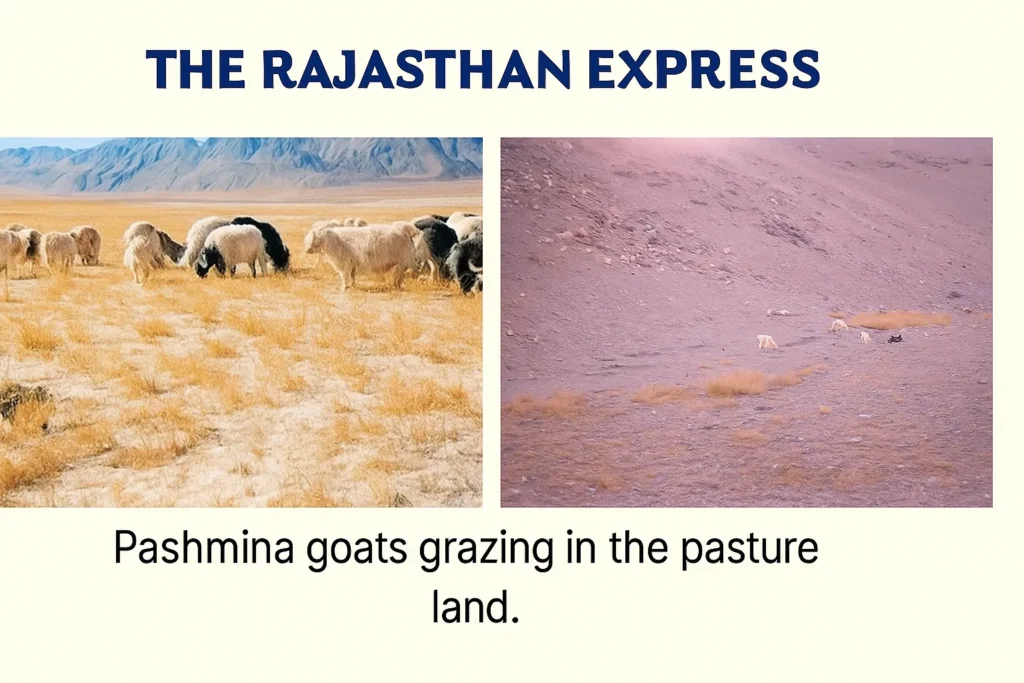
Pastures here extend up to an altitude of about 5,000 meters. These pastures mainly contain different grasses, legumes, and shrubs. Plants such as Poa pratensis, wild clover, Loma, and Kibu are commonly found here.
1. Grasses
Poa pratensis, Festuca rubra, Bromus macrostachys, Elymus sibiricus, Agropyron lange-aristatum, wild clover, Loma, Panga, Nargyal (Astragalus sp.), Kibu, etc.
2. Leguminous Plants
Astragalus tribulifolius, Oxytropis microphylla, Cicer microphyllum.
3. Shrubs and Woody Plants
Caragana versicolor, Myricaria germanica, Myricaria prostrata.
The growth of these plants occurs during the short summer season when snow melts at high altitudes, and this vegetation remains the main food source for animals throughout the year.
Local people know fodder shrubs by many names such as Selvyoah, Troiya, Somoede, Burwak, Yakis, Tsiri, Shaya, and Loma. Dry fodder is mainly prepared from grasses grown in wild pastures and barley straw. Barley is the only cash crop of this region and is fed to animals only during severe winters.
In winter, when grass is not available, goats are given 1.0–1.5 kg of dry fodder per day. During extreme cold, they are also given 200–400 grams of concentrate feed to meet their energy requirements. Goat kids drink only their mother’s milk during the first two weeks of life. After that, they begin going out with the rest of the herd and start nibbling tender grass leaves and small twigs. Kids are not raised separately here, so no milk replacer is used.
In summer, water in pastures comes from melting snow and glaciers. In winter, when all water freezes, natural springs remain the main water source. Where springs are not available, goats quench their thirst by eating snow or ice.
Soil and water testing has revealed deficiencies of iodine and zinc in this region, while sulfur levels are slightly high. The good news is that no harmful minerals have been found in excessive amounts.
Housing Management of Changthangi Goats
At night, Changthangi goats are kept in special types of open enclosures. The walls of these enclosures are built with stones and arranged in such a way that air can easily move in and out. In some places, these enclosures are also made using dry shrubs and their strong roots. These enclosures usually do not have roofs.
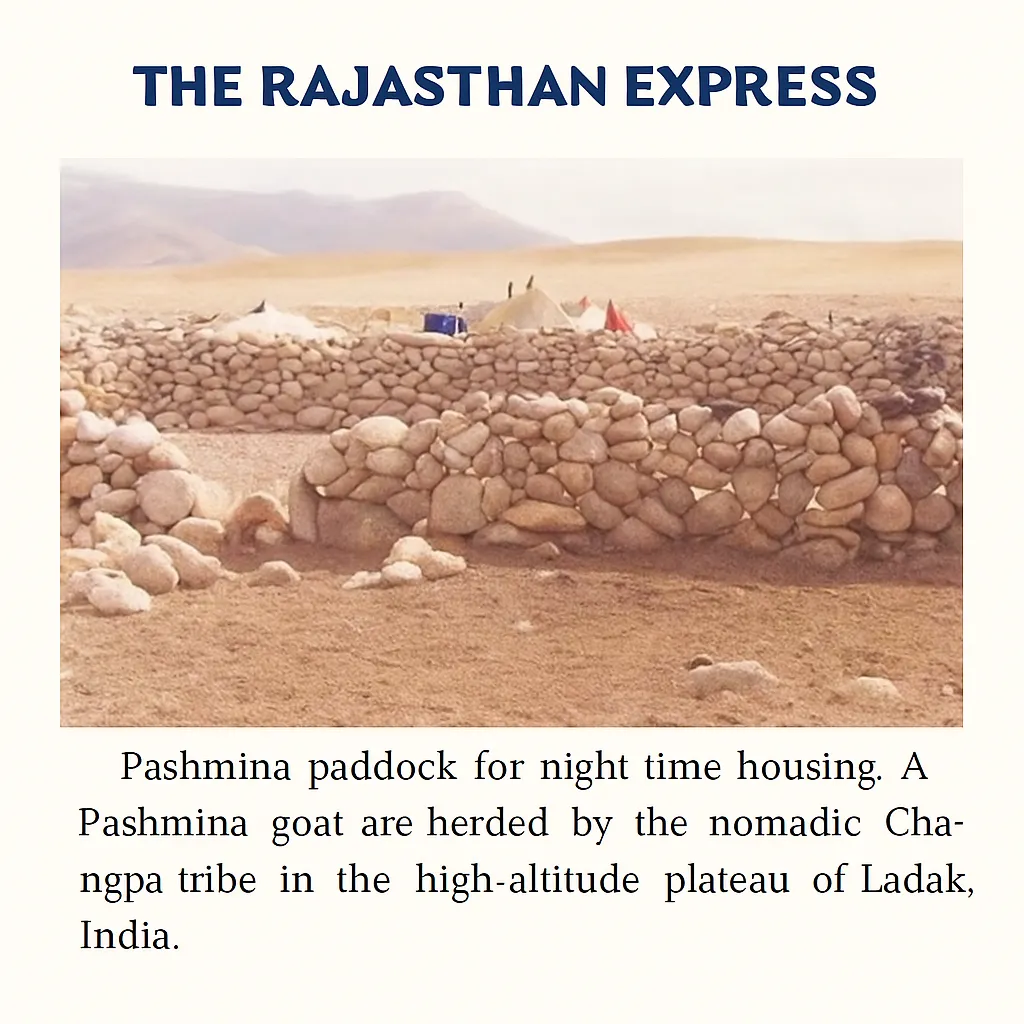
Herders release goats into pastures early every morning and bring them back to enclosures in the evening. Permanent animal sheds are not used in this region; animals live under the open sky in every season.
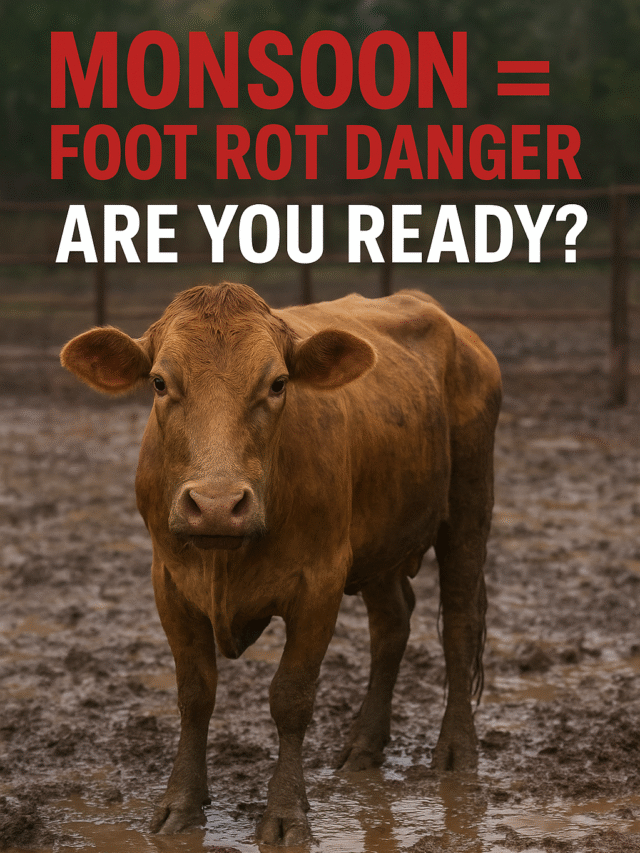
The floor of the enclosures is covered with a 3–4 inch thick layer of sand and soil. Due to the extremely dry climate of Changthang, there is no risk of water stagnation or mud formation. Therefore, no special drainage system is required. Also, since there is no mud on the floor, the risk of foot rot disease remains low, as this disease mainly affects animals living in muddy and marshy conditions.
Seasonal Management
- Housing management changes according to seasons. In winter, a 9 m × 9 m enclosure is sufficient for about 300 goats. But in summer, only about 200 goats are kept in the same space because animals need more open space during warm nights.
Community Living
- Animals of all ages — kids, adults, and old goats — live together in the same enclosure. Sometimes, goats are also commonly kept together with sheep.
Special Arrangements in Winter
- Rongpa communities that are permanently settled build temporary mud shelters for goats during extremely cold days. These protect animals from strong winds and cold.
Kidding Arrangements
- No separate room or space is created for Changthangi goats to give birth. Female goats deliver kids in the open enclosure itself, and newborns remain there. Females are sent back to pasture only 2–3 days after kidding so that they can resume their normal routine.
Special Care of Newborn Kids
- High-altitude areas experience strong and cold winds, so newborn kids are kept in special pits for the first few days. Old cloth or fibrous material is spread at the bottom of these pits to retain warmth. Kids are taken out only during feeding times so that they remain protected from cold winds.
Care of Sick Animals
- Sick kids are also kept in these protected pits. Sick adult animals are kept inside the tents (Rebo tents) of Changpa families for care. This makes monitoring and treatment easier.
Changthangi Goat Diseases, Mortality Rate, and Population Status
Presence of Diseases in Changthangi Goats
Changthangi goats are generally known for their strong disease resistance. Because of this, illnesses are seen less frequently in this breed.
The main diseases are as follows:
1. Bacterial Diseases
- Enteritis/Diarrhea
- Clostridial diseases: These include fatal diseases such as Enterotoxemia and Black Quarter
- Brucellosis: Occasional cases are reported
2. Viral Diseases
- Foot and Mouth Disease (FMD)
- Contagious Ecthyma (Orf)
- Goat Pox
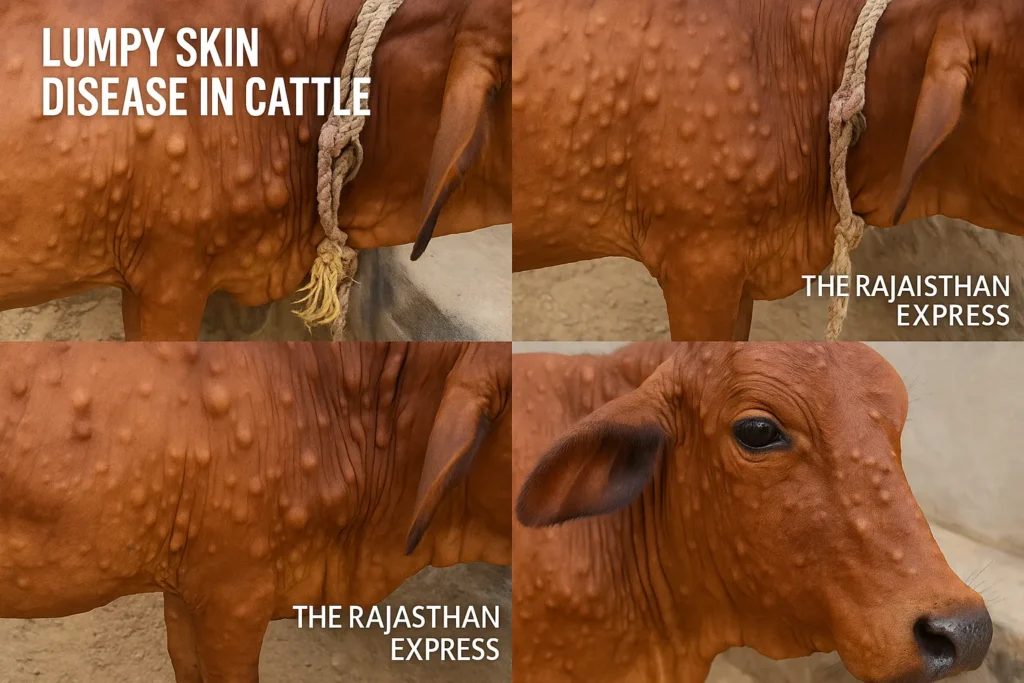
- Lumpy Skin Disease
- Contagious Caprine Pleuropneumonia (CCPP)
3. Parasitic Diseases
- Coccidiosis: Caused by the parasite Eimeria
- Tapeworm: Due to Moniezia
- Roundworms: Such as Nematodirus and Haemonchus
Preventive Measures
To protect these goats from diseases, the following measures are adopted:
- Vaccination: They are regularly vaccinated against Foot and Mouth Disease (FMD), Goat Pox, and Clostridial diseases (such as enterotoxemia). For clostridial diseases, a polyvalent clostridial vaccine is generally administered.
- Deworming: Animals are regularly dewormed based on season and parasite load.
- Medicated Bath: Collective medicated baths are given to control external parasites (ectoparasites) such as mange, lice, ticks, and flies.
Read More About : Vaccination Schedule for Sheep and Goats
Mortality Rate and Major Causes
In Pashmina (Changthangi) goat kids, mortality decreases with increasing age. According to one study, mortality in the 1–2 month age group was 28.34%, which declined to only 2.17% in the 9–12 month age group. Overall, 54.30% of kids die from birth until one year of age.
The major causes of kid mortality are:
- Respiratory diseases
- Nutritional deficiencies
- Predator attacks
- Severe cold and adverse climatic conditions
In adult animals, mortality also decreases with age. For example, in the 1–2 year age group, mortality was 11.73%, while in animals older than 4 years, it further declined to 5.79%.
Changthangi Goat Population Status
In the Changthang region, the Changpa community keeps sheep and goats together in mixed herds. These herds mostly consist of Changthangi goats.
In 2003, the University of Kashmir conducted a population study of these goats. The study examined age structure and the male–female ratio.It was found that compared to other breeds, Changthangi goat herds have a higher number of male goats (bucks). One main reason is that castrated male goats, locally called “Rangu,” are used for carrying loads in pastures. At the same time, they also produce high-quality Pashmina wool.
| Estimated Population of Changthangi Goats (2003) | |||
| Age Group | Male | Female | Total |
|---|---|---|---|
| Kids (0–6 months) | 24,672 | 24,468 | 49,140 |
| Young stock (6–12 months) | 17,271 | 17,127 | 34,398 |
| Adults (1 year and above) | 18,575 | 56,378 | 74,953 |
| Total | 60,518 | 97,973 | 158,491 |
| The Rajasthan Express : Population Statistics of Changthangi Goats (2003) | |||
- According to later data, the Breed Survey 2013 conducted by the Department of Animal Husbandry, Dairying and Fisheries, Government of India, estimated the total population of Changthangi goats at 196,210.
Discover the Changthangi goat (Pashmina Goat / Cashmere goat
THE RAJASTHAN EXPRESS
) of Ladakh—the source of the world’s finest Pashmina wool. Complete guide with breed characteristics, production data, genetic secrets, and conservation status. 🇮🇳🐐 #Pashmina #Changthangi #Ladakh


