 By
ByUterine Prolapse in Cattle: Causes, Types, and Understanding Prolapse in Cows and Buffaloes
What is Uterine Prolapse in Cattle?
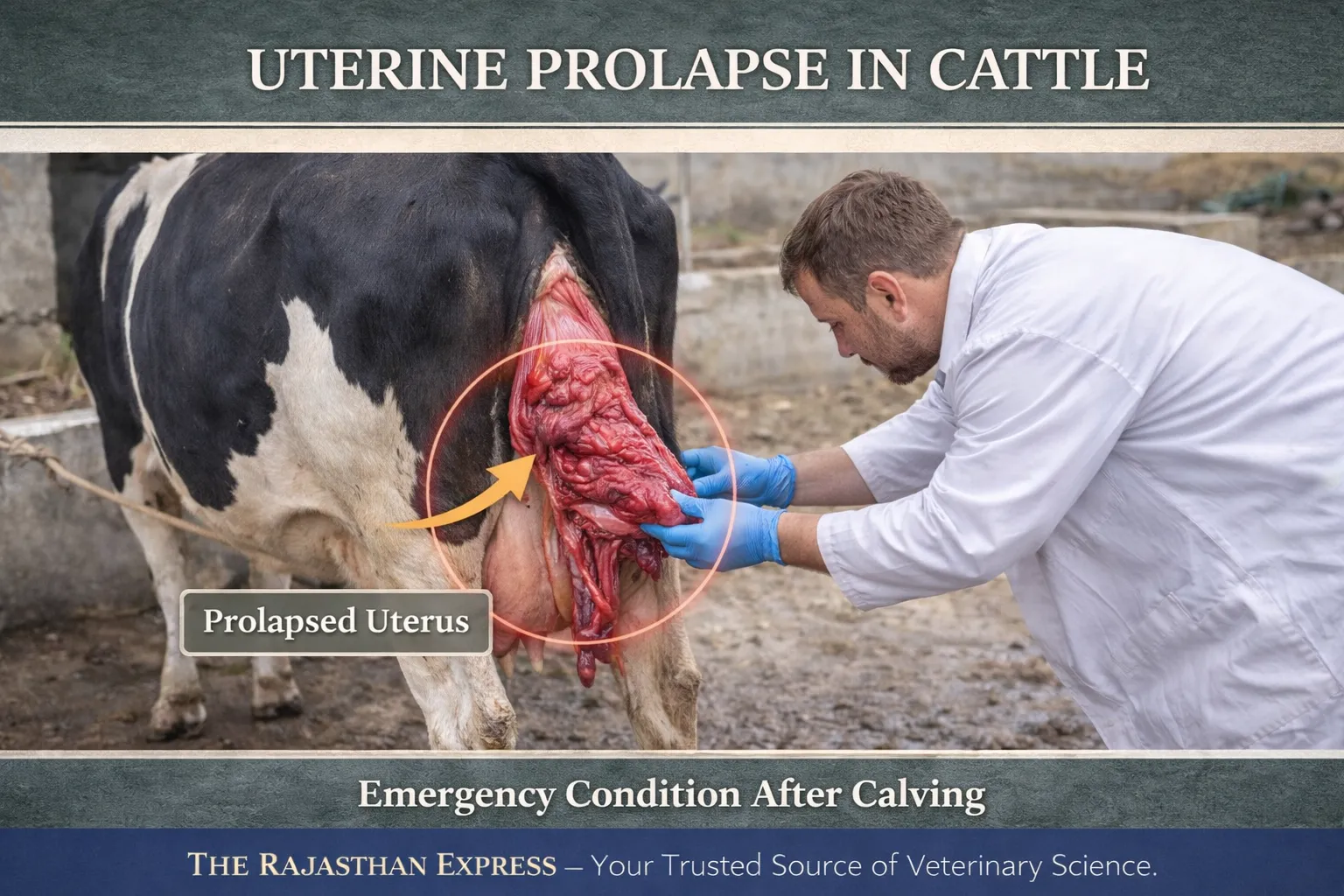
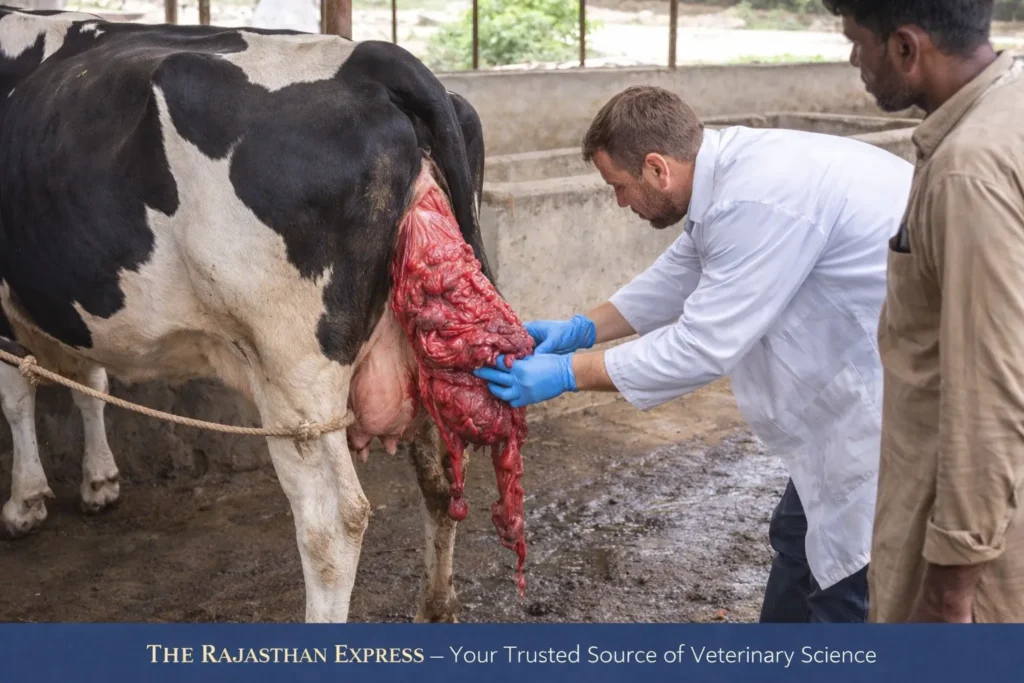
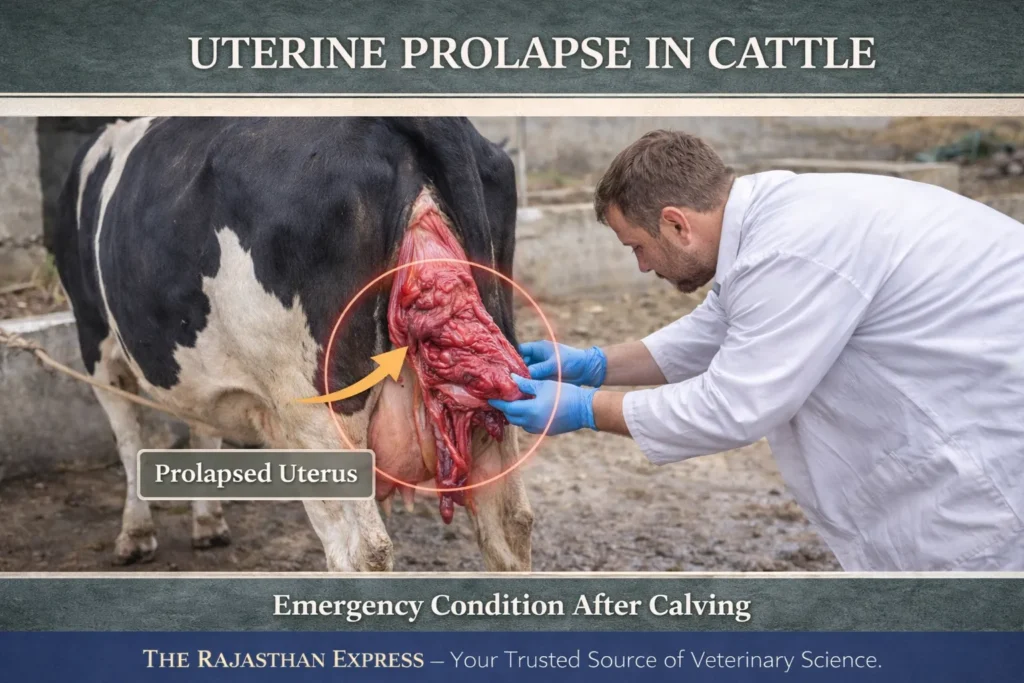
- Uterine prolapse in cattle occurs when the uterus comes out of the body either before or after calving. This condition is known as uterus prolapse in cattle or uterine prolapse.
- In English, it is also referred to as “Casting of Withers” or “Casting of Calf Bed.”
Predisposing Factors of Uterine Prolapse in Cattle
- One of the main factors responsible for uterine prolapse in cattle is the imbalance of calcium and phosphorus in the body.
- In some animals, this problem may also be hereditary. Animals that have previously experienced vaginal prolapse in cattle or those in the last stage of pregnancy are more likely to develop this condition.
Uterine Prolapse in Cattle – Causes, Types, Symptoms & Treatment in Cows and Buffaloes
| Medical Condition |
Uterine Prolapse in Cattle Uterus Prolapse in Cow & Buffalo |
|---|---|
| Common Veterinary Keywords | uterine prolapse in cattle • prolapse in cattle treatment • prolapse in cattle • types of prolapse in cattle • vaginal prolapse in cattle • cervical prolapse in cattle • causes of uterine prolapse in cattle • uterus prolapse in cattle • treatment for uterine prolapse in cattle • uterine prolapse in cattle pdf • rectal prolapse in cattle • how to treat rectal prolapse in cattle • treatment of prolapse in cattle |
| Definition |
Uterine prolapse in cattle is a serious reproductive emergency in which the uterus turns inside out and protrudes through the vulva either immediately after calving or rarely before calving. This condition is also called Uterus Prolapse in Cattle, “Casting of Withers,” or “Casting of Calf Bed.” |
| Species Affected |
• Cow • Buffalo • Sheep • Goat • Occasionally dogs and other mammals |
| Most Common Time of Occurrence | Uterine prolapse usually occurs immediately after calving when the uterus is still relaxed and not yet contracted to its normal size. |
| What is Prolapse? |
Prolapse is a medical condition where an internal organ protrudes outside the body through a natural opening. In cattle, prolapse can occur in several organs such as: • Uterus • Vagina • Cervix • Rectum • Third eyelid |
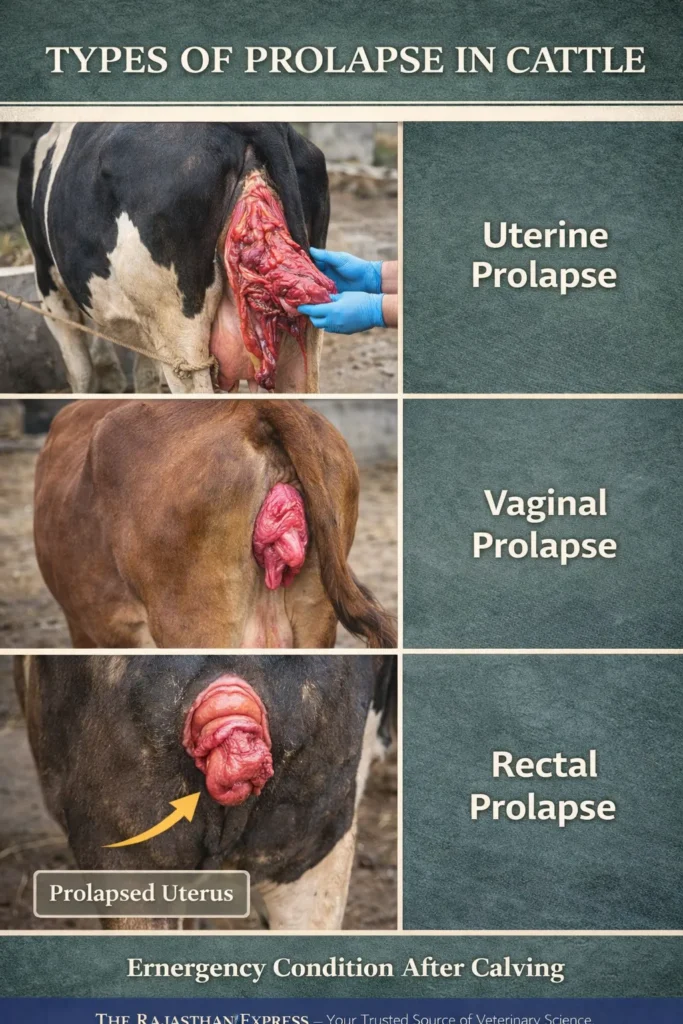
| Types of Prolapse in Cattle | 1. Uterine Prolapse Occurs when the entire uterus turns inside out and protrudes through the vulva after calving. 2. Cervico-Vaginal Prolapse Occurs when the vagina and cervix protrude through the vulva, usually during late pregnancy. 3. Rectal Prolapse Occurs when a portion of the rectum protrudes outside the anus. 4. Third Eyelid Prolapse A condition affecting the eye where the third eyelid becomes visible and swollen. |
| Predisposing Factors | Major risk factors that increase the chances of prolapse in cattle include: • Calcium and phosphorus imbalance • Weak pelvic muscles • Previous vaginal prolapse history • Multiple pregnancies • Genetic predisposition |
| Causes of Uterine Prolapse in Cattle | The causes of uterine prolapse in cattle include several nutritional, hormonal, and mechanical factors. |
| Hormonal Causes | • Excess estrogen hormone in the body • Estrogen injections during pregnancy • Excess estrogen production by placenta • Hormonal imbalance due to ovarian cysts |
| Nutritional Causes | • Calcium deficiency (Hypocalcemia) • Phosphorus deficiency • Mineral imbalance • Excess bulky feed during pregnancy |
| Mechanical Causes | • Increased abdominal pressure • Severe straining during calving • Overfeeding during pregnancy • Constipation or bloat • Heavy fetus or twin pregnancy |
| Anatomical Causes | • Relaxation of pelvic ligaments • Weak uterine muscles • Accumulation of peri-vaginal fat • Uterine atony |
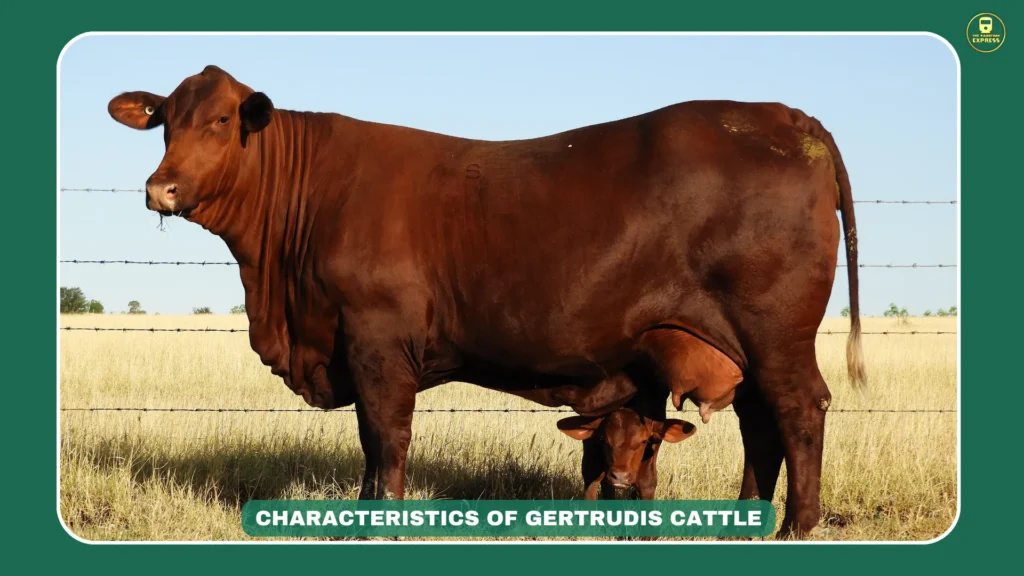
| Breeds with Higher Risk | Some breeds show higher hereditary susceptibility to prolapse. Examples: • Hereford • Santa Gertrudis • Red Sindhi |
| Clinical Signs of Uterine Prolapse | Symptoms depend on severity and duration of prolapse. |
| Early Symptoms | • Bright red uterus protruding from vulva • Animal becomes restless • Repeated straining (tenesmus) • Frequent attempts to urinate • Reduced appetite |
| Intermediate Symptoms | • Uterus becomes swollen and edematous • Color changes from red to dark or pale • Contamination with dung, soil, and debris • Cotyledons visible on uterine surface |
| Severe Symptoms | • Rupture of blood vessels • Internal bleeding • Septic infection • Shock (hypothermia, weak pulse) • Collapse and death if untreated |
| Emergency Treatment for Uterine Prolapse in Cattle | Immediate veterinary treatment is essential to save the animal. |
| Step 1 – Epidural Anesthesia | 5–8 ml of Lignocaine or Xylocaine is injected in the epidural space to prevent straining. |
| Step 2 – Cleaning the Uterus | The prolapsed uterus is washed gently using antiseptic solution such as: • Potassium Permanganate solution (KMnO₄) • Mild antiseptic solution |
| Step 3 – Reduce Swelling | Methods used to reduce uterine edema include: • Ice water washing • Sugar application • Hypertonic saline (3–5% NaCl) |
| Step 4 – Lubrication | Lubricants such as liquid paraffin or lignocaine jelly are applied to facilitate repositioning. |
| Step 5 – Repositioning the Uterus | The uterus is pushed gently back inside the pelvic cavity using hand pressure. Proper repositioning of the uterine horn tips is essential to prevent recurrence. |
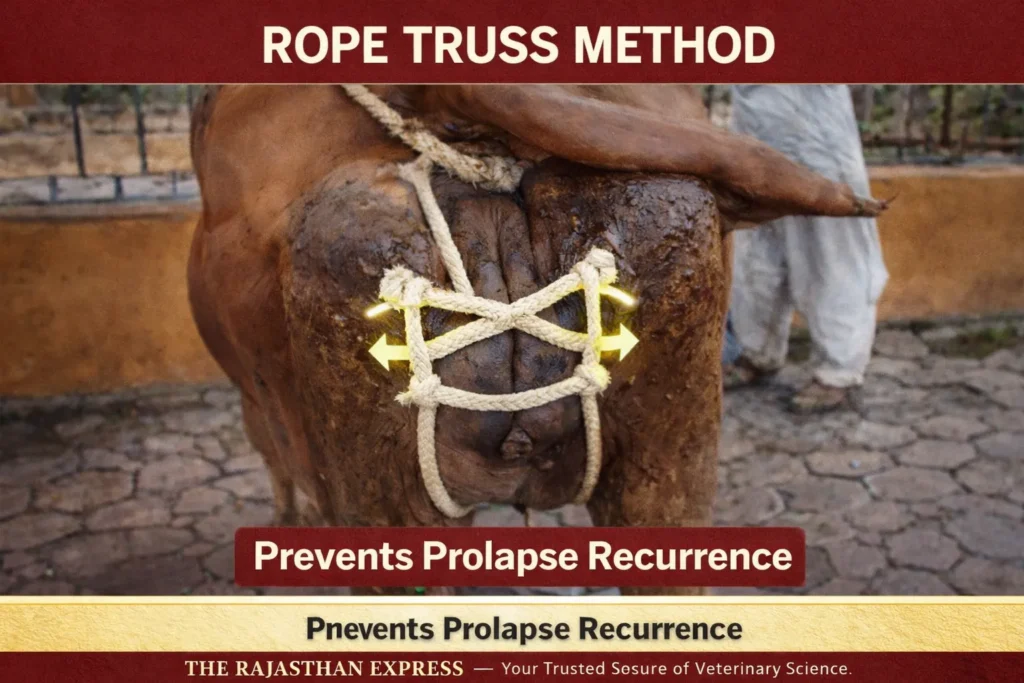
| Step 6 – Vulvar Retention | After repositioning, the vulva may be secured using rope truss or sutures to prevent recurrence. |
| Post-Treatment Care | Proper treatment after repositioning is essential for recovery. |
| Medications (3–5 Days) | • Broad spectrum antibiotics • NSAIDs (Meloxicam, Analgin) • Antihistamines • Multivitamins |
| Fluid & Mineral Therapy | • Calcium Borogluconate IV • Calcium-phosphorus injections • Electrolyte fluids |
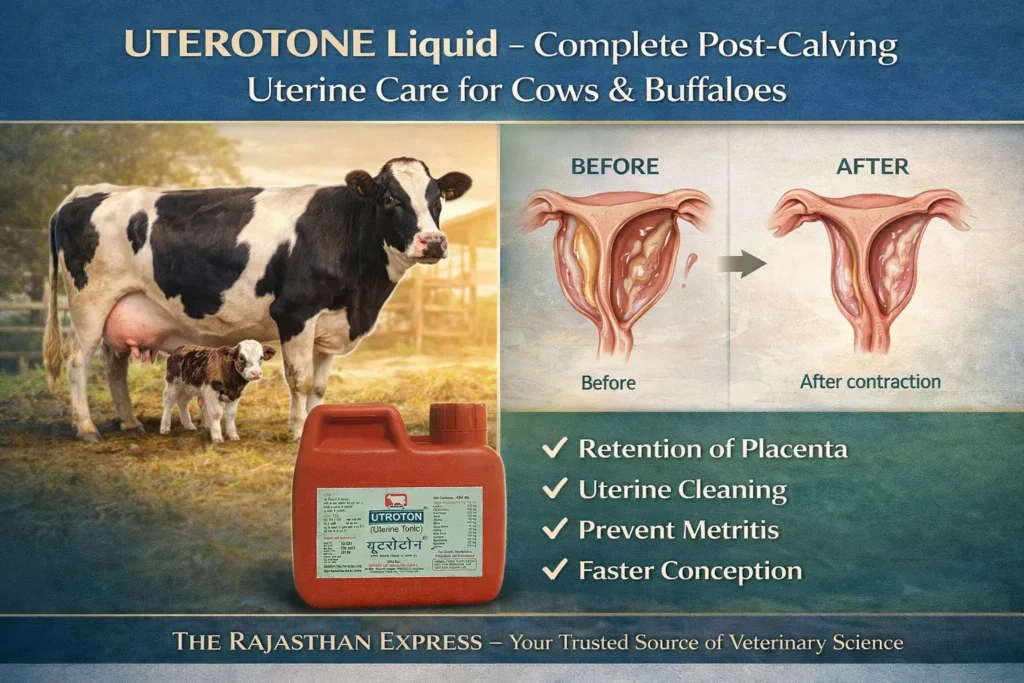
| Herbal Uterine Tonics | Supportive uterine cleansing medicines include: • Uterotone Liquid • Utrasafe |
| Hormone Precaution | Progesterone injections should NOT be administered after uterine prolapse because they inhibit uterine contraction and may worsen infection. |
| Management & Feeding | • Provide light digestible feed • Ensure adequate mineral mixture • Provide green fodder • Allow moderate walking exercise |
| Housing Management | The resting area should have a slight slope so that the hindquarters remain slightly elevated to reduce pressure on the uterus. |
| Surgical Treatment for Recurrent Prolapse | If prolapse occurs repeatedly, surgical procedures may be required. |
| Surgical Techniques | • Bühner’s Method • Caslick Operation (Vulvoplasty) • Minchev’s Method |
| Prognosis | The prognosis is generally good if treatment is performed immediately. Delay in treatment may lead to infection, hemorrhage, shock, and death. |
| Sources: The Rajasthan Express; Uterine Prolapse in Cattle: Causes, Symptoms, Types & Treatment | Prolapse in Cows and Buffaloes | |
Causes of Uterine Prolapse in Cattle
Understanding the causes of uterine prolapse in cattle is very important. Once the causes are known, prevention becomes easier.
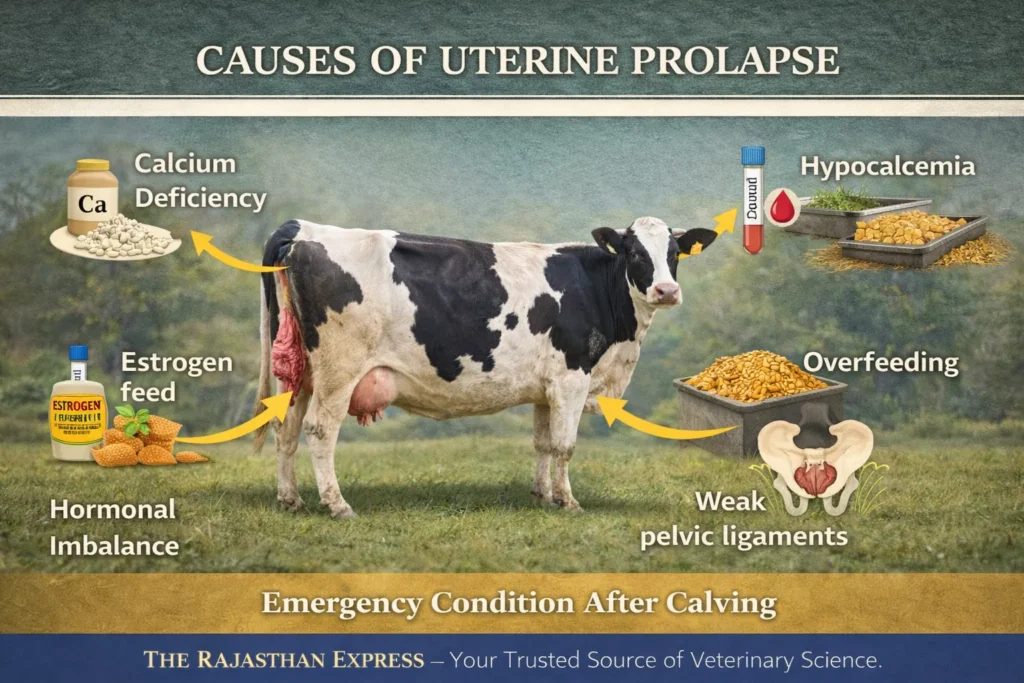
1. Excessive Estrogenic Feed (Hormone-Increasing Feed)
- When cows or buffaloes consume feed that contains a high level of estrogen hormone during pregnancy, it can create problems.
Example: Feeding excessive amounts of green fodder such as Clover.
How it happens:
- This fodder increases the level of estrogen hormone in the body, which causes the muscles that hold the uterus in place to become loose.
2. Relaxation of Pelvic Ligaments
- In the pelvic region of animals, there are strong fibers called ligaments that hold the uterus in its proper position.
- When these ligaments become excessively relaxed, the uterus may shift from its position and come outside.
- This condition is more common in older animals or cows that have given birth multiple times.
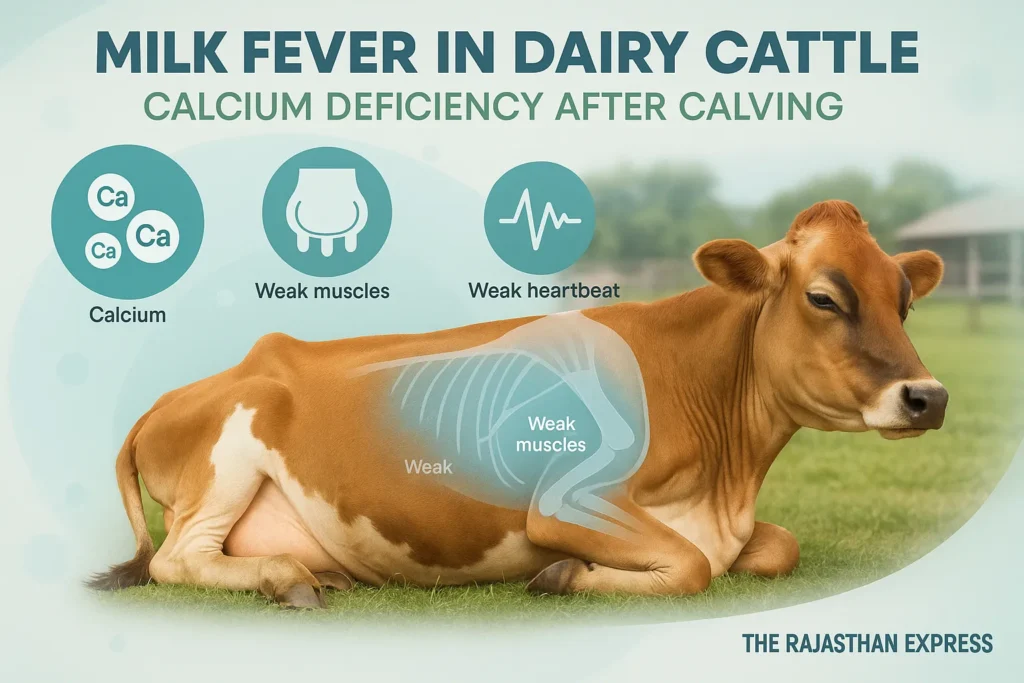
3. Hypocalcemia (Calcium Deficiency)
- After giving birth, animals often experience calcium deficiency.
How to identify it:
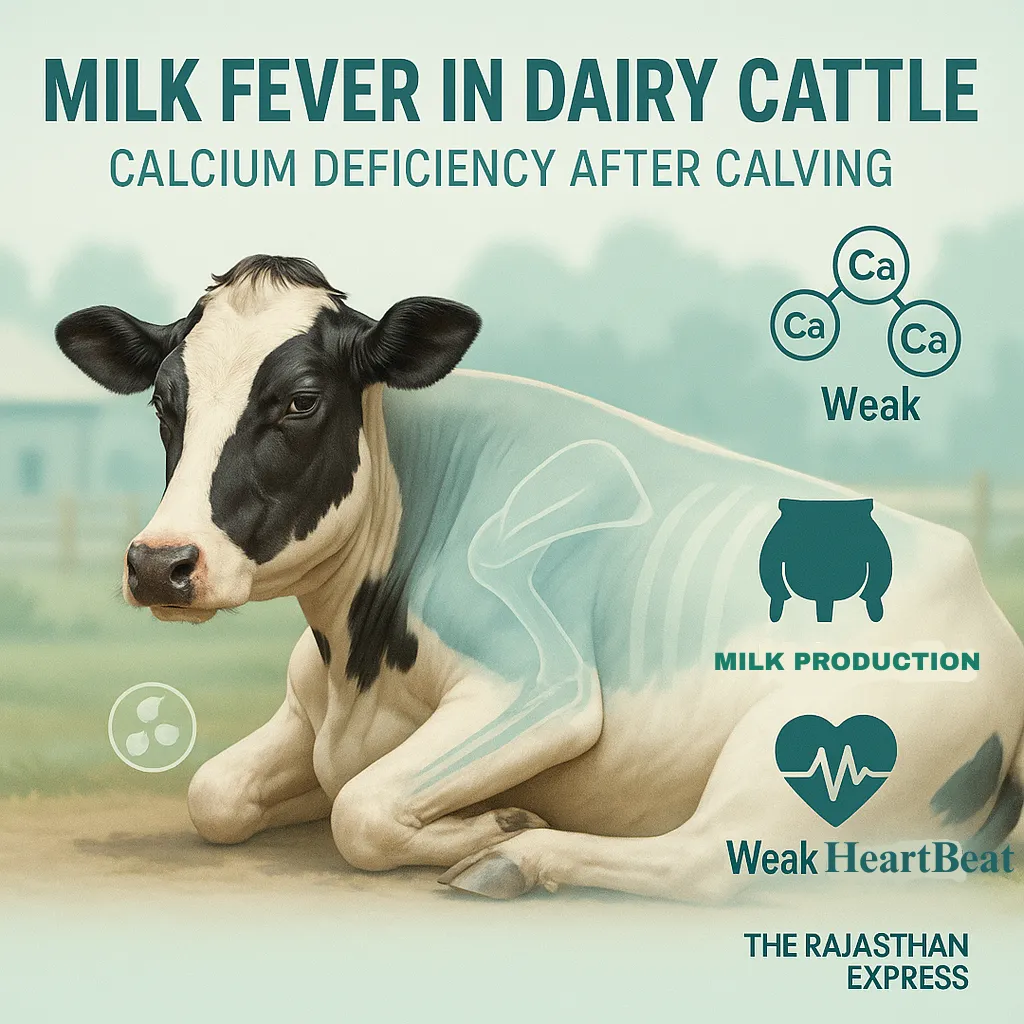
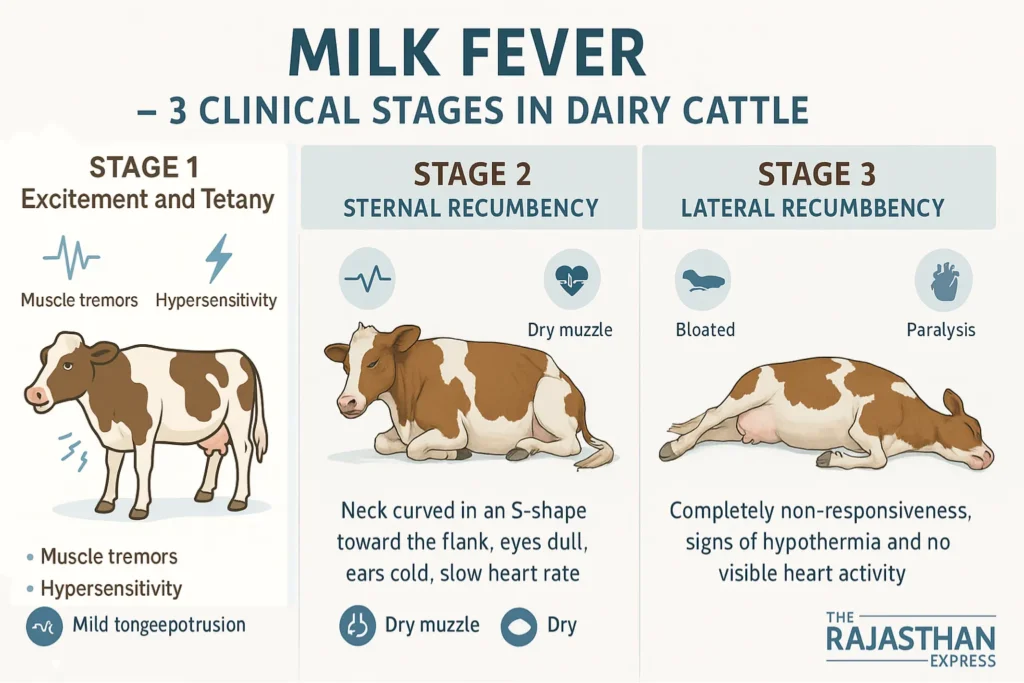
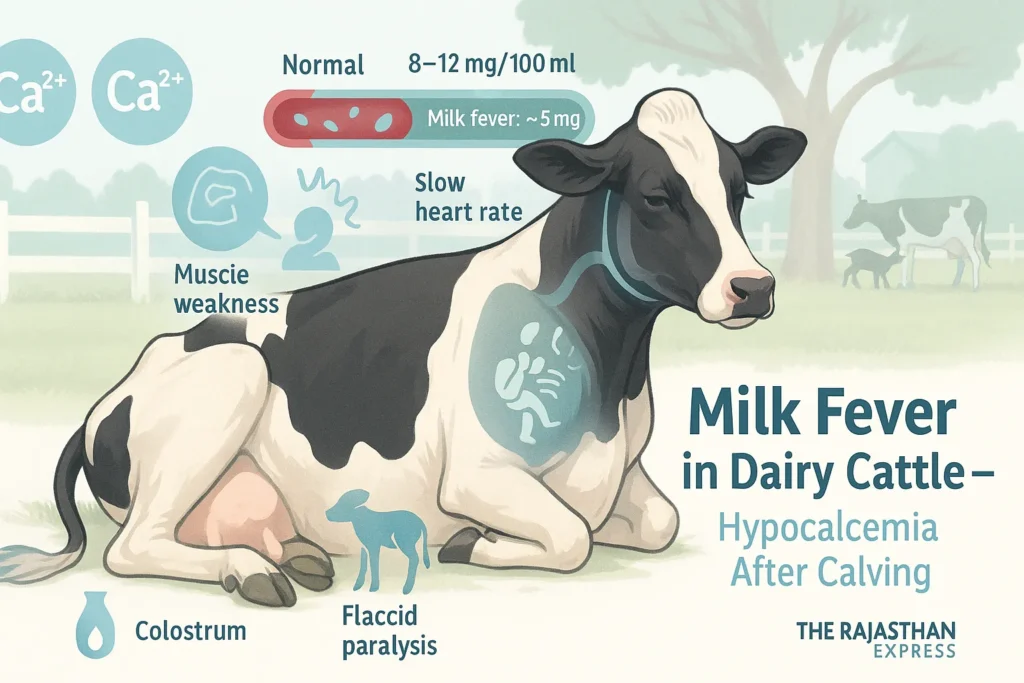
- The animal feels weak and may be unable to stand properly. This condition is often associated with milk fever.
- When calcium levels drop, the strength of the muscles decreases. The muscles of the uterus also become weak and cannot hold it in place.
4. Accumulation of Peri-Vaginal Fat
- In some animals, excessive fat accumulates around the vulva.
- This fat places pressure on the muscles that support the uterus.
- When fat increases excessively, the supporting muscles become weak, which may lead to prolapse in cattle.
- This problem is more commonly seen in animals that are overfed.
5. Heavy and Bulky Diet During Pregnancy
- When a pregnant animal is fed a very large quantity of feed or heavy fodder.
Example:
- Large amounts of dry fodder, straw, or heavy grain.
What happens:
- The stomach becomes overly full and the pressure inside the abdomen increases. This pressure acts on the uterus and pushes it outward.
6. Increased Intra-Abdominal Pressure
The pressure inside the abdomen may suddenly increase due to several reasons:
- Eating excessive food
- Constipation or bloating
- Severe coughing
- Frequent straining
When abdominal pressure increases, it pushes the uterus downward.
7. Cystic Ovaries
Sometimes fluid-filled cysts develop in the ovaries.
- These cysts increase the production of estrogen hormone.
- Excess estrogen causes the muscles that hold the uterus to become relaxed.
- This condition is more commonly seen in animals that suffer from uterine infections or hormonal imbalance.
8. Injection of Estrogen Hormone
- Sometimes during treatment or to correct the reproductive cycle, animals are given estrogen hormone injections.
- If these injections are administered during pregnancy or in excessive amounts, the uterus may become relaxed.
Important:
Hormonal injections should never be given without a veterinarian’s advice.
9. Excess Estrogen Production by the Placenta
In the last stage of pregnancy, the placenta also produces estrogen hormone.
Sometimes this hormone may be produced in excessive amounts.
When does this occur?
- Placental disorders
- Infection in the placenta
- Twin pregnancy
Excess estrogen causes the uterine muscles to become relaxed earlier than normal.
Breeds with Higher Risk of Prolapse in Cattle
In some breeds, prolapse in cattle may also be hereditary.
Examples include:
- Hereford
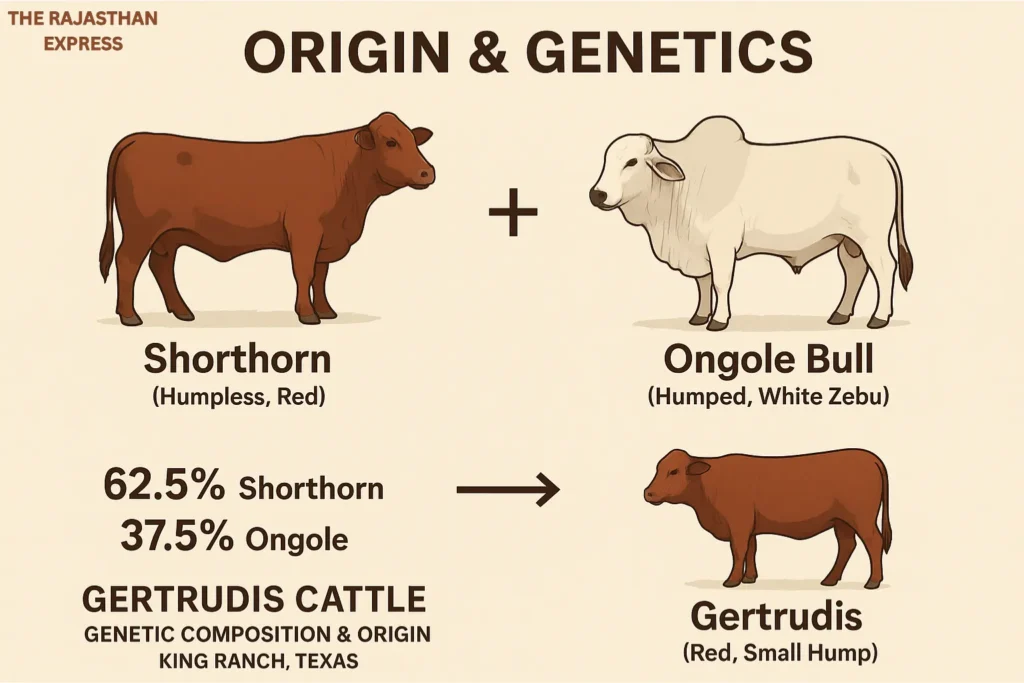
- Santa Gertrudis
- Red Sindhi
In dogs, this problem is also observed in certain breeds such as the Boxer, especially during the heat period.
Read More About : Santa Gertrudis cattle
What is Prolapse?
- When any organ of the body comes out through its natural opening, this condition is called prolapse.
- In cows and buffaloes, types of prolapse in cattle are mainly of two types.
Types of Prolapse in Cattle
1. Uterine Prolapse in Cattle
- When the uterus comes out after calving or sometimes before calving, it is called uterine prolapse in cattle.
- This condition usually occurs immediately after calving, when the uterus has not yet completely contracted.
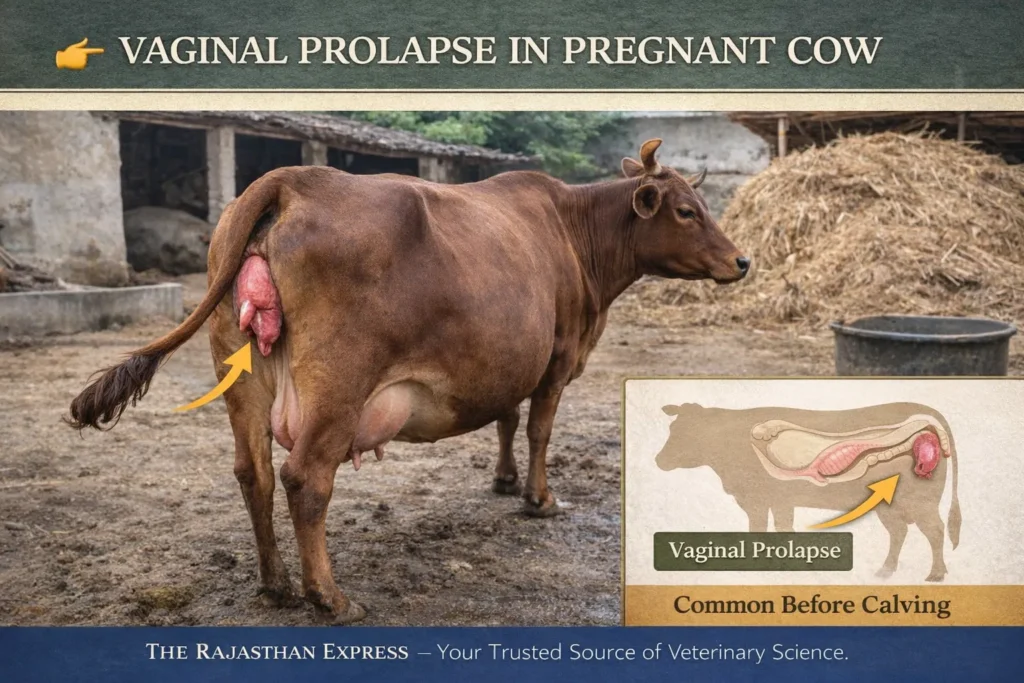
2. Cervico-Vaginal Prolapse in Cattle
- When the cervix and vagina come out through the vulva, it is called cervico-vaginal prolapse in cattle.
- This condition is different from uterine prolapse. It is also known as “Casting of Winters” because it is often observed at the end of winter.
- This problem occurs when the muscles responsible for closing the vaginal opening (constrictor vestibuli and vulvar muscles) become weak and cannot keep the vagina inside.
This condition may occur both before and after calving.
Causes of Cervical and Vaginal Prolapse in Cattle
- Hypocalcemia – Low calcium levels in the blood
- Excess estrogenic feed in the diet
- Deficiency of calcium (Ca) and phosphorus (P) in the feed
- Excessive straining during calving
- The uterus becoming atonic or flaccid
- Weak animals or low body condition score
- Continuous straining due to retention of placenta
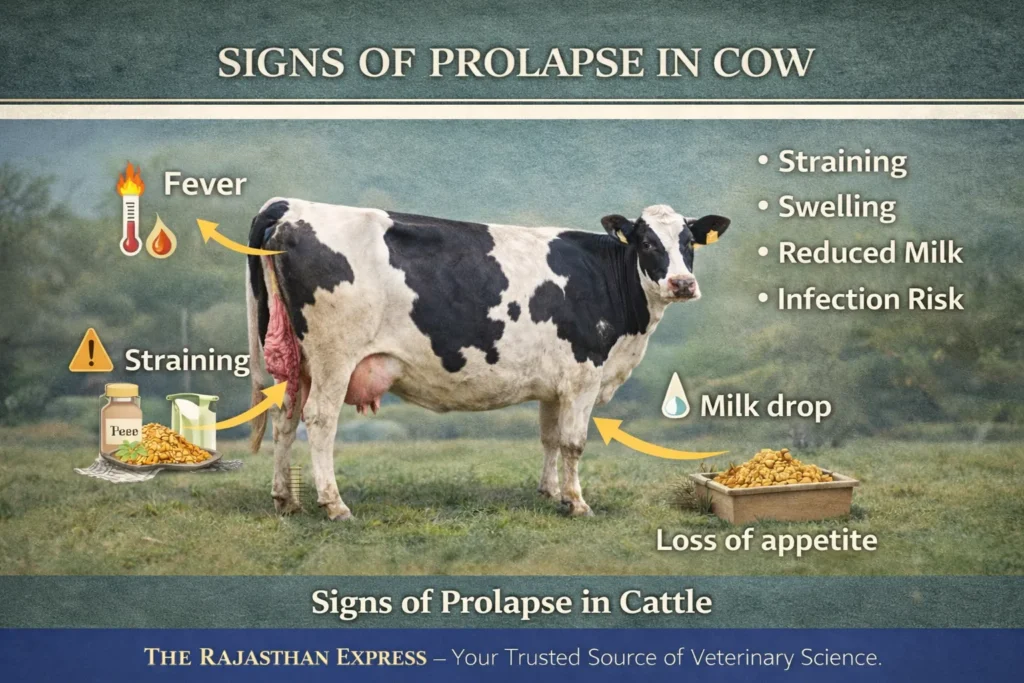
Symptoms of Prolapse in Cattle
The following symptoms of prolapse in cattle may be observed:
- A part of the vagina or the entire vagina comes out of the body
- The protruding part appears red, pink, or bluish-red in color
- Swelling and contamination with dirt may occur
- The animal repeatedly strains (straining/tenesmus)
- Difficulty in urination
- In severe cases, the tissues may dry out and crack
Types of Cervico-Vaginal Prolapse in Cattle
Cervico-vaginal prolapse in cattle occurs in three degrees.
1. First Degree Prolapse
- In this condition, when the cow sits down, a portion of the vagina protrudes through the vulva.
- As soon as the cow stands up, the vagina returns inside automatically.
- This is the initial stage of prolapse, where the tissues only temporarily tend to protrude outside.
2. Second Degree Prolapse
- In this condition, the vagina remains protruded through the vulva both when the cow is sitting and standing.
- This stage is more serious than first-degree prolapse, as the vagina does not return to its original position and remains outside permanently.
3. Third Degree Prolapse
- In this condition, along with the vagina, the posterior part of the uterus and the cervix also protrude through the vulva.
- This is the most severe stage of cervico-vaginal prolapse, where multiple reproductive structures protrude simultaneously.
Signs of Prolapse in Cows and Buffaloes
The signs of uterine prolapse in cattle may vary depending on the stage and severity of the condition. Recognizing these symptoms early is very important for timely treatment.
1. Early Signs of Uterine Prolapse in Cattle
Condition of the Prolapsed Uterus
- In the beginning, the protruding uterus appears warm and bright red when touched, indicating that blood circulation is still normal.
Restlessness and Discomfort
- The animal becomes restless and repeatedly attempts to stand up and lie down.
Frequent Straining
- The animal frequently strains (Tenesmus) as if trying to give birth or urinate.
Repeated Attempts to Urinate
- The cow attempts to urinate frequently, but very little urine is passed.
Anxiety and Distress
- The animal behaves abnormally and appears disturbed or anxious.
Reduced Appetite
- The animal eats and drinks less and may stand restlessly.
2. Intermediate Signs
Change in Color
- After some time, the protruding uterus becomes cold, swollen, and darker or pale in color, indicating reduced blood circulation.
Swelling and Edema
- The uterus becomes enlarged due to fluid accumulation, leading to swelling.
Signs of Infection
- The prolapsed uterus may become grossly contaminated with soil, dung, grass, and other debris, increasing the risk of infection.
Structural Changes
- The inner lining of the uterus becomes visible, and cotyledons may also be seen.
- Cotyledons are structures that connect the placenta to the uterus during pregnancy.
3. Severe Signs
Internal Hemorrhage
- If the blood vessels of the uterus rupture during prolapse, internal bleeding may occur.
Shock
In cases of severe bleeding or infection, the animal may go into shock.
Signs of shock include:
- Low body temperature (Hypothermia)
- Weak and rapid pulse
- Pale gums
- Cold ears and limbs
- Weakness and collapse
Death
If treatment is not provided in time, the animal may die due to:
- Excessive blood loss
- Shock
- Severe infection (Septicemia)
Treatment for Uterine Prolapse in Cows and Buffaloes
The treatment of prolapse in cattle, including cervico-vaginal prolapse and uterine prolapse in cattle, is almost similar.
(A) How to Reposition the Uterus
1. Provide Rest and Maintain Cleanliness
Epidural Anesthesia
- To prevent straining, the animal should be given epidural anesthesia.
- For this purpose, 5–8 ml of Lignocaine or Xylocaine is injected near the spinal cord in the hindquarter region.
This prevents pain and reduces straining.
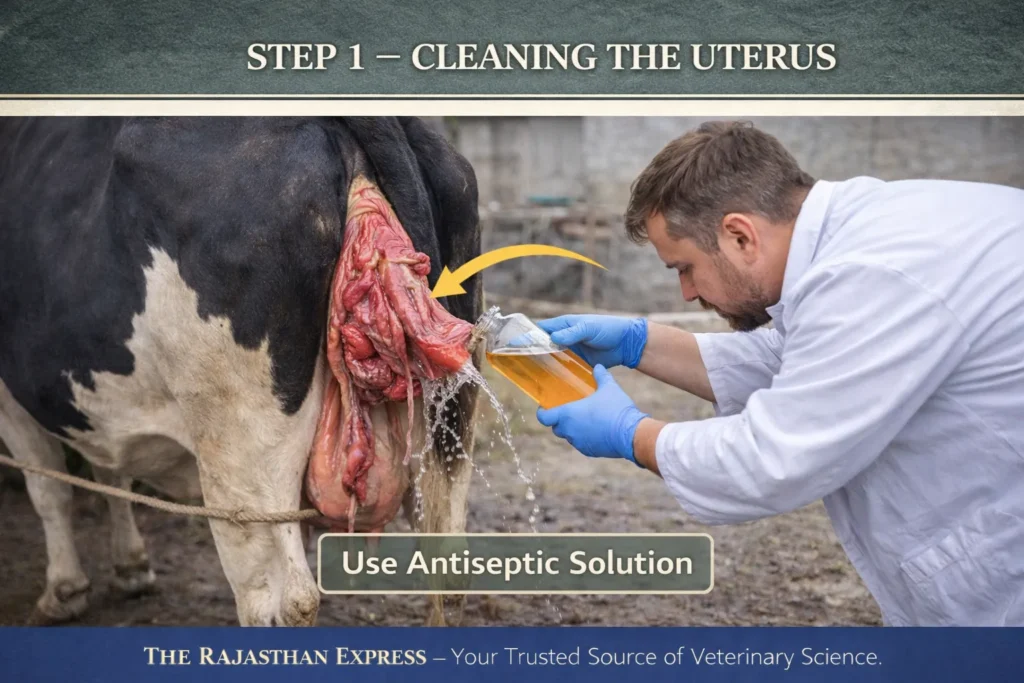
Cleaning
- The prolapsed uterus should be washed gently with a mild antiseptic solution.
- A light pink solution of Potassium Permanganate (KMnO₄) can be used for washing.
2. Correct Time for Removing the Placenta
- If the placenta does not come out naturally within 12 hours after calving, it should be removed manually.
- This reduces excessive straining by the animal.
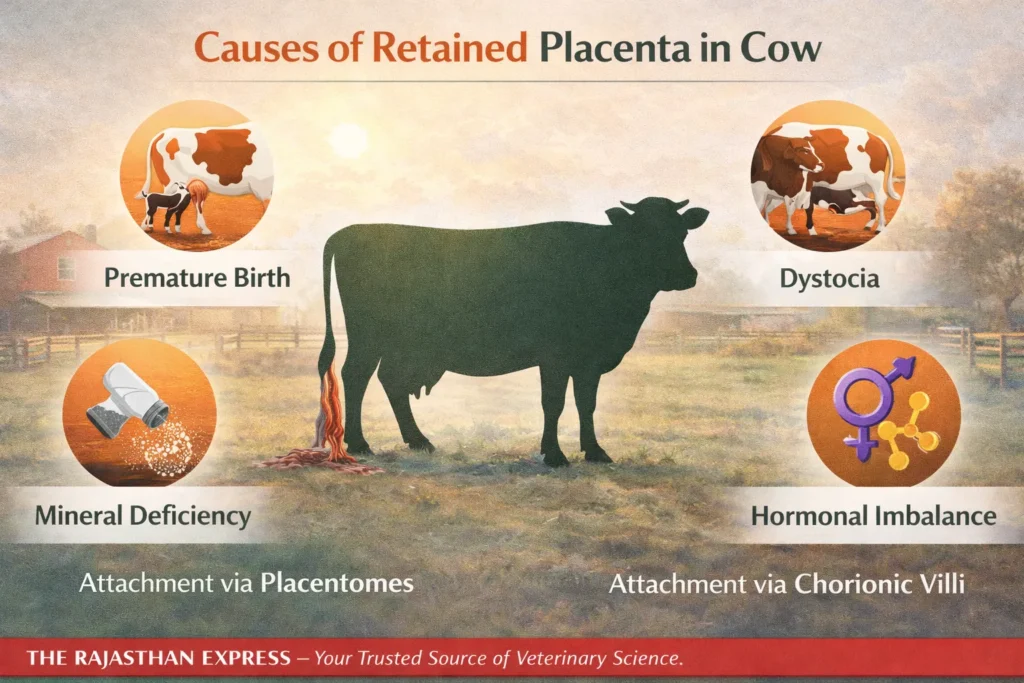
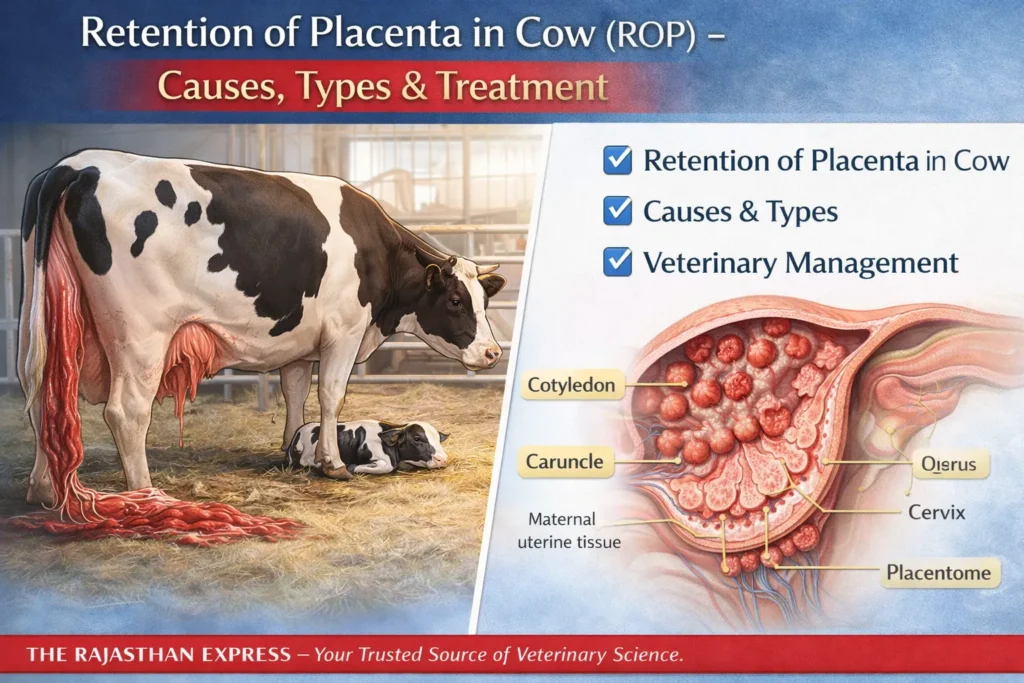
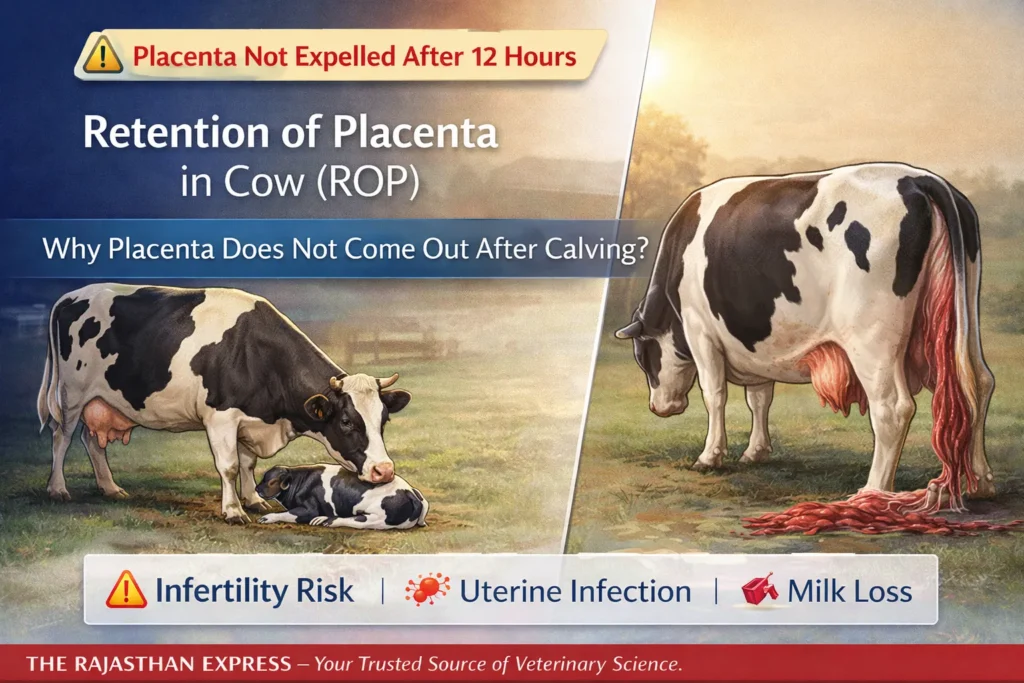
Read More About : Retention of Placenta in Cow
3. Reduction of Edema
- If the uterus is excessively swollen, its size must be reduced before repositioning.
- Swelling increases the size of the uterus and makes repositioning difficult.
Methods to reduce swelling:
Ice Application
- Wash the uterus with ice or cold water.
- This reduces blood supply and helps decrease swelling.
Sugar Application
- Sprinkling sugar or washing with sugar solution helps remove excess fluid from the uterus, reducing its size.
Hypertonic Saline
- Washing with 3–5% NaCl solution also helps reduce swelling.
Antiseptic Cleaning
- After reducing swelling, the prolapsed portion should again be washed thoroughly with an antiseptic solution.
4. Relieving Urination Problems
- Lift the uterus slightly above the vulva and apply gentle pressure.
- This usually helps the animal pass urine, reducing straining.
- If the animal cannot urinate, lifting the uterus often resolves the issue.
5. Correct Positioning of the Animal
For Cows and Buffaloes
- Place soil under the hind legs so that the rear part of the body remains elevated.
- This helps prevent the uterus from coming out again.
Special Note for Tympny or Bloat
- If the animal is experiencing difficulty in breathing, place soil under the front legs so that the front portion of the body becomes elevated.
- This position reduces the pressure of the abdomen on the diaphragm, which helps the animal breathe more easily.
6. Apply Lubrication
- After cleaning and reducing swelling, apply Lignocaine jelly and Liquid Paraffin to the uterus.
- This lubrication helps the uterus slide back easily inside the body.
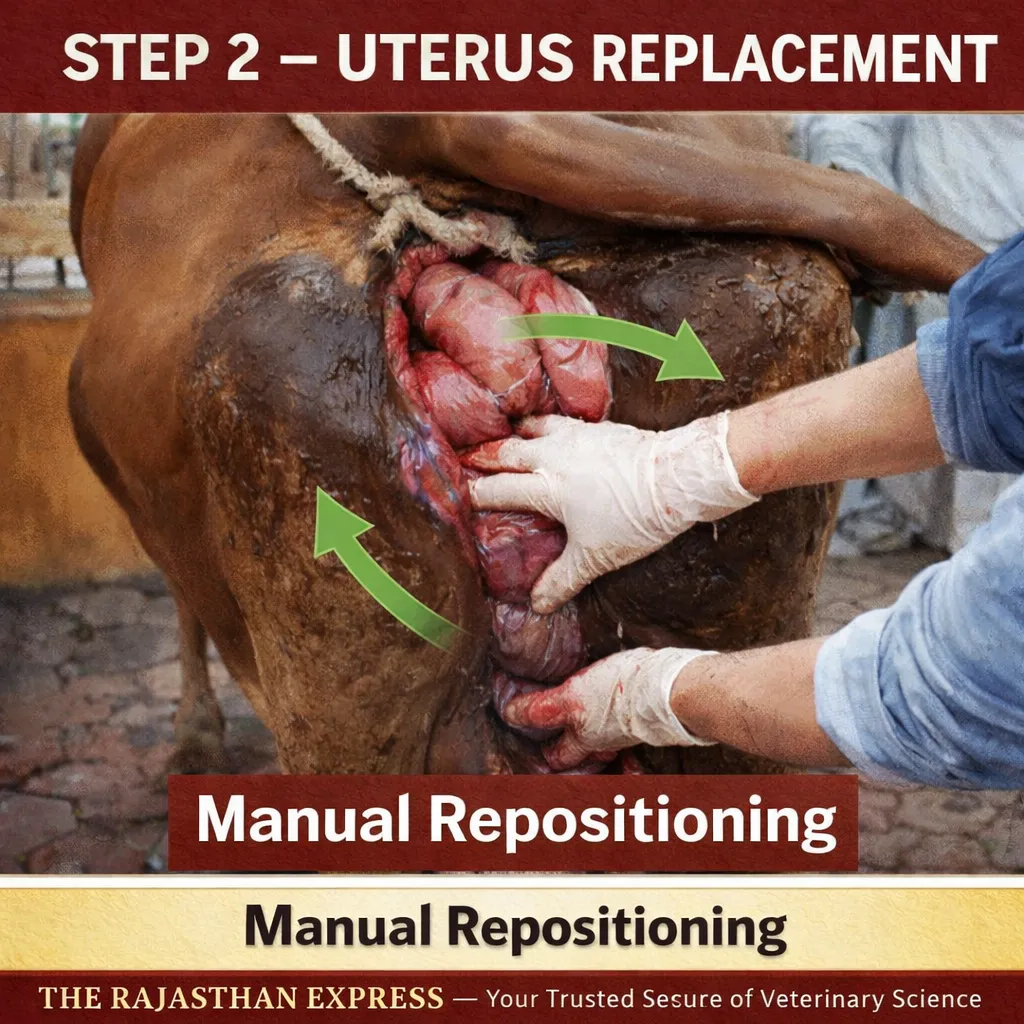
7. Method for Repositioning the Uterus
Two people are usually required:
- One person holds and supports the uterus upward
- The other gradually pushes and turns the uterus inward
Timing is important:
- When the animal strains, hold the uterus in position
- When straining decreases, gently push the uterus inside
The tip of the uterus must be pushed deep into the pelvic cavity using the fist.
If the hand cannot reach far enough, a clean cylindrical object such as a bottle may be used carefully.
8. After Repositioning the Uterus
- Once the uterus is repositioned, the vulva should be secured with a rope truss (Eeduni) so that the uterus does not prolapse again.
- In smaller animals like sheep, a retainer device should be applied.
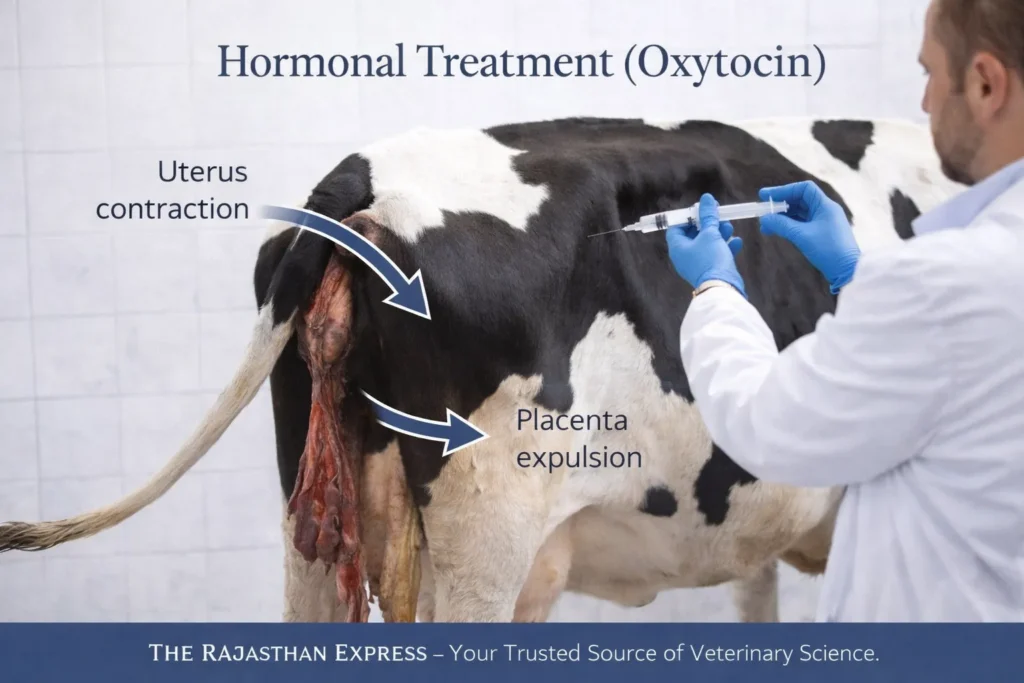
9. Oxytocin Injection
- After successfully repositioning the uterus, 5–8 ml of Oxytocin (25–40 IU) should be injected intramuscularly.
- This medicine helps the uterus contract and remain in its normal position.
Special precaution:
- Sometimes veterinarians inject oxytocin directly into the uterus to reduce its size, but this can make the uterus excessively rigid. Therefore, it is better to administer the injection after the uterus has been repositioned.
(B) Care and Treatment After Repositioning the Uterus
After performing uterine prolapse in cattle treatment, proper post-treatment care is extremely important. Correct medication, nutrition, and management help prevent recurrence of prolapse in cattle and reduce the risk of infection.
1. Medications (Give for 3–5 Days)
The following medicines should be administered for several days after treatment for uterine prolapse in cattle:
Antibiotics
- Broad-spectrum antibiotics should be given to prevent infection.
Anti-Inflammatory Drugs
- NSAIDs (Non-Steroidal Anti-Inflammatory Drugs) are used to reduce pain and swelling.
Antihistamines
- These medicines help prevent allergic reactions and swelling.
Multivitamins
- Multivitamin supplements help overcome weakness and support recovery in the animal.
2. Fluid Therapy
Proper fluid therapy helps strengthen the muscles and improves recovery after prolapse in cattle treatment.
- Administer Calcium Borogluconate (CBG) intravenously to strengthen the muscles.
- If CBG is not available, injectable calcium and phosphorus injections may be given.
3. Traditional Supportive Treatment / Uterine Tonic
Herbal uterine cleansing medicines may also be given as supportive therapy.
These medicines help keep the uterus clean and promote recovery.
Examples include:
- Uterotone Liquid
- Utrasafe
4. Hormone That Should Not Be Used
Important:
Do not administer Progesterone hormone injections at this stage.
- Progesterone prevents the uterus from contracting properly, which can increase the risk of infection and complications after uterus prolapse in cattle.
5. Feeding and Management
Proper feeding and care are essential after treatment of prolapse in cattle.
- Provide light and easily digestible feed
- Ensure green fodder is included in the diet
- Allow light walking or moderate exercise
6. Slope in the Resting Area
- The place where the animal sits or rests should have a slight slope.
- The front portion of the body should remain slightly lower, while the rear portion should remain slightly elevated.
- This reduces pressure on the uterus and helps prevent recurrent uterine prolapse in cattle.
Surgical Methods for Recurrent Prolapse in Cattle
If the uterus continues to prolapse repeatedly even after treatment, surgical procedures may be required.
Common surgical techniques include:
Buhner’s Method
- A surgical technique in which the vulvar opening is partially closed using sutures to prevent the uterus from coming out again.
Caslick Operation (Vulvoplasty)
- This surgical procedure involves partially suturing the vulva to prevent recurrence of vaginal prolapse in cattle.
Minchev’s Method
- Another surgical approach used to prevent repeated prolapse in cattle by providing additional support to the vulvar region.
Learn about uterine prolapse in cattle, its causes, symptoms, types of prolapse in cattle, and effective prolapse in cattle treatment for cows and buffaloes.
THE RAJASTHAN EXPRESS


